

18 min 43 sec
Say What They Can’t Unhear: The 9 Principles of Lasting Change
Discover how to overcome deep-seated resistance to change by aligning your ideas with the existing beliefs of your audience. This guide provides nine psychological principles for making your message truly unforgettable.
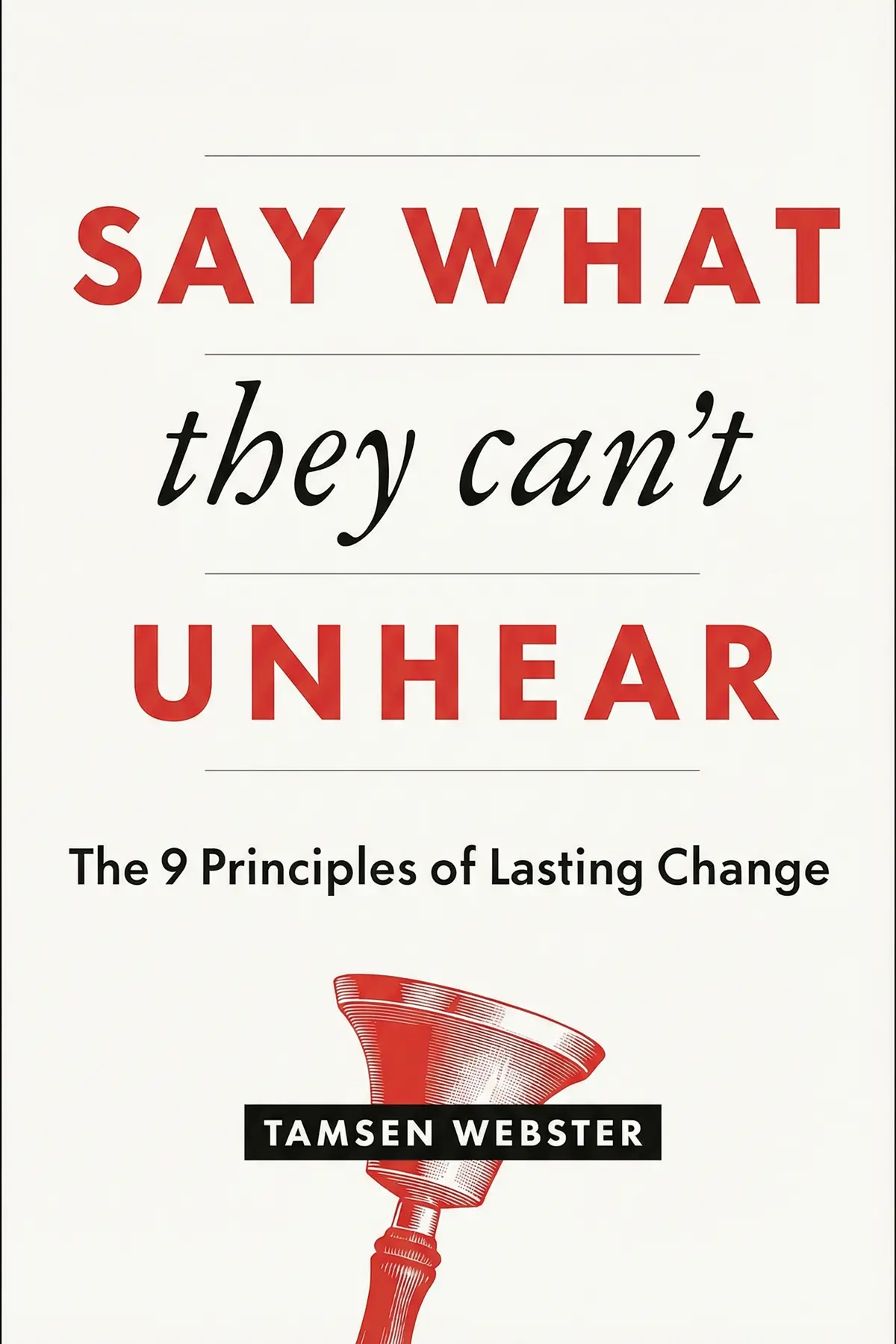
Table of Content
1. Introduction
1 min 31 sec
We have all been there. You have a vision. You have the data. You have a plan that makes perfect sense on paper. You stand before your team, your community, or even just a loved one, and you lay it all out. You wait for the spark of realization, the nodding heads, the sudden surge of motivation. But instead, you meet a wall. Sometimes it’s a wall of polite silence, and other times it’s a wall of active pushback. It’s frustrating, and it leaves you wondering why a clearly superior way of doing things is being rejected in favor of the status quo.
The truth is that human beings are not nearly as rational as we like to think. We don’t just accept facts; we filter them through a complex web of existing beliefs, past experiences, and survival instincts. When we encounter a message that asks us to change, our brains often perceive it as a threat to our comfort and our identity. This is why even the best ideas can fail if they aren’t delivered with an understanding of human psychology.
In this exploration of Tamsen Webster’s insights, we are going to look at the underlying mechanics of persuasion. We’ll move beyond simple “tips and tricks” and instead focus on the deep principles that govern how we react to new information. You are going to learn how to frame your message so that it doesn’t just get heard, but becomes a part of the listener’s own internal logic. By the end of this journey, you’ll understand how to bridge the gap between what you want to achieve and what your audience is actually willing to do. Let’s begin by looking at why the way people feel about your message is more important than the message itself.
2. The Power of the Reaction
2 min 02 sec
Discover why the psychological response of your audience is more important than the logic of your proposal, using a tragic historical lesson about medical hygiene.
3. The Narrative Driver
1 min 44 sec
Every choice we make is backed by a hidden story we tell ourselves, often based on assumptions we haven’t even fully realized yet.
4. Patterns and Core Truths
1 min 52 sec
Persuasion is impossible if you fight against a person’s fundamental principles, which function like the unchangeable laws of physics in their mind.
5. The Shield of Identity
1 min 46 sec
Learn why attacking someone’s past decisions is the quickest way to shut down a conversation and how to frame change as an extension of their strengths.
6. Leveraging Shared Values
1 min 38 sec
When faced with deep-seated disagreement, the most effective strategy isn’t to debate the conflict, but to find a higher-level belief you both share.
7. The Path of Least Resistance
1 min 34 sec
Drastic changes often fail because they create too much friction; the key to lasting transformation is making the new behavior as painless as possible.
8. Navigating Conflicting Truths
1 min 44 sec
When our beliefs clash with our reality, we experience cognitive dissonance, and we will always choose the ‘truth’ that best fits our identity.
9. The Limit of Your Influence
1 min 32 sec
No amount of persuasion can force someone to want something they don’t; discover why you must align your goals with their existing desires.
10. Eliminating Buyer's Remorse
1 min 40 sec
People don’t regret decisions that align with their core values; learn how to build confidence in change through a series of small, value-based agreements.
11. Conclusion
1 min 40 sec
As we reach the end of this exploration into the principles of lasting change, the central theme should be clear: you cannot force an idea into someone else’s mind, but you can invite them to find it within their own. Tamsen Webster’s framework reminds us that communication is not a battle to be won with superior logic; it is an act of alignment. When we stop trying to ‘fix’ people or ‘correct’ their behavior, and instead start looking for the stories and principles that drive them, we unlock a far more powerful form of influence.
Lasting change happens in the quiet moments of internal realization—when a person looks at a new idea and realizes it doesn’t just make sense, it makes sense *for them.* It happens when the resistance of the ego is replaced by the resonance of shared values. By following these nine principles, you shift your role from a salesperson of ideas to a curator of moments that truly matter. You provide the framing, the respect, and the connection that allow others to see the path forward for themselves.
In your next conversation, whether it’s in a boardroom, at a dinner table, or even within your own internal monologue, remember that the most effective message is the one the listener doesn’t just hear, but can’t unhear. It’s the message that fits so perfectly into their existing worldview that it becomes an inseparable part of who they are. Focus on the reaction, protect the identity of your audience, and always seek the shared truth. When you do that, you don’t just spark change; you create a transformation that sticks. Thank you for listening to this BookBits summary of Say What They Can’t Unhear.
About this book
What is this book about?
Have you ever presented a logical, well-researched case for change, only to have it completely ignored? The problem usually isn't the quality of your idea; it's how that idea interacts with the listener's internal world. Say What They Can't Unhear explores the psychological barriers that prevent people from adopting new behaviors and provides a roadmap for bypassing those defenses. Tamsen Webster argues that lasting transformation doesn't come from external pressure, but from internal shifts. By understanding how the human brain processes information, builds narratives, and protects its sense of identity, you can craft messages that feel like a natural choice rather than an outside command. This book offers a deep dive into communication strategies that respect the audience's autonomy while guiding them toward a new perspective.
Book Information
About the Author
Tamsen Webster
Tamsen Webster is a strategist and expert in change communication with over two decades of experience helping leaders create impactful messages that drive lasting transformation. She’s worked with organizations such as Harvard Medical School and TEDxCambridge. She’s also the author of the best-selling book Find Your Red Thread, which offers practical strategies for making big ideas irresistible.
Ratings & Reviews
Ratings at a glance
What people think
Listeners find the book highly successful at conveying core concepts for driving transformation, with one review characterizing it as a perceptive manual on the psychology of influence. Furthermore, the material is praised for its accessibility, cited as essential reading for executive leaders and for its effectiveness in developing content for lasting change. Listeners also value the foundational ideas, with one review noting they are backed by solid science, and the book's communicative style, with one listener noting it's not typical business talk. Listeners describe the guide as both entertaining and straightforward to grasp.
Top reviews
Tanyaporn
Wow. This book completely flipped the script on how I approach team meetings. I used to think that providing enough data would naturally lead people to the right conclusion, but Webster proves why that often backfires. Her breakdown of the '9 Principles' isn't just theory; it feels like a tactical manual for navigating human resistance. I specifically loved the distinction between 'you’re right' and 'that’s right,' as it perfectly captures why some of my past initiatives failed to gain real traction. The writing is incredibly tight and avoids the usual fluff you find in business books. It’s dense with insight but remains surprisingly easy to digest. If you are struggling with change management or just want your ideas to actually stick, this is essential reading. It’s rare to find a book that feels this immediately applicable to my daily work life.
Show moreKanokwan
Finally got around to reading this and Chapter 4 on identity was a total lightbulb moment for me. We often try to persuade people by challenging their views, but Webster explains why that just causes them to shut down. To be fair, I’ve been guilty of trying to 'fix' my team's mindset instead of aligning with their existing sense of self. The book teaches you how to frame a message so it becomes part of the listener’s own internal narrative. This isn't about manipulation; it's about deep alignment. The prose is sharp, conversational, and completely devoid of typical corporate jargon. I finished it in two sittings because the flow is so natural. It’s the kind of book you buy copies of for your entire management team. Every principle feels like a missing piece of a puzzle I’ve been trying to solve for years.
Show moreYok
As someone who deals with corporate resistance daily, the concept of 'reactance' was exactly the label I needed for my professional frustrations. Webster has a gift for taking complex psychological triggers and making them accessible for the average manager. The book is structured around nine principles that help you guide others toward change without making them feel pushed. Personally, I found the section on storytelling particularly insightful because it moves away from the 'salesy' approach and toward true connection. The writing is punchy. The advice is practical. The examples are relatable. I’ve already started shifting the way I phrase my project proposals based on the 'can't unhear' framework. It’s one of those rare business books that actually delivers on the promise of its title. You really can’t unhear these principles once you’ve read them.
Show moreKiattisak
Ever wonder why your best ideas get shot down even when they make perfect sense? This book provides the answer. Tamsen Webster explains that it’s not about the strength of your argument, but how that argument interacts with the listener’s identity. The way she explains the psychology of decision-making is brilliant. I’ve read a lot of books on persuasion, but this one feels different because it isn't about winning an argument. It’s about making the change so irresistible and logical that the other person adopts it as their own idea. The chapters are short and impactful. I found myself highlighting nearly every other page. This isn't just for business people; it’s for anyone who needs to communicate an idea that matters. It’s a masterclass in empathy-driven communication that will change the way you speak to everyone.
Show moreSupranee
Gotta say, I was skeptical about another business book on 'change,' but this one is a refreshing departure from the norm. It avoids the typical rah-rah motivation and gets straight into the mechanics of how the brain accepts or rejects new information. The nine principles are a fantastic framework for anyone who needs to lead a team through a pivot. I especially liked the focus on the audience's 'internal story.' The book is incredibly readable and lacks the dry, stuffy tone of most leadership guides. It feels like having a conversation with a very smart, very direct mentor. I’ve already recommended it to several coworkers who are struggling with project buy-in. It’s an essential tool for creating messages that don't just get heard, but actually get acted upon. Tamsen Webster has really delivered something special here.
Show moreChanon
Not what I expected, but exactly what I needed. I thought this would be a sequel to her first book about building a 'Red Thread,' but it’s really a deep dive into the psychology of why people resist new ideas. The focus on 'lasting change' is so relevant in today’s volatile work environment. Each principle is illustrated with clear examples that make the complex science feel intuitive. I particularly enjoyed the section on how to avoid triggering a defensive response in your audience. The book is short, but don't let that fool you; it’s packed with more actionable advice than books twice its length. It’s the kind of resource you keep on your desk and reference before every big presentation or difficult conversation. Webster has a unique ability to make you see your own communication flaws with a sense of humor and a clear path toward improvement.
Show moreAiden
After hearing Tamsen speak at a marketing event, I expected a deep dive into simple messaging, but this is actually a sophisticated masterclass in human behavior. It focuses heavily on change management, which was a welcome surprise given my current role. The principles are logically organized and backed by solid psychological research without feeling like a dry academic paper. Frankly, I recognized myself in many of the 'what not to do' scenarios she described. My only minor gripe is that while she emphasizes understanding the audience's values, I wanted more specific exercises on how to uncover those hidden beliefs when they aren't obvious. Still, the concept of identity as the ultimate influencer is a game-changer. It’s a quick, punchy read that I’ll likely revisit several times this year. Definitely worth the shelf space for any leader.
Show moreHugo
Picked this up after a colleague recommended it for our leadership book club. Not gonna lie, I usually find books on 'lasting change' to be a bit repetitive, but this one stands out due to its focus on the audience's internal story. The 9 principles provide a very clear roadmap for communication. I particularly appreciated the focus on how people need to feel smart, capable, and good during a transition. One small critique is that the book is so streamlined that I sometimes felt I was missing the 'how-to' on the discovery phase of the process. It tells you what to say, but finding the raw materials for that message requires a bit more legwork than the book covers. However, the delivery and the science behind the messaging are top-notch. It’s an insightful guide for anyone tasked with moving a group of people toward a new goal.
Show moreSawit
The core concepts laid out in these pages are undeniably powerful, yet I found the pacing a bit relentless at times. Tamsen Webster is a masterful communicator, but her style here is so 'tight' that I felt I lacked the mental breathing room to fully process one principle before moving to the next. Truth is, some sections felt slightly redundant as if the same point was being hammered home through different lenses. While I appreciate the lack of fluff, a few more long-form case studies would have helped ground the abstract psychology for me. It is a solid resource for persuasion, but it didn't quite resonate with me as much as her earlier work. If you prefer a very fast-paced, high-information-density style, you will love it. For me, it was a bit of a whirlwind that left me wishing for a more leisurely exploration of the 'why' behind the change.
Show moreHassan
Look, I appreciate the science-backed approach and the author clearly knows her stuff, but I struggled to stay engaged. The book felt more like a collection of high-level observations than a practical toolkit I could use on Monday morning. To be fair, the writing is professional and the principles are logical, but it felt a bit too abstract for my needs. I was looking for more step-by-step templates for message creation, and this focused much more on the broad psychology of change management. It might be a great fit for senior executives who deal in high-level strategy, but for a frontline manager, it felt a bit removed from the daily grind. I didn't find the 'nine principles' as revolutionary as the marketing suggested. It’s an okay read, but it didn't quite hit the mark for me personally.
Show moreReaders also enjoyed



AUDIO SUMMARY AVAILABLE
Listen to Say What They Can’t Unhear in 15 minutes
Get the key ideas from Say What They Can’t Unhear by Tamsen Webster, plus 5,000+ more titles in English and Thai.
- 5,000+ titles
- Listen as much as you want
- 7-day free trial
- Cancel anytime







