
18 min 58 sec
Science of Evil: On Empathy and the Origins of Cruelty
A scientific investigation into human cruelty, replacing the vague concept of evil with the measurable metric of empathy erosion through the lens of neurology, genetics, and early childhood development.
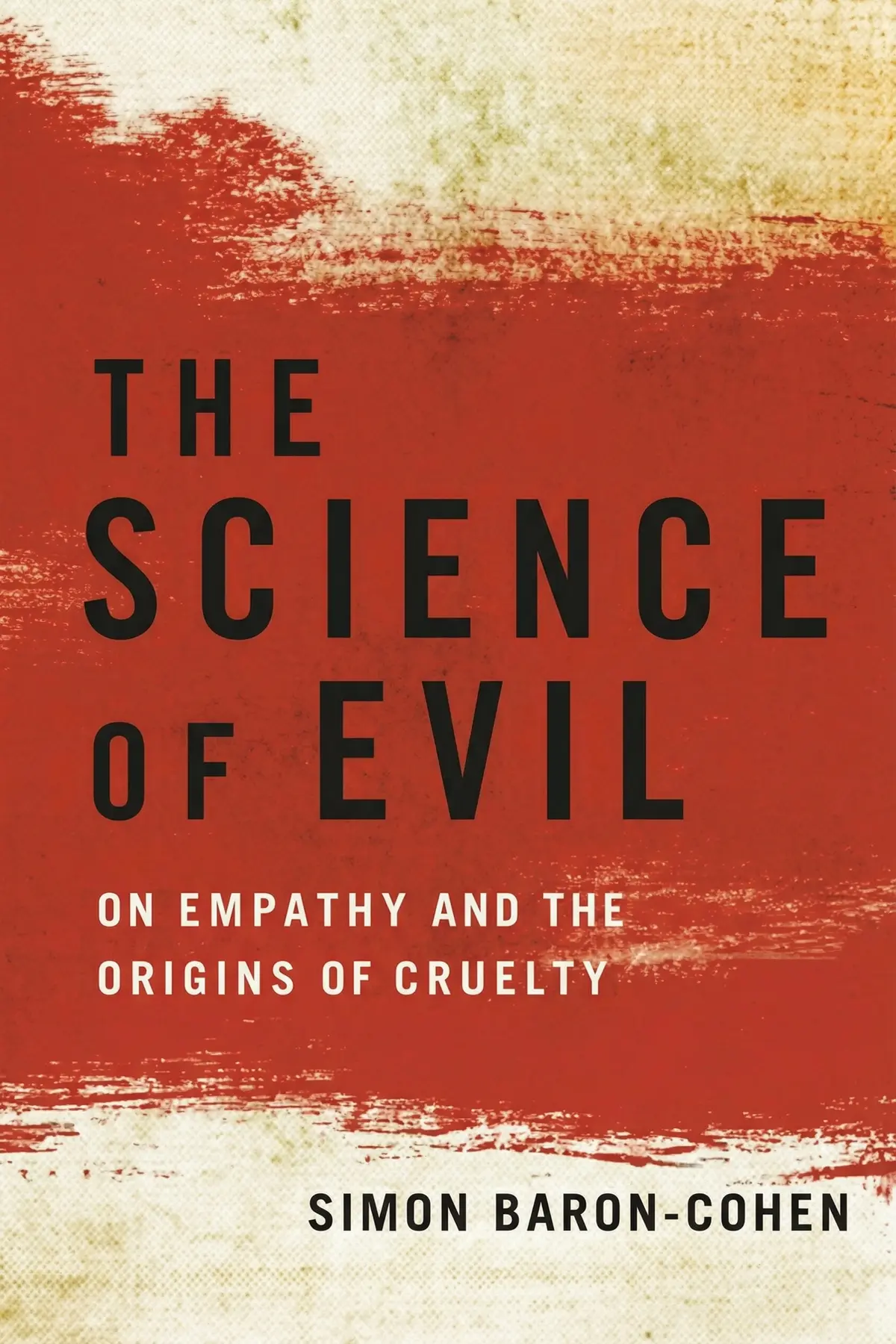
Table of Content
1. Introduction
1 min 44 sec
When we look back at history’s darkest chapters, we often reach for a single word to explain the unexplainable: evil. It is a word that feels satisfying because it labels the monster, but as a scientific tool, it is remarkably unhelpful. Consider the case of Dr. Sigmund Rascher, a man whose medical research is still cited in contemporary textbooks. He was a meticulous, high-level scientist, yet he conducted his hypothermia experiments on helpless prisoners at Dachau. How can a cultured, educated person participate in such horrific cruelty?
Conventionally, we say Rascher was evil. But this explanation is circular. We say he did bad things because he was evil, and we know he was evil because he did bad things. This doesn’t actually explain the ‘how’ or the ‘why’ of human behavior. To truly understand the origins of cruelty, we have to move past these vague labels and look at a tangible, measurable psychological attribute: empathy.
In this exploration of Simon Baron-Cohen’s work, we are going to look at the ‘science’ behind what we usually call evil. We will discover that morality isn’t just a philosophical choice, but a biological and developmental process. We will see how our brains are wired to connect with others, and what happens when those connections are severed. By shifting our focus from ‘evil’ to ’empathy erosion,’ we can begin to decode the roots of human cruelty through neurology, genetics, and the way we raise our children. This is a journey into the darker corners of the human mind, seeking to understand how the light of empathy can be dimmed, and what it takes to keep it burning.
2. The Shift from Evil to Empathy Erosion
2 min 26 sec
Moving beyond circular definitions of morality, we explore how viewing others as mere objects—the ‘I-It’ relationship—paves the way for acts of extreme human cruelty.
3. The Two Dimensions of the Empathy Circuit
2 min 42 sec
True empathy requires more than just understanding another’s thoughts; it demands an emotional response that prevents us from causing harm to those around us.
4. The Empathy Spectrum and the Dimmer Switch
2 min 32 sec
Empathy isn’t a fixed trait but a sliding scale influenced by authority, ideology, and propaganda that can turn down our natural compass.
5. The Physical Map of the Empathy Circuit
2 min 31 sec
From the tragic accident of Phineas Gage to modern neuroimaging, we trace how specific regions of the brain collaborate to form our moral compass.
6. The Biological Blueprint of Cruelty and Compassion
2 min 31 sec
Exploring the hidden influences of the ‘Warrior Gene’ and fetal hormones, we see how our genetic and biological makeup sets the stage for our empathetic potential.
7. The Foundation of Empathy in Early Childhood
2 min 47 sec
Through the lens of attachment theory, we discover how the ‘secure base’ provided by a caregiver creates the psychological safety necessary to understand other minds.
8. Conclusion
1 min 45 sec
In this journey through Simon Baron-Cohen’s Science of Evil, we have moved beyond the simplistic and circular label of ‘evil’ to uncover the complex machinery of empathy. We have seen that cruelty is not a supernatural force, but the result of empathy erosion—a state where the ‘double focus’ of the human mind fails, and we begin to treat others as objects rather than people.
We explored the two faces of empathy: the cognitive ability to read a mind and the affective ability to care about what is found there. We looked at the ‘dimmer switch’ of the empathy spectrum, noting how social pressure and ideology can turn down the light of compassion in almost anyone. We traced the physical circuit of empathy in the brain and examined the genetic and hormonal blueprints that set our initial sensitivity. Finally, we saw how the ‘secure base’ of early attachment provides the essential training ground for a life of connection.
The throughline of this work is clear: our moral health is tied to our empathetic health. Empathy is the most valuable resource our species possesses. It is the natural brake on aggression and the primary engine of cooperation. While we cannot always control our genetic makeup or our neurological health, we can control the environments we build for our children and the ideologies we allow to take root in our societies. By understanding the science of empathy erosion, we move from condemnation to understanding, and from fear to a more rigorous form of hope. The key to a less cruel world isn’t just to punish ‘evil,’ but to actively cultivate the biological and psychological foundations of empathy in every one of us.
About this book
What is this book about?
This exploration challenges the traditional, circular definition of evil by offering a more tangible scientific alternative: the erosion of empathy. Simon Baron-Cohen argues that acts of cruelty are not the result of a supernatural or abstract force, but rather a specific psychological and biological state where individuals lose the ability to perceive others as human beings with their own feelings and perspectives. Through a combination of case studies and research, the book examines how the brain’s empathy circuit can be compromised. It dives into the differences between various personality profiles, distinguishing between those who lack empathy to manipulate others and those who struggle with it due to neurodevelopmental conditions. Ultimately, the work provides a framework for understanding human behavior through genetic markers, hormonal influences, and the critical importance of secure emotional attachment in early life, offering a path toward a more empathetic society.
Book Information
About the Author
Simon Baron-Cohen
Simon Baron-Cohen is a professor of developmental psychopathology and the director of the Autism Research Centre at the University of Cambridge. He is the author of over 600 scientific articles and several influential books, including The Pattern Seekers and The Essential Difference.
Ratings & Reviews
Ratings at a glance
What people think
Listeners find the author's take on empathy compelling, specifically highlighting the useful, quantifiable "empathy quotient" test and the study of genetic components. The text is considered informative and highly readable, with one listener noting the beneficial references and appendices. Positive feedback focuses on the intriguing subject, the analysis of brain functions, and the prose, as one listener particularly appreciates the clear explanations of brain regions. Scientific opinions are divided; some listeners consider the research clear, while others remain skeptical of the theory of evil being presented.
Top reviews
Yam
The Science of Evil provides a refreshing, biological perspective on human cruelty that moves away from outdated theological definitions. I found the section on the 'Empathy Quotient' (EQ) to be a major highlight, as it gives readers a concrete tool to understand their own place on the spectrum. Personally, I was most impressed by how he links the physiological brain function to social behavior without becoming overly technical. The appendices and references are incredibly helpful for anyone wanting to dive deeper into the genetic markers of empathy. It’s rare to find a book that balances hard neuroscience with such a readable, engaging prose style. This is a must-read for anyone interested in why we treat each other the way we do.
Show moreGoy
Finally got around to reading this, and the concept of 'Zero-Positive' individuals really changed how I view human behavior. It’s a bold theory that reframes certain conditions not as mere deficits, but as a different, highly-systematized way of processing reality. The book is incredibly informative, providing a deep dive into the genetic components that influence our ability to relate to others. I loved the clear diagrams of the brain regions involved in the empathy circuit—it made the science feel very tangible. For anyone who has ever been baffled by the cruelty in the news, this provides a comforting, scientific explanation that feels much more grounded than 'pure evil'.
Show moreTitiluck
In my experience, this book functions as a solid introduction to a very complex topic. Baron-Cohen’s central argument—that we should replace the word 'evil' with 'empathy erosion'—is a powerful shift in perspective. The truth is, it makes sense of historical atrocities without falling into the trap of just labeling people as monsters. I did think some parts were a bit repetitive, and the 'mommy issues' case studies felt a little dated. However, the overall discussion on the 'empathy circuit' and the genetic predispositions for these traits is handled with a lot of care. It’s a thought-provoking piece that definitely deserves a spot on your shelf.
Show moreWittaya
A deeply thought-provoking read that challenges the way we punish 'evil' acts in our society. By looking at the combination of genetics and early childhood neglect, Baron-Cohen argues for empathy and rehabilitation over pure retribution. Not gonna lie, some of the descriptions of cruelty are hard to stomach, but they serve to illustrate his point about how people can be 'turned off' to the feelings of others. The inclusion of the Empathy Quotient test is a genius move, making the reader part of the study. It’s an accessible, humanizing, and ultimately hopeful book that suggests we can actually do something about the 'science of evil' if we understand the biology behind it.
Show moreClara
Ever wonder why some people are just... heartless? Simon Baron-Cohen attempts to answer this by replacing the vague concept of 'evil' with a quantifiable lack of empathy. I found the 'Empathy Quotient' test in the back to be incredibly insightful, even if it feels a bit like a parlor trick at first. To be fair, the book is written with a clarity that makes complex brain regions like the amygdala and medial prefrontal cortex accessible to anyone. While the science might feel a bit speculative in certain chapters, the exploration of how genetics and nurture intertwine is compelling. It’s a quick read that packs a punch, though it does leave you with several haunting questions about the nature of human cruelty.
Show moreRod
Baron-Cohen’s writing style is remarkably accessible for a book that dives into complex neurological structures. He avoids the usual academic dry spell, making the discussion of the brain’s empathy centers feel urgent and relevant to our current world. I particularly enjoyed the distinction he makes between different types of 'Zero-Empathy' individuals. The idea that some lack empathy but gain an incredible ability to see patterns is a brilliant reframing of neurodiversity. It helped me understand the 'Zero Positive' people in my own life much more clearly. To be fair, it’s a short book, but it’s packed with insights that have stuck with me long after finishing the last page.
Show moreAnong
Truth is, I couldn’t stop thinking about the fact that the author is Sacha Baron-Cohen’s cousin while reading this. One uses satire to expose the lack of empathy in society, while the other maps it out in the lab. It’s a fascinating juxtaposition! The book itself is quite good, especially the parts focusing on how the brain treats people as 'objects' to justify cruelty. I did find the sections on animal empathy in mice and monkeys to be a bit brief, but they were nonetheless eye-opening. While some of the conclusions about rehabilitation felt a bit optimistic, the overall framework for understanding 'evil' is much more useful than just calling people bad.
Show moreMichael
Picked this up because the premise of 'Zero-Negative' and 'Zero-Positive' personalities sounded fascinating. While Baron-Cohen’s breakdown of the 'empathy circuit' is genuinely enlightening, I struggled with his case studies. Look, blaming every instance of psychopathy on a neglectful mother feels like a massive step backward for modern psychology. It’s that old 'mommy didn't love me enough' trope that ignores the role of the father entirely. The chapters on systematizing in autism were the highlight for me, but the push for total rehabilitation through the 'flower in the desert' analogy felt a bit like an ivory tower fantasy. It’s an okay read, but take the nurture arguments with a grain of salt.
Show moreRung
After hearing so much about Baron-Cohen's reputation in the field of autism, I was shocked by the sloppy scholarship in this volume. He makes several basic factual errors—most notably claiming Kim Peek had autism when his actual diagnosis was FG syndrome. He also misinterprets Martin Luther’s historical writings in a way that is utterly preposterous to anyone with a passing interest in history. These aren't just nitpicks; they undermine the credibility of his entire argument. If he can’t get the basic facts right about a famous case study, why should I trust his revolutionary theory on the 'empathy circuit'? It’s a disappointing effort from someone who should know better.
Show moreIsaiah
This book is dangerous. To suggest that individuals with Borderline Personality Disorder or Autism lack empathy is not just scientifically inaccurate, it’s actively harmful to a community that already faces massive stigma. Frankly, the author’s tone feels quite cold and detached, which is ironic for a book about empathy. How did such blatant misinformation about BPD patients—who often feel empathy too intensely—pass through peer review? It feels like holy fear-mongering under the guise of an academic study. If you care about mental health advocacy or basic scientific rigor, stay far away from this toxic narrative. It’s a gross misrepresentation that treats suffering humans like broken machines.
Show moreReaders also enjoyed
A Liberated Mind: How to Pivot Toward What Matters
Steven C. Hayes
Acting with Power: Why We Are More Powerful Than We Believe
Deborah Gruenfeld
Age of Propaganda: The Everyday Use and Abuse of Persuasion
Anthony Pratkanis
AUDIO SUMMARY AVAILABLE
Listen to Science of Evil in 15 minutes
Get the key ideas from Science of Evil by Simon Baron-Cohen, plus 5,000+ more titles in English and Thai.
- 5,000+ titles
- Listen as much as you want
- 7-day free trial
- Cancel anytime







