
17 min 43 sec
Shatterproof: How to Thrive in a World of Constant Chaos (and Why Resilience Alone Isn’t Enough)
By Tasha Eurich
Discover why traditional resilience fails in modern chaos and learn a transformative four-step process to build a life that doesn't just recover from hardship but grows stronger because of it.
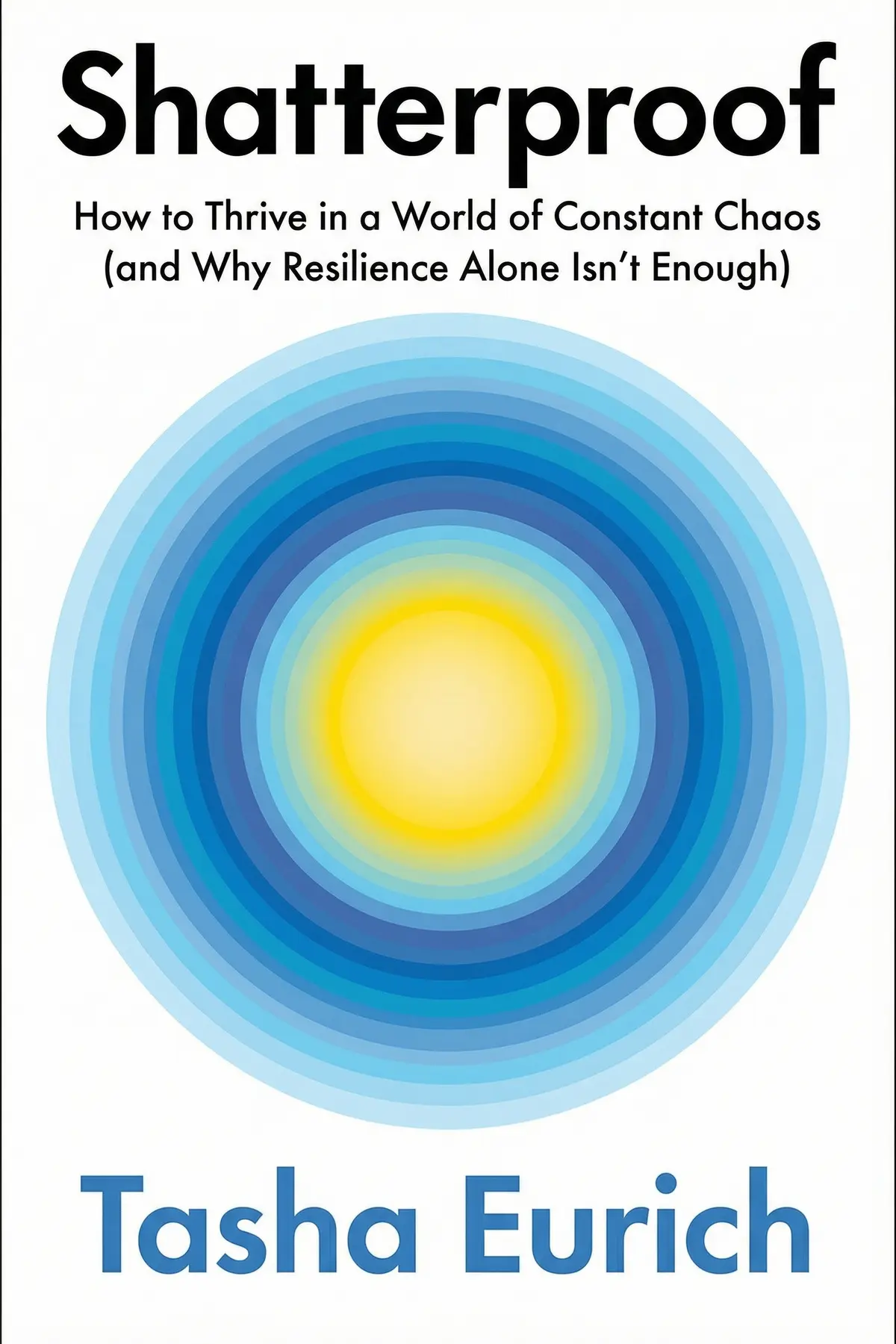
Table of Content
1. Introduction
2 min 13 sec
Imagine for a moment a high-powered professional who seems, from the outside, to be the very definition of success. She is the person everyone turns to in a crisis because she is unflappable, reliable, and seemingly immune to the pressures of a demanding career. She prides herself on her ability to take a hit, shake it off, and get right back into the fray. This is what we’ve been told resilience looks like: the ability to bounce back to your original shape no matter how hard you’re squeezed. But then, one night, the unthinkable happens. In the quiet of a hotel room, far from the eyes of colleagues, she collapses. It isn’t a physical injury, but a total systemic failure. The grit that once fueled her has turned into a heavy weight, and the tools she used to manage stress simply stop working. This was the exact experience of organizational psychologist Tasha Eurich, and it led her to a profound realization: in a world of endless, overlapping chaos, the traditional model of resilience has reached its breaking point.
We are currently living in what can only be described as a permanent state of disruption. Since roughly 2008, the pace of change has accelerated to a degree that our biological systems were never designed to handle. From the constant ping of digital notifications to global economic shifts and personal health scares, the pressure is relentless. Most of us respond to this by trying to be even more resilient, pushing ourselves harder and demanding more willpower from our tired minds. But what if the goal shouldn’t be to bounce back? What if the goal is to be transformed by the pressure into something even better than you were before? This is the core of the throughline we are exploring today. We are moving beyond the concept of resilience and into the realm of being shatterproof. This journey isn’t about denying the difficulty of our times, but about developing a new set of psychological skills that allow us to thrive in the middle of the storm. By the end of this exploration, you’ll understand why your current coping mechanisms might be failing you and, more importantly, how to build a foundation that actually gains strength from adversity. It’s time to stop just enduring and start growing forward.
2. Why Bouncing Back Is No Longer Enough
2 min 48 sec
Explore the biological and evolutionary reasons why our modern world overwhelms our natural stress responses, creating a ceiling for traditional resilience.
3. The Shift from Resilience to True Growth
2 min 37 sec
Learn the three essential mental shifts required to transform challenges into catalysts for meaningful life changes instead of just temporary fixes.
4. Decoding Your Internal Distress Signals
2 min 42 sec
Discover the first two steps of the shatterproof roadmap: learning to name your pain and identifying the external triggers that activate it.
5. Breaking the Cycle of Reactive Patterns
2 min 52 sec
Uncover the hidden ‘shadows’ that dictate your automatic stress responses and learn how to replace them with intentional ‘pivots’.
6. Satisfying the Three Pillars of Human Stability
2 min 41 sec
Explore the three fundamental psychological needs—confidence, choice, and connection—and practical strategies to nurture them daily.
7. Conclusion
1 min 50 sec
As we wrap up our look into the shatterproof philosophy, the most important thing to remember is that being shatterproof doesn’t mean you will never experience pain or that your life will be free from disruption. It means that when life inevitably brings chaos to your doorstep, you will have a different way of meeting it. We’ve seen how traditional resilience, while valuable, often reaches a ceiling in our modern world because it focuses on returning to a past state that may have already been unsustainable. By shifting our focus toward growth and transformation, we can turn the very things that threaten to break us into the tools that build us up.
The roadmap we’ve discussed—probing your pain, tracing your triggers, spotting your shadows, and picking your pivots—is not a one-time fix. It is a continuous practice of self-awareness and intentional action. It’s about becoming a student of your own reactions and a conscious architect of your own responses. When you focus on fulfilling your core needs for confidence, choice, and connection, you aren’t just building a shield against the world; you are building a life that is vibrant, flexible, and deeply rooted in who you actually are.
So, as you step back into the flow of your daily life, consider this: the next time you feel that familiar sense of overwhelm or the urge to just ‘grit your teeth and push through,’ stop for a moment. Take a breath. Scan your body for tension. Ask yourself what your pain is trying to tell you and what need isn’t being met. Instead of trying to bounce back to where you were, ask yourself how this moment can help you grow forward. You have the capacity to be more than just resilient. You have the capacity to be shatterproof. Use the chaos as your catalyst, and watch as you rebuild yourself into something stronger, wiser, and more capable than you ever imagined possible.
About this book
What is this book about?
In an era of relentless disruption, the old advice to simply be resilient is no longer working. We often find ourselves hitting a wall where grit and willpower aren't enough to handle the compounding stresses of work, life, and global instability. This summary introduces the concept of being shatterproof—a state where you move beyond merely surviving challenges to using them as fuel for personal evolution. By exploring the biological reasons why our brains struggle with constant change, the book provides a roadmap for internal awareness and strategic action. You will learn how to identify the hidden defense mechanisms that drain your energy and how to replace them with intentional choices. The promise is a more sustainable way of living that prioritizes your core psychological needs for confidence, autonomy, and belonging, ensuring that even the most chaotic times can become a catalyst for a better version of yourself.
Book Information
About the Author
Tasha Eurich
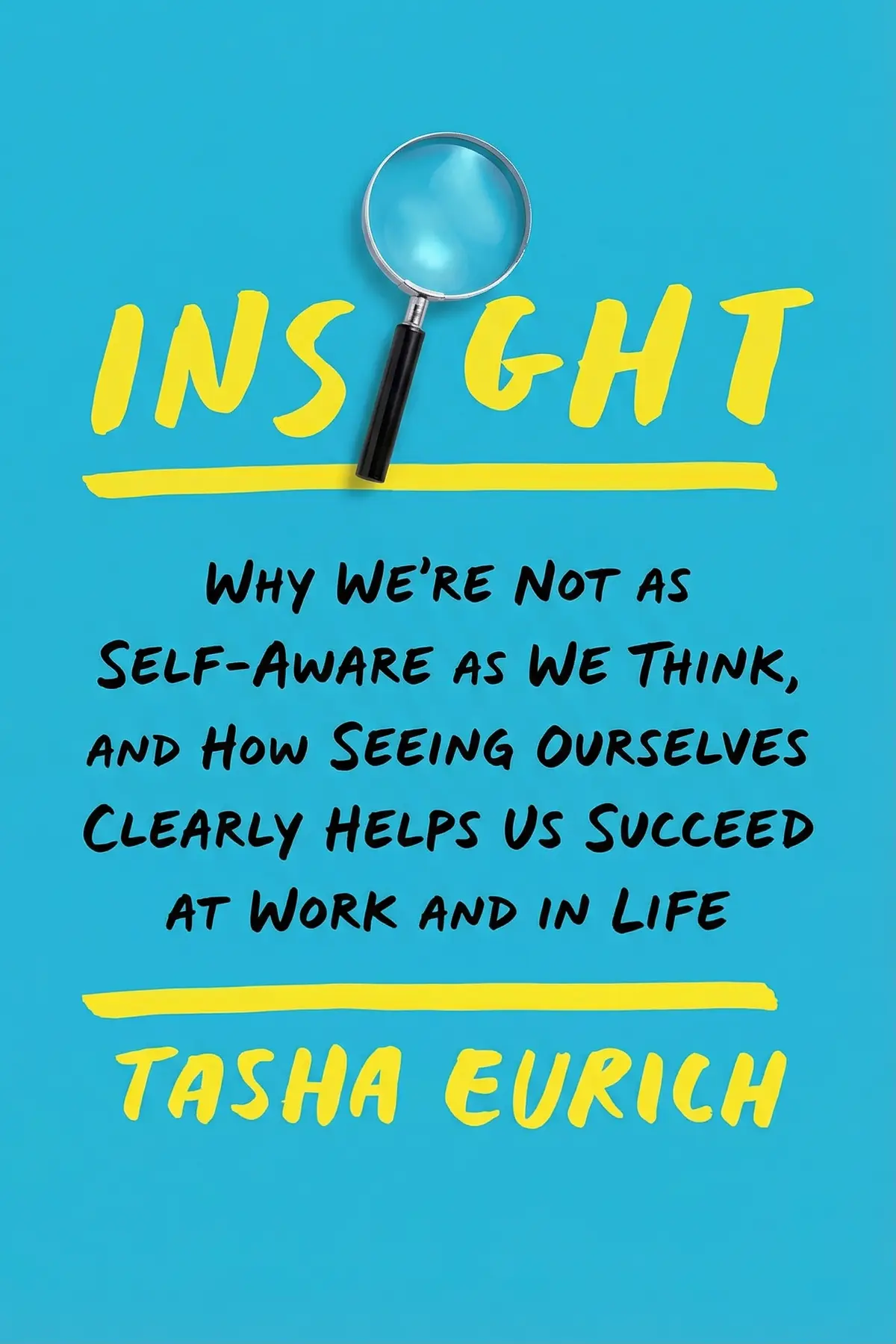
Dr. Tasha Eurich is a highly regarded organizational psychologist, researcher, and New York Times best-selling author. Her influential work on self-awareness and leadership includes acclaimed titles such as Insight and Bankable Leadership. Recognized by Thinkers50 as one of the world's most impactful coaches, she has shared her expertise with more than 40,000 leaders globally, working with major institutions ranging from Google and Walmart to the White House Leadership Development Program.
Ratings & Reviews
Ratings at a glance
What people think
Listeners find the book to be an empowering and thought-provoking read, particularly valuing how its psychological needs framework helps develop self-awareness. It earns high marks for its practical methodology and science-based evidence, with one listener emphasizing its special knack for weaving together engaging research. Additionally, listeners appreciate the book's pacing, with one noting it allows for significant self-examination, and consider it a must-read for professionals.
Top reviews
Elias
As someone who has worked in high-stress corporate environments for a decade, I’ve seen my share of 'resilience training' fail miserably. Eurich finally explains why: these programs often leave employees feeling more ashamed and stressed because they lack the structural support to actually thrive. Shatterproof flips the script by focusing on proactive choices and dampening negative self-talk. The structure of the book is fantastic, moving from the science of why resilience fails us to concrete tools for building a more stable life. I especially appreciated the deep dive into how our psychological needs must be met to truly grow from adversity. It’s rare to find a book that blends such compelling research with practical, actionable steps that you can use on Monday morning. This is a must-read for professionals who feel like they’re constantly running on a treadmill of burnout. Truly an insightful and empowering experience.
Show moreBo
The chapter on the limits of resilience alone made this worth the purchase price for me. Finally, an author admits that sometimes 'pushing through' is the worst thing you can do! Eurich’s approach to building a fulfilling life by prioritizing specific psychological needs is brilliant. I loved the balance of compelling research and personal stories, even if the personal stories were a bit intense at times. The book provides such a clear framework for making pivots in your life when things aren't working. It isn't just about being tough; it's about being smart and proactive. I’ve already started using some of the self-awareness exercises to check in on my stress levels. It feels like I finally have a toolkit that doesn't just tell me to 'be positive' while my life is on fire. Absolutely science-backed and incredibly practical.
Show moreNiphon
After hearing Tasha on a podcast, I was eager to see if her 'shatterproof' framework lived up to the hype, and I wasn't disappointed. This is one of the most thought-provoking books on personal growth I’ve read in years. It moves past the 'just be gritty' advice and looks at the actual psychological infrastructure we need to survive a chaotic world. The sections on making proactive choices and building a support system that actually works are pure gold. I loved that the advice is backed by real science, not just 'vibe-based' wellness tips. It helped me realize that I was focusing all my energy on surviving when I should have been focused on changing the things that were breaking me. If you’re feeling burned out or like you’re just 'pushing through,' stop everything and read this. It’s an empowering, refreshing, and deeply practical guide.
Show moreChamnong
This book is a vital wake-up call for anyone trapped in the endless 'bounce back' cycle that modern self-help culture promotes. Tasha Eurich argues that simply recovering from trauma isn't enough; we need a proactive strategy to avoid being shattered in the first place. I found the 'shatterproof' framework much more empowering than standard resilience training, which often feels like it's just asking you to endure more pain. The science-backed insights into our psychological needs provided a clear roadmap for self-examination that I hadn't found elsewhere. To be fair, some of the anecdotes about high-level medical research and nationwide doctor-shopping felt a bit out of reach for the average reader. Not everyone has those resources! However, the core message about taking control of your environment instead of just strengthening your 'resilience muscle' is transformative. It’s a solid, thought-provoking read that actually offers new tools for navigating chaos.
Show moreHang
Not what I expected, but maybe that's the point of the book. I went in looking for tips on how to be tougher, and I came out realizing I needed to change my situation instead of just my mindset. Eurich’s argument that resilience is like a rechargeable battery—and that we lose a bit of max capacity every time we're forced to bounce back—is haunting but very true. It explains why so many of us feel permanently exhausted even when we 'recover.' The writing style is very accessible, though it does get a bit repetitive in the middle sections. I found myself skimming some of the later anecdotes just to get to the actionable frameworks. Despite the fluff, the core psychological insights are top-tier. It's a refreshing alternative to the toxic-positivity crowd. Definitely worth your time if you're feeling stuck in a cycle of burnout.
Show moreTong
Eurich’s concept of the 'rechargeable battery' versus the traditional 'muscle' metaphor for resilience really clicked for me. It’s such a more accurate way to describe how stress actually feels in the real world. The book is well-paced and offers a great opportunity for deep self-examination. I especially liked the focus on the 'Control' aspect—learning how to optimize the outcomes of our decisions so we aren't just victims of circumstance. I did find the mentions of other 'psychobabble' authors a bit annoying, as it felt like the book was trying too hard to fit into a specific niche. But the actual data and the frameworks for connection were very solid. It’s a thoughtful, science-backed approach that offers a new path forward for anyone feeling overwhelmed by constant chaos. I’d recommend it to anyone in a leadership position.
Show moreAnong
Picked this up during a particularly brutal month at work, hoping for a magic pill to handle the stress. While there are definitely some good nuggets here, I couldn't help but feel like I’d heard a lot of this before. Eurich is a great writer, and her voice in the audiobook is very engaging, but the 'new' terminology felt a bit like rebranding existing concepts. For instance, much of the advice on competence and character mirrors the well-known 7 C’s of resilience that have been around for years. I also struggled with the pacing; the book felt like a long-form article that was stretched to meet a publisher's page count. The appendices are massive! That said, her battery metaphor—where we actually lose capacity every time we have to 'recharge'—was a total lightbulb moment for me. It’s worth a read if you’re new to the genre, but seasoned self-help readers might find it a bit repetitive.
Show morePenelope
Wait, is it just me, or does the cell phone metaphor in the beginning not actually make sense? The author uses a shattering phone to explain her concept, but it felt a bit forced. Look, Shatterproof isn't a bad book by any means, but it does suffer from a bit of 'TED Talk Syndrome.' You get a few really brilliant, science-backed ideas buried under a mountain of anecdotes and favorable nods to other popular psych authors like Brené Brown. I did appreciate the sections on managing negative self-talk and the importance of a support system. Those felt grounded and useful. But I was hoping for something more revolutionary given the bold title. If you can sift through the padding, there is value here, especially in the chapters regarding the limits of traditional resilience. It’s an okay read, just don’t expect a total reinvention of the wheel.
Show moreBoss
Finally got around to finishing the audiobook version and I have mixed feelings. Tasha Eurich is a fantastic narrator; she’s engaging and clearly knows her stuff. However, I think I would have gotten more out of a physical copy because there are so many exercises and assessments. Listening to them while driving just isn't the same. As for the content, it’s a bit of a mixed bag. Some of the strategies for cultivating self-awareness are excellent and science-backed, which I appreciate. On the other hand, the book feels quite padded with stories that don't always feel applicable to a normal person's life. The whole 'shatterproof' vs 'resilient' distinction felt a bit like splitting hairs at points. It’s a decent book with some helpful tidbits, but I’m not sure it lives up to the massive hype surrounding it.
Show moreRiley
Look, the truth is that most self-help books could be a long-form article, and Shatterproof isn't immune to that 'TED Talk' padding. I was really excited for a new take on resilience, but I found the first-person anecdotes to be more discouraging than encouraging. Reading about someone who can afford to shop for the best doctors in the country doesn't really help me manage my 80-hour work week. The book claims to be a revolutionary new way to thrive, but it feels like a lot of rebranded ideas from the 2010s. The appendices take up nearly half the book! I give it two stars because the battery metaphor is actually quite good, but the rest felt like fluff and repetitive stories meant to justify a 300-page hardcover. Frankly, you're better off just reading a summary of the main points online.
Show moreReaders also enjoyed
A Liberated Mind: How to Pivot Toward What Matters
Steven C. Hayes
59 Seconds: Change Your Life in Under a Minute
Richard Wiseman
ADHD an A-Z: Figuring It Out Step by Step
Leanne Maskell

AUDIO SUMMARY AVAILABLE
Listen to Shatterproof in 15 minutes
Get the key ideas from Shatterproof by Tasha Eurich, plus 5,000+ more titles in English and Thai.
- 5,000+ titles
- Listen as much as you want
- 7-day free trial
- Cancel anytime







