
30 min 25 sec
She/He/They/Me: An Interactive Guide to the Gender Binary
By Robyn Ryle
Robyn Ryle challenges the rigid binary of gender, offering a sociological exploration of how identity is assigned, performed, and reimagined across different cultures and histories to create a more inclusive future.
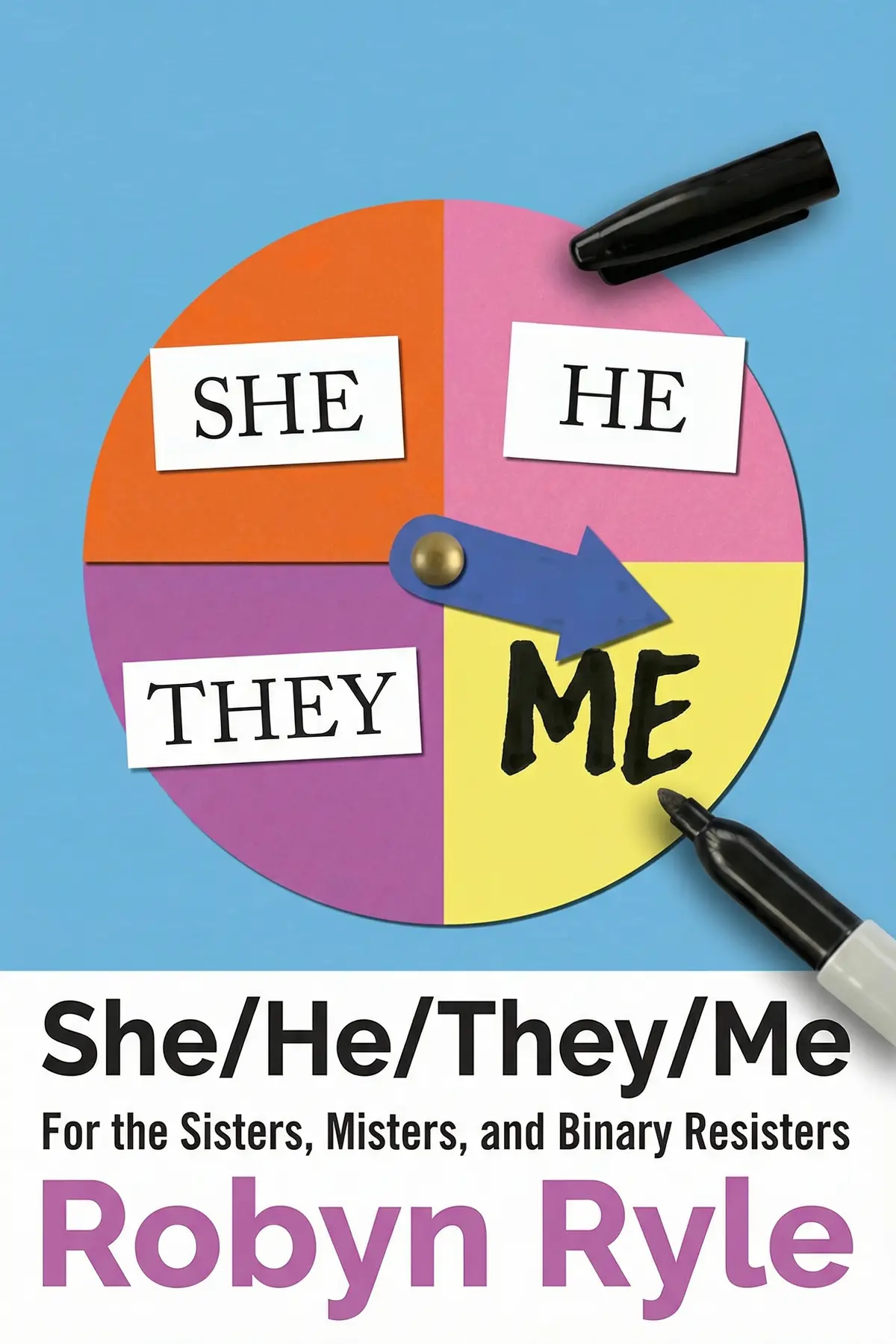
Table of Content
1. Introduction
1 min 51 sec
When we think about the world around us, we often assume that the most basic categories we use to organize people are fixed, natural, and universal. Perhaps no category feels more fundamental than gender. From the moment a child is born—and often long before—the first question asked is whether it’s a boy or a girl. This choice seems like a simple fork in the road, leading to two distinct lives, two sets of expectations, and two ways of being in the world. But what if that fork in the road isn’t the only path? What if the landscape of gender is actually a vast, sprawling territory with infinite directions to travel?
In this exploration of the ideas presented by Robyn Ryle, we are invited to set aside our preconceived notions and look at gender through a sociological lens. We’re going to treat gender not as a biological destiny, but as a complex social landscape. Think of this journey as a series of crossroads. At each junction, societies and individuals make choices about how to define themselves and others. Some paths are well-worn and familiar, like the traditional Western binary. Other paths are ancient, yet feel revolutionary to our modern ears. And still, other paths lead into a future we are only just beginning to imagine.
Over the course of this summary, we will dismantle the idea that there are only two ways to exist. we’ll look at cultures that recognize three, four, or even infinite genders. We’ll examine how power is distributed in different societies and how the very definition of what it means to be a man or a woman can change depending on who you are and where you live. By the end, the goal isn’t to find one final, perfect definition of gender, but to realize that the possibilities are nearly as endless as the human imagination itself. Let’s start by unpacking the baggage we’ve been carrying about what is “normal.”
2. Deconstructing the Binary Myth
2 min 28 sec
Traditional views often force us into a narrow box, but what happens when we realize that our ‘common sense’ about gender might actually be a collection of unexamined assumptions?
3. The Possibility of a Genderless Society
2 min 20 sec
Is it possible to live in a world where sex exists but gender doesn’t? Let’s explore how some cultures have prioritized seniority over the binary.
4. Beyond Two: One, Three, and Infinite Genders
2 min 24 sec
From the ‘one-gender’ model of ancient Greece to the ‘alyha’ of the Mohave, history proves that two categories are far from enough.
5. The Shifting Landscape of Masculinity
2 min 18 sec
What it meant to be a man in the 18th century is vastly different from today. Discover how class, race, and time redefine the ‘male’ experience.
6. How We Are Taught to Be Gendered
2 min 04 sec
Gender doesn’t just happen; it’s a learned behavior. Explore the fascinating world of socialization and how different cultures produce vastly different people.
7. The Architecture of Power: Patriarchy and Beyond
2 min 10 sec
Why do we teach children gender norms in the first place? The answer often lies in the distribution of power and the hidden structures of our society.
8. The Invisible Burdens: The Second and Third Shifts
2 min 09 sec
Equality isn’t just about who sits in parliament. It’s about who does the laundry, who manages the emotions, and who feels the pressure to look perfect.
9. Matriarchy and the Search for True Equality
2 min 17 sec
Is matriarchy just patriarchy in reverse? The evidence suggests that a woman-led society might prioritize consensus over dominance.
10. The Starting Point: Gender Assignment
2 min 03 sec
Before you can speak or walk, society has already given you a label. Discover the biological and social crossroads of gender assignment.
11. Policing the Body vs. Patient-Centered Care
1 min 59 sec
Should we ‘fix’ bodies that don’t fit the binary, or should we change our minds about what’s ‘normal’? Exploring the two paths of intersex medical care.
12. The Distinction Between Assignment and Identity
1 min 54 sec
What happens when the label you were given at birth doesn’t match who you are inside? Unpacking the journey of trans, nonbinary, and agender individuals.
13. Expression, Attraction, and the Vastness of Experience
2 min 16 sec
Gender is more than just who you are; it’s how you act and who you love. Discover the final pieces of the gender puzzle.
14. Conclusion
2 min 12 sec
As we conclude our journey across the diverse and sprawling landscape of gender, we find ourselves back where we started, but with a vastly different perspective. We began with the idea that gender is a simple binary, a ‘common sense’ truth dictated by biology. But through the lens of sociology and history, we have seen that this binary is just one small corner of a much larger map. We’ve discovered societies that function without gender, cultures that celebrate three or more genders, and historical eras where the very definition of ‘man’ and ‘woman’ was the opposite of what it is today.
We’ve learned that gender isn’t something we are born with, but something we are socialized into, reinforced by a complex system of rewards, punishments, and power dynamics. We’ve unmasked the hidden labor of the second and third shifts and explored the potential for more equitable power structures like matriarchy or even the total transcendence of gender categories. We’ve also seen the deeply personal side of this landscape, from the biological realities of intersex conditions to the courageous journeys of those whose identities and expressions challenge the status quo.
The most important takeaway from this exploration is that gender is not a cage, but a landscape of possibility. It is fluid, evolving, and deeply personal. When we realize that the ‘rules’ of gender are social constructs rather than laws of nature, we gain the power to question them. We can begin to build a world that is more inclusive, where the pressure to conform is replaced by the freedom to be authentic.
So, as you move back into your daily life, take this map with you. Look at the gendered expectations you face and the ones you place on others. Ask yourself: Is this path I’m on truly mine, or is it just the one I was told to follow? By embracing the complexity and the fluidity of gender, we open the door to a more compassionate and free society for everyone—sisters, misters, and binary resisters alike. The horizon is wide, and the next step is yours to take.
About this book
What is this book about?
This summary dives deep into the complex landscape of gender, moving far beyond the simple male-female divide. It explores how our understanding of masculinity and femininity is shaped by society rather than just biology. By looking at historical examples, from the ancient Greeks to the Yoruba people of Africa, it reveals that gender isn't a fixed truth but a fluid concept that varies across time and space. The promise of this exploration is a complete reframing of how we view ourselves and others. It unpacks the concepts of gender socialization, patriarchy, and the hidden labor often expected of women. Furthermore, it provides a sensitive look at intersex realities and the distinction between gender assignment, identity, and expression. Ultimately, the book offers a roadmap for understanding the vast spectrum of human experience and the possibility of a world where individuals are free to define themselves on their own terms.
Book Information
About the Author
Robyn Ryle
Robyn Ryle is a professor of sociology and gender studies at Hanover College in Indiana. She is the author of the textbook Questioning Gender: A Sociological Exploration. Her academic writing has been featured in SAGE Publications and the Wiley-Blackwell Encyclopedia of Gender and Sexuality. She also writes for general audiences in publications such as Gawker and StorySouth.
Ratings & Reviews
Ratings at a glance
What people think
Listeners view the "choose-your-own-adventure" structure as a creative and immersive method for exploring the intricate nature of identity and social development. Though views on the non-binary narrative tracks are mixed—with some listeners sensing the decision paths ultimately return to conventional structures—many value the extensive amount of international and historical data included. Furthermore, they describe the work as an ideal introductory guide for students or individuals beginning gender studies, and one listener pointed out its capacity for offering deep understanding via a customized demographic story. In addition, listeners prize the emphasis on cultivating compassion, noting that the variety of cultural illustrations assists in expanding their worldview.
Top reviews
Yuki
The chapter on global history and diverse gender expressions totally shifted my perspective on what 'normal' even means. Ryle uses this incredible metaphor of a landscape to describe gender, and it makes so much sense when you see how different societies chart their courses. I especially loved reading about the Balkan Sworn Virgins and how status can be tied to things other than biological sex. Frankly, this book is a must-read for anyone who feels trapped by the roles society forces on them from birth. It builds from the ground up, starting with simple definitions and moving into the nuanced depths of patriarchy and androcentrism. It’s original, it’s empathetic, and it’s unlike any other non-fiction book I’ve ever held. I’ve already recommended it to several friends who are teachers.
Show moreSaovapa
Finally got around to reading Ryle’s work, and the level of research into the social construction of gender is just stunning. I spent hours going back to prior chapters to see how a single choice, like geographic location or family support, would ripple through a person's life. The book doesn't just tell you that gender is complicated; it makes you live through those complications. I found the section on the Awa people of New Guinea and their initiation rituals to be a powerful example of how 'manhood' is earned rather than just assigned at birth. This book is a brilliant exercise in perspective-taking. It encourages you to step out of your own shoes and realize that your version of 'normal' is just one of many possibilities. It’s deeply moving and incredibly smart.
Show moreSuthinee
Picked this up because the concept of a 'choose-your-own-adventure' gender study sounded absolutely brilliant. It’s essentially a gamified sociology textbook that asks you to navigate the complex crossroads of identity. I found the section on the Mohave people and the 'alyha' category particularly enlightening, as it challenges the Western binary we take for granted. The author does a great job of explaining how we need to 'lose our baggage' before we can truly understand gender as a landscape rather than a fixed point. My only gripe is that some of the paths felt a bit repetitive after a while. However, as an introductory text for someone who is just starting to question social norms, it is incredibly effective and engaging. It encourages a lot of necessary empathy.
Show moreConnor
After hearing so much about this in my sociology class, I finally dove into the different paths and found myself pleasantly surprised. The author was actually one of my favorite professors, and her voice really shines through in the way she explains how patriarchy prepares boys for power and girls for care. I took several 'adventures'—one as my actual self and others as someone completely different. It was eye-opening to read specifically about the experiences of a disabled person of color in a different country versus a white cisgender woman in the US. The scope is impressive. While there are some minor contradictions in the later chapters where the choices blur together, the overall message of seeking empathy for others is very clear. It’s a creative way to learn.
Show moreKet
To be fair, the execution of the branching logic isn't perfect, but the ambition behind this project is highly commendable. Ryle manages to turn a dense topic like sociology into something that feels active and urgent. I loved the emphasis on how we need to 'lighten our load' by setting aside black-and-white assumptions before we start reading. It makes the information much easier to digest. Even when the paths overlapped, the quality of the writing kept me engaged. It’s a great book for people who find traditional non-fiction a bit dry and want something more interactive. Definitely check it out if you want to broaden your cultural horizons. You'll learn something new every time you start a new path.
Show moreJiraporn
Ever wonder why we get so stuck on the idea that there are only two ways to exist? It is a heavy question. Robyn Ryle takes a big swing here by using an interactive structure to deconstruct those 'common sense' gender assumptions we all grew up with. Look, the research into global cultures like the Hijras in India is fascinating and well-cited. It really opens your eyes to the fact that gender is social, not just biological. But I have to be honest—the technical layout of the 'adventures' is a bit of a mess. I found several spots where my previous choices were totally ignored by the next chapter. It’s hard to stay immersed when the book forgets who you decided to be three pages ago. It is a solid 3-star read for the information alone, but the 'adventure' part needs a lot more playtesting.
Show moreLayla
As someone who has studied gender for years, I found this to be a bit of a mixed bag. On one hand, the way it addresses the 'common sense' understanding of gender as a reductive mess of ideas is spot on. It is a fantastic teaching tool for undergrads or high school students. On the other hand, the writing can feel a bit simplistic if you already know the difference between gender identity and sexual orientation. I appreciate the focus on how some countries like Rwanda are leading in political equality, but the 'choose your own' format feels a little too much like a gimmick at times. It is a quick, fun read, but don't expect a deep academic dive. It's a primer, nothing more, and it occasionally ignores the complexities of intersex plotlines.
Show moreWatcharaporn
Not what I expected, but still worth a look if you're curious about the social construction of identity. The truth is, the 'choose-your-own-adventure' style is more of a hook than a functional system. Most paths lead back to the same general information about how society views men and women. I did enjoy the sections on 'infinite genders' and the idea that we all embody a unique version of gender every day. That felt very modern and validating. However, the book struggles to balance being a personal journey with being an educational textbook. It tries to be everything for everyone and ends up feeling a bit thin in certain areas. It's a decent gift for a curious teenager, but seasoned readers might find it lacking.
Show moreDavid
Wildly disappointing execution for a book that promises so much inclusivity right on the cover. As a non-binary person, I was excited to see how my specific experience would be charted through the different cultural lenses mentioned in the intro. Instead, I found that the branching logic is deeply flawed. No matter what path I took, the narrative seemed to eventually collapse back into traditional binary frameworks or cisgender experiences. It felt like the book was trying to 'educate' people about us without actually being *for* us. If you pick the path of family rejection, for example, the subsequent pages don't really reflect the nuances of a queer identity. It’s a neat gimmick, but it lacks the depth required for such a heavy subject. Great for a basic primer, I guess, but frustrating for anyone actually living these lives.
Show moreNim
Truly, this book is a mess of technical errors and problematic logic that left me more frustrated than informed. I picked the non-binary path and was immediately met with a layout that felt like it was purging my identity just to get back to a binary script. The title 'She/He/They/Me' implies a journey that respects all those pronouns, yet the 'They' path feels like an afterthought. There are so many inaccuracies regarding how branching choices should work. If I choose acceptance, the book shouldn't treat me like I’m in a crisis two pages later. It’s reductive. It feels like it was written by someone who understands the theory of gender but has never actually spoken to a non-binary person about their life. Total waste of time for members of the queer community.
Show moreReaders also enjoyed

A Biography of Loneliness: The History of an Emotion
Fay Bound Alberti
A Force for Good: The Dalai Lama's Vision for Our World
Daniel Goleman
A Room of One’s Own
Virginia Woolf
Abolish Rent: How Tenants Can End the Housing Crisis
Tracy Rosenthal
Abortion: Our Bodies, Their Lies, and the Truths We Use to
Jessica Valenti
Afropean: Notes From Black Europe
Johny Pitts
AUDIO SUMMARY AVAILABLE
Listen to She/He/They/Me in 15 minutes
Get the key ideas from She/He/They/Me by Robyn Ryle, plus 5,000+ more titles in English and Thai.
- 5,000+ titles
- Listen as much as you want
- 7-day free trial
- Cancel anytime







