
21 min 02 sec
Sizing People Up: A Veteran FBI Agent’s User Manual for Behavior Prediction
A former FBI behavior expert reveals how to predict human actions by analyzing incentives, language patterns, and emotional stability to build secure, trustworthy relationships in every area of life.
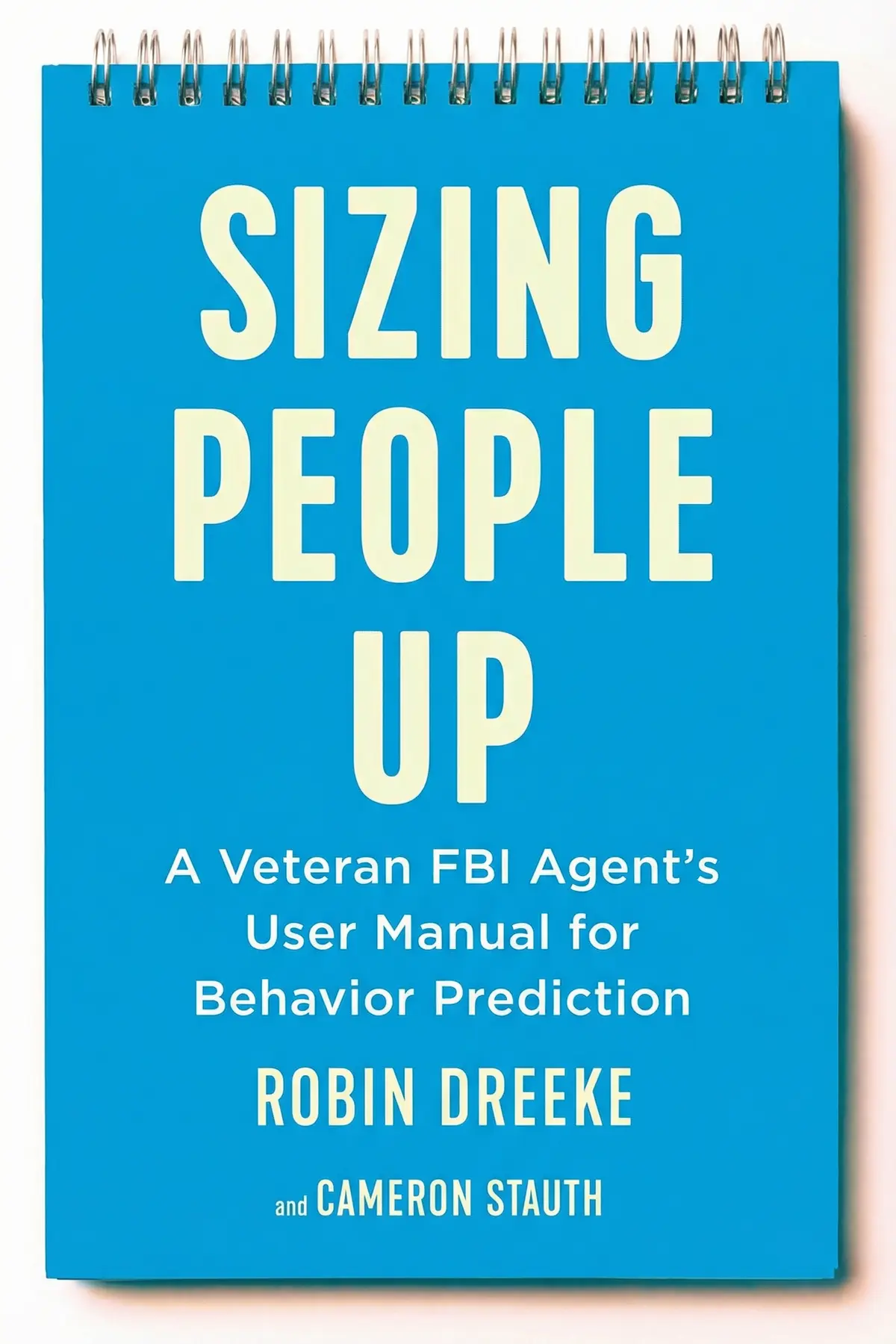
Table of Content
1. Introduction
1 min 25 sec
We often like to think of ourselves as independent, but the reality is that our lives are woven together with the lives of everyone we meet. From the coworkers we rely on for a project to the partners we choose for a lifetime, our success and happiness are rarely solo endeavors. They are the result of successful teamwork. Yet, this dependency comes with a significant risk: not everyone is a good teammate. There are people who will support you through every challenge, and there are those who will abandon you the moment you’re no longer convenient.
Learning to tell the difference between these two groups is perhaps the most important skill you can develop. In the past, you might have relied on your ‘gut feeling’ or a vague sense of intuition to decide who to trust. But as you’ll soon see, intuition is a blunt instrument that often leads us astray. To truly understand the people around you, you need a more rigorous, data-driven approach.
This is where the expertise of a veteran FBI behavior analyst comes into play. By looking at the subtle signals people broadcast through their language, their past actions, and their reactions to stress, you can move beyond guesswork. In this summary, we will explore the framework for predicting human behavior, allowing you to identify the champions who will help you succeed and the unreliable individuals you should keep at a distance. You’ll learn how to see past the masks people wear and uncover the true character beneath, ensuring that the people you hold onto are the ones who will actually hold onto you.
2. Predicting Behavior Through Circumstance and Consequence
2 min 21 sec
Discover why power often makes people unpredictable and why vulnerability provides a surprising level of behavioral clarity in your daily interactions.
3. The Win-Win Alignment of Personal Champions
2 min 09 sec
Learn to identify the ‘personal champions’ in your life by looking for the subtle signs of shared interests and genuine investment.
4. The Reciprocity of Trust and Ego Suspension
2 min 25 sec
Building trust is a two-way street that requires you to master the art of making others feel safe, valued, and understood.
5. Decoding Reliability Beyond the Professional Mask
2 min 16 sec
Traditional interviews and resumes often fail to show the truth, but looking at a person’s ‘whole life’ reveals their true level of diligence.
6. Identifying Behavioral Patterns of Loyalty and Character
2 min 12 sec
Words are cheap, but patterns of behavior are incredibly difficult to fake. Learn how to spot true loyalty and identify the red flag of gossip.
7. The Language of Integrity and Confidence
2 min 11 sec
The way people speak often reveals more than the words themselves. Learn why simplicity is a sign of trust while complexity can hide insecurity.
8. The Vulnerability Test: Assessing the Capacity to Apologize
1 min 53 sec
A person’s ability to take responsibility for their mistakes is the ultimate litmus test for their trustworthiness and respect for you.
9. Identifying the Anatomy of Emotional Stability
2 min 33 sec
Recognize the ‘3-P’ personality traits to avoid the contagious fear and chaos that emotionally unstable individuals can bring into your life.
10. Conclusion
1 min 37 sec
The ability to size people up is not a mystical power or a talent you’re born with; it is a skill you develop through observation and the systematic collection of behavioral data. As we’ve seen, the key to predicting what someone will do lies in looking beyond the surface. You must consider the circumstances that shape their choices, the incentives that drive their actions, and the patterns that define their character over time.
True trust is built on alignment. When you find people whose interests match yours, who use clear and moderate language, and who have the courage to be vulnerable and apologize, you have found the building blocks of a great team. On the other hand, by recognizing the red flags of ‘consequence immunity,’ the toxic nature of gossip, and the instability of the 3-P personality, you can protect yourself from the betrayal and chaos that come from misplaced faith.
As you move forward, remember that the most predictable thing about human beings is that they will almost always act in what they perceive to be their own best interests. This isn’t a reason for cynicism; it’s a tool for clarity. If you want to know how someone will act, simply look at what they want. Often, the easiest way to find this out is to ask them. By aligning your goals with the goals of those around you and by fostering an environment of ego-free validation, you can build a network of allies who are as invested in your success as you are. Use these tools not just to judge others, but to become the kind of reliable, transparent, and stable person that others want to size up and keep close. Trust is the currency of a successful life, and now you have the manual to spend it wisely.
About this book
What is this book about?
Have you ever been blindsided by a friend’s betrayal or a colleague’s sudden lack of support? Sizing People Up addresses the universal struggle of determining who is truly worthy of our trust. Written by a veteran of the FBI’s Behavioral Analysis Program, the book shifts the focus from gut feelings and intuition—which are often wrong—to a data-driven approach based on observable behavior and environmental context. The core promise of this guide is to turn the unpredictable world of human interaction into something manageable and predictable. By learning to identify specific indicators of reliability, such as how someone uses language or how they react to their own mistakes, you can move past the social masks people wear. The book teaches readers how to align their interests with others, how to foster reciprocity through ego suspension, and how to spot the red flags of emotional instability before they cause damage. Ultimately, it provides a manual for choosing better partners, employees, and friends, ensuring that your inner circle is built on a foundation of genuine integrity.
Book Information
About the Author
Robin Dreeke
Robin Dreeke is the former head of the FBI’s Behavioral Analysis Program, bringing over three decades of experience in the science of human behavior and interpersonal relationships to his work. He is the founder and president of People Formula, LLC, a consultancy dedicated to helping individuals and organizations master communication and rapport-building. Cameron Stauth is a respected author and journalist who focuses on nonfiction and science writing, specializing in making complex behavioral concepts accessible to a broad audience.
Ratings & Reviews
Ratings at a glance
What people think
Listeners appreciate how this work provides a distinctive viewpoint on human conduct, rooted in the author’s significant background within FBI counterintelligence. Although some listeners believe the high volume of autobiographical stories can sometimes distract from the primary teachings, they find the actionable system for assessing reliability and forecasting behavior via logical analysis highly valuable. Furthermore, listeners find the guide's strategies for establishing career partnerships and uncovering shared advantages in corporate environments helpful. They also highlight the utility of the detailed behavioral indicators shared, as one listener points out that the author’s characterization of trust as "predictability, not morality" offers an especially beneficial change in mindset.
Top reviews
Moo
Wow. This book completely changed how I approach networking and building trust in my industry. Instead of trying to "read" people like a psychic, Dreeke teaches you how to gather information and look for patterns of past behavior. The idea that "actionable trust" is built on competence and commitment rather than just being a "nice person" was a huge eye-opener for me. I’ve read a lot of body language books, but this one goes much deeper into the psychological motivations that drive people to be either loyal or deceitful. The anecdotes about foreign diplomats were absolutely fascinating and helped illustrate how to apply these rules when the stakes are incredibly high. If you want a logical, evidence-based way to navigate human relationships, this is the definitive guide to doing it right.
Show moreVimolwan
Not what I expected, but in the best way possible. I thought this would be a book about "mind games," but it’s actually a very ethical guide on how to be a better leader and partner. Dreeke’s "generosity" approach to trust—where you lead with value and look for win-win scenarios—is a refreshing take in a world that often feels transactional. The behavioral tells he describes are nuanced and go far beyond the typical "crossed arms means they're closed off" clichés you see everywhere else. I especially appreciated the sections on how to spot a master manipulator who uses "smooth talk" to hide their lack of substance. This is a must-read for anyone in a leadership position who needs to build a reliable team. It’s practical, well-researched, and backed by years of real-world experience in the highest levels of government.
Show moreKet
Finally got around to reading this, and I have to say, the concept of "predictability vs. morality" is worth the price of the book alone. Most of us get burned because we assume "good" people will do what they say, but Dreeke argues we should only trust people to act in their own best interests. This rational approach to human behavior takes the emotion out of the equation, which is exactly what I needed for my professional life. The specific tells regarding verbal patterns, like people using "simple language" when they are being honest, were particularly helpful for my daily meetings. It’s true that some of the stories are a bit long-winded, but the underlying framework is solid and easy to apply once you get the hang of it. I’d recommend this to anyone who manages a team or deals with high-level negotiations.
Show moreWaree
As someone who works in sales, I found the strategies for identifying mutual benefit and building quick rapport to be highly effective. Dreeke’s background in the FBI Behavioral Analysis Program gives him a level of credibility that most "business gurus" just don't have. He explains how to look for "verifiable confidence" and distinguish it from the fake bravado that many manipulators use to get ahead. While some reviewers find the anecdotes distracting, I thought they provided necessary context for how these high-stakes techniques work in the field. My only real complaint is that the book can feel a bit repetitive, as if the authors were trying to hit a specific word count. Regardless, I’ve already started using the "rational observation" techniques, and they’ve definitely helped me size up potential clients more accurately.
Show moreSiraporn
Frankly, I wasn't sure if a book by an FBI agent would be applicable to my life, but the insights into emotional maturity and consistency were spot on. Dreeke emphasizes that the most dangerous people aren't necessarily the "evil" ones, but the inconsistent ones who lack a stable sense of self. Learning to spot those subtle signs of desperation or lack of commitment has already saved me from a potentially bad partnership. The writing is clear, and the breakdown of "tells" for both positive and negative behavior is easy to follow, even if some of it feels like common sense. It’s a great manual for anyone who wants to stop relying on "gut feelings" and start using actual data to make decisions about people. It’s not perfect, but it’s a very solid four-star read for the practical value it provides.
Show moreRungtip
Ever wonder how an FBI agent decides who to trust in a room full of foreign spies? This book attempts to answer that, though it struggles with a dry, academic tone that clashes with its thriller-style anecdotes. I appreciated the shift in defining trust not as a moral quality, but as "predictability," which is a much more useful way to look at professional colleagues. Dreeke breaks down his system into six signs of reliability, and while the logic is sound, the delivery feels a bit like a lecture. Some stories are fascinating, particularly the ones involving counterintelligence, but they often drag on long after the point has been made. It’s a decent resource if you can filter out the filler, but it requires some patience to extract the actual nuggets of wisdom. Not ground-breaking, but certainly offers a unique perspective on human behavior.
Show moreRania
The chapter on "Investing in Others' Success" was probably the highlight for me, as it offers a practical way to build alliances in a competitive environment. However, the rest of the book is a bit of a mixed bag of psychology, personal opinions, and "good advice" from a retired agent. It’s one of those books where you find yourself highlighting a few great quotes while skimming through twenty pages of repetitive examples. I liked the idea that we should ignore our own ego to see how others perceive us, as that kind of self-awareness is rare. Still, the writing style is somewhat clunky and feels like it needed a much tighter edit to keep the momentum going. It’s worth a read if you’re interested in behavioral analysis, but don't expect it to completely change how you see the world.
Show moreAiden
Picked this up expecting a tactical guide on reading people, but the execution really missed the mark for me. Dreeke spends so much time talking about his "exciting" career preventing World War III that the actual "how-to" gets buried under a mountain of ego. He presents himself as a purely rational observer, yet the writing is highly opinionated and sometimes emotionally charged, especially when he discusses international relations. The framework for sizing people up relies heavily on the assumption that everyone acts with total consistency, which simply isn't how humans work in the real world. I found the "tells" he provides, like a manager leaving you out of meetings being a bad sign, to be incredibly basic. It’s not a terrible read if you like spy stories, but as a practical manual for life, it’s underwhelming and bloated.
Show moreLillian
After hearing Dreeke on a podcast, I thought this would be a game-changer for my social interactions, but it’s clearly written for corporate ladder climbers. The advice feels very specific to high-stakes business alliances and international diplomacy rather than everyday relationships for a normal person. Most of the "behavioral tells" are things you’d pick up naturally after working in any office for six months, like noticing if someone avoids eye contact or uses passive-aggressive language. There’s a lot of focus on "trust transference" and "mutual benefit" that feels a bit cold and calculating when applied to real life. To be fair, the section on why people gossip was interesting, but not enough to justify the rest of the slog. I really wanted to like this more, but it felt like a missed opportunity to translate FBI skills into something universally useful.
Show moreUbolwan
This book was an absolute chore to get through because it felt like a single magazine article stretched into hundreds of pages. While Dreeke clearly has an impressive background in FBI counterintelligence, the constant personal anecdotes serve more as padding than actual educational material. I was looking for a deep dive into non-verbal communication, but instead, I got vague stories that felt overcomplicated and frankly forgettable. The core advice—to look for consistent behavior and mutual benefit—is basically common sense that most adults have already learned through painful life experience. It’s frustrating when a professional with this much expertise produces something that feels like a repetitive PowerPoint presentation designed for corporate seminars. If you've ever been betrayed by someone, you likely already know these signs better than this manual explains them. Save your time and just look up an interview with the author online instead.
Show moreFeatured in
Readers also enjoyed
AUDIO SUMMARY AVAILABLE
Listen to Sizing People Up in 15 minutes
Get the key ideas from Sizing People Up by Robin Dreeke, plus 5,000+ more titles in English and Thai.
- 5,000+ titles
- Listen as much as you want
- 7-day free trial
- Cancel anytime







