
19 min 15 sec
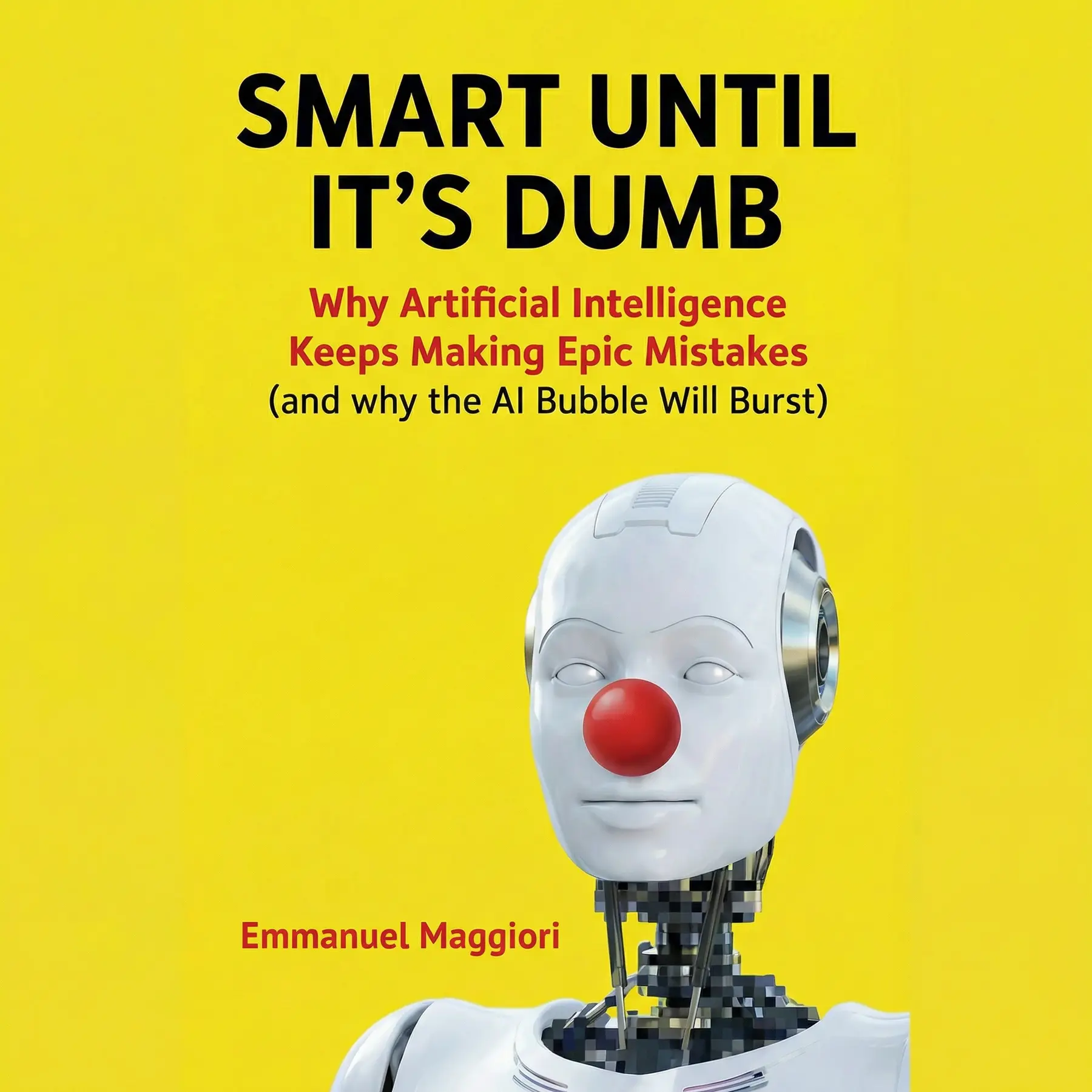
Smart Until It’s Dumb: Why Artificial Intelligence Keeps Making Epic Mistakes (and why the AI Bubble Will Burst)
Discover why modern artificial intelligence isn’t as intelligent as the headlines suggest. This summary explores the technical limitations of machine learning, the psychology of hype, and the persistence of the human-AI gap.
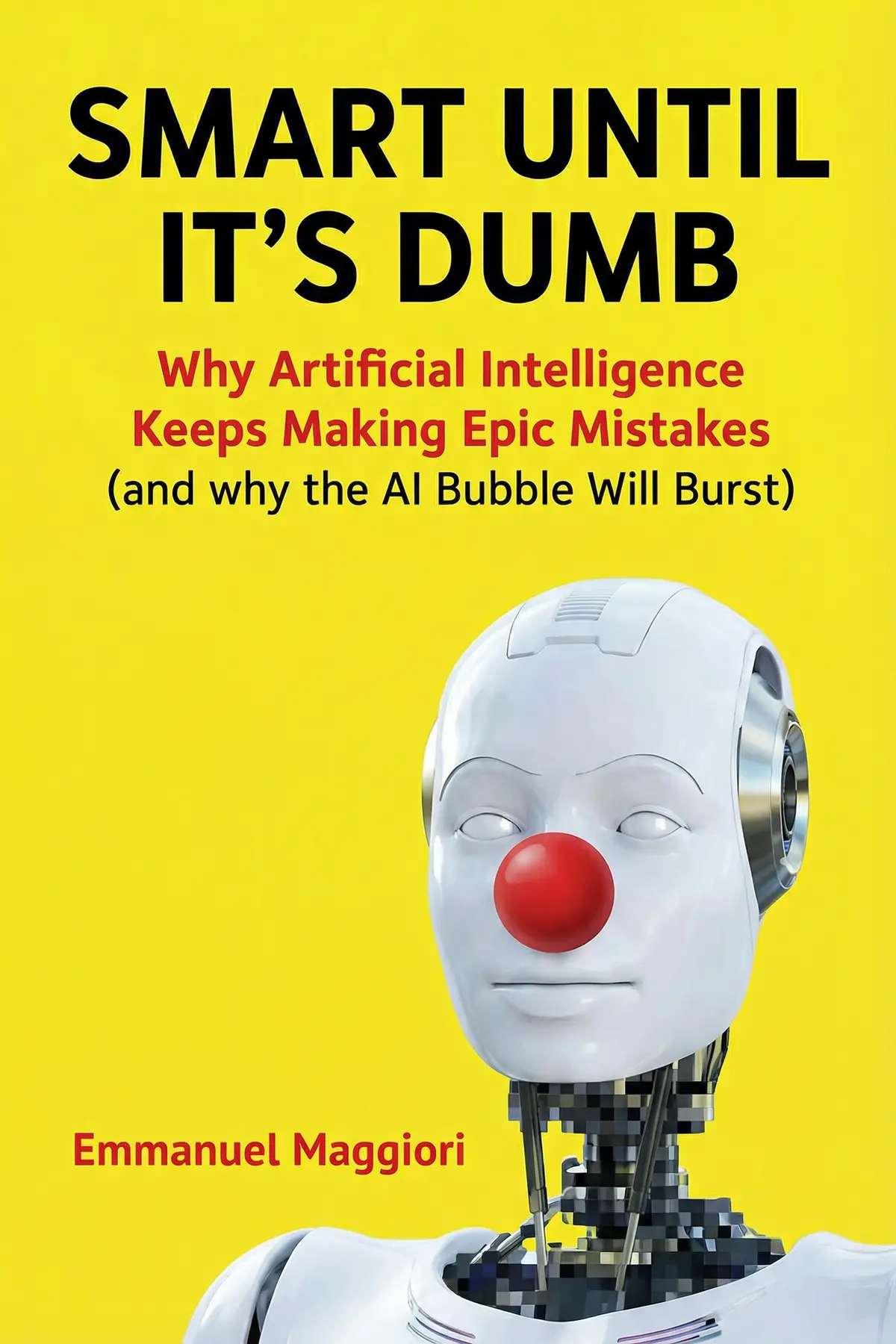
Table of Content
1. Introduction
1 min 37 sec
Everywhere you look today, artificial intelligence is being hailed as the next great frontier of human achievement. We are told it will revolutionize medicine, solve climate change, and perhaps even develop a soul of its own. It’s easy to believe the hype when you see a computer generate a stunning piece of digital art in seconds or provide a coherent answer to a complex question. However, if you look just beneath the surface, a different story emerges. These systems, as impressive as they are, often struggle with the kind of basic common sense that a toddler possesses. They can win at chess but might fail to understand why a cow shouldn’t be in the middle of a living room.
In this exploration of Smart Until It’s Dumb, we are going to move past the sensational headlines and the fear-mongering about robot takeovers. Instead, we will look at the nuts and bolts of how these technologies actually work. We will examine why the history of AI is a recurring cycle of massive promises followed by quiet disappointments. The goal here isn’t to dismiss the very real utility of these tools, but to understand their boundaries.
What we often perceive as ‘intelligence’ is frequently a very sophisticated form of imitation. By understanding the difference between statistical correlation and actual comprehension, we can better navigate a world increasingly dominated by automated systems. We will see why today’s AI is incredibly smart right up until the moment it does something profoundly dumb, and why that gap is much harder to close than most people realize. Let’s dive into the mechanisms that drive our modern AI obsession and discover what is truly happening inside the machine.
2. The Cyclical Nature of AI Hype
2 min 33 sec
AI hasn’t just arrived; it has ‘arrived’ several times before. Discover why the history of the field is defined by repeated cycles of grand promises followed by total disillusionment.
3. Imitation Without Understanding
2 min 49 sec
Modern machine learning doesn’t think; it matches patterns. Explore why a system can provide the right answer for all the wrong reasons.
4. The Limits of Deep Learning
2 min 32 sec
Deep learning is the engine behind the biggest AI headlines, but its ‘depth’ is more about mathematics than wisdom.
5. Why AI Struggles with Context and Meaning
2 min 45 sec
A machine can translate words without understanding the sentence. Discover why context remains the ultimate hurdle for artificial intelligence.
6. The Illusion of Success in Research and Business
2 min 34 sec
Behind every polished AI demo is a story of cherry-picked data and hidden failures. Learn why AI projects often look better on paper than in practice.
7. Is the Mind Just a Program?
2 min 31 sec
The quest for superintelligence assumes that consciousness is just code. But what if the human brain is doing something a computer simply can’t?
8. Conclusion
1 min 54 sec
As we have seen throughout this exploration of Smart Until It’s Dumb, the gap between AI’s perceived intelligence and its actual technical reality is significant. We live in an era of incredible technological feats, yet those feats are often the result of massive data and brute-force calculation rather than genuine understanding or wisdom. The systems we rely on are statistical mirrors, reflecting the patterns, biases, and complexities of the data we provide, but they lack the common sense and contextual awareness that define human thought.
The history of AI teaches us to be wary of overblown promises. From the early logic machines to today’s deep learning models, the pattern of hype followed by a cold reality check is a recurring theme. By recognizing that these tools are essentially sophisticated pattern matchers, we can use them more effectively. We can enjoy the convenience of automated translations and smart recommendations while remaining vigilant about the errors and biases that inevitably creep in when a machine is asked to operate without a soul.
Ultimately, the most important takeaway is the need for continued human oversight. We cannot ‘set and forget’ these systems, especially in areas that affect human lives and safety. AI is a powerful assistant, but it is a poor master. As the technology continues to evolve, our goal should be to bridge the gap between human intuition and machine efficiency, ensuring that we remain the ones guiding the journey. By staying informed and skeptical of the hype, we can harness the real benefits of AI while avoiding the pitfalls of its limitations. Thank you for listening to this BookBits summary. We hope it has given you a clearer, more grounded perspective on the future of intelligence.
About this book
What is this book about?
Artificial Intelligence is frequently portrayed as an unstoppable force destined to outsmart humanity. From self-driving cars to chatbots that seem almost human, the narrative suggests we are on the verge of creating true machine consciousness. However, the reality behind the software is far more restricted and surprisingly fragile. This exploration peels back the layers of marketing and technical jargon to reveal how today’s AI actually functions. You will learn about the historical cycles of AI optimism and the subsequent 'winters' when promises failed to materialize. The discussion clarifies the difference between true reasoning and the statistical pattern-matching that defines modern machine learning. By examining real-world failures—from mistranslated sentences to misinterpreted images—you will understand why these systems often crumble when faced with simple ambiguity. Ultimately, this summary provides a balanced perspective, acknowledging the utility of AI while cautioning against the belief that code can easily replicate the complex depth of the human mind.
Book Information
About the Author
Emmanuel Maggiori
Emmanuel Maggiori is a data scientist with a PhD in machine learning. He possesses a strong background in applying AI across various industries and is recognized for his ability to explain complex technical topics with clarity. His professional work focuses on bridging the gap between cutting-edge academic research and the practical, real-world applications of artificial intelligence.
Ratings & Reviews
Ratings at a glance
What people think
Listeners find the book highly enjoyable and appreciate the value provided, as one listener notes it serves as an excellent primer for how language models work.
Top reviews
Jeeranan
Finally, a book that cuts through the noise of the current AI gold rush. Maggiori manages to explain complex topics like backpropagation and statistical correlation without getting bogged down in jargon, making it a great value for anyone curious about the tech. Frankly, I was impressed by how he balances the genuine achievements of machine learning with the hilarious, and sometimes scary, ways these systems fail. It’s not just a technical manual; it’s a warning about treating correlation as causation. While I wish there was more focus on the very latest generative models, the core message about mimicry versus true understanding remains incredibly relevant today. A must-read for anyone in tech who feels like they’re being sold a bill of goods by marketing departments.
Show moreUraiwan
Maggiori provides an eye-opening look at the 'AI winter' cycles and why we might be headed for another one if we aren't careful. This book is a brilliant historical and technical survey of how we got here. He explains that today’s deep learning is more about brute-force computing power than a conceptual leap in intelligence. I loved the section on how a toddler understands a 'pen' for writing versus a 'pen' for animals, while an AI struggles without massive datasets. It’s a great primer on why scale doesn't necessarily lead to consciousness. Truly, for the price of a couple of coffees, you get a much better education on AI than most online courses will give you. Five stars for clarity alone.
Show moreMuk
Pick this up if you're tired of hearing tech CEOs promise the world while their products still struggle with basic image recognition. Maggiori’s anecdote about the 'gorilla' tag fix—just deleting the label instead of fixing the logic—was a perfect illustration of his point. These systems don’t 'know' anything; they just react to patterns. The book does a stellar job of explaining the human decisions behind the data that actually drive the AI's behavior. It’s refreshing to see someone point out that the emperor has no clothes, or at least that his clothes are made of statistical correlations. It's a quick read but one that sticks with you long after you've put it down. Highly recommended for the tech-curious.
Show moreSamira
Not many tech books manage to be both informative and genuinely fun to read, but this one nails it. The author’s story about being a 'corporate AI spy' was hilarious and provided a rare look at how the sausage is actually made in the industry. It’s one thing to read about AI in a textbook; it’s another to see how companies fudge the numbers to impress investors. The truth is, most of what we call AI is just clever engineering and manual tweaking. This book is an excellent value for money and provides a necessary vocabulary for discussing the limits of automation. I’ve recommended it to several colleagues already. It’s a 5-star debunking of the modern tech mythos.
Show moreMai
As a software developer, I found Maggiori's breakdown of 'statistical pattern matching' incredibly grounding in an era of pure hype. He explains why a self-driving car might handle a highway but fail miserably because of a slightly vandalized stop sign. This book highlights the fragility of these systems and the massive human effort required in data labeling that most people never see. To be fair, some of the analogies feel a bit stretched, but the logic holds up under scrutiny. It’s a sobering reminder that we aren't building minds; we’re building very sophisticated, very fast calculators. If you want to understand why AI is ‘smart’ until it does something incredibly ‘dumb,’ this is the best primer out there. Well worth the price of admission.
Show moreAim
Ever wonder why your smart assistant can't understand a simple joke or basic context? Maggiori dives deep into the 'correlation engines' that power modern technology, revealing how they lack even the basic reasoning of a toddler. The chapter on how researchers cherry-pick data to make their models look better was particularly enlightening. It made me look at every AI-related headline with a much more critical eye. Look, the book isn't perfect—it's definitely leaning toward the pessimistic side—but we need that perspective right now. It provides a much-needed reality check against the 'superintelligence' narratives that dominate the news cycle. The writing is punchy and accessible, which I appreciated.
Show moreBunyarit
After hearing so much buzz about AGI, reading this felt like a cold shower in the best way possible. The author doesn't just dismiss AI; he explains exactly how it works and where the 'magic' ends. I found the discussion on consciousness and the Google engineer who thought a chatbot was sentient to be the highlight of the book. It raises some deep questions about how easily we are fooled by linguistic fluency. Gotta say, the way Maggiori dismantles the idea that the mind is just a computer program is fascinating, even if you don't fully agree with his philosophical stance. It’s a short, dense, and deeply rewarding read that challenges the status quo of the Silicon Valley echo chamber.
Show moreSven
This book is a fantastic primer for anyone who wants to understand how large language models actually function without needing a PhD in mathematics. It's affordable, well-structured, and written in a way that is actually fun to read. My only real gripe is that it occasionally feels like it’s ignoring the very real progress made in the last eighteen months. Still, the underlying critique of 'brute-force' learning remains valid. The explanation of why a model might label a bus as an ostrich based on a few pixels is worth the price of the book alone. It’s a great gift for that one friend who is convinced a robot is going to take their job by next Tuesday. Very informative.
Show moreEmma
The truth is, while the technical explanations are top-tier, the author's writing style felt a bit repetitive at times. He hammers home the 'mimicry vs. understanding' point in almost every chapter, which started to grate by the halfway mark. However, I can't deny the value of his insights into the corporate culture of AI, where projects are launched just to say they have AI. That part felt very real to my own experience in the industry. Personally, I would have liked to see a bit more nuance regarding the successes of AI in fields like protein folding or logistics. Instead, the focus is almost entirely on where the technology breaks. It’s an important read, just a bit one-sided.
Show moreAkira
I’m not convinced the author understands the true potential of recent breakthroughs. This book feels like it was written by someone who is determined to see the glass as half-empty regardless of the evidence. While he makes some okay points about statistical bias, he completely misses the emergent properties of newer, larger models. Comparing AI to cold fusion is frankly ridiculous and shows a lack of depth in his analysis of state-of-the-art research. The writing is also quite dry and the structure feels disjointed in the final third. If you're looking for a balanced view, this isn't it. It’s more of a manifesto for cynics than a serious look at the future of technology.
Show moreReaders also enjoyed
AUDIO SUMMARY AVAILABLE
Listen to Smart Until It’s Dumb in 15 minutes
Get the key ideas from Smart Until It’s Dumb by Emmanuel Maggiori, plus 5,000+ more titles in English and Thai.
- 5,000+ titles
- Listen as much as you want
- 7-day free trial
- Cancel anytime







