
21 min 04 sec
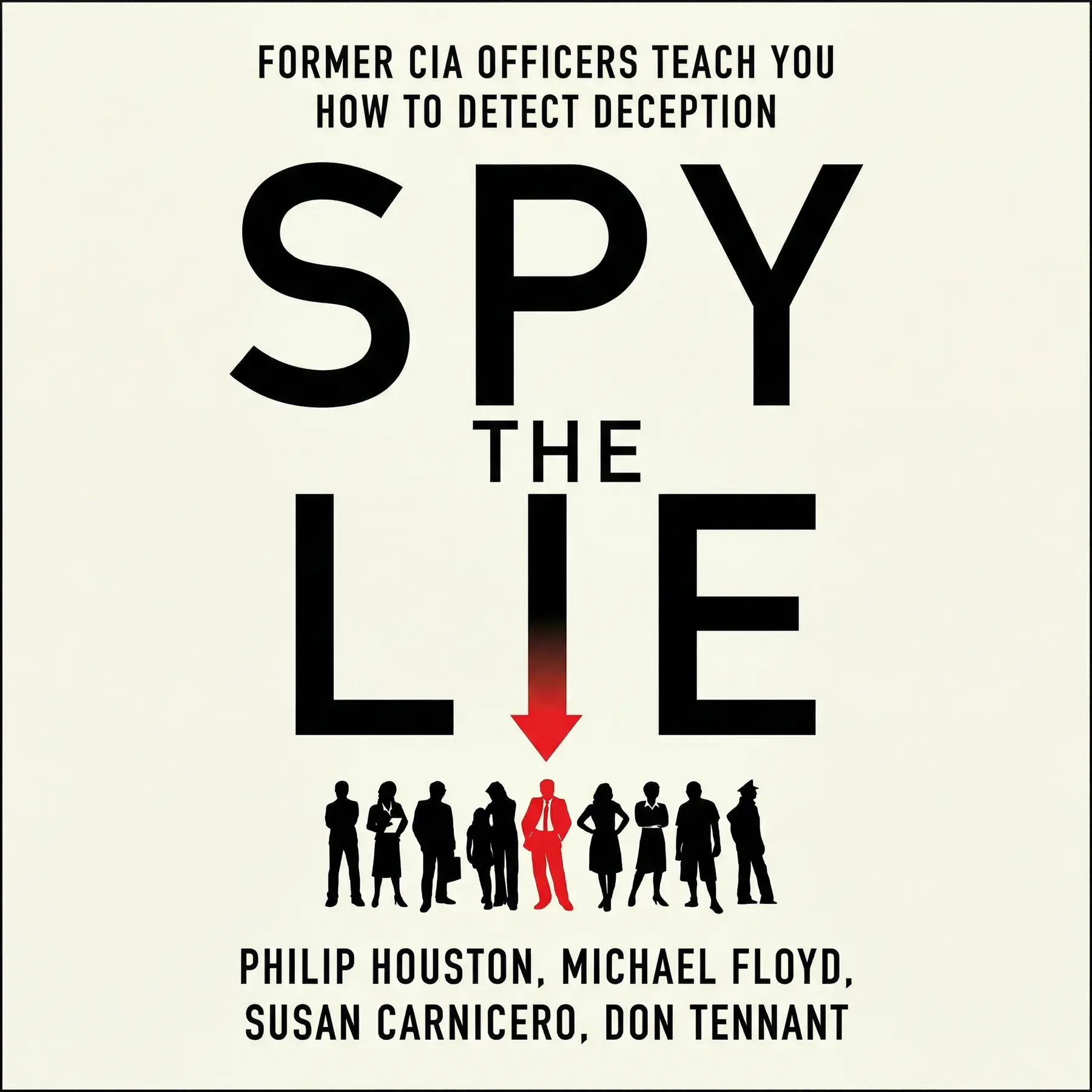
Spy the Lie: Former CIA Officers Teach You How to Detect Deception
Spy the Lie unveils powerful, behavior-based techniques used by CIA veterans to detect deception. Learn how to identify clusters of deceptive cues and ask questions that lead directly to the truth.
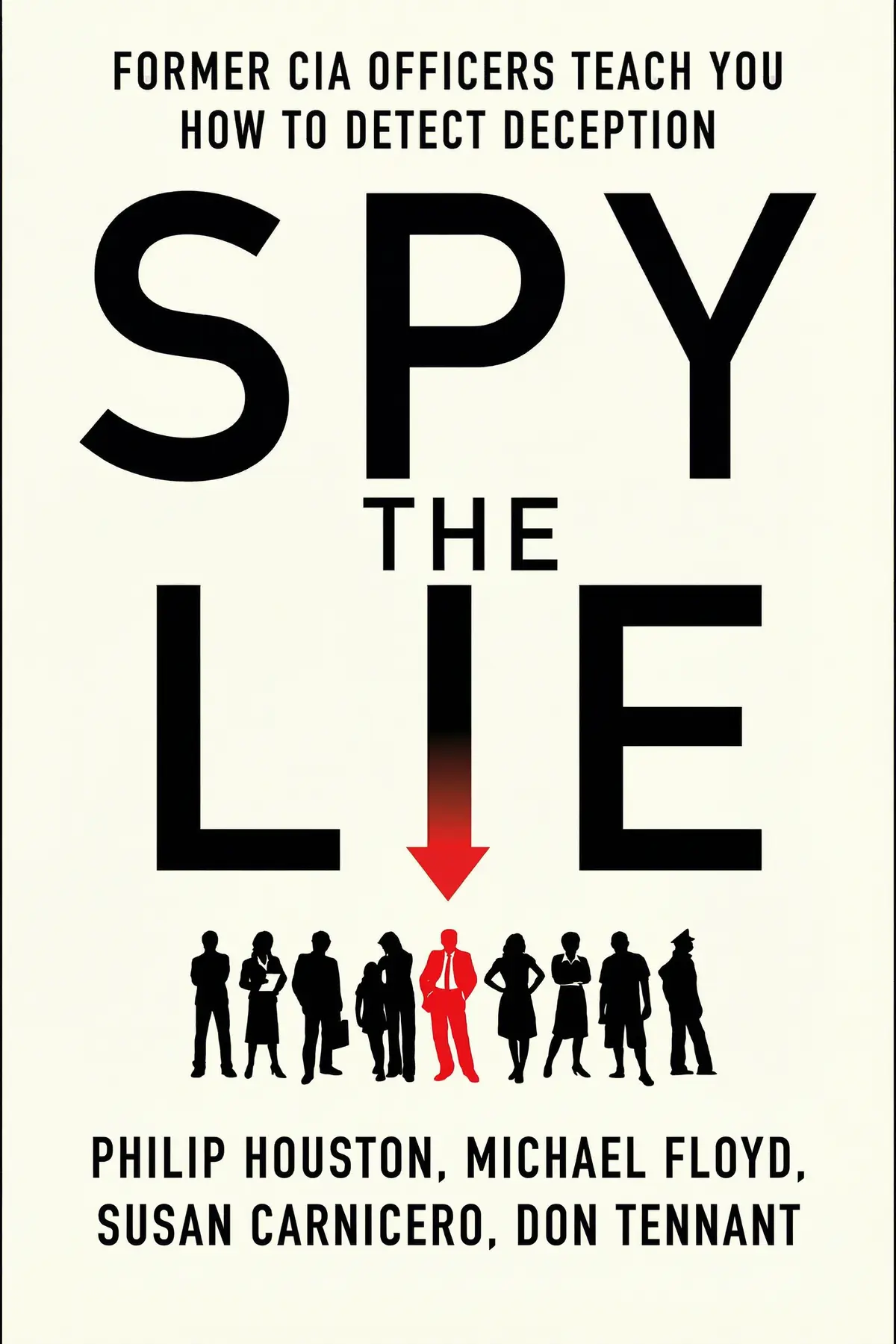
Table of Content
1. Introduction
1 min 38 sec
Have you ever wondered how many times you are lied to in a single day? If you’re like most people, you probably believe you can spot a lie when you hear one. You might think it’s all in the eyes, or perhaps a nervous twitch of the hands. But the reality is far more complex. Research suggests that humans lie with staggering frequency—anywhere from ten to two hundred times a day, depending on the study. Most of these are small, harmless white lies, but some carry the weight of entire careers, relationships, or legal cases.
The central challenge we face is that our natural instincts for detecting lies are remarkably flawed. We are often blinded by our own biases or distracted by the sheer volume of information we process during a conversation. This is where the expertise of professional intelligence officers becomes invaluable. In this summary of Spy the Lie, we are going to explore the rigorous, behavior-based techniques developed by former CIA officers.
We will move past the folklore of lie detection and into a world of scientific observation. You will learn why human communication is so difficult to decode and how our own brains often get in the way of seeing the truth. More importantly, we’ll look at the specific verbal and physical signals that indicate a person is under the stress of deception. By the end of this journey, you’ll have a new framework for listening and observing—a throughline that shifts your focus from what people want you to believe to what their behaviors are actually revealing. Whether you are a manager, a parent, or just someone who values the truth, these insights will fundamentally change how you interact with the world around you.
2. The Complexity of Human Communication
1 min 56 sec
Discover why our brains struggle to process both words and body language at once, making it incredibly easy for deception to slip past us.
3. The Blind Spot of Personal Bias
1 min 48 sec
Learn how your preconceived notions about people can act as a blindfold, allowing liars to hide in plain sight.
4. The Illusion of Truthful Behavior
1 min 47 sec
Explore the tactics liars use to mimic honesty and why you should ignore ‘good’ behavior when searching for the truth.
5. The Art of Omission
1 min 42 sec
Uncover the subtle ways people hide the truth by leaving things out and the linguistic markers that give them away.
6. Commission and the Power of Influence
1 min 39 sec
Understand how liars use excessive detail and appeals to their own character to distract you from their dishonesty.
7. The Body's Involuntary Stress Response
1 min 56 sec
Explore the biological ‘fight-or-flight’ triggers that cause liars to itch, sweat, and fidget against their will.
8. The Importance of Clusters and Timing
1 min 44 sec
Learn why a single twitch doesn’t mean a lie and how to use the ‘five-second rule’ to accurately spot deception.
9. Strategies for Effective Questioning
1 min 54 sec
Master the art of the neutral, precise question to trap a liar in their own words without them even realizing it.
10. The Dangers of Confrontation
1 min 45 sec
Find out why calling someone a liar too early can backfire and how to keep a suspect talking until they slip up.
11. Disrupting the Prepared Narrative
1 min 48 sec
Learn how to break a liar’s ‘game plan’ by asking unexpected questions and exploring their story in reverse.
12. Conclusion
1 min 27 sec
The journey from suspicion to certainty is paved with observation, not intuition. As we have seen, the methods used by seasoned CIA officers are not about being a human polygraph; they are about becoming a disciplined student of human behavior. We have learned that communication is messy, that our biases are powerful blinders, and that the body has a biological imperative to react to the stress of a lie.
By looking for clusters of signals within a tight timeframe and using neutral, precise questioning, you can cut through the noise of ‘truthful behavior’ and ‘lies of influence.’ The throughline of this entire approach is to stop looking for a single sign of a lie and start looking for the friction between what a person is saying and how their body is reacting.
If you want to put this into practice immediately, start by becoming a better listener. When you suspect someone is being less than honest, resist the urge to argue. Instead, acknowledge their point of view to keep them talking. Say something like, ‘I can see why you’d feel that way,’ and then gently guide them back to the facts. The truth is rarely found in a single moment of confrontation; it is distilled through patience, observation, and the refusal to be distracted by the masks people wear. Armed with these techniques, you are no longer a passive participant in a conversation—you are an active seeker of the truth.
About this book
What is this book about?
The ability to distinguish truth from fiction is a vital skill in every facet of life, from the boardroom to the living room. Spy the Lie provides a masterclass in deception detection, drawing on the decades of collective experience of its authors—former high-level intelligence officers. The book moves beyond the myths of polygraphs and gut feelings, offering a structured, behavior-based methodology for identifying lies in real-time. Readers are promised a deep dive into the psychology of why people lie and the physical ways their bodies betray them. By understanding the specific linguistic patterns and physical cues that accompany dishonesty, you will learn to see through the masks people wear. The book provides a practical toolkit for conducting interviews and everyday conversations that naturally reveal whether someone is being genuine or leading you astray.
Book Information
About the Author
Philip Houston
The authors of this work, Philip Houston, Michael Floyd, Susan Carnicero, and Don Tennant, combine intelligence and journalism expertise. Houston, Floyd, and Carnicero have extensive backgrounds at the highest levels of the United States government, with careers spanning major agencies, including the CIA, the NSA, and the US Army Military Police. They have become globally recognized experts in interrogation, interviewing, and polygraph testing, and together they founded QVerity, a specialized firm dedicated to providing training and consulting in the complex art of deception detection. Don Tennant is a journalist and former editor-in-chief of Computerworld.
Ratings & Reviews
Ratings at a glance
What people think
Listeners find this book to be a fast-moving and captivating listen that offers excellent broad insights and practical advice for daily life. The narrative is expertly written, and listeners appreciate the way it simplifies intricate ideas for instant real-world use. They value its method for spotting dishonesty, noting how it aids in recognizing deceptive conduct, and view it as an essential tool for both private and work interactions.
Top reviews
Woramet
Picked this up hoping for some real-world application in my HR role, and it definitely delivered more than the standard body language fluff. The authors emphasize the 'cluster rule,' which prevents you from jumping to conclusions over a single nervous tick or a simple itch. To be fair, some stories feel a bit dated, but the logic behind the 'punishment question' is fascinating to see in action. I found the writing style very accessible, making it feel less like a dry manual and more like a conversation with seasoned professionals. It has changed the way I observe people during high-stakes meetings without making me feel like a paranoid investigator. If you want something that moves beyond the cliché idea that 'crossed arms mean they’re closed off,' this is a solid choice.
Show moreHannah
Wow, this actually made complex behavioral psychology feel simple enough for anyone to apply in their everyday life. The authors do a great job of explaining how the autonomic nervous system triggers things like throat-clearing or hiding the mouth during a lie. Not gonna lie, I started watching my coworkers more closely after reading the section on grooming gestures, and it’s startling how many clusters you see once you know what to look for. The prose is clean and direct, avoiding the overly academic jargon that usually ruins books like this. It’s rare to find a non-fiction book that is both educational and genuinely entertaining from start to finish. I’d recommend it to anyone who wants to improve their personal relationships by understanding what’s really being said.
Show moreAim
The chapter on the 'behavioral pause' completely changed how I think about silence during a conversation. The example of asking someone what they did seven years ago versus asking if they robbed a gas station is a brilliant way to illustrate how our brains process truth versus fiction. Frankly, this book is full of these 'lightbulb moments' that make you realize how much you’ve been missing in your daily interactions. I love how it breaks down 'hand-to-face activity' not just as nervousness, but as a physiological reaction to the blood rushing away from the extremities. It’s well-crafted, fast-paced, and provides immediate value if you’re willing to pay attention to the details. This is definitely the best book on the subject I’ve come across so far.
Show moreLiam
As someone who conducts interviews regularly, I was looking for a way to cut through the rehearsed answers people usually bring to the table. This book provides a clear framework for identifying deceptive behaviors by focusing on verbal cues like repeating the question or using 'perception qualifiers.' I appreciate that the authors don't claim this is an absolute science; they admit it’s about increasing your odds rather than reading minds. The chapter on 'anchor-point movement' was particularly enlightening, as I had never considered how a person’s feet or buttocks could signal their internal anxiety level. My only minor gripe is that it can feel a bit repetitive towards the middle, but the practical value outweighs the occasional fluff. It’s a tool I’ll keep in my professional belt for a long time.
Show moreEye
This book is a refreshing departure from the usual body language manuals that are often as reliable as a coin toss. Instead of focusing on subjective 'tells,' Philip Houston and his team provide a structured system based on clusters of deceptive indicators. I think it’s important to note that they frequently remind the reader to ignore 'truthful behavior' to manage bias, which is a key step most amateurs miss. In my experience, the techniques for identifying 'exclusion qualifiers' like 'basically' or 'mostly' are where the real value lies. It does require practice to keep all these variables in mind during a real-time conversation, but the logic holds up well under scrutiny. It’s a professional-grade resource that remains very accessible to the average person.
Show morePot
After hearing so much about the CIA's interrogation techniques, I expected something much more aggressive and perhaps even unethical. Instead, I found a thoughtful approach to detecting deception that emphasizes remaining non-confrontational while digging for the truth. As a parent, I found the 'denial problems' section particularly relatable when dealing with my teenagers’ creative excuses for why they were home late. Look, it’s not about being a 'drone parent' as some critics say, but about understanding the psychology of why a person avoids a direct answer. I appreciated the advice on keeping questions short and simple to ensure the stimulus is clear for the person being interviewed. It’s a fascinating look at the subtle ways we all try to dress up the truth when we’re feeling the heat.
Show moreLucia
Not what I expected at first, but in a good way. I’m a student who often feels guilty for even thinking someone might be lying to me, but this book gave me a more objective way to evaluate people. It focuses on identifying specific 'non-answer statements' like 'that’s a good question' which buy the liar time to think. To be fair, I don’t think I could use the full system without having the book right in front of me, but the general principles are easy to remember. The writing style is engaging and doesn't feel like a lecture, which I really appreciated. It’s a helpful guide for anyone who wants to be a bit more discerning without becoming cynical or overly aggressive in their interactions with others.
Show moreSin
Ever wonder if your 'gut feeling' about a liar actually has a basis in reality? 'Spy the Lie' tries to answer that, though I gotta say, it probably could have been summarized in a lengthy pamphlet rather than a full-length book. While the tips on identifying 'non-answer statements' and 'inappropriate politeness' are useful, the authors stretch the material thin with quite a few repetitive examples. Some of the case studies involving 'weirdos' and foot fetishes felt unnecessary and didn't add much to the actual methodology. It’s an easy read that you can finish in a couple of hours, but don’t expect to walk away as a master human polygraph. It’s decent for a quick brush-up on social cues, but it isn't the life-changing manual the title suggests.
Show moreNit
Look, the information presented here is technically sound, but it’s important to realize that most of these techniques are already in the public domain. The authors try to 'sex up' the narrative with mentions of secret locations and field officers, yet the actual methods—like identifying verbal/nonverbal disconnects—are fairly standard. I found the section on 'invoking religion' to be one of the more interesting parts, as it’s a behavior I’ve seen many times without realizing its significance. However, the book suffers from a lack of truly credible, high-stakes scenarios that show the system working in the field. A lot of the success stories seem to involve people who were already doing a terrible job of hiding their guilt. It’s a good introductory text, but seasoned readers of psychology might find it a bit basic.
Show moreSkylar
Why do people think being in the CIA automatically makes for a groundbreaking book? Frankly, most of these 'secrets' are just common sense observations wrapped in a thin layer of agency branding and self-importance. One anecdote about an agent realizing a man is Muslim because he’s praying was genuinely embarrassing to read in a professional text. They also spend a strange amount of time talking about using these high-pressure tactics on their own children just to check on homework assignments. It feels less like sophisticated intelligence and more like 'drone parenting' mixed with basic psychological tricks you could find on any blog. I was hoping for deep insights, but instead, I got a sanitized collection of stories that didn't really prove the techniques work better than a lucky guess.
Show moreReaders also enjoyed
AUDIO SUMMARY AVAILABLE
Listen to Spy the Lie in 15 minutes
Get the key ideas from Spy the Lie by Philip Houston, plus 5,000+ more titles in English and Thai.
- 5,000+ titles
- Listen as much as you want
- 7-day free trial
- Cancel anytime







