
15 min 41 sec
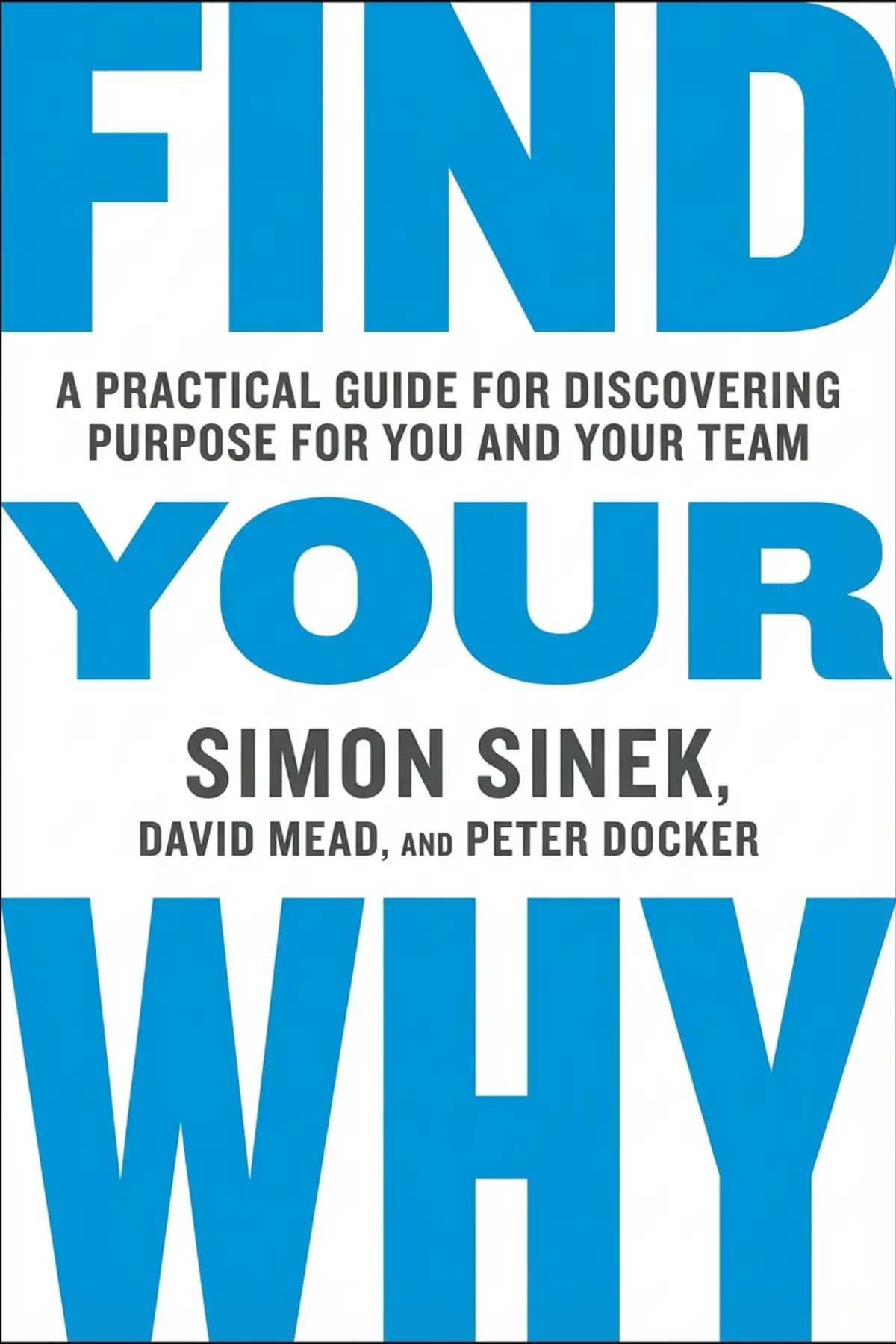
Start With Why: How Great Leaders Inspire Everyone to Take Action
By Simon Sinek
Discover the framework of the Golden Circle to understand why some leaders and organizations inspire deep loyalty while others rely on temporary manipulation to achieve short-term results.
Table of Content
1. Introduction
2 min 15 sec
Picture a small, unassuming room in Washington State back in 2009. There wasn’t much fanfare, and the audience numbered only about a hundred people. The man who walked onto the stage didn’t have a background in high-level corporate leadership; in fact, he was a former law student who had shifted his focus to the world of marketing. Even his equipment seemed to be working against him, with his microphone cutting out right as he began his presentation. Yet, despite these modest beginnings, what he said that day would eventually echo across the globe, reaching millions of people through one of the most-watched digital talks in history. That man was Simon Sinek, and his message was simple yet revolutionary: it all begins with a single question.
Sinek noticed a pattern among the world’s most successful figures and organizations. Whether it was the pioneers of aviation, the leaders of the civil rights movement, or the tech giants of Silicon Valley, they all shared a specific way of thinking, acting, and communicating. This pattern stood in stark contrast to the way the rest of the world operated. Most people and businesses focus on the tangible results—the things they produce or the services they offer. But the truly influential ones start somewhere else entirely. They start with their purpose, their cause, or their belief. They start with ‘Why.’
In the following minutes, we are going to explore the core philosophy that has transformed how leaders approach their work and their lives. We’ll break down the structure of what Sinek calls the Golden Circle and look at why this framework is so powerful for building trust and loyalty. We’ll see why common business tactics like discounts and promotions are actually forms of manipulation that can hurt a company in the long run. Most importantly, we will discuss how you can uncover your own sense of purpose and use it to inspire those around you.
Whether you are an entrepreneur trying to launch a new idea, a manager looking to better support your team, or simply someone trying to find more meaning in your daily tasks, the principles we’re about to cover offer a roadmap for moving from being a person who just ‘does’ things to a leader who inspires action. This isn’t just about marketing or sales; it’s about a fundamental human need for connection and shared belief. So, let’s dive into the mechanics of inspiration and see how starting with why can change everything.
2. Inspiration Versus Manipulation
2 min 23 sec
Many businesses use tactics that look like leadership but are actually short-term tricks. Discover why relying on incentives might be hurting your long-term success.
3. The Framework of the Golden Circle
2 min 15 sec
Uncover the three layers of communication that separate average companies from visionary leaders by focusing on the ‘Why’ first.
4. The Power of Authentic Origins
2 min 19 sec
See how a company’s success is rooted in its founding values, using the history of Apple as a blueprint for purpose-driven growth.
5. Finding Your Core Believers
2 min 02 sec
Learn why targeting the masses is often a mistake and how focusing on those who share your ‘Why’ can lead to a tipping point.
6. Sustaining the Vision Over Time
2 min 24 sec
Discover how to balance the roles of the visionary and the implementer to ensure your ‘Why’ doesn’t get lost as you grow.
7. Conclusion
2 min 03 sec
As we come to the end of our exploration of this leadership philosophy, let’s reflect on a story that perfectly captures the difference between working with a ‘What’ and working with a ‘Why.’ Imagine two workers at a large building site in the middle of a hot summer day. You approach the first worker and ask him about his job. He sighs, wipes the sweat from his brow, and says that the work is exhausting and monotonous. He tells you that he’s been laying stones in the sun for months, and he isn’t even sure if he’ll see the structure finished before he retires. For him, the work is just a series of tasks—it’s just a ‘What.’
Then, you go to the second worker, who is doing the exact same task under the exact same conditions. When you ask him the same question, his eyes light up. He admits that the work is hard and the sun is hot, but then he smiles and says, ‘I am building a cathedral.’ This second worker isn’t just laying stones; he is contributing to a grand purpose. He has a sense of ‘Why.’ He understands that his individual effort is part of something much larger and more meaningful than the physical labor itself.
This is the essence of inspiring leadership. Your job as a leader is to give your team a cathedral to build. It’s not enough to tell people what to do or how to do it. You must remind them why it matters. When people have a sense of purpose, they are more creative, more resilient, and more fulfilled. They don’t just show up for a paycheck; they show up to make a difference.
The Golden Circle isn’t just a business tool; it’s a way of looking at the world. It’s a challenge to look past the surface-level results and dig deep into the underlying motivations that drive us. By starting with ‘Why,’ you can move away from the temporary gains of manipulation and toward the lasting impact of inspiration. Whether you are leading a massive corporation or just trying to live a more intentional life, remember that the most powerful thing you can share is not what you do, but why you do it. Find your belief, communicate it clearly, and watch as others join you in building something truly extraordinary.
About this book
What is this book about?
This summary explores the fundamental difference between companies that simply sell products and those that lead movements. At its heart is the concept of the Golden Circle—a three-layered model consisting of Why, How, and What. Most businesses function from the outside in, focusing on what they do and how they do it. However, the most influential leaders, like Steve Jobs or the Wright Brothers, communicate from the inside out. By identifying and leading with a clear sense of purpose, organizations can move beyond the trap of price wars and short-term incentives. You will learn how to articulate a vision that attracts the right people, fosters innovation, and builds a brand that customers feel a personal connection to. The promise of the book is a path toward more authentic leadership and lasting success through the power of purpose.
Book Information
About the Author
Simon Sinek
Simon Sinek is a self-professed optimist determined to create a better and brighter future for humanity. An influential speaker and coach, Sinek has helped organizations around the world, such as Microsoft, American Express, the United Nations, and the Pentagon, inspire their employees. He is also the author of Leaders Eat Last and Together is Better.
Ratings & Reviews
Ratings at a glance
What people think
Listeners consider this title indispensable for those in charge, offering profound knowledge and realistic cases that foster different ways of thinking. The book also grants excellent understanding of how to lead and succeed, featuring sharp examples of corporate trailblazers, and listeners value its ability to influence their decisions. Nevertheless, opinions on the writing are divided; while some listeners feel it is absorbing, others remark on its repetitive nature.
Top reviews
Wissanu
Finally got around to reading Sinek's manifesto after years of seeing that famous Golden Circle diagram shared on my professional feed. While the core message is straightforward, its application to leadership is where the real wisdom lies. It pushes you to stop obsessing over the 'what' of your products and start articulating a deeper purpose that your team can actually rally behind. Yes, the author brings up Apple and the Wright brothers a lot, but these case studies effectively illustrate how a clear vision differentiates a leader from a mere manager. To be fair, the text gets a bit repetitive in the second half as he reinforces the same points. However, the perspective shift it offers is essential for anyone trying to build something that lasts. It helped me realize that loyalty isn't bought through features; it's earned through shared beliefs.
Show moreMaksim
Wow. This completely changed how I approach my pitch decks and team meetings. Sinek argues that people don't buy what you do, but why you do it, and he links this directly to our biology. By targeting the limbic system rather than just the neocortex, you tap into the emotional center where true loyalty lives. The book provides a practical framework that I’ve already started using to refine my brand's messaging. Some might find the tone a bit self-important, but the results speak for themselves. This is essential reading for anyone in a position of influence. It forces you to look at your business not as a series of transactions, but as a way to contribute to a larger cause. I'm buying copies for my entire management team.
Show moreNuk
This book provides the missing link for anyone struggling to inspire a team or build a brand that people actually care about. Sinek's 'Golden Circle' is such a simple yet profound way to gain a new perspective on leadership. It’s filled with practical wisdom that pushes you to look beyond the surface level of your daily operations. While some parts feel like they are padding for time, the overarching message is vital for success. It helped me redefine my own career goals and clear up the confusion around our company's mission. I particularly enjoyed the section on how to find your 'Why' and the importance of being authentic in your communication. Highly recommended for new managers who want to lead with integrity.
Show moreDing
Ever wonder why some movements, like the one led by Martin Luther King Jr., gain massive momentum while others fizzle out? Sinek uses this to show that people rally around a shared vision rather than a checklist of demands. This book offers a compelling perspective on why some companies remain resilient during economic shifts. By focusing on a core belief, leaders can guide their actions more effectively than those who just chase short-term profit. I found the examples of industry leaders to be clear and guiding, though the writing can be a bit circular at times. It really helps you gain a new perspective on how to communicate with impact. Definitely a staple for my business shelf and something I'll revisit.
Show moreTen
As a small business owner, I found the core philosophy of 'Starting with Why' absolutely transformative for our internal culture. Sinek spends a lot of time discussing the difference between manipulation and inspiration, which really made me reflect on our current marketing strategies. Are we just dropping prices to get sales, or are we actually building a community of believers? The book provides great insights into leadership and success by showing how visionaries keep their focus on the long-term goal. I did find the constant fawning over Steve Jobs a bit much, especially since business is often more complex than just having a good 'why.' Still, the book is effective in guiding actions toward a more authentic way of doing business. It’s a solid read if you need to clarify your mission statement.
Show moreLayla
Look, you might get tired of hearing about the same few companies by the end, but the underlying logic remains sound. This book is all about the driving forces of a successful business: Purpose, Action, and Results. Sinek does a great job explaining why some companies lose their way once the original visionary leaves. He uses the 'Golden Circle' to show how the 'Why' can get buried under the 'What' as a company grows. Personally, I found the chapters on maintaining the clarity of 'Why' as you scale to be the most useful. It’s not just a book for CEOs; it's for anyone who wants to understand the mechanics of human loyalty. A bit wordy in places, but the wisdom is there if you are willing to look for it.
Show moreScarlett
After hearing so much hype in my corporate circles, I expected a fluff piece, but Sinek actually offers some solid frameworks for success. He uses Southwest Airlines as a case study to show how a company's culture can become its greatest competitive advantage. Most businesses focus on the 'What'—the product—but this book teaches you to lead with your convictions. It’s a great read for gaining insights into why some leaders are so much more effective than others. To be fair, he does repeat his points about Apple quite a bit, which can get tedious. But the clarity of the examples makes the theory easy to apply to your own career. It’s a useful guide for anyone wanting to inspire others and move beyond just selling features.
Show moreAraya
Frankly, the middle section drags a bit because Sinek hammers the same three examples home repeatedly. We get it; Apple is innovative and Southwest cares about their people. However, if you can look past the redundancy, the book offers a powerful framework for organizational stability. It’s a great tool for leaders who feel they’ve lost their spark or are struggling to explain their company’s value proposition to the outside world. I appreciated the distinction between manipulation and inspiration, as it forced me to re-examine our own sales tactics. It’s not a perfect book, and the TED talk covers about eighty percent of the value, but the additional depth on the 'How' and 'What' layers is still worth the time for a dedicated professional.
Show moreTim
The truth is, this is a brilliant twenty-minute TED Talk that has been stretched thin into a two-hundred-and-fifty-page book. I appreciate the central idea—that successful organizations communicate from the inside out—but Sinek repeats the same concepts until they lose their impact. Every few chapters, we are back to the Wright brothers or the birth of the personal computer. While the core message is powerful, the supporting evidence feels anecdotal rather than scientifically rigorous. It's a helpful framework for branding, but don't expect a deep dive into organizational psychology or complex data. If you have a few hours to spare, it’s worth a skim to see the examples in detail, but you might find yourself checking how many pages are left by the middle of the third section.
Show moreNong
In my experience, business success is far more about market timing and raw execution than having a fuzzy emotional vision. Sinek tries to dress up marketing strategies as 'biology' by pointing at the limbic system, but the science feels incredibly flimsy and oversimplified. He constantly uses Southwest Airlines and Apple as his gold standards, yet he ignores the actual economic factors that made those companies survive while others failed. It is easy to look at a winner and say they 'started with why' after the fact, but that feels like circular reasoning to me. The book claims that manipulation and inspiration are different, but the line between them is basically nonexistent in his examples. If you want actual data on how humans make decisions, go read something by Daniel Kahneman instead. This is just another entry in the tech-bro canon that mistakes charisma for actual business strategy.
Show more
Readers also enjoyed
AUDIO SUMMARY AVAILABLE
Listen to Start With Why in 15 minutes
Get the key ideas from Start With Why by Simon Sinek, plus 5,000+ more titles in English and Thai.
- 5,000+ titles
- Listen as much as you want
- 7-day free trial
- Cancel anytime







