

14 min 36 sec
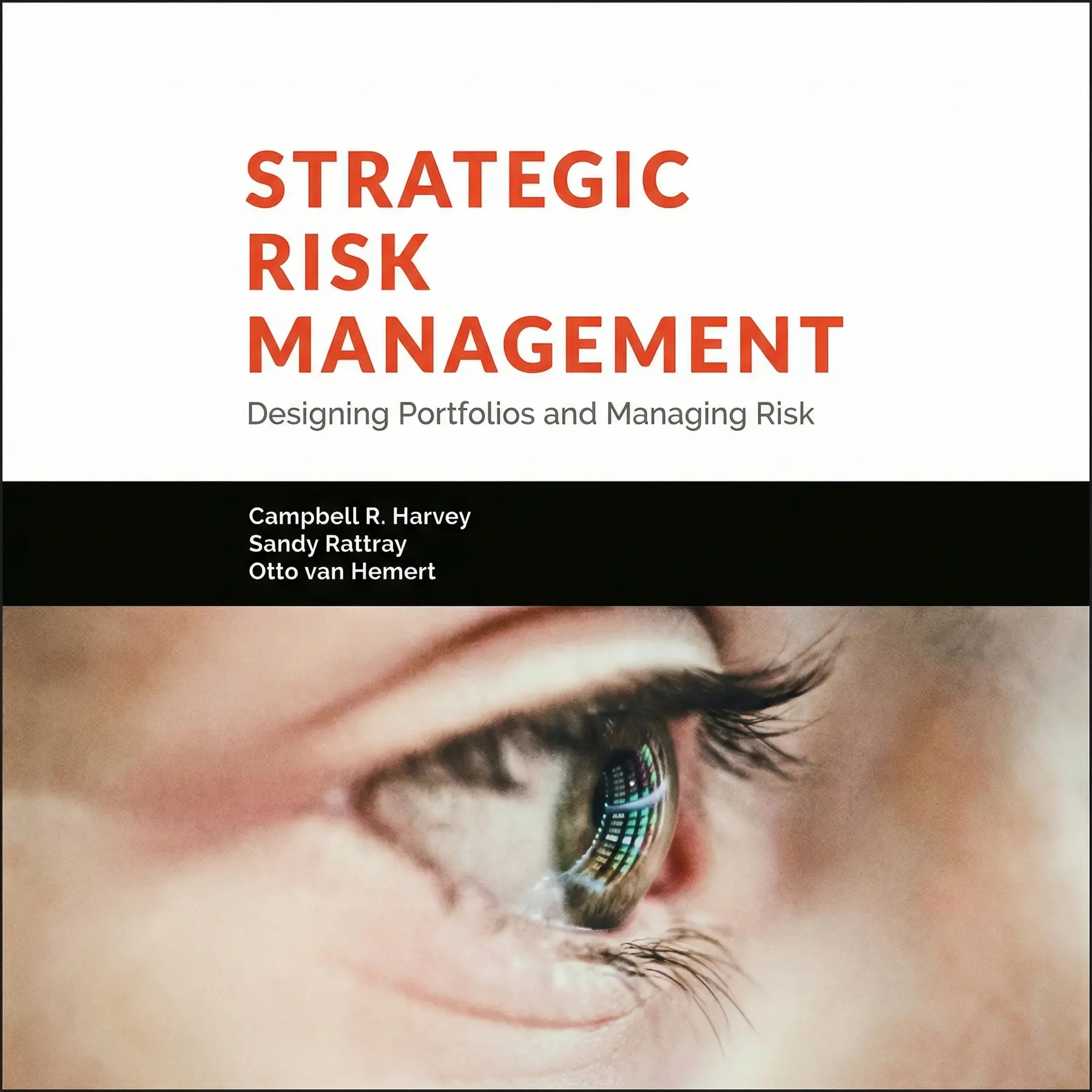
Strategic Risk Management: Designing Portfolios and Managing Risk
Strategic Risk Management provides a robust, scientifically grounded framework for protecting investment portfolios. It explores advanced techniques like volatility targeting and trend-following to ensure resilience during significant market downturns and financial crises.
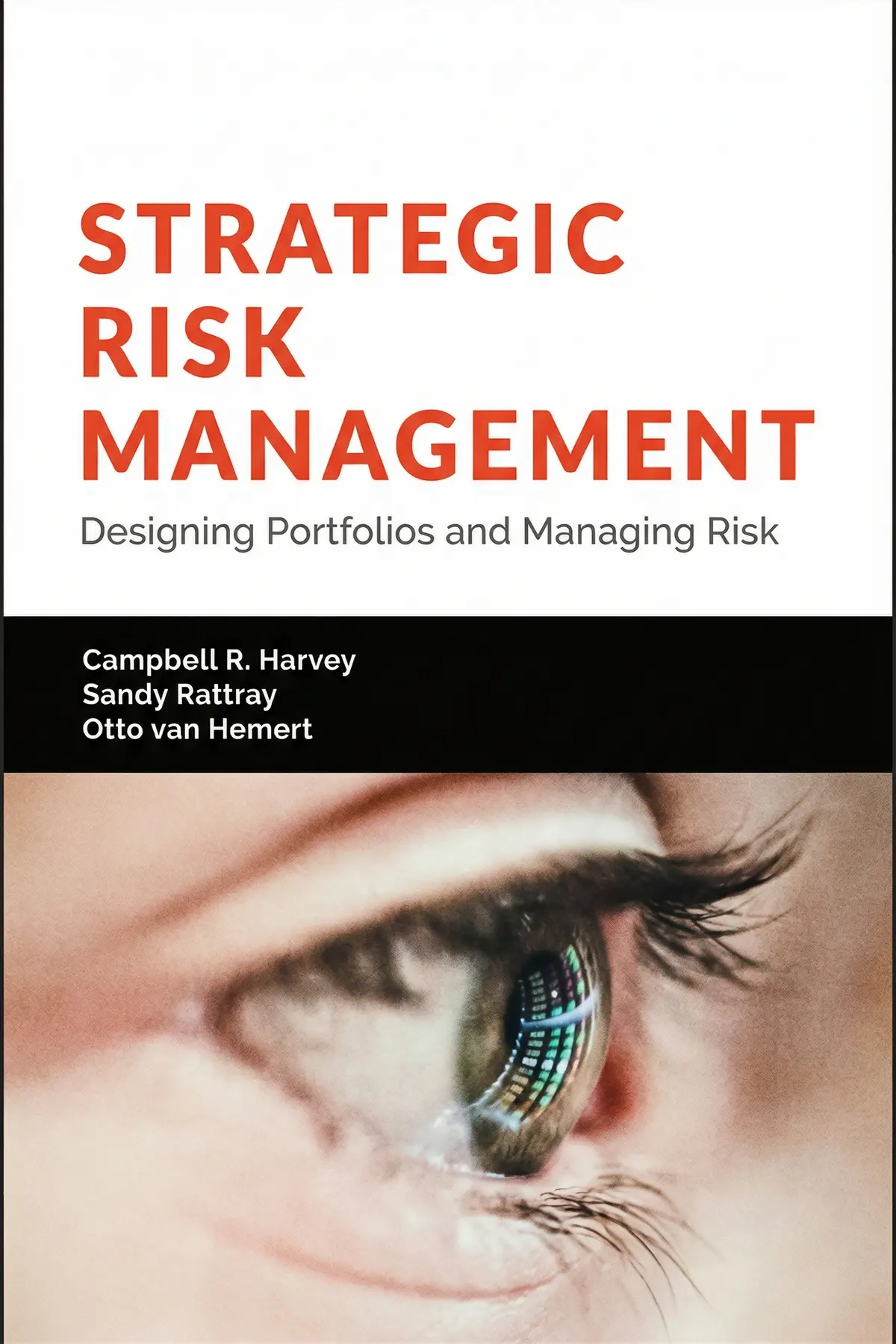
Table of Content
1. Introduction
1 min 00 sec
Most investors view risk management as a secondary task—a set of defensive measures tucked away in the corner of a portfolio to be used only when things go wrong. But in the world of high-stakes investing, treating risk as an afterthought is a recipe for disaster. The reality of modern markets is that they don’t just drift; they experience sharp, sudden breaks that can erase years of progress in a matter of days.
In this summary of Strategic Risk Management, we are going to look at a fundamental shift in how to think about your assets. Instead of just hoping for the best and fearing the worst, you will learn how to build a portfolio that is structurally prepared for chaos. We’ll explore how to turn market volatility into an ally and how to use data-driven strategies to keep your head while others are panicking. The throughline here is simple but profound: true financial security doesn’t come from avoiding risk, but from managing it with precision, discipline, and a scientifically backed framework. Let’s dive into the mechanics of how you can create a portfolio that stands firm, even when the global economy feels like it’s shaking.
2. Harnessing Crisis Alpha Through Trend-Following
1 min 45 sec
Discover how momentum-based strategies can actually generate profits during market downturns, transforming a crisis into an opportunity for growth through dynamic risk adjustment across various asset classes.
3. The Trade-offs of a Crisis-Proof Portfolio
1 min 58 sec
Explore the balance between safety and cost as we examine the different tools available for hedging, from expensive put options to the reliability of safe-haven assets.
4. Volatility Targeting as a Risk Stabilizer
1 min 42 sec
Learn how keeping your portfolio’s volatility steady can lead to smoother returns and smaller drawdowns by adjusting leverage in response to market fluctuations.
5. The Evolution of Strategic Rebalancing
1 min 46 sec
Rebalancing is more than just a calendar event. Discover why traditional methods can fail during long slumps and how to use a more intelligent, trend-aware approach.
6. Managing the Human Element and Manager Drawdowns
1 min 43 sec
Investment isn’t just about numbers; it’s about the people behind the numbers. Learn how to set firm rules for when to hire or fire investment managers based on drawdown data.
7. Systematic Versus Discretionary Approaches
1 min 48 sec
Compare the cold logic of algorithmic trading with the intuitive insights of human experts to understand how both styles can play a role in a balanced risk management strategy.
8. Validation from the Global Pandemic
1 min 45 sec
See how the theoretical frameworks of strategic risk management held up during the 2020 market crash, providing real-world proof of their effectiveness.
9. Conclusion
1 min 09 sec
As we wrap up our look at Strategic Risk Management, the most important takeaway is that safety is not a passive state; it is an active pursuit. The financial world is inherently volatile, and the crises of the future will likely look very different from the ones we’ve seen in the past. However, the principles of trend-following, volatility targeting, and strategic rebalancing provide a timeless framework for dealing with that uncertainty.
By moving away from a static view of your portfolio and embracing a more dynamic, data-driven approach, you can protect your hard-earned capital from the worst of the market’s whims. This isn’t about avoiding risk altogether—that’s impossible if you want to grow your wealth. It’s about ensuring that when the next storm hits, you have the right sails in place to navigate through it. Start by evaluating your own exposure: are you relying on outdated rebalancing techniques? Is your portfolio sensitive to sudden spikes in volatility? By applying the integrative strategies we’ve discussed, you can turn risk from a frightening unknown into a manageable component of your long-term success. The goal isn’t just to survive the next crash, but to be one of the few investors who remains calm and prepared while everyone else is searching for the exit.
About this book
What is this book about?
Modern financial markets are characterized by periods of extreme calm followed by sudden, violent disruptions. For the serious investor, the primary challenge is not just finding growth, but surviving these inevitable shocks without depleting capital. This book serves as a comprehensive guide to navigating these turbulent waters by integrating risk management directly into the investment process. Through a detailed examination of historical market data and sophisticated financial modeling, the authors present a toolkit of resilient strategies. The promise of the book is a move away from static, reactive protection toward a dynamic, proactive philosophy. By understanding concepts like crisis alpha and strategic rebalancing, investors can build portfolios that don't just endure a crash but potentially find ways to generate returns while traditional assets are failing. It is a rigorous look at how to maintain stability in an unstable world.
Book Information
About the Author
Campbell R. Harvey
Sandy Rattray serves as the Chief Investment Officer of Man, an investment group based in London, following a career as a managing director at Goldman Sachs. Otto van Hemert, formerly a member of the finance faculty at NYU Stern, currently holds the position of Director of Core Strategies at Man AHL. Campbell R. Harvey is a distinguished professor of finance at Duke University, a research associate at the National Bureau of Economic Research, and acts as an investment strategy advisor at Man.
Ratings & Reviews
Ratings at a glance
What people think
Listeners find the quality of research in this book to be excellent. However, perspectives on its effectiveness and risk management components are varied; one listener points out that it is best suited for professional investors with high math and statistical abilities, whereas another listener suggests it is not suitable for investors or risk management.
Top reviews
Jonathan
After hearing so much about Harvey’s research, I finally dove into this framework and found the section on the COVID-19 pandemic incredibly revealing. The authors provide a rare look at how their strategies performed during a real-world black swan event, which adds a layer of credibility most finance books lack. Truth is, many academic theories fall apart when volatility spikes, but their data on trend-following and volatility targeting suggests a more resilient path. I especially appreciated the deep dive into 'crisis alpha' and how to generate returns when everything else is bleeding. It is a dense read, but the empirical evidence justifies the effort for any serious practitioner. While the math can get intense, the logic behind moving away from simple dollar-neutrality toward beta-neutrality is a game changer for portfolio construction.
Show moreJoseph
Wow, the data provided on trend following as a form of crisis alpha is incredibly robust and well-presented. The authors make a compelling case that traditional asset allocation is failing because it treats risk management as a separate silo. Instead, they advocate for a unified system where the rate of asset accumulation matches the specific investment horizon. This makes so much sense when you consider how quickly market regimes can shift. I was particularly impressed by the discussion on long-short quality trades as a defensive mechanism. It’s rare to find a book that balances high-level theory with practical, out-of-sample testing from recent history. This should be required reading for anyone managing significant capital in today's unpredictable environment.
Show morePawinee
Ever wonder why traditional hedges like bonds have failed to protect portfolios in the most recent market shifts? Harvey, Rattray, and van Hemert answer this by demonstrating why we need a more dynamic, strategic approach to risk. Their work on 'crisis alpha' is probably the best explanation of the concept I have encountered in years. The book proves that trend-following remains a crucial component of any portfolio that hopes to survive a major tail event. I appreciated the specific focus on how these strategies were put to the test during the 2020 crash. It’s one thing to show a backtest from the 1990s, but seeing the real-time efficacy is another thing entirely. This is a top-tier resource for institutional risk management.
Show moreRohan
Finally got around to finishing this, and the timing couldn't be better given the current market climate. The authors offer a sophisticated roadmap for building a crisis-resilient portfolio without the astronomical costs usually associated with hedging. I loved the breakdown of how different defensive strategies—like quality long-short—perform during recessions versus simple market corrections. It’s a masterclass in quantitative strategy that doesn't shy away from the complexities of real-world implementation. The discussion on systematic versus discretionary approaches was particularly balanced and insightful for such a technical book. If you want to understand the 'why' behind modern risk management, this is the definitive text. It is scientifically backed and empirically rigorous, exactly what you want from this team.
Show moreAstrid
The chapter on volatility targeting alone changed how I view my equity exposure during market stress. Most investors think risk is something to be avoided, but Harvey and his co-authors argue it should be integrated directly into the investment process. This book moves past the old-school mean-variance models to look at how dynamic scaling can actually improve Sharpe ratios in credit and equities. Frankly, the data on why gold is an unreliable hedge was eye-opening for me. I still have some reservations about how 'ad-hoc' some of the tail hedging strategies feel when grouped together. However, the move toward a holistic, risk-aware approach is clearly the right direction for the industry to head in.
Show morePalm
Strategic rebalancing is an idea that seems so obvious once it’s explained, yet few actually do it well. The authors explain that delaying a rebalance until the trend is in your favor can significantly mitigate the 'short vol' nature of periodic rebalancing. I found this section to be the most practical part of the book for my own process. The writing is technical but clear, though I did find myself skimming some of the more dense statistical proofs. Gotta say, the distinction between systematic and discretionary fund management was handled with a lot of nuance. They don't just bash human traders but show how algorithmic rules can complement human expertise. It’s a well-rounded look at modern risk despite being a bit dry in parts.
Show moreRosa
As someone who spends all day in spreadsheets, I found the technical depth of this book incredibly refreshing. It covers a vast range of defensive strategies, from put options to currency carry, with a level of rigor you don't often see. My only real gripe is that it can feel a bit repetitive when they go over the different asset classes. To be fair, the emphasis on drawdown control and preset exit rules is vital for anyone who has struggled with the human element of trading. The book effectively highlights how volatility rises during stress, making a strong case for cutting risk dynamically. It’s a heavy lift, but the insights into tail hedging and credit protection make it worth the time. A very professional piece of work.
Show morePensuda
Look, this isn't for the casual retail investor looking for a quick tip or a weekend read. This book requires a high level of mathematical and statistical ability to truly grasp the nuances of their arguments. I found the chapters on strategic rebalancing quite intuitive, but the technical execution feels geared toward institutional desks rather than individual portfolios. To be fair, the research is top-notch, yet I can't help but feel it’s essentially a polished collection of white papers. It offers some interesting insights into portfolio construction, but it's nothing revolutionary if you've already been following the latest in quantitative finance. It is a solid reference for professionals, though likely too opaque for those without a heavy quantitative background.
Show moreArm
This book feels more like a collection of high-quality white papers than a cohesive narrative journey. Each chapter stands well on its own, but the transitions between volatility targeting and drawdown strategies can be a bit jarring. In my experience, the math required will be a significant barrier for most individual investors. It's clear the authors are brilliant, but they don't always succeed in making the material accessible to a broader audience. That said, the insights into how rebalancing acts as a short straddle are worth the price of admission. It’s a useful book to have on the shelf for reference, even if you don't agree with every single conclusion they reach regarding tail risk.
Show moreNarongrit
Not what I expected given the pedigree of the authors involved in this project. While the research quality is high, the book reinforces my fear that the asset management industry is stuck in a loop of backtesting. They add tools like trend-following and vol-scaling simply because they worked historically, rather than advancing a truly new theory of risk. Personally, I found the framework to be a bit of a Frankenstein’s monster of various strategies that don't always feel theoretically cohesive. It’s disappointing to see such brilliant minds relying on what seems like a reactive approach to market downturns. If you are looking for a revolutionary breakthrough in financial theory, you might want to look elsewhere. It feels more like a defense of current quantitative practices than a step forward.
Show moreReaders also enjoyed


AUDIO SUMMARY AVAILABLE
Listen to Strategic Risk Management in 15 minutes
Get the key ideas from Strategic Risk Management by Campbell R. Harvey, plus 5,000+ more titles in English and Thai.
- 5,000+ titles
- Listen as much as you want
- 7-day free trial
- Cancel anytime







