
Ali: A Life
Jonathan Eig
Explore the revolutionary science and history of muscle development. This summary reveals how building strength is a vital medical tool for longevity, mental health, and maintaining independence across every stage of life.
1 min 50 sec
Imagine for a moment that you were handed the keys to a high-performance vehicle, one of the most sophisticated machines ever engineered. But instead of learning how to drive it, you left it in the garage, letting the engine rust and the battery drain, until eventually, you forgot it could even move. For the vast majority of people living in the modern world, this isn’t a metaphor—it is a literal description of our relationship with our own bodies. We carry within us a miraculous system of muscle and bone designed for explosive power and enduring resilience, yet our sedentary lifestyles have rendered these systems dormant.
In this exploration of physical strength, we are going to look past the mirrors of the local gym and the glossy covers of fitness magazines to uncover the true story of muscle. This isn’t just a guide on how to get bigger biceps; it is a profound look at how human strength is the cornerstone of our autonomy, our mental clarity, and our long-term health. We will journey from the dusty athletic grounds of ancient Greece to the cutting-edge laboratories of modern sports science to understand why we’ve become so disconnected from our physical selves.
Along the way, we’ll see how a 2,000-year-old philosophical mistake led us to believe that a strong body somehow equals a weak mind. We will meet the pioneers who proved that strength isn’t a gendered trait and the researchers who discovered that even a ninety-year-old can reclaim the vitality of their youth through resistance training. By the time we’re finished, you’ll see that muscle isn’t a luxury for the young or the athletic—it is a vital, living pharmacy that we can tap into at any age. The throughline of this journey is simple: reclaiming your strength is the most effective way to reclaim your life. Let’s begin by looking at the incredible hardware we’ve all been born with.
2 min 22 sec
Discover how the most powerful engine in the human body has been sidelined by modern living and why we must reconnect with our ancient physical heritage.
2 min 33 sec
Uncover the historical origins of the ‘meathead’ stereotype and how an ancient doctor’s personal grudge helped separate mind from muscle for two millennia.
2 min 36 sec
Meet the woman who shattered records and myths, proving that the benefits of strength training are universal, regardless of gender.
2 min 50 sec
Look back at the surprising physical capabilities of Victorian women and how a simple change in wording changed the face of modern medicine.
2 min 31 sec
Learn how the ‘fountain of youth’ might be hidden in your muscle fibers and why it’s never too late to start building strength.
2 min 30 sec
Explore why the weight room might be more effective than the pharmacy for treating chronic conditions like depression, diabetes, and arthritis.
1 min 43 sec
As we close our look into the untold story of muscle, it’s worth reflecting on the throughline that has connected every chapter of this journey: muscle is much more than just a physical attribute; it is the currency of our independence and the foundation of our health. From the ancient Greeks who saw it as a divine gift, to the modern researchers who see it as a medical miracle, the narrative remains the same. When we neglect our strength, we neglect our vitality. When we embrace it, we unlock a version of ourselves that is more resilient, more capable, and more alive.
We have seen that the barriers to being ‘stronger’ are often more mental and cultural than they are physical. We’ve inherited a history of mind-body dualism and gender stereotypes that have kept many of us from reaching our potential. We’ve been told that decline is inevitable, yet we’ve seen ninety-year-olds reclaim their mobility through the simple act of lifting heavy objects. The science is settled: your muscles are a life-long pharmacy, ready to be activated at any moment.
The most important takeaway is that you don’t need to be an athlete to benefit from the power of muscle. You don’t need to look like a bodybuilder or live in the gym. You simply need to recognize that your body is a system that thrives on challenge. Whether it’s reclaiming the ability to stand from a chair, managing a chronic condition, or simply wanting to keep your mind sharp as you age, the answer is the same: get stronger. Start where you are, use what you have, and remember that every time you challenge your muscles, you are sending a signal to your entire being that you are here, you are capable, and you are not done yet. Your strength is your birthright. It’s time to take it back.
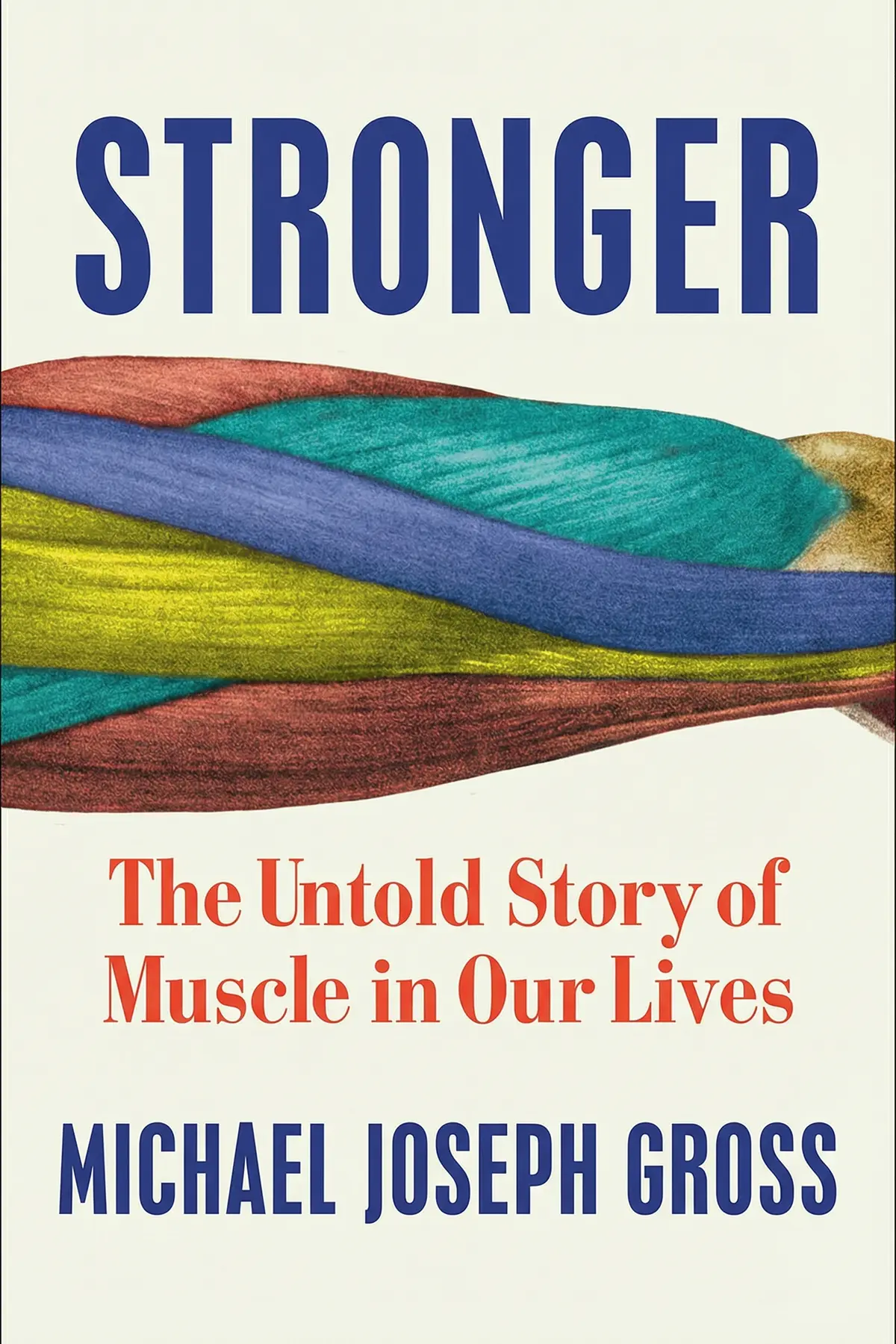
Stronger challenges the common perception that muscle-building is merely a pursuit of vanity or athletic dominance. Instead, it frames physical strength as an essential human right and a powerful form of preventative medicine. The book explores the historical roots of why we separated mind and body, tracing how ancient philosophers and doctors inadvertently created the modern 'meathead' stereotype. Through compelling stories of pioneers like powerlifter Jan Todd and transformative research into geriatric strength, the narrative shows that the capacity for muscle growth never truly leaves us, even into our nineties. It promises a roadmap for reclaiming physical agency, explaining how progressive resistance training can effectively treat chronic issues like depression, diabetes, and age-related decline. Ultimately, the book serves as an invitation to stop treating our bodies as luggage and start treating them as the sophisticated, powerful engines they were evolved to be.
Michael Joseph Gross is an acclaimed journalist and author known for his deep dives into culture, business, and technology. A longtime contributing editor at Vanity Fair, his work has appeared in numerous major publications. He is also the author of Starstruck, a study of celebrity culture, and has shared his insights on major platforms including CBS Mornings and NPR.
Listeners find the book captivating and well-crafted, with one noting it as a required read for students of the iron game. The depth of documentation is impressive, and one listener calls attention to the intriguing ancient history about muscles. Listeners value the fitness guidance; one listener points out the amazing research about weight training benefits, while another listener mentions the focus on remaining fit at any age. Listeners find the work eye-opening, with one describing it as transformative for the mind.
As a long-time devotee of physical fitness, I found Stronger to be an essential addition to my bookshelf. Michael Joseph Gross provides a meticulously researched exploration of the iron game that goes far beyond simple gym advice. The way he weaves ancient history with modern physiology is nothing short of masterful. I was particularly struck by the sections on how our ancestors viewed physical strength as a moral virtue. To be fair, some chapters lean heavily into the academic side, which might slow down casual readers. However, the transformative insights into how muscle impacts our mental state made every page worth the effort. It’s rare to find a book that treats weight training with such intellectual rigor and respect. It is truly an enlightening read.
Show moreMichael Joseph Gross has written a truly wonderful book that explores the history of muscle with both depth and passion. The chapter on the Ancient Greeks was a particular highlight for me, as it provided a fascinating look at the origins of physical culture. The research is amazing and the storytelling brings the benefits of weight training into sharp focus. Not everyone will appreciate the length, but I felt every chapter added something valuable to the narrative. It’s a transformative piece of work that makes you want to go out and lift something heavy immediately. If you are a student of the iron game, you need this on your shelf. It’s brilliant, dense, and deeply human.
Show moreWhat an enlightening read for anyone who wants to understand the deeper connection between their mind and their muscles. This isn't just another workout manual; it's a transformative look at the physiology of strength and its historical roots. I loved the focus on the Ancient Greeks and how they integrated physical training into their daily lives. The storytelling is excellent and really brings the benefits of weight training into focus. Even though it's a bit heavy on detail, the message is clear: muscle is vital for a long, healthy life. I’m already looking into getting more kettlebells for my home gym! This book is truly a must-read for anyone interested in physical fitness for all ages.
Show moreGetting older makes you realize how vital muscle mass is for basic independence, and this book hammers that point home perfectly. Gross is a compelling storyteller who brings the lives of various iron game figures into sharp focus. I particularly enjoyed the segments on the physiology of aging and how we can counteract physical decline with simple tools. To be fair, the book is quite long and the writing can feel a bit heavy at times, but the information is too good to ignore. It has definitely changed my perspective on why I head to the gym every morning. It’s a must-read for anyone concerned about long-term health and mobility. I'll be keeping this one as a reference.
Show moreAfter hearing so much about how weight training combats a sedentary lifestyle, I picked this up for some motivation. The book does a fantastic job of demonstrating how something as simple as resistance training can lead to a more mobile life. It’s quite interesting to see the historical context Gross provides, moving from the Ancient Greeks to modern-day kettlebell enthusiasts. While the middle chapters can be a little unengaging, the overall wealth of information makes it a worthwhile read for the health-conscious. Not gonna lie, it’s a bit of a commitment to get through the whole thing, but the fitness advice is sound. It’s definitely more than just a meathead manual; it's a thoughtful study of our bodies.
Show moreFinally got around to finishing this deep dive into why we lift things up and put them down. As someone who enjoys anatomy and physiology, I found the technical descriptions of muscle contractions surprisingly engaging. Michael Joseph Gross has clearly done his homework, as the book is filled with well-documented research and interesting ancient history. It’s a wonderful resource for students of the iron game who want to know the why behind their training. My only gripe is that it can feel a bit bloated in the later chapters. Despite the occasional slog, the core message about maintaining mobility through resistance training is incredibly important for everyone. It is a very enlightening and well-written piece of fitness literature.
Show moreI really wanted to love this more than I did, but the middle sections were a bit of a slog. The introduction was absolutely stellar and set a high bar that the rest of the book struggled to maintain. While I appreciate the deep dive into the abundant health benefits of lifting weights, the organization felt somewhat chaotic and hodgepodge. It’s great to see a modern author defending the importance of physical fitness for all ages, especially in our sedentary culture. However, the storytelling becomes repetitive after the third or fourth person discovers the wonder of muscle. It’s a solid piece of research, but it could have used a much tighter edit to keep the momentum going throughout its 360 pages.
Show moreThe truth is, this book could have been half its current length and still managed to convey its core message effectively. While the 'muscle good' takeaway is vital for anyone facing the realities of aging, the narrative feels incredibly repetitive after a while. I felt like I was reading the same archetypal story about a person discovering the wonders of the kettlebell over and over again. Gross is a talented writer, and his ability to humanize the science of physiology is impressive, but the pacing is a slog. It’s a decent reference for those curious about the ancient history of muscle, yet it lacks the spark needed to be a true page-turner. I finished it, but it was work.
Show moreLook, the information here is undeniably fascinating, but the delivery is often quite dry and academic. I appreciate the focus on how moving dumbbells can preserve mobility and independence as we age, which is a message more people need to hear. However, the writing style lacks the energy I expected from a book about physical strength and vitality. At 360 pages, it feels unnecessarily long and occasionally wanders off into tangents that don't serve the central theme. To be fair, it's a well-documented resource for anyone interested in the history of the iron game. I just wish the narrative was as powerful as the subject matter itself. It’s good, but prepare for a slow read.
Show moreThis felt less like a cohesive narrative and more like an unorganized hodgepodge of historical anecdotes and anatomical trivia. I picked it up hoping for a motivating guide on resistance training, but I found myself drowning in a 360-page history lesson that never quite found its rhythm. Frankly, the writing style is far too dry for the subject matter, making it a genuine struggle to stay engaged past the first hundred pages. While the research is clearly well-documented, the book is massively bloated and repeats its central themes until they lose their impact. If you are looking for practical fitness tips, you might want to look elsewhere. It’s just too heavy for what it offers. I eventually gave up.
Show moreJonathan Eig
Elisabeth Rosenthal
AUDIO SUMMARY AVAILABLE
Get the key ideas from Stronger by Michael Joseph Gross, plus 5,000+ more titles in English and Thai.







