
A Short History of Nearly Everything
Bill Bryson
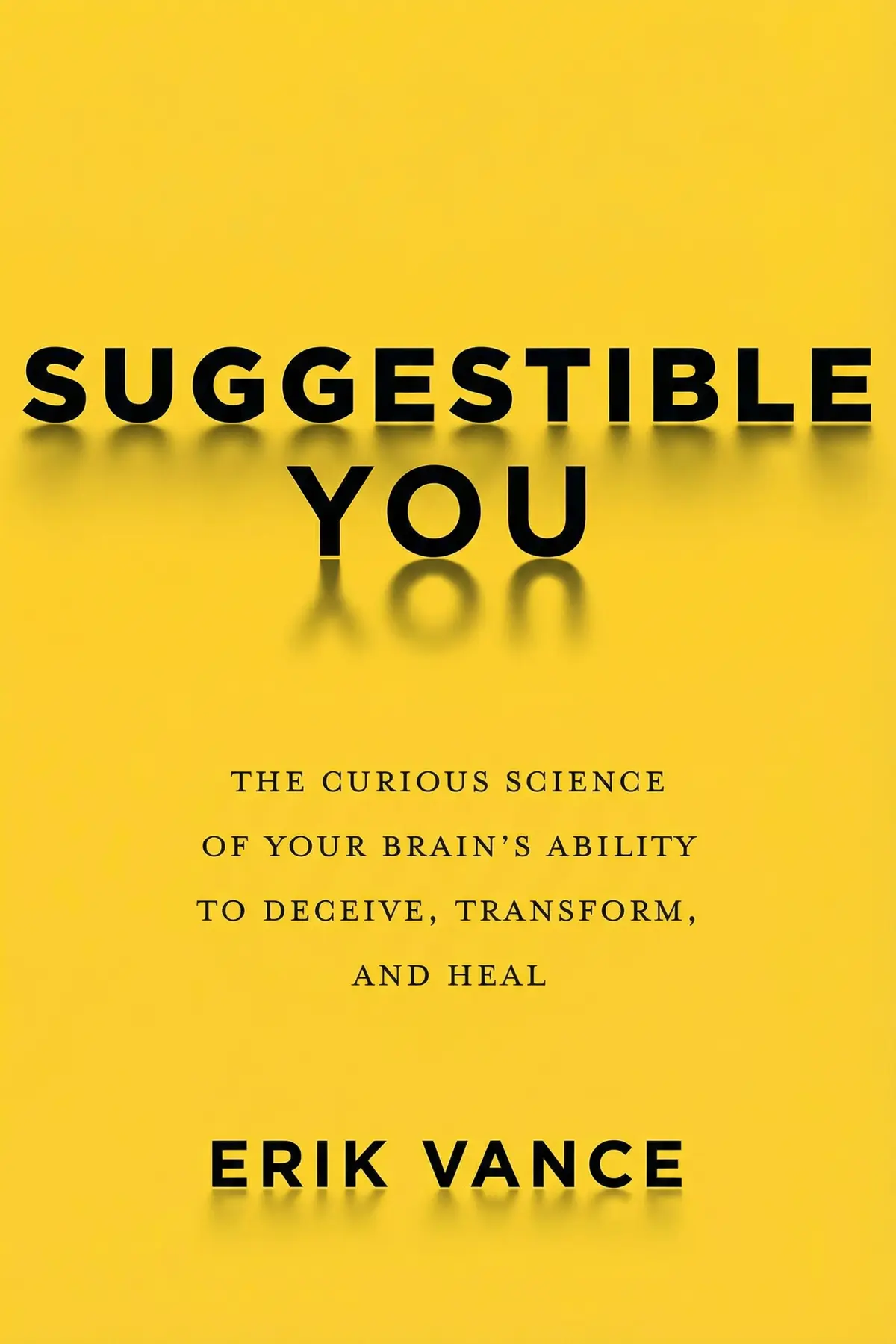
Explore the fascinating intersection of neuroscience and psychology as Erik Vance reveals how our expectations, beliefs, and suggestibility can fundamentally alter our physical health, memory, and perception of reality.
1 min 45 sec
Have you ever wondered why a simple sugar pill can sometimes cure a persistent headache, or why a childhood story can linger in your mind with more detail than yesterday’s lunch? The answer lies in the incredible, often deceptive, power of the human brain. We like to think of our minds as objective recorders of reality, but the truth is far more complex and strange. Our brains are not passive observers; they are active creators of our experiences, driven by one primary force: expectation.
In this exploration of the science of suggestibility, we are going to look at the ways your mind tricks your body into healing, how it can accidentally make you sick, and why your memories are much less reliable than you think. This isn’t just about magic tricks or stage shows; it’s about the deep-seated biological mechanisms that allow us to function in a world full of sensory information.
Behind every placebo, every hypnotic trance, and every false memory is a brain trying to make sense of the world by anticipating what will happen next. Our minds have a distinct dislike for being wrong, so when the world doesn’t match what we expect, the brain often chooses to rewrite reality rather than admit its error. This throughline—the idea that our internal expectations dictate our external outcomes—is the key to unlocking a deeper understanding of human health and behavior. Over the next several chapters, we will journey through the internal pharmacy of the brain, the risks of negative thinking, and the ways you can learn to harness your own suggestibility to lead a more empowered life. Prepare to challenge everything you thought you knew about your own perceptions as we dive into the science of your suggestible mind.
2 min 03 sec
Uncover how the brain uses stories and context to trigger physical healing, even when the medicine itself contains no active ingredients.
2 min 06 sec
Your mind has its own hidden arsenal of powerful chemicals, from opioids to antidepressants, that it releases based on what you believe.
2 min 03 sec
Not everyone responds to placebos in the same way, and scientists are discovering that your DNA might determine how easy you are to influence.
2 min 11 sec
Belief isn’t always a force for good; explore how negative expectations can manifest as real physical illness and widespread panic.
2 min 14 sec
Moving beyond stage tricks, learn how hypnosis creates a state of hyper-suggestibility that can even allow for surgery without traditional anesthesia.
2 min 20 sec
Your memories are not a fixed recording of the past; they are constantly being rewritten by your current beliefs and outside suggestions.
2 min 35 sec
From the labels on wine bottles to the cravings of an addict, discover how external cues manipulate our physiological desires and tastes.
2 min 16 sec
Learn how to use the principles of suggestion to improve your own life while avoiding the pitfalls of charlatans and dangerous medical advice.
1 min 46 sec
As we conclude this journey through the suggestible mind, the overarching lesson is clear: our brains are not merely mirrors of reality, but active architects of it. From the way we experience a simple sugar pill to the way we reconstruct our very past, expectation is the thread that binds our experiences together. We have seen that the brain is a magnificent, internal pharmacy, capable of dispensing powerful chemicals that can heal or harm depending on the signals we give it.
We’ve explored the ‘meaning response’—the idea that the context and story surrounding a treatment can be just as important as the treatment itself. We’ve looked at the dark potential of the nocebo effect and how fear can manifest as physical illness. We’ve debunked the myths of hypnosis to find a valuable tool for pain management, and we’ve learned that our memories are far more fragile than we’d like to admit.
What this really means for you is that you have a certain level of agency in how you experience the world. By understanding your own suggestibility and the narratives that drive you, you can begin to steer your expectations in a more positive direction. However, this power comes with the responsibility of discernment. In a world where suggestibility can be manipulated by marketing or misinformation, staying anchored in critical thinking is essential.
Ultimately, the science of suggestibility is a reminder of the profound connection between the mind and the body. It tells us that we are not just victims of our biology, but active participants in our health and wellbeing. As you move forward, remember that the stories you tell yourself and the expectations you hold are more than just thoughts—they are the blueprints for the physical reality your body lives in every day. Use that power wisely, stay curious, and never underestimate the transformative potential of your own suggestible mind.
Suggestible You dives deep into the hidden mechanisms of the human mind, focusing on how expectation acts as a powerful architect of our experiences. The book investigates the science behind placebos, the darker influence of nocebos, the misunderstood world of hypnosis, and the reconstructive nature of human memory. By examining the internal chemical reactions triggered by belief, Vance provides a roadmap for understanding why some people heal through faith or alternative medicine while others remain unaffected. It promises to reveal the brain's ability to deceive itself for the sake of survival and comfort, offering readers a new perspective on the boundaries of modern medicine and the untapped potential of their own suggestibility.
Erik Vance is an award-winning science journalist with a background in biology. Before transitioning to journalism in 2005, he worked as a researcher, educator, and environmental consultant. His writing has been featured in prestigious publications like National Geographic, the New York Times, Scientific American, and Harper’s Magazine. He also serves as a contributing editor for Discover magazine.
Listeners find the work highly informative and captivating, with one listener noting it is thoroughly documented. They appreciate the health-related content, as one listener highlights the book's focus on how humans recover from illness and pain. Offering deep understanding, one listener mentions it spurs introspection on every page, while listeners value its overall impact, one noting its significant implications for human potential. The prose receives positive feedback, including one listener who likens the style to Mythbusters, though opinions on the author’s specific approach vary.
Erik Vance has a gift for making dense neuroscience feel like an episode of Mythbusters. He dives headfirst into the world of placebos and false memories, showing us that our brains are far more malleable than we’d like to admit. To be fair, some of the anecdotes about faith healing might make a skeptic’s skin crawl, but the underlying data on opioid cascades is hard to ignore. I found myself questioning my own reactions to pain and medication on nearly every page. This isn't just a book about science; it’s a manual for understanding the human potential for recovery. The way he frames the mind-body connection as a 'social immune system' is nothing short of brilliant. If you want to understand why you feel better just by talking to a kind doctor, you need to read this. It’s well-documented, punchy, and incredibly insightful throughout.
Show moreNot gonna lie, I was skeptical about how much a book could tell me about my own brain that I didn't already know. However, Vance’s exploration of the 'suggestible you' is a masterclass in introspection and human potential. The chapter on false memories was terrifyingly insightful, showing just how easy it is for our minds to manufacture entire life events. I particularly loved the section on religious healing; it was handled with a level of respect and scientific curiosity that you rarely see together. The book is well-documented and provides a fantastic overview of how our beliefs act as a gateway to our physical health. It really makes you think about the power of the mind in a whole new light. This is one of those rare books that actually changes the way you perceive your own body and its ability to heal.
Show moreVance explores the murky waters of human recovery with a level of curiosity that is both infectious and intellectually stimulating. The way he describes the brain as a storyteller that sometimes lies to keep the body functioning is just incredible. I was particularly struck by the mention of 'open-label' placebos—the idea that knowing you're taking a sugar pill doesn't necessarily stop it from working! This book is packed with these kinds of 'wait, what?' moments that spur introspection on every page. The writing is sharp, clear, and avoids the usual academic jargon that kills books like this. It’s an essential read for anyone who wants to understand the hidden mechanics of belief and the very real neuro-chemicals that drive our health. This book has significant implications for how we should view medicine in the future.
Show moreEver wonder why a simple sugar pill can sometimes outperform expensive medication? This book explores that mystery with a perfect balance of curiosity and skepticism. Vance does a great job explaining how our expectations shape our reality, particularly regarding the nocebo effect and chronic pain. The section on sham surgeries was particularly eye-opening, making me realize how much of modern medicine relies on the theater of the cure. Look, the science is presented in a way that's accessible without being condescending, which is a rare feat in popular non-fiction. I did feel like the ending was a bit rushed, especially the part about how we can apply these findings to our daily lives. Still, it’s a very informative read that offers a significant look at how suggestible we truly are. I’d recommend it to anyone interested in psychology or holistic health.
Show morePicked this up after seeing the National Geographic feature and it did not disappoint in terms of sheer information density. The author explores how our internal pharmacy works, specifically how we can trigger neuro-chemical releases through nothing but belief. I was especially floored by the research on naloxone blocking the placebo effect, proving there's a physical reality to these 'mind tricks.' The writing style is conversational and engaging, though some of the transitions between chapters felt a little disjointed to me. In my experience, books on the brain can get dry, but Vance keeps things moving with a mix of field reporting and lab data. It’s a fascinating deep dive into human recovery that stays with you long after you finish the last chapter. Definitely worth a spot on your shelf if you're into the mind-body connection.
Show moreThe chapter on hypnosis alone is worth the price of admission, especially if you listen to the audiobook version with the induction appendix. I tried the hypnotic exercise while stressed out, and the state of relaxation I achieved was unlike anything I've experienced before. Personally, I think the author hits the nail on the head regarding how much our social environment impacts our mental well-being. It isn't just about the pills we take, but the context in which we take them. The book provides great insight into the placebo effect, but it also warns about the nocebo effect—how fear can literally make us sick. My only gripe is that I wish there was more focus on how to consciously avoid negative suggestions in daily life. Aside from that, it’s a very informative and thought-provoking read for anyone curious about neuroscience.
Show moreFinally got around to finishing this, and I’m still thinking about how much of our daily health is governed by belief rather than biology. The discussion on PTSD as a form of the nocebo effect was a real lightbulb moment for me. It makes so much sense when you view it as the brain reacting to a threat that isn't currently there. Vance’s style reminds me of a more refined Mythbusters, where he's willing to test these theories on himself. While I agree with some critics that he can be a bit soft on pseudoscience, the broader point about the importance of the 'healing environment' is undeniable. We really do need to realize that mental health is a group effort involving our families and societies. Overall, this is a very informative book that offers a lot of food for thought regarding the power of suggestion.
Show moreThe premise here is absolutely gripping, yet I found myself struggling with the author’s tendency to walk a tightrope between hard science and speculative fluff. Frankly, Vance spends a lot of time trying to placate people who believe in homeopathy while simultaneously citing studies that prove it's the placebo effect at work. Why bother clinging to foundationally dishonest industries when we could just integrate better bedside manners into legitimate medicine? The chapters on hypnosis were fascinating, but the narrative often drags when it shifts toward personal anecdotes that don't always support the central thesis. It is a solid look at brain science, but it leaves you wanting more practical advice on how to actually harness these effects. I enjoyed the read for the trivia, but the 'both sides' approach felt a bit intellectually muddy at times.
Show moreIt’s a solid deep dive into the placebo effect, though I'm not gonna lie, the narrative drags a bit when the author gets too bogged down in personal anecdotes. Vance clearly knows his stuff, and the research into how opioids are naturally triggered by expectation is genuinely fascinating. But at times, the book feels more like a travelogue than a scientific exploration. He goes to great lengths to describe his travels to meet healers, which is interesting, but it often interrupts the flow of the actual data. I also expected a bit more practical advice on how to use suggestibility to improve my own health habits. In short, it’s a good book if you want a general overview of the topic, but it might feel a bit light if you’re already familiar with the work of people like Dan Ariely or Oliver Sacks.
Show moreWhile the subject of suggestibility is undeniably important, this book feels like a missed opportunity to actually debunk the pseudoscience it covers. Vance seems more interested in defending 'suggestible' people who embrace delusions than in championing objective truth. He spends a massive amount of time on the benefits of hypnosis but barely touches on the ruinous effects of gaslighting or predatory 'cures' like homeopathy. To be honest, I found his argument that we should embrace fake treatments just for the placebo effect to be fundamentally dishonest and dangerous. Why should we preserve industries that lie to patients? The science he actually cites is interesting, but it's buried under a mountain of anecdotes that feel designed to avoid offending anyone. If you're looking for a rigorous scientific critique of the placebo effect, you might want to stick to academic articles instead of this.
Show moreBill Bryson
Jeff Hawkins
Steven C. Hayes
Deborah Gruenfeld
AUDIO SUMMARY AVAILABLE
Get the key ideas from Suggestible You by Erik Vance, plus 5,000+ more titles in English and Thai.







