
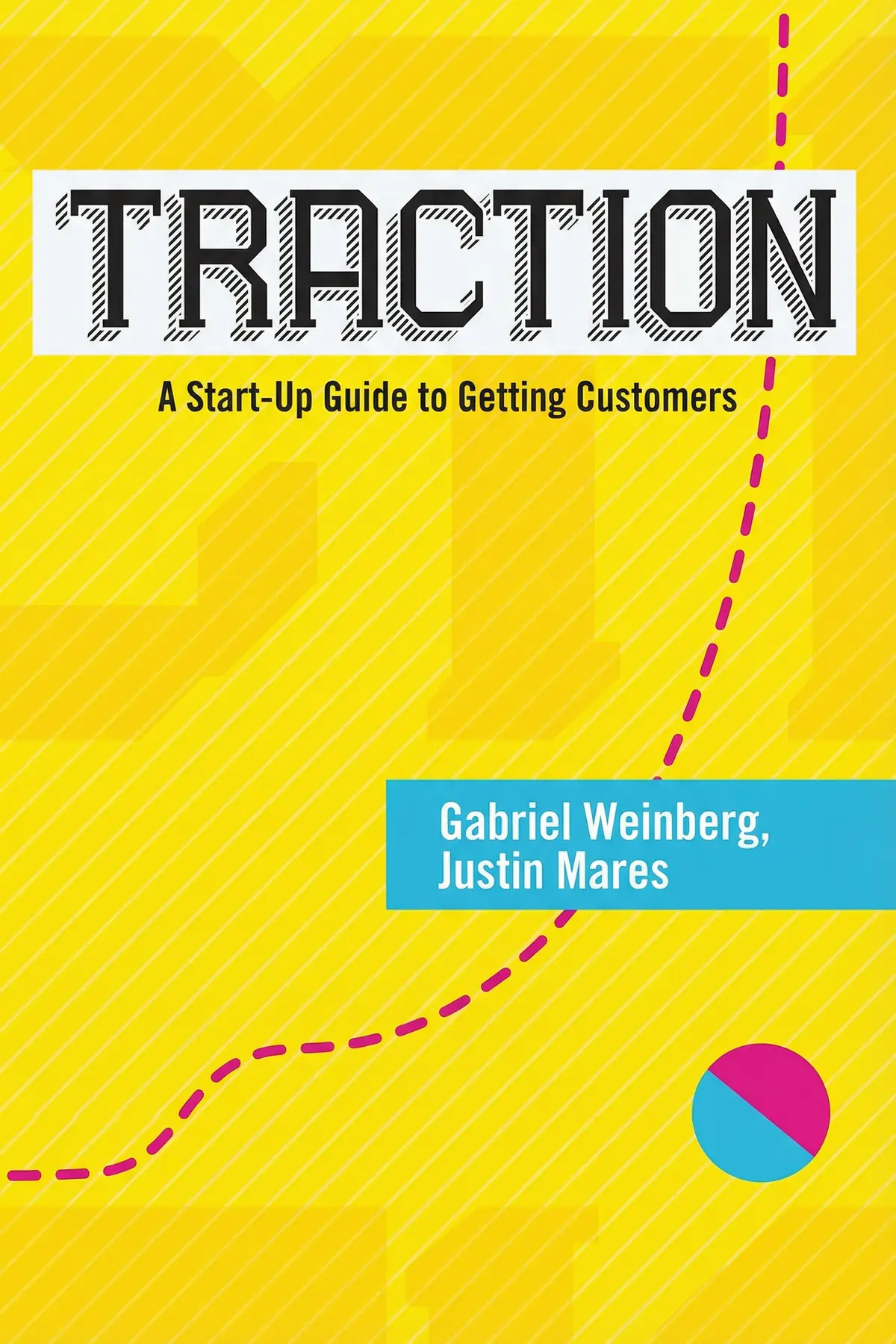
Traction: A Start-Up Guide to Getting Customers
Gabriel Weinberg
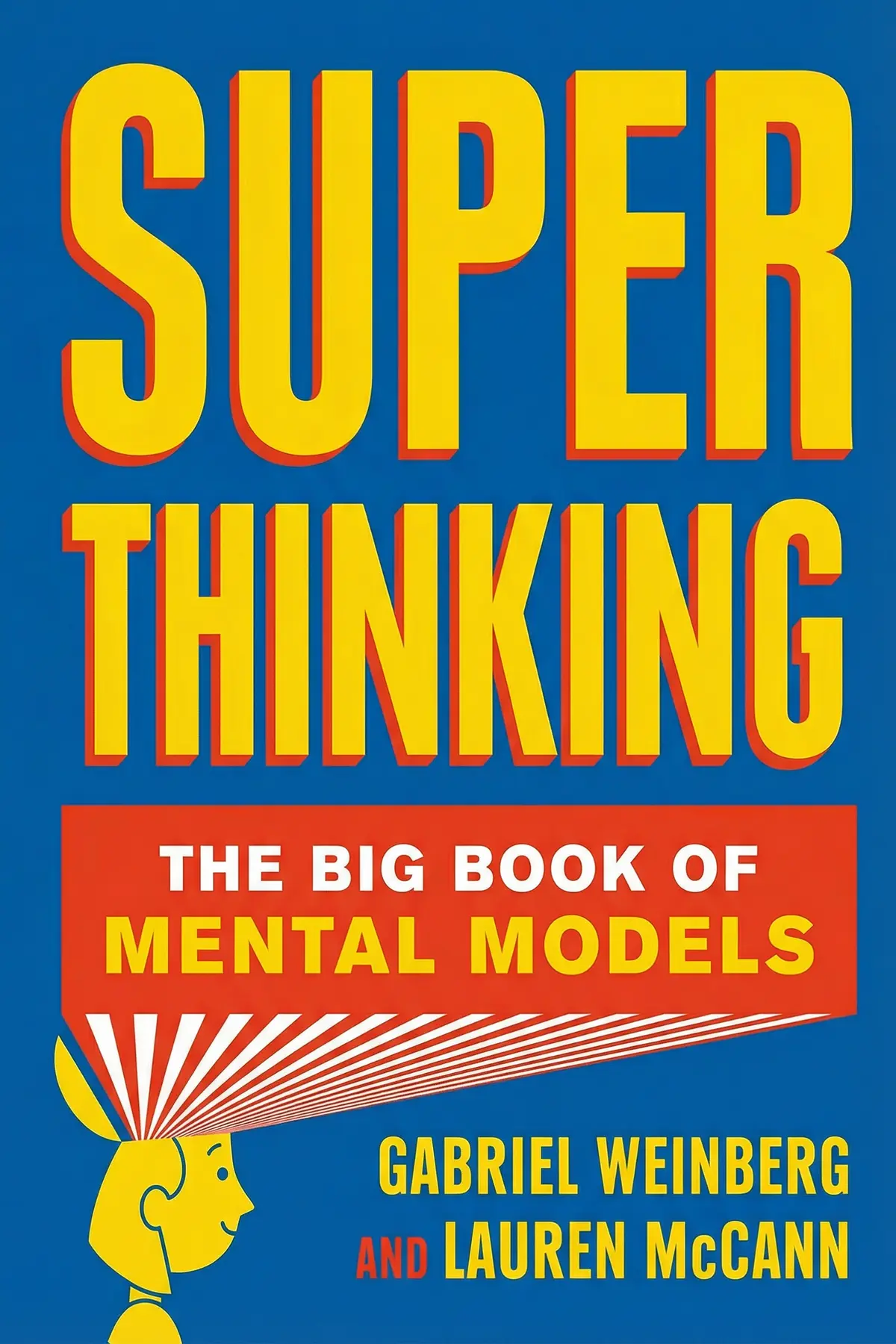
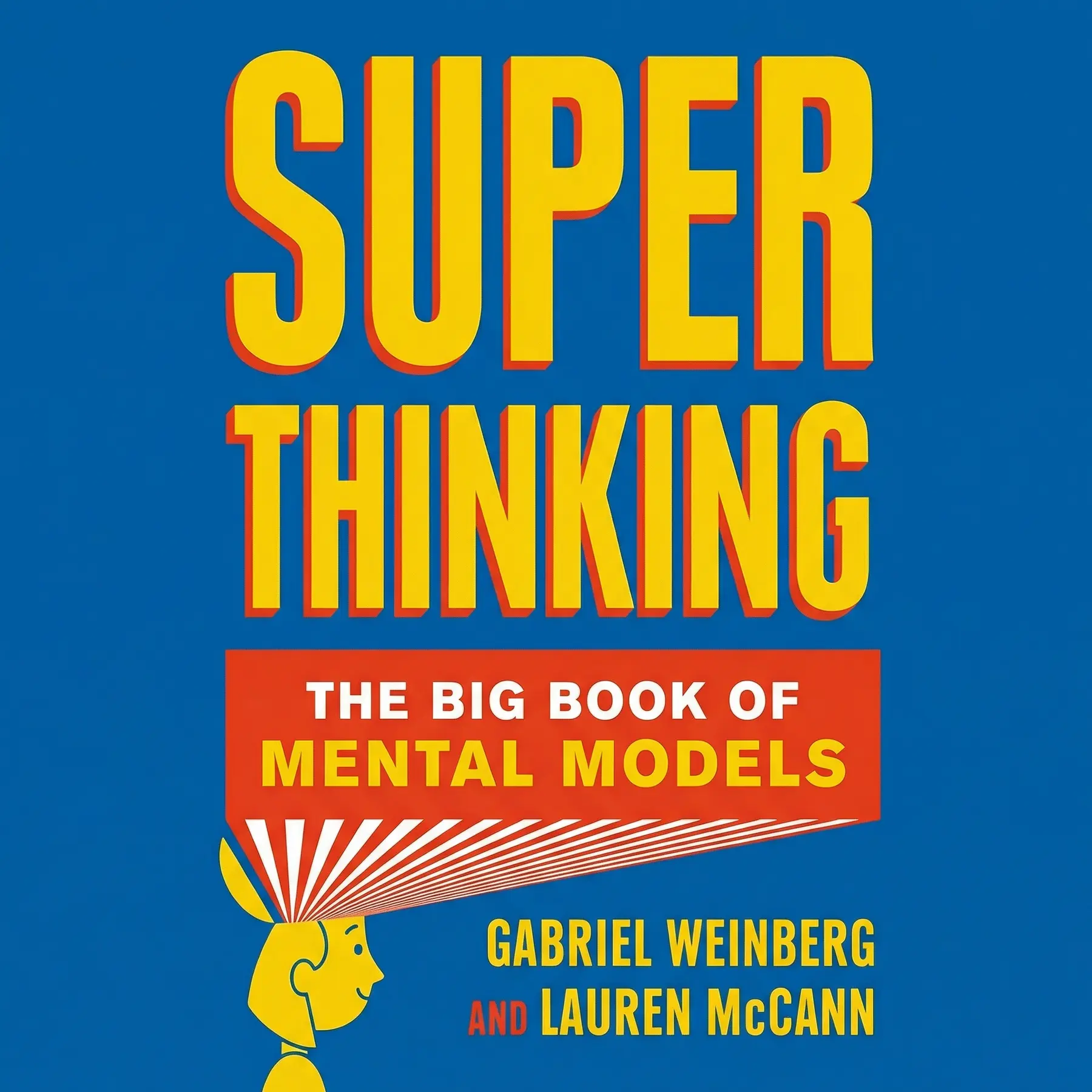
Super Thinking explores the mental models used by the world's most effective problem-solvers. Learn how to apply concepts from physics, economics, and psychology to make better decisions and avoid common cognitive errors.
1 min 46 sec
Think about the last time you felt truly stuck. Perhaps you were faced with a career choice that seemed impossible to parse, or maybe you were trying to understand why a relationship or a project wasn’t moving forward. In those moments, it often feels like we are missing a piece of the puzzle. But what if the problem isn’t a lack of information? What if the problem is the way we are processing that information?
This is where the concept of worldly wisdom comes in. It’s a term often associated with the legendary investor Charlie Munger, who argued that simply knowing a collection of isolated facts isn’t particularly useful. Facts are just data points. For them to be truly powerful, they need to hang together on what he called a ‘latticework of theory.’ Without that structure, you don’t have usable knowledge; you just have a memory bank of trivia. Worldly wisdom is the art of taking theoretical models from various disciplines—like physics, economics, and philosophy—and plugging them into your everyday life to see the world more clearly.
In this exploration of the concepts found in Gabriel Weinberg and Lauren McCann’s work, we are going to look at how to build that latticework for yourself. We call this ‘super thinking.’ It’s about moving beyond gut feelings and reaction-based decisions. Instead, you’ll learn to use proven cognitive blueprints to make sense of the chaos around you.
Throughout this journey, we’ll see how a 14th-century principle can streamline your personal life, why trying to be ‘right’ is often less effective than focusing on how not to be ‘wrong,’ and how the way we frame our social interactions can completely change the outcomes we get. By the end of this session, you’ll have a new set of lenses through which to view your challenges, allowing you to act with more confidence and fewer regrets. Let’s dive into the models that can take your cognitive performance to the next level.
2 min 14 sec
Discover how the same principles used in nuclear physics and technological revolutions can help you understand the hidden dynamics of your daily life.
2 min 32 sec
Learn why the secret to success often lies in avoiding mistakes and how breaking problems down to their core can lead to revolutionary solutions.
2 min 29 sec
Simplicity is more than just an aesthetic choice; it’s a powerful tool for making more accurate predictions and finding better partners.
2 min 23 sec
Unlock a fairer way of seeing the world by understanding the hidden biases that cloud your judgment of others and your own sense of justice.
2 min 21 sec
In a world of constant change, the ability to update your beliefs is more valuable than any fixed piece of knowledge.
2 min 12 sec
Numbers can tell stories, but they can also lie. Learn how to spot the statistical errors that lead most people astray.
2 min 25 sec
Understanding why we do favors for some and charge fees for others can help you avoid awkward social blunders and improve cooperation.
1 min 41 sec
As we wrap up our look at the principles of super thinking, it’s worth reflecting on how these models connect. We began with the idea of a latticework—a structure where different theories from different worlds intersect to give us a more complete picture of reality. We saw how the physics of critical mass can explain the success of a startup, and how the philosophy of Ockham’s Razor can simplify our personal choices. We explored the importance of being adaptable, the necessity of avoiding unforced errors, and the nuanced difference between social and market incentives.
The throughline in all of this is intentionality. Most of the mistakes we make in life aren’t the result of being unintelligent; they are the result of using the wrong tools for the job. We use our emotions where we should use logic, or we use anecdotal evidence where we should use statistical rigor. Super thinking is about slowing down long enough to ask, ‘Which model applies here?’ It’s about building a mental library that you can rely on when the stakes are high.
If you want to start putting this into practice today, try a very simple but powerful tool: the numbered pro-con list. When you are faced with a big decision, don’t just list the positives and negatives. Assign each one a value from -10 to +10. This forces you to acknowledge that not all factors are equal. Is the high salary of a new job (+9) worth the three-hour daily commute (-8)? By quantifying your values, you are conducting a systematic analysis rather than just following a gut feeling. This is the first step toward building your own latticework of worldly wisdom. Remember, the goal isn’t just to think more; it’s to think better. By using these super models, you aren’t just reacting to the world—you are mastering it.
Have you ever felt overwhelmed by the sheer number of decisions you have to make, or found yourself stuck in a cycle of repetitive mistakes? Most of us rely on intuition or luck to navigate life's complexities, but there is a more reliable way to approach the world. Super Thinking introduces the concept of mental models—reusable cognitive frameworks that help you interpret data, predict outcomes, and solve problems with clarity. By drawing on a vast array of disciplines—from the mathematical rigors of first principles thinking to the psychological nuances of social norms—this summary provides a toolkit for the mind. You will discover how to avoid unforced errors in judgment, why the simplest explanation is often the most accurate, and how to stay adaptable in an ever-changing environment. The promise is simple: by building a latticework of these super models, you can upgrade your decision-making process from a series of guesses to a disciplined practice of worldly wisdom.
Gabriel Weinberg is the founder and CEO of the internet privacy company DuckDuckGo and the author of the growth guide Traction. Lauren McCann is an experienced statistician and researcher who has designed clinical trials in the pharmaceutical industry and holds degrees from MIT. Together, they bring a mix of entrepreneurial strategy and mathematical rigor to the study of effective thinking.
Gabriel Weinberg
Listeners find that this work offers deep insights through thorough research and captivating examples, making it a mandatory read for any student of life. They also appreciate the clear summaries of mental models, which they find applicable to both their personal lives and professional careers. Furthermore, listeners highlight the engaging storytelling and writing style, describing the subject matter as highly intriguing.
Picked this up after seeing a glowing recommendation from Annie Duke, and the hype is actually real. Gabriel Weinberg and Lauren McCann have essentially built a master class in cognitive frameworks that simplifies complex decision-making. As the CEO of DuckDuckGo, Weinberg brings a tech-savvy perspective that makes the examples feel current rather than dusty or academic. I loved the heavy Charlie Munger influence; it’s like having a billionaire’s mental playbook condensed into one accessible volume. The writing style is punchy and visual, using comics and graphs to break up dense concepts like game theory or critical mass. It’s a required read for anyone who wants to stop making the same predictable errors in judgment. Truth is, I’ll be keeping this on my desk as a reference guide for years because you can’t possibly absorb all these models in a single sitting. It’s dense, yes, but incredibly rewarding if you take the time to digest the material. This is a toolkit for life.
Show moreFinally got around to reading this, and I'm honestly annoyed I waited so long. This is perhaps the most comprehensive collection of 'super models' I’ve ever encountered in one place. I was particularly struck by the application of 'critical mass' to habit formation and wealth accumulation; it's a perfect example of how physics principles can explain social phenomena. The authors have a gift for taking high-level concepts and making them feel relevant to a modern audience. Whether you’re an entrepreneur or just a student of life, there is something here that will challenge your current perspective. The synthesis of ideas from Daniel Kahneman and Nassim Taleb into a practical framework is nothing short of impressive. To be fair, you have to be in the right headspace to tackle this much information, but the payoff is immense. My decision-making process feels significantly more robust after just one pass through these chapters. It really is an essential guide for the modern thinker.
Show moreWow, what an absolute powerhouse of a book! Super Thinking is an essential toolkit for anyone looking to navigate the complexities of the 21st century with more clarity. I loved the breakdown of 'first principles'—the method used by Descartes and Elon Musk to strip a problem down to its fundamental truths. It’s a refreshing departure from the usual 'follow your gut' advice you find in most self-help sections. The authors' ability to weave together diverse disciplines like biology, economics, and psychology into a single narrative is truly remarkable. The book is visually engaging with its various graphs and comics, which helps reinforce the concepts without feeling like a textbook. Gotta say, this is one of those rare books that actually changes how you look at the world the moment you put it down. If you want to be more resilient, adaptable, and realistic in your decision-making, you need to read this as soon as possible. It is a masterclass in effective reasoning.
Show moreAs someone who struggles with overcomplicating simple choices, the chapter on 'being less wrong' was a total game-changer for me. Super Thinking provides a structured way to approach the chaos of everyday life by using established scientific and philosophical principles. I particularly appreciated the discussion on 'anchoring' and how our first impressions often lead us astray during negotiations or even casual interactions. The authors do a great job weaving together disparate subjects like physics and business into a unified theory of smarter living. Look, the second half gets a bit heavy on management tactics and '10x teams,' which might not appeal to everyone, but the first few chapters are gold. The illustrations and graphs help visualize the concepts, making the technical jargon feel way less intimidating than your typical self-help manual. It’s an engaging, well-researched toolkit that actually gives you actionable ways to improve your daily judgment. I feel much more equipped to handle professional challenges now.
Show moreEver wonder why some people always seem to make the right call under pressure? This book argues it's not luck, but a collection of mental models that help them filter noise from reality. Weinberg and McCann have done a fantastic job aggregating the wisdom of giants like Warren Buffett and Charlie Munger into a single, cohesive guide. The storytelling approach kept me engaged, even when we were diving into more abstract concepts like entropy or the tragedy of the commons. Personally, I found the section on 'Luck Surface Area' to be the most inspiring part of the entire text. It challenges the reader to interact with more diverse groups of people to increase their chances of a lucky break. While some of the business jargon in the later chapters felt a bit repetitive, the overall value of the toolkit is undeniable. It’s a book that demands a slow read and frequent revisits to truly master the content.
Show moreAfter hearing several friends rave about this, I decided to see if the mental models hype was justified. It’s a very clever and well-organized text that serves as an excellent primer for higher-level thinking. I especially enjoyed the discussion on 'overfitting,' which is the opposite of Ockham’s Razor—using an overly complicated explanation when a simple one is better. The book is packed with these kinds of 'aha!' moments that make you realize how often we fall into predictable cognitive traps. In my experience, the best way to read this is in small chunks rather than a marathon session, as the density of ideas can be overwhelming. Some might find the descriptions a bit brief, but as a quick-reference guide for decision-making, it’s hard to beat. The writing is clear and unintimidating, making even the most complex theories feel accessible to a general reader. It’s definitely earned a permanent spot on my bookshelf for future consultations and reminders.
Show moreDirect, practical, and incredibly dense, Super Thinking is the kind of book you buy for your friends and then end up keeping for yourself. Gabriel Weinberg and Lauren McCann have created a fantastic synthesis of the most important concepts for navigating life’s hurdles. I loved the tech-focused examples from the DuckDuckGo CEO, as they provided a modern context for older philosophical ideas. The use of funny comics and simple graphs makes the learning process feel like a conversation rather than a lecture. Truth is, while I didn't love every single model—some felt a bit redundant or overlapping—the overall impact on my perspective was profound. It encourages a more disciplined approach to problem-solving that most of us were never taught in school. Whether you’re trying to build a '10x team' or just want to manage your time more effectively, there’s a model in here for you. It’s an impressive achievement in conceptual synthesis that I highly recommend to any curious mind.
Show moreThe concept of 'mental models' is fascinating, but this book feels more like a giant index than a cohesive narrative. While it’s certainly comprehensive, the sheer volume of concepts—from Ockham’s Razor to Luck Surface Area—means the authors rarely spend more than a page or two on each. This breadth comes at a significant cost to depth, leaving me wanting more real-world application for the tougher frameworks. Frankly, it felt like I was reading a summary of 50 other better books like Thinking Fast and Slow or Antifragile. If you’re looking for a broad introduction to how to think better, this is a solid jumping-off point, but don't expect to become a master strategist overnight. Some chapters, particularly those focused on professional 'market power,' felt a bit too rooted in hyper-capitalist success metrics for my liking. It's a useful directory, but not exactly a deep dive into the human psyche that I was craving.
Show moreTo be fair, there is a lot of great information packed into these pages. The authors clearly did their homework, citing everything from Deep Work to Predictably Irrational. However, I struggled with the shift in tone halfway through the book. The early focus on personal growth and 'first principles' thinking was excellent and felt universally applicable. But as the book progressed, it became increasingly focused on 'market power' and 'sustainable competitive advantage.' This hyper-fixation on professional achievement through a capitalist lens felt a bit narrow-minded and ignored the broader potential of these models for community building or personal ethics. I also found some of the examples to be a bit repetitive after a while. It’s a well-written book with a lot of heart, but the application of the models feels a bit skewed toward the corporate ladder. It's a solid 3-star read for me, though others in management might rate it much higher.
Show moreNot what I expected from a book that claims to help you think better. It felt like the authors tried to cram an entire university's worth of curriculum into 300 pages, and the result is a shallow mess. Each mental model is introduced, briefly defined, and then discarded before you can even begin to understand how to apply it to your life. I'd much rather read a deep dive on ten essential models than a dictionary-style list of 300 that I’ll forget by next week. Not gonna lie, the formatting with the comics and 'funny' images felt a little bit condescending, as if the readers couldn't handle the actual philosophy without a visual crutch. If you want to actually learn about game theory or cognitive bias, go read the original sources instead of this SparkNotes version. It might be okay as a coffee table book for quick flipping, but it lacks the intellectual rigor I was hoping for.
Show more

Steven C. Hayes

Deborah Gruenfeld
AUDIO SUMMARY AVAILABLE
Get the key ideas from Super Thinking by Gabriel Weinberg, plus 5,000+ more titles in English and Thai.







