
21 min
Talking to Crazy: How to Deal with the Irrational and Impossible People in Your Life
Talking to Crazy explores techniques for communicating with irrational people. Psychiatrist Mark Goulston provides a roadmap for de-escalating conflict, using empathy to disarm hostility, and maintaining your own sanity in difficult relationships.
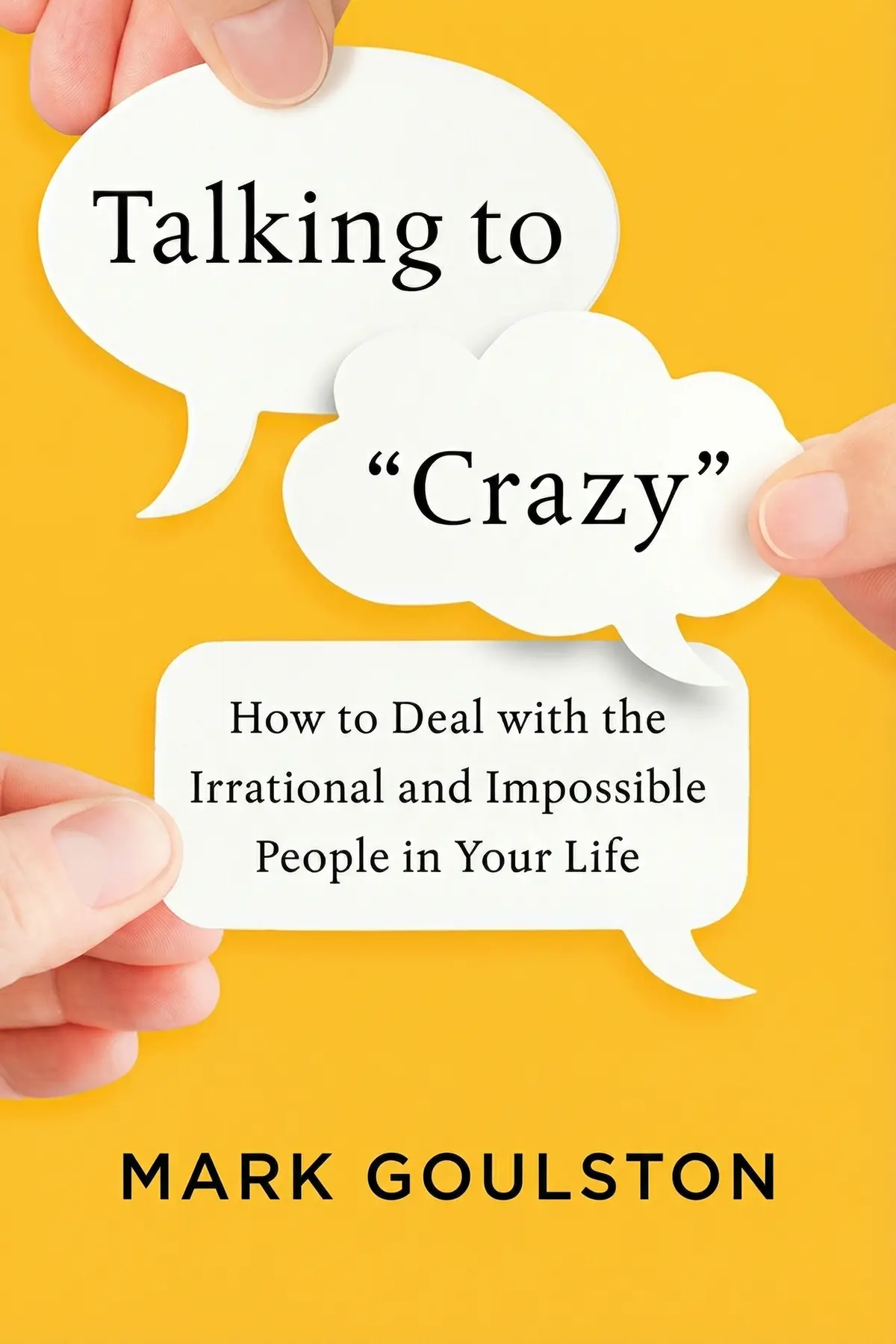
Table of Content
1. Introduction
1 min 48 sec
Picture this: You are in the middle of a perfectly normal afternoon when a colleague or a family member suddenly snaps. They make a comment that feels like a personal attack, or perhaps they start making demands that defy all logic. Your heart rate spikes, your face gets hot, and suddenly, you are shouting back. An hour later, as you are cooling down, you realize the entire exchange was absurd. You might ask yourself, ‘What is wrong with them?’ or even, ‘What is wrong with me?’
This is the starting point of Talking to Crazy. Dr. Mark Goulston suggests that we live in a world where irrational behavior is far more common than we like to admit. Most of us pride ourselves on being logical, reasonable adults, yet we frequently find ourselves trapped in ‘crazy’ interactions that leave us feeling drained and defeated. The central throughline of this guide is that you cannot argue with irrationality using logic. If someone is operating from a place of emotional dysfunction, your facts and figures will only make them dig their heels in deeper.
Instead, Goulston proposes a radical shift: we must learn to speak the language of the irrational. By understanding the psychological underpinnings of why people lose their minds—and why we occasionally lose ours—we can learn to de-escalate even the most volatile situations. Over the course of this summary, we will explore how to identify the specific triggers that send people over the edge, how to stay calm when someone is trying to drive you batty, and how to use specialized communication techniques to reach the sane person buried beneath the irrational exterior. Whether you are dealing with a manipulator, a narcissist, or someone who simply refuses to communicate, there is a way to bridge the gap without losing your own sanity in the process.
2. Admitting Our Own Irrational Tendencies
1 min 48 sec
Before you can handle someone else’s erratic behavior, you must first come to terms with your own capacity for being ‘crazy.’
3. Identifying the Triggers of Irrationality
1 min 42 sec
Irrational behavior is rarely random; it is usually a predictable reaction to deep-seated emotional triggers from the past.
4. The Futility of Logic in an Emotional Storm
1 min 37 sec
Trying to use facts to calm down an irrational person is like trying to put out a grease fire with water—it only makes things worse.
5. Using Empathy to Re-establish Sanity
1 min 34 sec
To bring someone back from the brink of irrationality, you have to be willing to temporarily enter their world.
6. Steering Clear of Power Struggles
1 min 38 sec
Most irrational outbursts are attempts to regain control; the best way to end them is to stop fighting for the steering wheel.
7. The Power of Preemptive Strikes and Clear Boundaries
1 min 40 sec
Protect your peace by addressing potential conflicts before they explode and setting non-negotiable limits on behavior.
8. Reaching the Sane Person Inside the Crazy Wrapper
1 min 35 sec
Even the most irrational person has a core of sanity; your job is to speak directly to that core while ignoring the outward noise.
9. Managing Manipulators and Chronic Takers
1 min 33 sec
Manipulative behavior is often a response to a fear of rejection; learn to handle it by being direct and refusing to be triangulated.
10. Handling Narcissists and Sarcastic Defenses
1 min 33 sec
When dealing with know-it-alls and cynics, the most effective strategy is to do exactly what they don’t expect.
11. Protecting Relationships and Family from Irrationality
1 min 33 sec
In high-stress personal relationships, the key to survival is moving from a ‘me vs. you’ mindset to a ‘we vs. the problem’ partnership.
12. Knowing When You Can't Fix the Crazy Alone
1 min 29 sec
Recognize the limit of your influence; clinical mental illness requires professional intervention, not just better communication.
13. Conclusion
1 min 30 sec
Dealing with irrational people is one of the most taxing challenges we face, but as we’ve explored, it doesn’t have to be a battle you are destined to lose. The core lesson of Talking to Crazy is that the most ‘logical’ response to irrationality is actually empathy. By refusing to engage in power struggles, identifying the hidden triggers behind outbursts, and speaking to the sane person hidden beneath the ‘crazy’ exterior, you can transform even the most toxic interactions.
Remember that your goal isn’t to win an argument or to prove that you are right. Your goal is to restore sanity and preserve your own peace of mind. This requires a high degree of emotional intelligence and the willingness to temporarily set aside your ego for the sake of the relationship.
One final, actionable tip to keep in your back pocket: when you are talking to someone who is in the middle of a ‘crazy’ episode, try focusing your gaze on their left eye. The left eye is connected to the right side of the brain, which processes emotions. Scientists and psychologists suggest that this can help you form a deeper emotional connection with the person and may actually help you stay more focused on their emotional state rather than getting caught up in their angry words. It is a small, physical reminder to stay empathetic and calm while the storm rages around you. By mastering these tools, you move from being a victim of the ‘crazy’ people in your life to being a steady, stabilizing force who can lead them—and yourself—back to sanity.
About this book
What is this book about?
Have you ever found yourself in an argument where logic seems to have no place? Whether it is a boss who refuses to listen, a partner who shuts down, or a friend who constantly manipulates, we all encounter people who act irrationally. Talking to Crazy is a guide designed to help you navigate these impossible interactions without losing your cool. Mark Goulston argues that trying to be rational with an irrational person is a losing game. Instead, he offers a set of psychological tools to 'lean into' the craziness, effectively disarming the other person through empathy and strategic communication. The book promises to transform your most stressful relationships by teaching you how to identify the triggers that send people into irrational spirals. You will learn how to bypass a person’s defensive shell to reach the sane individual hiding inside. From handling narcissistic know-it-alls to managing the silent treatment, this summary provides actionable strategies for reclaiming control over your social and professional life. By the end, you will understand not only how to handle others' outbursts but also how to recognize and manage your own moments of irrationality.
Book Information
About the Author
Mark Goulston
Mark Goulston is a highly regarded psychiatrist, business advisor, and executive coach. With years of experience in clinical practice and corporate consulting, he specializes in helping individuals and organizations overcome communication barriers. He is also the author of the bestselling books Just Listen and Get Out of Your Own Way, which further establish his expertise in human behavior and interpersonal dynamics.
Ratings & Reviews
Ratings at a glance
What people think
Listeners find the writing clear and accessible, with one listener remarking that it functions as an ideal guide for navigating challenging circumstances. Furthermore, the book provides relevant tips and actionable methods, labeling it an essential resource for those in caregiving roles. Listeners also value the focus on mindfulness, with one listener pointing out how it fosters a deeper sense of empathy toward others. The prose receives high marks, as one listener observes it is authored by a psychiatrist for the average person. However, perspectives regarding the author’s particular style are mixed.
Top reviews
Ryan
Ever wonder why you can't win an argument with someone who's already decided to be unreasonable? This book was a total game-changer for me because it shifted my focus from trying to be 'right' to actually being effective. Goulston’s mindfulness approach helps you develop genuine empathy even when you're being yelled at, which sounds impossible until you try his techniques. I particularly loved the fawn-to-fear breakdown; it helped me realize how much I was enabling the difficult people in my life by trying to be the rational one. It’s written in a way that’s very easy to understand, making it a must-read for caretakers or anyone dealing with aging parents who have lost their filter. If you've ever felt like you're losing your mind because of someone else's drama, pick this up. It’s practical, direct, and surprisingly kind-hearted for a book with such a provocative title.
Show morePannipa
The chapter on identifying your own 'crazy' was the moment I realized this book was different from the dozens of other communication guides I've read. Goulston forces you to look inward before you start pointing fingers at your 'impossible' spouse or coworkers. This is a pragmatist's dream—packed with strategies that you can actually use the same day you read them. I especially appreciated the author's compassion; he clearly wants to help people heal their relationships, not just 'win' arguments. As a caretaker for an elderly relative, I found the empathy-building exercises to be a lifesaver during particularly stressful weeks. It's written by a psychiatrist who clearly understands the messiness of human interaction. This is the kind of book you keep on your shelf and revisit whenever you feel your patience wearing thin.
Show moreCarter
As someone who works in a high-stress library environment, I deal with irrational people on a daily basis, and this book has become my go-to manual. Frankly, the techniques Goulston describes for neutralizing a 'raging jerk' are worth the price of the book alone. He teaches you how to maintain your own peace of mind while dealing with people who are essentially having adult temper tantrums. The strategies are simple, do-able, and they don't require you to have a PhD in psychology to implement. I’ve already recommended this to several coworkers who were struggling with burnout. It’s refreshing to read a self-help book that is actually helpful and doesn't just sprout vague platitudes about 'staying positive.' It’s about real tools for real, messy situations.
Show moreSophia
Mark Goulston brings a unique perspective as a psychiatrist writing for the average person, stripping away the heavy clinical jargon to provide something actually usable. This book serves as a perfect handbook for those high-tension moments when logic just doesn’t work. The concept of 'leaning into the crazy' felt counter-intuitive at first, but once you apply it to a toxic coworker or a stubborn relative, the results are undeniable. Truth is, we all encounter people who are temporarily irrational, and Goulston gives us the tools to stay calm instead of matching their intensity. I appreciated the distinction between everyday irrationality and serious clinical disorders, which the author handles with a surprising amount of compassion. While some of the scripts felt a bit rehearsed, the underlying psychology is sound. It’s a solid resource for anyone tired of losing their cool during impossible conversations.
Show moreParichat
After hearing so much about this from colleagues, I decided to give it a shot to help with some family drama. It’s a very readable guide that focuses on garden variety irrationality rather than clinical insanity, which makes it applicable to almost everyone. I found the section on 'the bully' particularly helpful, as it teaches you how to set boundaries without escalating the conflict into a full-blown war. Goulston has a way of explaining complex emotional reactions in a way that feels accessible but not condescending. The advice to identify your own 'crazy' before judging others was a necessary reality check that most self-help books skip. Not every technique worked for me, and some of the examples felt a bit dated, but the overall framework for staying calm in the face of absurdity is excellent.
Show moreEmma
Finally got around to reading this after it sat on my nightstand for months, and I’m glad I did. It’s a vast improvement over most business psychology books because it actually addresses the emotional volatility we face in our personal lives too. The author's suggestion to stop being 'rational' with an irrational person was a lightbulb moment for me. It’s counter-intuitive, but leaning into their world actually helps de-escalate things much faster than arguing facts. I also loved the John Prine quote—it was a small touch that added a lot of soul to the writing. My only complaint is that some parts feel a bit like they were written for a corporate seminar, but the core advice is solid. It’s a very practical handbook for anyone who feels like they're constantly walking on eggshells around a certain someone.
Show moreSavannah
Not what I expected from a book with such a flashy title. I thought it would be a cynical guide to winning arguments, but it’s actually a very thoughtful look at how to communicate with compassion and boundaries. Goulston manages to bridge the gap between clinical psychiatry and everyday common sense. The section on sociopaths was a stark contrast to the rest of the book, but it was a necessary warning to not try and 'fix' everyone. I did find the author's style a bit over-simplified at times, as if he was trying too hard to be relatable, but the content itself is top-notch. It helped me realize that most irrational behavior is just a cry for help or a reaction to stress. If you can get past the repetitive terminology, there is a lot of wisdom here.
Show moreAmara
Look, this isn't a deep dive into neuroscience, but it’s a decent primer for managing difficult personalities. The core message is that you can’t argue with an irrational person using logic, which is a lesson I apparently needed to learn the hard way. Goulston provides a variety of strategies to 'lean into' the irrationality to help the other person feel heard, which eventually brings them back to reality. My main gripe is that the book feels a bit bloated and repetitive in the middle sections. It hits the same notes over and over again, and some of the scripts he provides feel a little too theatrical for real-life use. However, the final section on dealing with actual mental illness and sociopathy was incredibly valuable and grounded. It’s a useful tool for specific workplace conflicts, but take the over-the-top title with a grain of salt.
Show moreSuda
To be fair, I struggled to get past the tone of this book. The author uses the word 'crazy' so frequently that it starts to feel dehumanizing and repetitive, which really grated on my nerves by the halfway point. While there are definitely some good points about de-escalation, the writing style feels overly dramatic and sensationalized, almost like a late-night infomercial for psychology. Many of the scenarios felt way too specific—if you aren't dealing with that exact situation with a teenager or a boss, the advice doesn't always translate well. In my experience, the first third of the book could have been a long blog post about active listening and reacting consciously. I found the 'manipulate the manipulator' vibe a bit off-putting. It wasn't a total waste of time, but I expected something more sophisticated from a professional psychiatrist.
Show moreLuke
I really wanted to like this, but I found the author’s approach to be incredibly manipulative and elitist. The title itself should have been a red flag; calling everyone you disagree with 'crazy' isn't exactly a foundation for healthy communication. Goulston treats human interaction like a chess match where you’re trying to outmaneuver a child, which felt very disrespectful. The writing is incredibly repetitive and flashy, focusing more on catchy labels than actual psychological depth. To me, it felt like a book written 'to make a buck' by someone who enjoys the sound of their own voice. If you're looking for a serious look at mental health or deep interpersonal dynamics, look elsewhere. This felt more like a guide on how to be a 'charismatic' puppeteer. I couldn't even bring myself to finish it.
Show moreFeatured in
Readers also enjoyed

AUDIO SUMMARY AVAILABLE
Listen to Talking to Crazy in 15 minutes
Get the key ideas from Talking to Crazy by Mark Goulston, plus 5,000+ more titles in English and Thai.
- 5,000+ titles
- Listen as much as you want
- 7-day free trial
- Cancel anytime







