
19 min 17 sec
Testing Business Ideas: A Field Guide for Rapid Experimentation
Discover how to transform risky assumptions into validated business models through rapid experimentation, diverse team building, and data-driven testing strategies designed to maximize your venture's chances of real-world success.
Table of Content
1. Introduction
1 min 45 sec
Picture this: you’ve just had a breakthrough. You’ve spent weeks, maybe months, polishing a concept for a new product or service. In your mind, it’s flawless. You can already see the customers lining up and the revenue pouring in. It’s an exciting moment, the kind that drives entrepreneurs to work late into the night. But there is a hidden danger in this excitement. Many founders become so enamored with their initial spark that they rush headlong into the market, committing massive amounts of capital and time to an idea that has never actually been challenged by reality.
In the world of innovation, fortune doesn’t just favor the bold; it favors the prepared. The harsh truth is that most new business ideas fail, and they often fail because the people behind them didn’t stop to ask if their foundational assumptions were actually true. This is where the methodology of rapid experimentation comes into play. Instead of betting everything on a single, untested vision, you can treat your business idea like a series of scientific experiments. This approach allows you to put your concepts under a microscope, examining them for feasibility, desirability, and viability before you make an irreversible commitment.
Throughout this exploration, we’re going to look at how to move from a vague “gut feeling” to a evidence-based strategy. We will see how to assemble the right team, how to use visual tools to map out your assumptions, and how to design experiments that provide clear, actionable data. The goal isn’t to eliminate risk entirely—that’s impossible in business—but to reduce it significantly. By the end of this journey, you’ll understand how to save your most precious resources by learning what your customers truly want, rather than what you hope they want. Let’s dive into the process of turning a bright idea into a profitable reality.
2. Designing a High-Performance Team
2 min 22 sec
Building a successful venture requires more than just a good idea; it demands a team structured for speed, diversity, and an obsessive focus on the customer experience.
3. Visualizing the Strategy Loop
2 min 32 sec
Transforming abstract concepts into concrete plans requires a cycle of constant ideation and synthesis, supported by visual tools that map out every risk and opportunity.
4. Crafting Testable Hypotheses
2 min 15 sec
Before running an experiment, you must translate your assumptions into clear, precise statements that can be proven or disproven by hard data.
5. The Hierarchy of Evidence
2 min 09 sec
Not all data is equal; understanding the difference between opinions and facts—and controlled versus real-world settings—is crucial for accurate testing.
6. Navigating the Discovery Phase
2 min 07 sec
Early-stage testing focuses on understanding customer needs and behaviors through qualitative insights and data patterns before building a full solution.
7. Moving to Validation and MVPs
2 min 12 sec
Once a direction is chosen, validation testing uses minimum viable products and crowdfunding to prove desirability and willingness to pay with high-strength evidence.
8. Escaping the Pitfalls of Experimentation
2 min 18 sec
Avoiding common traps like analysis paralysis and confirmation bias requires a culture that values evidence over ego and speed over perfection.
9. Conclusion
1 min 37 sec
As we wrap up this look into the art and science of testing business ideas, it’s important to remember that the goal isn’t just to be busy, but to be effective. The world doesn’t need more failed startups or wasted corporate budgets; it needs solutions that actually work for real people. By moving away from a culture of ‘launch and pray’ and toward a culture of ‘test and learn,’ you give your venture the best possible chance of surviving the transition from a whiteboard sketch to a market leader.
We’ve seen that it all starts with the people—the diverse, entrepreneurial teams that aren’t afraid to challenge their own assumptions. We’ve explored the visual tools like the Business Model Canvas that bring clarity to complex strategies, and the rigorous process of turning vague guesses into testable, precise hypotheses. We’ve learned to value facts over opinions and real-world behavior over focus groups. From the initial sparks of the discovery phase to the hard-won data of the validation phase, the message is clear: the data should drive the ship.
Your next step is to look at your current project and ask yourself: what is the single biggest assumption I am making right now? Don’t try to test everything at once. Pick that one critical risk—the thing that, if it’s wrong, kills the whole business—and design a simple, cheap experiment to test it this week. Whether it’s five customer interviews or a simple one-page website, start gathering evidence. Remember, every piece of data you collect is a shield against failure and a stepping stone toward a business that isn’t just a good idea, but a proven success. Stop guessing, start testing, and let the evidence show you the way forward.
About this book
What is this book about?
This guide focuses on the critical bridge between having a business idea and launching a successful company. It emphasizes that most new ventures fail because they skip the testing phase, choosing instead to rely on gut feelings or unverified assumptions. The book introduces a systematic approach to identifying risks, formulating hypotheses, and running experiments to gather evidence. You'll learn how to use tools like the Business Model Canvas and Value Proposition Canvas to map out your strategy and then rigorously challenge that strategy through discovery and validation tests. The promise is a more resilient business built on facts rather than opinions, helping you save time and resources by failing fast or pivoting toward what actually works.
Book Information
About the Author
David J. Bland
David J. Bland is an author and the founder of Precoil, a strategy consultancy that specializes in helping businesses test their ideas. Alexander Osterwalder is an entrepreneur and business theorist who focuses on business modeling.
High-Impact Tools for Teams: 5 Tools to Align Team Members, Build Trust, and Get
Stefano Mastrogiacomo
Ratings & Reviews
Ratings at a glance
What people think
Listeners find the book to be an excellent resource for validating concepts, praising its clear and practical descriptions. Furthermore, the material is top-notch, with one listener mentioning it functions as a superb supplement to The Strategyzer Series. The text is also accessible and stimulating; one review points out that it assists in concentrating on urgent problems. Conversely, several listeners describe problems with the physical construction, noting that the binding fails and pages detach after just a single reading.
Top reviews
Yongyut
Finally got around to reading this, and it is easily one of the most practical business books I own. Most 'startup' literature is just 300 pages of anecdotes, but this is a legitimate field guide. It provides a structured way to move from a vague concept to a validated business model without wasting thousands of dollars. The toolkit of experiments is vast, covering everything from simple landing pages to complex concierge tests. To be fair, you won't become an expert in every method overnight, but having this roadmap is a total game changer for my current project.
Show moreLeah
The chapter on experiments alone is worth every penny. For years, our team struggled to move beyond basic user interviews, but Bland and Osterwalder provide a literal menu of options like card sorting and boomerang tests. It is incredibly thought-provoking and helped us pivot away from a feature that would have been a total dud. I love the way the authors break down the cost and strength of evidence for each test type. It’s simple, visual, and highly effective for teams that need to stop arguing and start testing.
Show moreMattanee
As a product manager working in a massive corporate environment, I often find 'lean' books to be totally disconnected from my reality. This one is different. It provides a clear, step-by-step path for testing ideas even when you're dealing with internal stakeholders and high levels of risk. The graphs and tables are not just window dressing; they are functional tools that I’ve already started using in my weekly strategy meetings. It’s easy to read but manages to stay intellectually stimulating throughout the entire 300+ pages.
Show moreNum
Stop guessing what your customers want and just buy this book. It’s remarkably rare to find a guide that is this simple to digest while remaining so useful for actual product development. The way it helps you map out uncertainty and then choose the right experiment to mitigate that risk is brilliant. We used the storyboard techniques last week, and the clarity it brought to our team was immediate. It’s a must-read for anyone who is serious about bringing a new product to market successfully.
Show moreOoi
I picked this up during a particularly frustrating phase of my startup journey and it provided the exact framework I was missing. The diversity of testing methods—from low-fidelity mockups to high-fidelity pilot programs—is impressive. Frankly, I wish I had discovered this two years ago before I wasted time on features nobody wanted. It's become my go-to reference book. The physical design is gorgeous, though I do worry about the binding holding up over time given how often I'm flipping through it.
Show moreFelix
Everything about this guide screams 'practicality.' It doesn't just suggest that you should test your ideas; it shows you exactly how to do it with clear pros and cons for every single method. It’s a fantastic addition to the Strategyzer series that bridges the gap between strategy and execution perfectly. I love how it forces you to think about evidence rather than just opinions. Whether you’re a solo founder or leading a large innovation team, there is something in here that will improve your process immediately.
Show morePrapaiwan
If you’re already a fan of the Strategyzer series, this is an essential addition to your library. It maintains that iconic visual style that makes complex frameworks feel accessible and immediate. I found the section on assumptions mapping particularly enlightening because it forced me to confront my own biases. However, the breadth-over-depth approach means you might need to look elsewhere for the 'how-to' on specific technical implementations. It’s a fantastic starting point for any team, though the physical landscape format makes it a bit awkward to read unless you have a desk.
Show moreLillian
Wow, this is such a refreshing change from the usual text-heavy business guides that put me to sleep. The authors clearly understand that entrepreneurs are busy people who need quick, actionable insights. I especially appreciated the 'Speed Boat' and 'Product Box' methods for gathering feedback. My only real gripe is that the book spends a significant amount of time cross-promoting other titles in the series, which feels a bit salesy after a while. Still, the core content is outstanding and will definitely help you focus on the most pressing issues in your business model.
Show moreOwen
Is this a comprehensive manual or just a very well-designed summary of existing techniques? I’m torn. On one hand, the visual layout is stunning and it’s a great 'cheat sheet' to keep on your desk for inspiration during brainstorming sessions. On the other hand, the actual experimentation techniques don't appear until nearly a hundred pages in, and much of the earlier content feels like a repeat of previous Strategyzer books. It’s a decent primer for beginners, but experienced entrepreneurs might find the level of detail a bit lacking for real-world execution.
Show moreAlejandra
Beware of the physical construction of this book because the binding is absolutely terrible. Within a week of light reading, the glue failed and pages began falling out, which is frustrating for a book at this price point. Content-wise, I found it a bit superficial. It feels like a beautiful catalog of ideas rather than a deep dive into the 'why' or 'how.' If you need specific instructions on running a customer interview, you’re better off sticking with something like The Mom Test. It’s pretty to look at, but ultimately lacked the substance I needed for my day-to-day work.
Show more
Readers also enjoyed
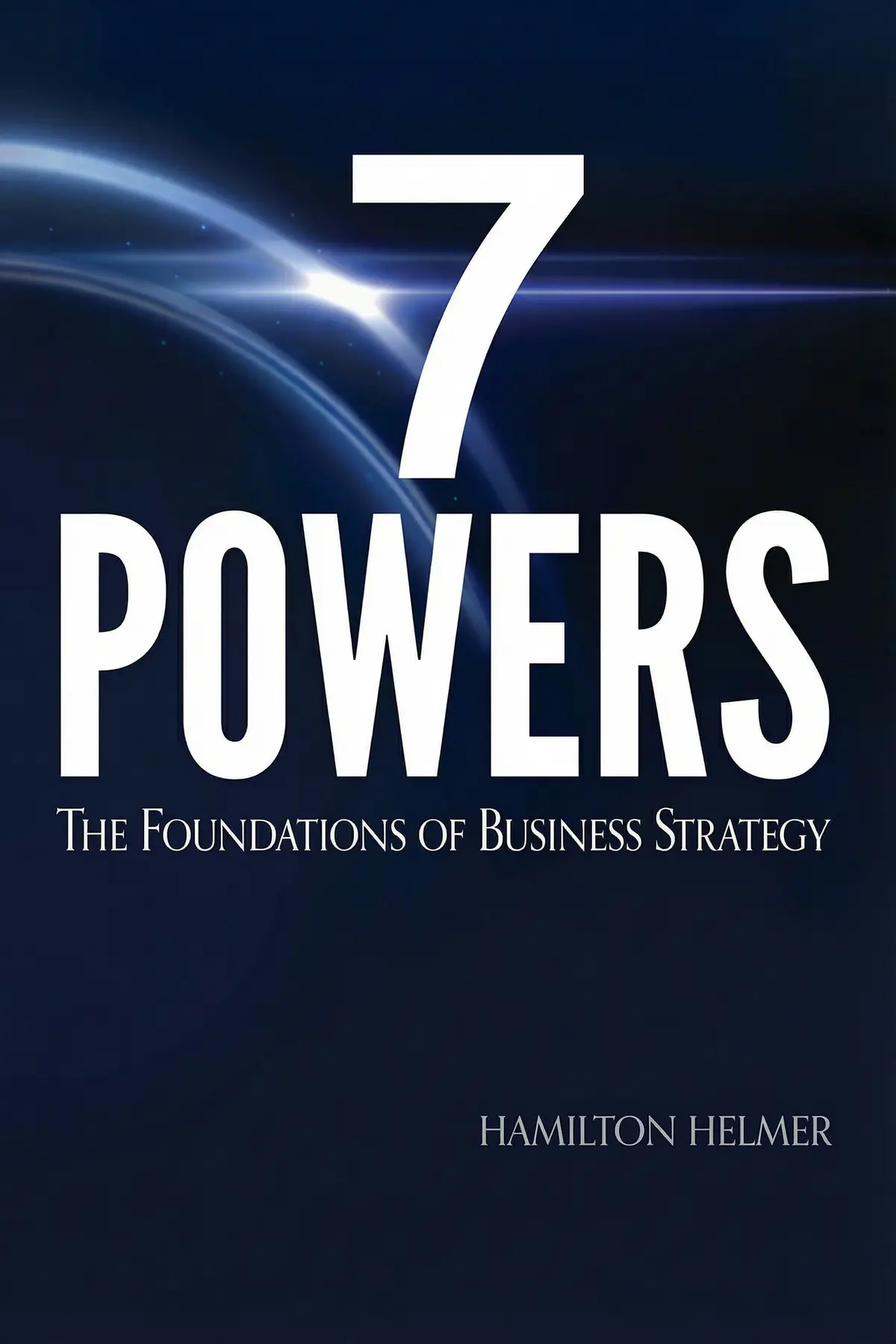
7 Powers: The Foundations of Business Strategy
Hamilton Helmer
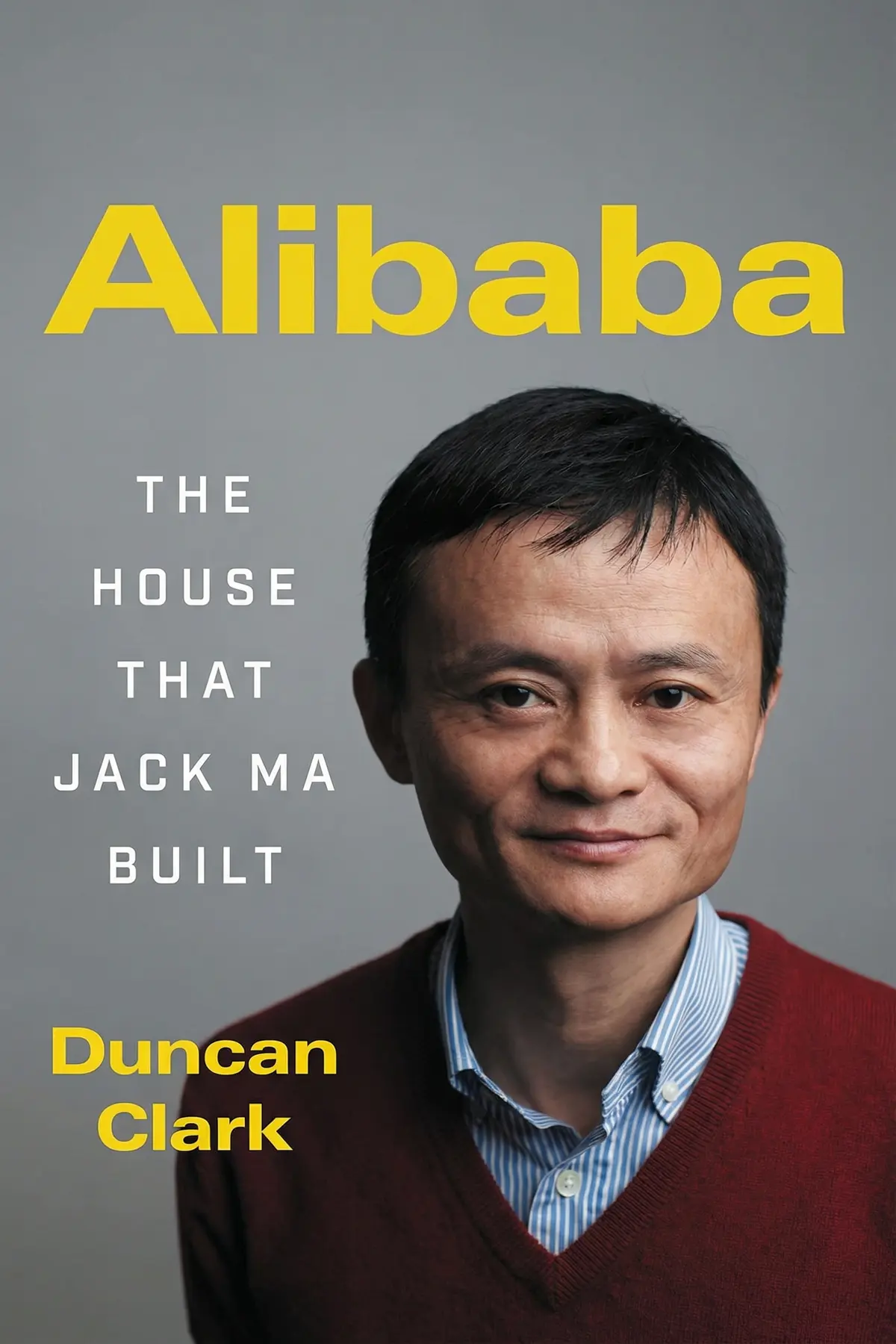
Alibaba: The House That Jack Ma Built
Duncan Clark
Bad Blood: Secrets and Lies in a Silicon Valley Startup
John Carreyrou
AUDIO SUMMARY AVAILABLE
Listen to Testing Business Ideas in 15 minutes
Get the key ideas from Testing Business Ideas by David J. Bland, plus 5,000+ more titles in English and Thai.
- 5,000+ titles
- Listen as much as you want
- 7-day free trial
- Cancel anytime







