
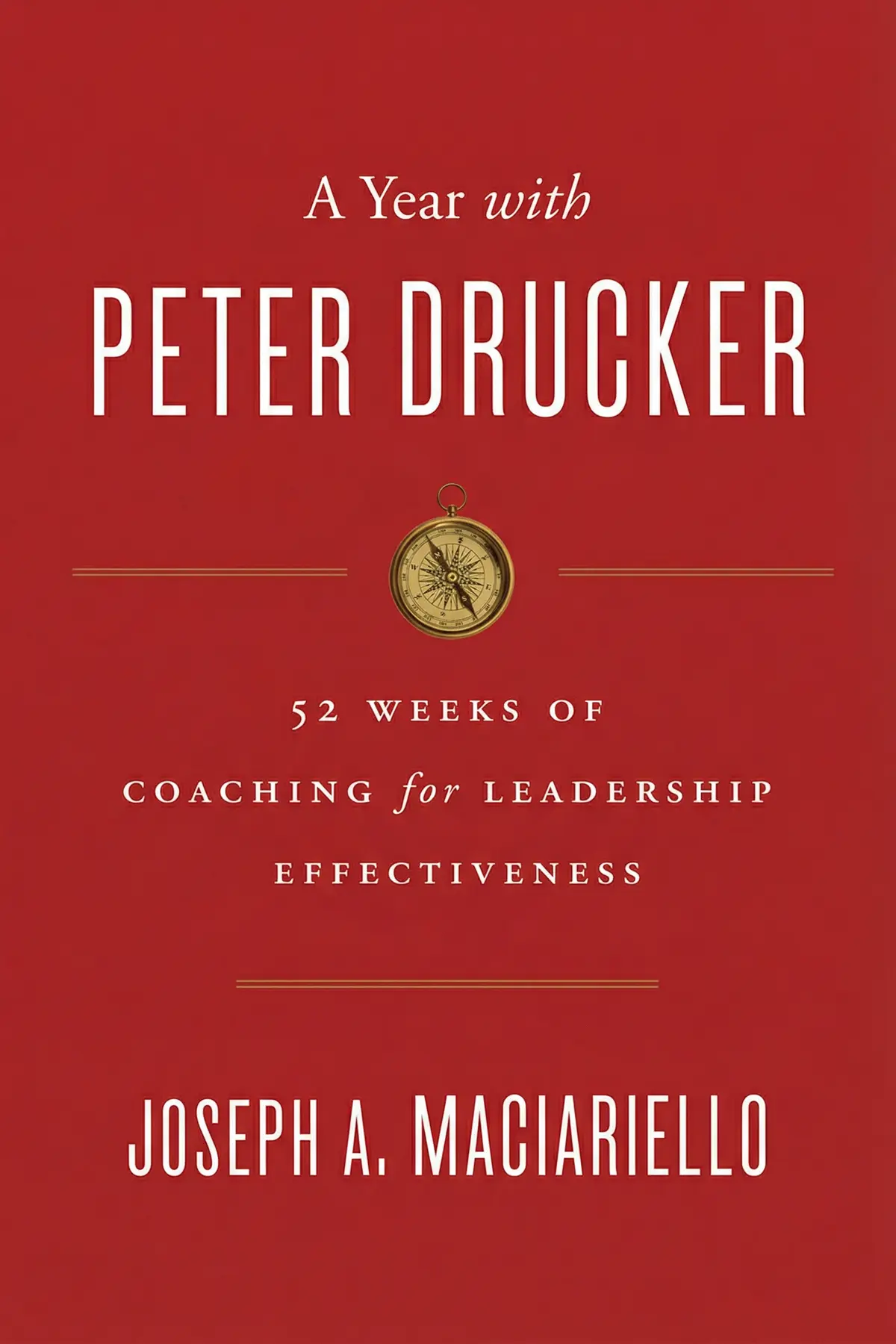
A Year with Peter Drucker: 52 Weeks of Coaching for Leadership Effectiveness
Joseph A. Maciariello
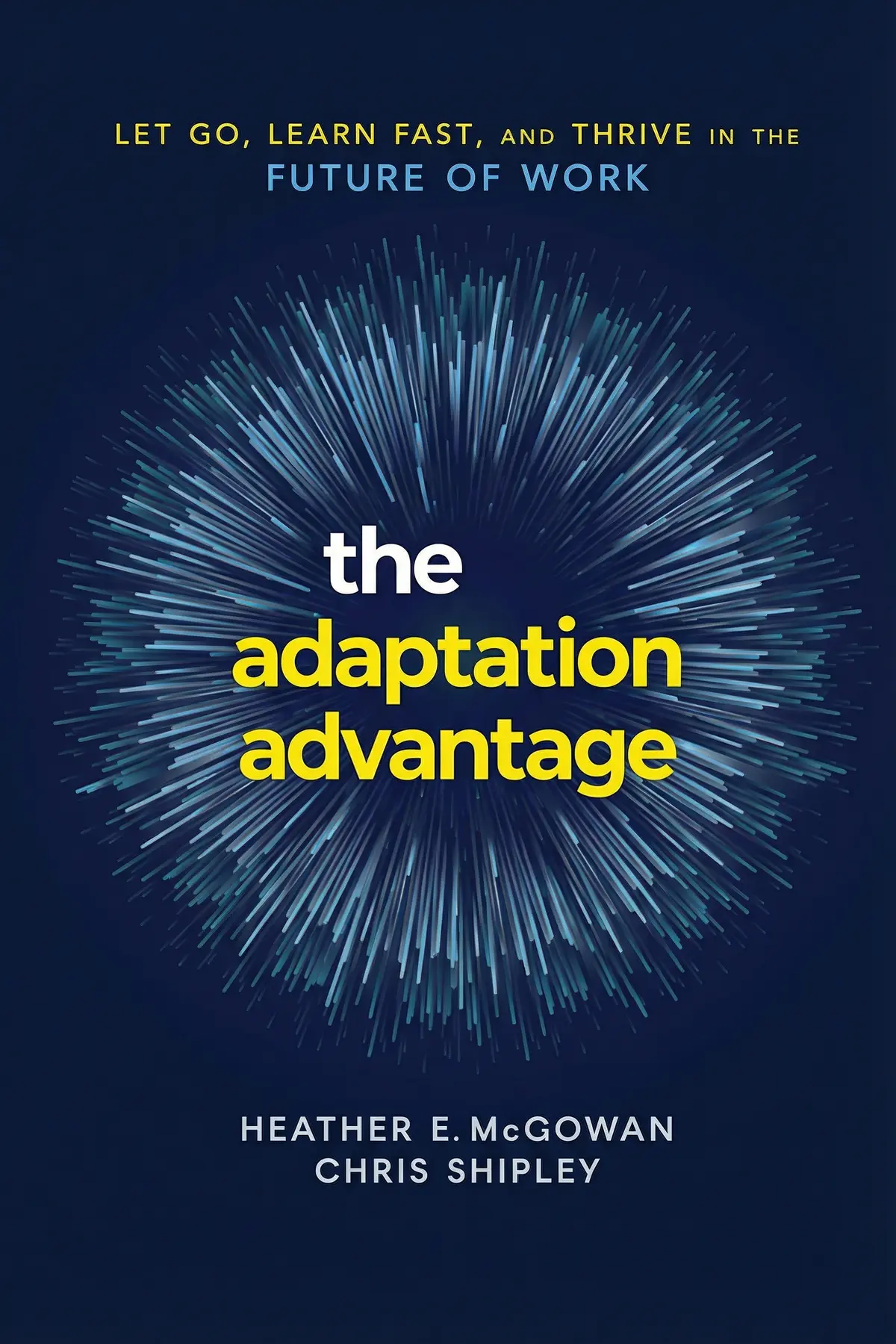
The Adaptation Advantage explores how to flourish in an era of rapid technological change. By shifting focus from fixed job titles to continuous learning, individuals and leaders can harness their uniquely human strengths.
1 min 46 sec
Think about the passing of a single second. It feels like almost nothing—a mere heartbeat in the span of a day. But in that tiny window of time, the digital world is exploding with activity. In just one second, thousands of transactions are processed, tens of thousands of searches are conducted, and millions of emails fly across the globe. We are living in a moment where the scale of human and machine interaction is almost impossible to comprehend. This sheer velocity creates a sense of vertigo for many of us, especially when we look at our careers. We hear constant warnings that the robots are coming for our jobs and that the skills we spent years honing are becoming obsolete overnight.
However, there is a different way to look at this transformation. Instead of viewing technology as a rival in a race we are destined to lose, we can see it as a tool that handles the routine so we can focus on the exceptional. This shift requires a fundamental change in how we view ourselves and our value. The core message of the authors is that our greatest asset isn’t what we know right now, but how quickly we can learn and change. This is the adaptation advantage. It’s the ability to let go of old identities and embrace a state of perpetual evolution.
In the following minutes, we will explore how the world is changing and why you are likely already better at adapting than you realize. We will look at why defining yourself by a static job title is a dangerous move in the modern economy and how to build a mindset that welcomes uncertainty. We will also dive into the new requirements for leadership and organizational success, moving away from rigid hierarchies and toward cultures of trust and capacity. This journey is about finding your footing in a world of flux and learning to thrive not in spite of change, but because of it.
2 min 23 sec
The world is transforming at a speed that often feels overwhelming, but technology is actually providing us with the tools to handle this shift more effectively than ever.
2 min 07 sec
Tying your entire sense of self to a specific profession is a risky strategy in a world where roles are constantly being reinvented.
2 min 09 sec
Success in a changing world isn’t about mastering one skill forever, but about moving through cycles of learning and focusing on what machines can’t replicate.
1 min 59 sec
Effective leadership is no longer about having all the answers or exerting control; it’s about vulnerability and empowering others.
2 min 06 sec
Successful companies are moving away from rigid structures and focusing on their internal health and their ability to respond to change.
2 min 05 sec
As we reach the end of this exploration, the throughline is clear: the most important skill for the future is the ability to adapt. We have seen that while technology is accelerating at a dizzying pace, it is also providing us with the tools to focus on our most human qualities. By understanding the processes of atomization, automation, and augmentation, we can see that we are being freed from routine work to engage in more meaningful, creative, and social endeavors.
The journey toward the adaptation advantage starts with a shift in identity. It requires us to stop asking ‘what’ we do and start asking ‘why’ we do it. It demands that we embrace the S-curve of learning, moving through cycles of exploration and experimentation throughout our lives. For leaders, it means moving from a position of command-and-control to one of vulnerability and empowerment. For organizations, it means prioritizing the invisible but vital forces of culture and capacity over rigid hierarchies and short-term financial targets.
To put this into practice today, take a moment to look back at your own career. Think about a time when you faced a significant setback or a major change that felt like a disaster at the moment. Perhaps you lost a job, had a project fail, or were forced to move into a completely new field. Ask yourself: What did that experience teach me? How did I change my approach? You will likely find that you are already more agile than you give yourself credit for. Those moments of struggle were actually moments where you were expanding your capacity.
Don’t let the fear of new technology or shifting markets paralyze you. Instead, lean into your uniquely human strengths—your ability to empathize, to create, and to connect. These are the qualities that no algorithm can replicate. By maintaining a mindset of continuous growth and staying true to your underlying purpose, you will find that the future isn’t something to be feared, but a landscape full of opportunity. You have the adaptation advantage; now it’s time to use it.
The Adaptation Advantage addresses the growing anxiety surrounding the future of work and the rise of artificial intelligence. Many people fear that automation will make their roles obsolete, but this book offers a more optimistic perspective. It suggests that by leaning into our inherent human capabilities—such as creativity, empathy, and social intelligence—we can turn technological advancement into a personal and professional benefit. The promise of this work is a roadmap for navigating the 'fourth industrial revolution.' It provides a framework for rethinking individual identity, evolving leadership styles, and restructuring organizations to prioritize culture and capacity over rigid job descriptions. By moving away from the question of 'what' we do and toward 'why' and 'how' we adapt, the authors illustrate how to stay relevant and thrive in an unpredictable economy. It is a guide for anyone looking to transform the pressure of constant change into a competitive edge.
Heather E. McGowan is a prominent speaker and strategist who focuses on the future of work. She has spent her career helping leaders at Fortune 500 companies prepare for a shifting landscape and roles that have not yet been invented. Chris Shipley is a seasoned journalist and technology analyst with over three decades of experience. She has provided consultation to hundreds of organizations on innovation practices and business modeling.
Listeners find the text intellectually stimulating regarding education and professional growth, with one listener emphasizing the inclusion of practical exercises. They view it as an essential and highly relevant resource.
This book is a complete game-changer for anyone feeling the "robot anxiety" that seems to dominate every headline these days. McGowan and Shipley argue convincingly that we need to stop asking kids what they want to *be* and start asking *why* they want to do it. Connecting my identity to a sense of purpose rather than a static job title felt like a massive weight off my shoulders. The writing is punchy, and the anecdotes—like the comparison between the Sony Walkman and the iPod—hit home. It’s an empowering read that makes the future feel like an opportunity rather than a threat.
Show moreEver wonder why you feel so burned out despite having a "good" job? This book might have the answer. McGowan and Shipley explain how our obsession with job titles creates a fragile identity that shatters the moment the market shifts. By focusing on adaptation and purpose, we become much more resilient. The story about Steve Jobs being fired from Apple and then returning was a great reminder that setbacks are just pivots. Not gonna lie, I was skeptical at first, but this is a must-read for anyone feeling stuck in their career.
Show moreTo be fair, I expected another dry business book, but this was surprisingly emotional and thought-provoking. It’s essentially a guide on how to stay relevant as a human in an age of machines. The authors don't just talk about tech; they talk about the human spirit and our innate ability to evolve. I particularly liked the focus on wellness and respect as pillars of a modern organization. If you’re worried about your career longevity, do yourself a favor and read this.
Show moreAs a manager in a mid-sized firm, I found the section on "intentional culture" versus "accidental culture" absolutely vital. The authors describe culture as the heart and capacity as the brain, which is a brilliant way to look at organizational health. I’ve already started implementing some of the practical exercises with my team to help them navigate the "S-curve" of learning. Some of the talk about a "technocratic world" felt a bit detached from reality, but the leadership advice on vulnerability and trust is top-tier.
Show moreFinally finished this and it’s surprisingly timely given how fast AI is moving right now. The "Three A's"—atomization, automation, and augmentation—provide a clear framework for understanding how technology actually supports human labor rather than just replacing it. I liked the focus on neurodiversity and the idea that our capacity to learn is more important than what we already know. It’s a bit redundant at times, and some sections feel like a slog, but the message about shifting from "learning to work" to "working to learn" is powerful.
Show morePicking this up was the best decision I’ve made for my professional development this year. The authors dive deep into the concept of "psychological safety" and how leaders must model vulnerability to build trusting teams. It’s not just about the bottom line anymore; it’s about creating an environment where people feel safe enough to unlearn old habits. The writing is accessible, though the tech-heavy examples might alienate readers who aren't into the startup scene. Still, the message about our uniquely human skill set is universal.
Show moreThe concept of the "Adaptation Advantage" is exactly what we need in the Fourth Industrial Revolution. Personally, I think the rate of change is so fast that we’re all living through a constant state of "climate change" in the market. I loved the distinction between "modeling the way" and "enabling others to act." It challenges the traditional, hierarchical view of leadership in a way that feels fresh and necessary. A few of the diagrams were confusing, but the overall takeaway is worth the effort.
Show moreWhat on earth is going on with some of these charts and diagrams? Honestly, I spent more time trying to decode the visuals than I did actually absorbing the text. The central thesis about the "Adaptation Advantage" is solid and well-researched, but the delivery feels a bit clunky in places. While I appreciate the focus on "uniquely human" skills like empathy and creativity, the book gets repetitive by the halfway mark. It’s a good primer on the future of work, but frankly, it could have been a long-form essay instead of a full book.
Show moreWhile the core message is fantastic, the book feels like it’s trying a bit too hard to be "visionary" with its layout. The content itself is high quality, but the execution is a bit of a slog in the later chapters. Truth is, once you get the point about detaching your identity from your job, you’ve gotten 80% of the value. I appreciated the evidence-backed approach to human skills like social intelligence, though I wish there was more documentation for some of the specific studies mentioned.
Show moreI’m tired of these "Future of Work" manifestos that sound like they were written in a Silicon Valley bubble. The authors lean heavily on loose assumptions and futuristic speculation that just doesn’t apply to blue-collar or high-stakes utility industries. Look, if I encourage my workers to "embrace failure" in a water treatment plant, people get sick. The stakes of failure are just too high for this kind of paper house reality. To be fair, the research on AI is interesting, but the practical application for most industries is basically zero.
Show moreJoseph A. Maciariello
Deborah Gruenfeld
Robin Ryan
Mike Michalowicz
AUDIO SUMMARY AVAILABLE
Get the key ideas from The Adaptation Advantage by Heather E. McGowan, plus 5,000+ more titles in English and Thai.







