
17 min 39 sec
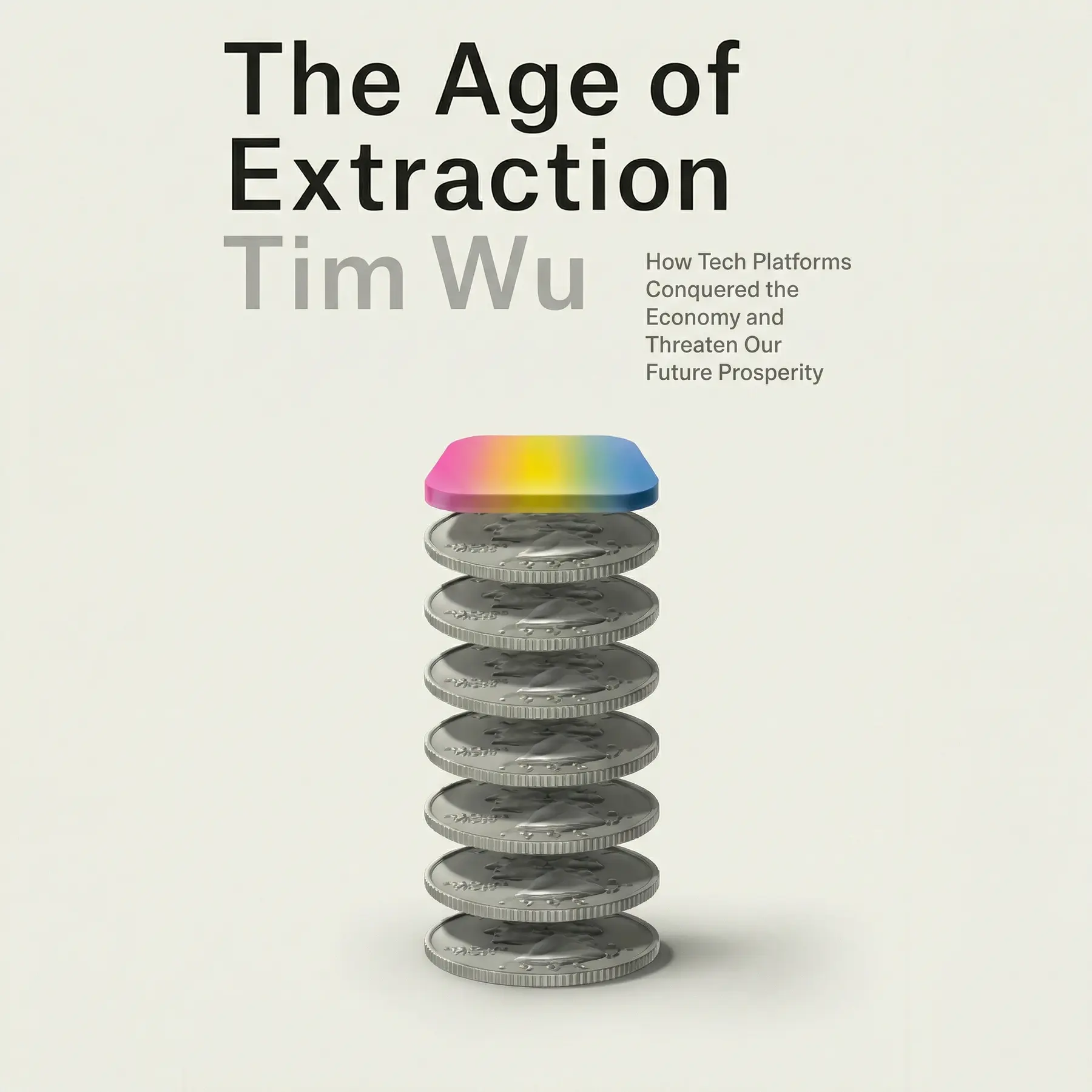
The Age of Extraction: How Tech Platforms Conquered the Economy and Threaten Our Future Prosperity
By Tim Wu
A compelling analysis of how modern technology platforms have transitioned from open marketplaces into extractive gatekeepers that stifle competition, exploit user data, and capture the majority of the economy’s gains.
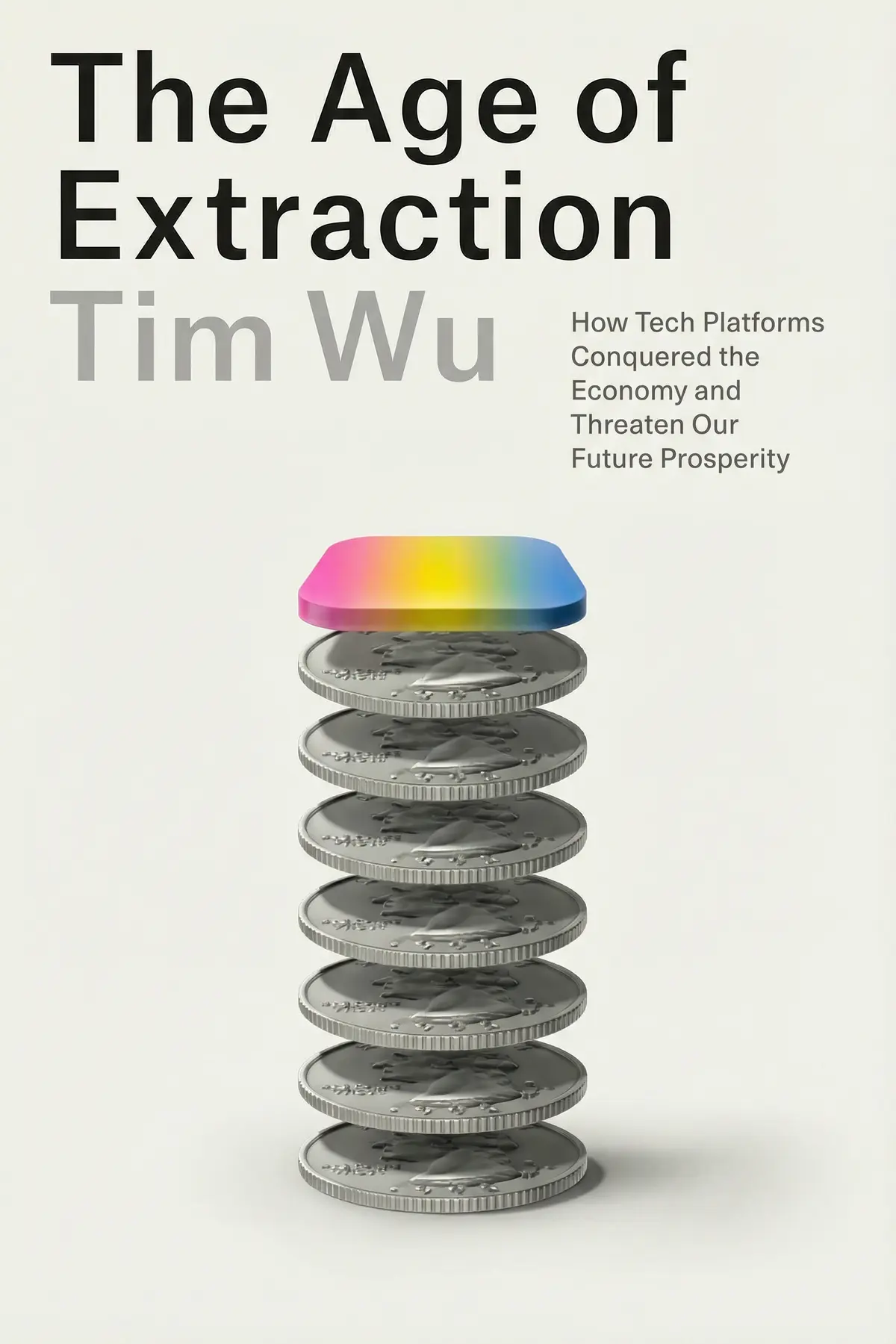
Table of Content
1. Introduction
1 min 58 sec
Every day, you step into digital environments that feel like the modern equivalents of the air we breathe. You might start your morning by searching for information, scroll through social feeds to see what friends are doing, and order a few household essentials from a massive online marketplace. These spaces—Amazon, Google, Meta, and the like—present themselves as helpful, neutral tools designed to make your life easier. They have become the primary venues where we buy, sell, talk, and think. But there is a deeper transformation occurring beneath these glossy interfaces. What began as a revolution in access and efficiency has evolved into a new era of economic capture.
In this exploration of The Age of Extraction, we look at the hidden architecture of the platform economy. The core throughline here is the shift from platforms as catalysts—places that spark new activity and help people find each other—to platforms as extractors, which function more like toll collectors that siphon off the value created by everyone else. We will examine how these companies used the promise of convenience to weave themselves into the fabric of our lives, only to eventually turn that dependence into a source of immense power.
By the end of this journey, you will understand the specific tactics used to maintain this dominance, from the way data is used to predict your next move to the strategic buyouts that keep challengers at bay. More importantly, we will look at how we might fix this system. It is a story about the tension between innovation and control, and how we can reshape our digital future to ensure that prosperity is shared rather than hoarded at the center. Let’s begin by looking at the original promise of the platform model and how it first managed to lower the barriers for all of us.
2. The Catalytic Power of Platforms
2 min 12 sec
Discover how digital platforms originally revolutionized the economy by removing friction and allowing buyers and sellers to connect in ways never before possible.
3. The Transition from Enabler to Extractor
2 min 04 sec
Learn about the subtle shift that occurs when a platform becomes so essential that it can begin raising prices and siphoning value from its users.
4. How Scale Becomes Authority
2 min 03 sec
Explore why massive size isn’t just about efficiency—it’s a form of market power that allows platforms to dictate terms and crush rivals.
5. The Imbalance of the Attention Economy
1 min 55 sec
Uncover the reality of social platforms where the creative labor of millions is converted into profit for a few central corporations.
6. Convenience and the Art of the Everything Cocoon
1 min 49 sec
Understand how the pursuit of a ‘frictionless’ life can lead us into digital ecosystems that are designed to make leaving nearly impossible.
7. Data and the Power of Prediction
1 min 55 sec
See how the massive amounts of data we generate every day are used to build prediction machines that give platforms an unfair advantage.
8. Restoring Balance through Smart Regulation
2 min 04 sec
Discover practical strategies for reclaiming a fair economy, from enforcing competition to treating essential platforms like public utilities.
9. Conclusion
1 min 39 sec
The Age of Extraction serves as a vital reminder that the digital tools we use are not just neutral conveniences; they are powerful economic structures that shape our opportunities and our choices. We have moved from an era of open possibility to one where a few central hubs control the flow of value. By understanding the playbook of extraction—how scale, convenience, and prediction are used to create dependence—we can begin to see the system for what it is.
The solution lies in a return to balance. We must demand that our digital infrastructure remains a catalyst for the many rather than a siphon for the few. This means advocating for policies that promote real competition, enforce neutrality, and prevent the consolidation of power across different industries. The throughline of this summary has been the shift from enabling to extracting, but that story doesn’t have to be the final word.
As we look forward, the challenge is to reclaim the original promise of the internet. We can build a future where platforms lower barriers and foster innovation without demanding a permanent tax on all human activity. By staying informed and pushing for structural change, we can ensure that the next era of technology is defined not by extraction, but by a renewed sense of shared prosperity and open competition. The power to reshape the digital economy starts with recognizing how it currently works and deciding that we deserve a system that works for us.
About this book
What is this book about?
The Age of Extraction explores the transformation of the digital landscape. It details how the very platforms that once promised to democratize commerce and communication have become dominant forces that prioritize short-term profit over the health of the broader economic ecosystem. Author Tim Wu explains the mechanisms of this shift, from the use of scale and convenience to the implementation of sophisticated predictive AI. The book offers a roadmap for understanding our current predicament and provides specific policy suggestions to restore balance. By advocating for structural changes such as business-line separation and neutrality rules, Wu argues that we can reclaim the innovative spirit of the early internet. This summary provides the essential insights needed to navigate and reform a world where a few powerful entities control the flow of information and wealth.
Book Information
About the Author
Tim Wu
Tim Wu is a distinguished professor at Columbia Law School and a premier scholar in the fields of technology policy and antitrust law. He is famously credited with originating the term net neutrality. From 2021 to 2023, he served as the Special Assistant to the U.S. President for Technology and Competition Policy. Wu is also the author of acclaimed books like The Master Switch, The Attention Merchants, and The Curse of Bigness, cementing his reputation as a vital critic of corporate power in the digital age.
Ratings & Reviews
Ratings at a glance
What people think
Listeners find Tim Wu’s exploration of today’s economy to be both revelatory and compelling, applauding the way he bridges the gap between old-world monopolies and modern-day tech giants. They admire his broadening of the "extraction" concept into sectors like private equity and healthcare, with one listener remarking that these real-world instances are especially striking. Furthermore, the audience appreciates the succinct writing style and the conceptual framework provided for grasping the surge of platform dominance. They also observe that while thoughts differ on the practicability of his suggested fixes, the text serves as a strong compilation of the trends defining the outlook for our future wealth.
Top reviews
Nim
Finally finished Tim Wu’s latest, and it’s a brilliant, if sobering, synthesis of everything he’s been warning us about for years. Wu excels at tracing the lineage of modern tech giants back to 19th-century toll bridges and railroad monopolies. The truth is, he makes a compelling case that 'platform thinking' has become a parasitic force in our economy. While his previous books laid the groundwork, this one feels like the ultimate culmination of his antitrust philosophy. He manages to connect the dots in an unexpected way, teasing out themes about business and law that few other writers can grasp. I was particularly gripped by the sections on how these platforms now act as the antithesis of innovation. It is an eye-opening read that has the potential to transform the way you see the digital world around you.
Show moreMontri
Ever wonder why every service you use seems to be getting more expensive while the quality steadily declines? Wu explains this through the lens of extraction, where platforms prioritize skimming off the top over providing actual utility. It’s a bleak look at how we’ve traded genuine progress for the convenience of a few dominant, privately-owned ecosystems. Look, the historical context he provides regarding IBM and AT&T is worth the price of admission alone. He describes platforms as 'catalytic spaces' that have been weaponized to extract data and attention. It’s an intellectual framework that makes sense of the anti-monopoly movement better than anything else I've read lately. Even if you aren't a tech nerd, the implications for our future prosperity are made crystal clear in his concise prose.
Show moreAisha
Tim Wu has solidified his place as the most important thinker regarding the intersection of law, tech, and the economy. The Age of Extraction is a grand, sophisticated treatise that goes far beyond simple buzzwords to explain our current malaise. I found the offline examples of private equity in the housing market particularly stunning and deeply disturbing. It’s a brilliant, concise, and ultimately necessary book for understanding the world our children will inherit. He has a way of connecting historical monopolies to modern apps that feels both fresh and urgent. This isn't just about enshittification; it's about the survival of a fair and competitive marketplace. If you care about the future of democracy and prosperity, you simply cannot afford to miss this banger. It truly is a 5-star synthesis of our modern predicament.
Show moreLily
This book is a wake-up call for anyone who still believes the internet is a neutral playground for innovation. I was especially struck by the chapters on how private equity firms are applying tech-style extraction to rental housing and healthcare. Gotta say, seeing the parallels between Amazon’s seller fees and the way landlords use algorithms to squeeze tenants was terrifying. It’s not just about apps; it’s about a fundamental shift in how value is captured rather than created. Wu writes concisely and persuasively, making complex economic theories accessible to the average reader. While the book is more about articulating the problem than providing a roadmap, his antitrust lens remains sharp. It’s a striking example of a natural progression in his work, following his previous masterpieces like The Master Switch.
Show moreEli
As someone who has followed Wu since his net neutrality days, I found this to be his most expansive work yet. He isn't just looking at Google or Facebook anymore; he's looking at the very architecture of modern capitalism. The section on enshittification provides a much-needed intellectual framework for why our digital experiences feel increasingly hostile and expensive. Personally, I think this should be required reading for policymakers, even if the current political landscape makes his suggestions seem unlikely. The offline examples involving healthcare providers being burned out by private equity rollups were the ones that truly stunned me. Wu is a terrific thinker whose strength lies in combining trends in new, haunting ways. It’s a synthesis of big data thinking and the depressing reality of a closed, corporate internet.
Show moreChloe
The chapter on the 'toll bridge' nature of modern platforms changed how I view my own digital consumption entirely. Wu persuasively argues that we are living in a new Gilded Age where a few entities control the sole routes of commerce. In my experience, books on antitrust can be dry, but Wu keeps things moving with sharp prose and vivid examples. While it's depressing to realize how much of our economy is now just a series of rent-seeking checkpoints, knowledge is power. He goes wider than just tech, showing how private equity extends this extraction to the very roofs over our heads. It’s a striking example of patterns being combined in new ways to show a frightening trend. I highly recommend it for the 'aha' moments alone, even if the ending feels a bit rushed.
Show moreJom
Picked this up on a whim and couldn't put it down, despite how much it made my blood boil. Wu connects the dots between Amazon’s marketplace fees and the rising costs of insurance in a way that feels inevitable. Not gonna lie, the realization that we are the product even when we're paying for the service is a hard pill to swallow. It’s an essential guide to the hidden taxes we pay every day to the platform lords. The writing is incredibly concise and he avoids the fluff that plagues most nonfiction books in this genre. My only gripe is that the blockchain solution felt like a weird inclusion for a writer who is usually so grounded. Still, the analysis of platform power is top-notch and reinforces why Wu is such a respected voice in this field.
Show morePornpimon
After hearing Wu on a recent podcast, I had to see if the book lived up to the hype. It’s a striking synthesis of surveillance capitalism and Wu’s own previous work on information empires. The truth is, he manages to explain why innovation has stalled by showing how platforms now act as the antithesis of creativity. While his faith in antitrust regulation feels a bit quaint in 2025, the book's diagnosis of the problem is undeniable. The historical perspective on how IBM was forced to open up its software platform was a highlight for me. It reminds us that things weren't always this way and don't have to be in the future. It’s a powerful read that left me thinking about the 'extractive economy' long after I closed the final page.
Show moreErn
Wow, Tim Wu really has a gift for making complex antitrust law feel like a high-stakes thriller. The Age of Extraction builds perfectly on his earlier work, showing how the 'open' web was systematically enclosed by new gatekeepers. I did roll my eyes a bit when he brought up blockchain as a potential panacea for restoring accountability to the system. To be fair, the diagnostic part of the book is so strong that the shaky solutions don't ruin the experience. It feels a bit like the ultra-rich discovering effective altruism to fix their image. There aren't really any low-hanging fruit solutions to platform inequality, so I appreciate his effort to at least name the beast. If you've read his previous books, you'll recognize the patterns, but it’s still worth the time for the new data.
Show moreLeila
Not what I expected from the author of The Master Switch, as much of this felt like a rehash of old arguments. Frankly, the 'tech is bad' narrative is so pervasive in 2025 that I was hoping for more radical, actionable solutions. Instead, we get more doom-scrolling in book form and a weirdly optimistic pivot to decentralized ledgers at the end. It's well-written, but it feels like a man yelling at a storm that has already destroyed the house. The timing feels unfortunate because a lot of this antitrust talk feels quaint given how unchecked these companies currently are. I found myself skimming the historical parts since they didn't offer a new enough 'hot take' for my liking. It's an okay primer for beginners, but long-time fans of his work might find it redundant.
Show moreReaders also enjoyed
1929: Inside the Greatest Crash in Wall Street History--and How It
Andrew Ross Sorkin
23 Things They Don’t Tell You About Capitalism
Ha-Joon Chang
A Little History of Economics
Niall Kishtainy
A Splendid Exchange: How Trade Shaped the World
William J. Bernstein
AUDIO SUMMARY AVAILABLE
Listen to The Age of Extraction in 15 minutes
Get the key ideas from The Age of Extraction by Tim Wu, plus 5,000+ more titles in English and Thai.
- 5,000+ titles
- Listen as much as you want
- 7-day free trial
- Cancel anytime







