
28 min 14 sec
The Curse of Bigness: Antitrust in the New Gilded Age
By Tim Wu
The Curse of Bigness examines the dangerous rise of modern monopolies and the history of antitrust law, arguing that extreme corporate concentration threatens both economic fairness and the core of democratic society.
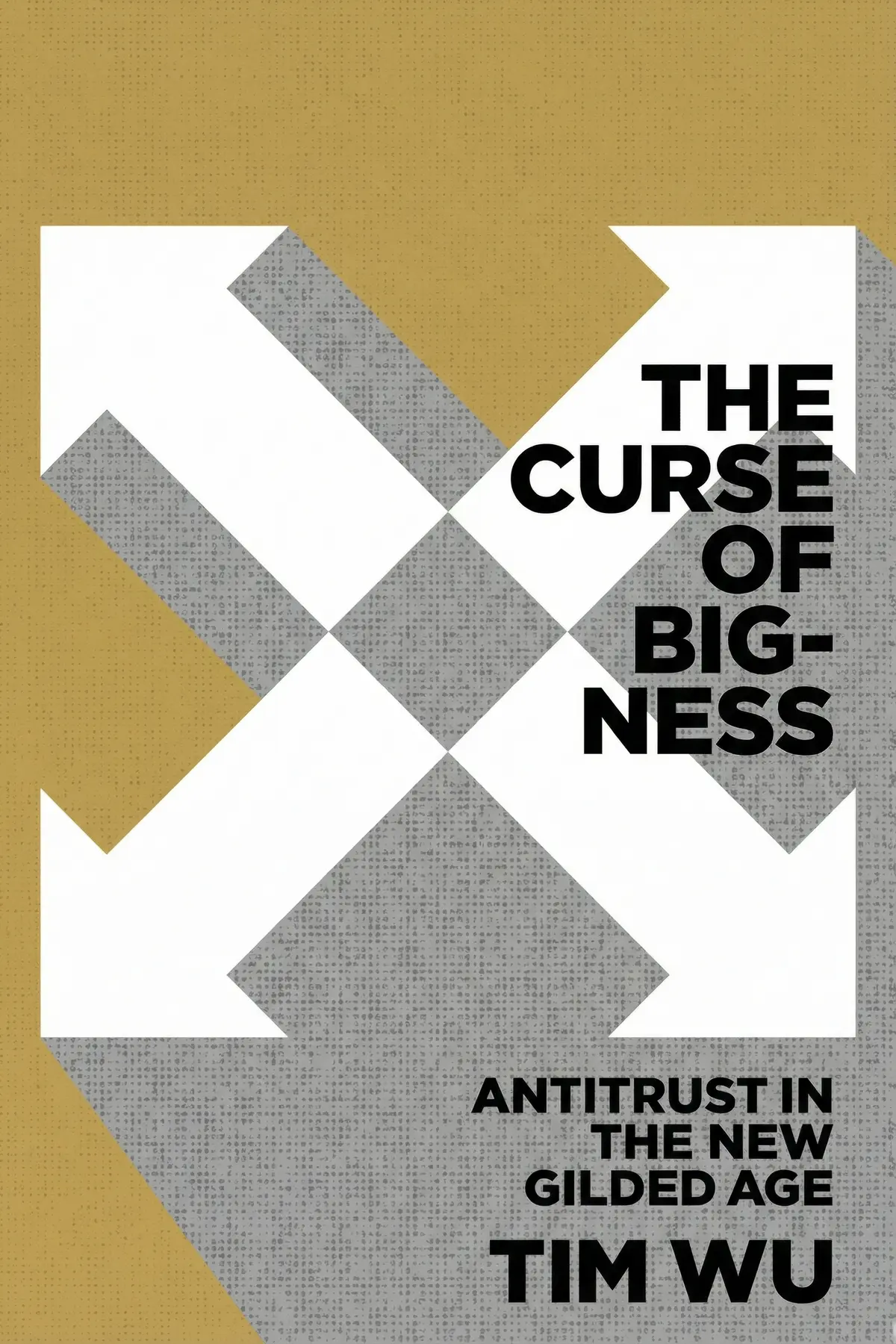
Table of Content
1. Introduction
2 min 05 sec
Imagine living in a world where the vast majority of the products you buy, the information you consume, and the digital tools you use are controlled by just a handful of massive entities. This isn’t a far-off dystopian fiction; it’s a reality that has been building for decades. In the early twentieth century, a legal and political battle was waged against what was called ‘the curse of bigness.’ Today, we find ourselves in a remarkably similar position, facing a new generation of corporate titans that wield power not just over our wallets, but over our very democracy.
In this exploration of Tim Wu’s work, we are going to look at the history, the philosophy, and the future of antitrust law. We’ll uncover how the United States once led the charge against monopolies, only to lose its way as economic theories shifted toward a narrow focus on efficiency and low prices. This journey isn’t just about economics or law; it’s about the fundamental structure of our society. It’s about whether we want to live in a country where economic power is decentralized and competitive, or one where a few ‘trusts’—now in the form of tech giants—decide the winners and losers of our economy.
We will trace the origins of these ideas back to the Gilded Age, a time of extreme inequality and corporate dominance, and see how the figures of that era fought to protect the ‘small man’ and the integrity of the market. We will also examine how the focus changed in the late twentieth century, leading to the hands-off approach that allowed today’s monopolies to flourish. Ultimately, this narrative provides a call to action. It suggests that if we don’t act soon to renew our commitment to antitrust enforcement, we risk repeating the darkest chapters of history, where economic concentration paved the way for political authoritarianism. Let’s dive into the story of how we got here and what it will take to reclaim a market that truly works for everyone.
2. The Gilded Age and the Rise of the Trusts
2 min 27 sec
Travel back to an era of unprecedented industrial growth where massive monopolies first began to threaten the foundations of American fair play and economic independence.
3. The Philosophy of Louis Brandeis
2 min 22 sec
Meet the visionary legal mind who believed that extreme corporate size was an inherent danger to the health of a democratic nation.
4. The Original Intent of the Sherman Act
2 min 24 sec
Uncover the forgotten purpose of America’s first major antitrust law, which was designed to be a constitutional safeguard for the economy.
5. The Golden Age of Antitrust Enforcement
2 min 25 sec
Discover the mid-twentieth century period when the government actively broke up monopolies and what that meant for the American middle class.
6. The Chicago School and the Consumer Welfare Shift
2 min 25 sec
Explore how a radical change in economic theory in the 1970s and 80s effectively neutered antitrust laws for decades.
7. Modern Monopolies and the Platform Power
2 min 34 sec
Analyze how today’s tech giants represent a new, more pervasive form of monopoly that acts as the gatekeeper to our modern digital lives.
8. The Link Between Bigness and Inequality
2 min 35 sec
Examine the direct connection between the concentration of corporate power and the widening gap between the ultra-wealthy and everyone else.
9. The Threat to Democracy
2 min 19 sec
Understand how extreme corporate size isn’t just an economic issue but a fundamental threat to the functioning of a free and open political system.
10. Historical Warnings: Monopoly and the Rise of Fascism
2 min 32 sec
Look at the dark history of the 1930s to see the terrifying consequences of what happens when economic concentration goes unchecked.
11. A New Path Forward: Restoring the Balance
2 min 28 sec
Learn about the practical steps we can take to revitalize antitrust law and reclaim a fair, competitive market for the future.
12. Conclusion
1 min 38 sec
As we conclude our look at Tim Wu’s analysis of the ‘curse of bigness,’ the throughline is unmistakable: the concentration of economic power is one of the greatest challenges to our modern way of life. We have seen how the United States, once a leader in the fight against monopolies, allowed its primary defense mechanism—antitrust law—to be neutered by a narrow economic ideology. This shift opened the door for the rise of a new generation of corporate giants that now act as the gatekeepers of our economy and the controllers of our digital public square. But as we’ve explored, this is a story that has been told before, and it is a battle that has been won before.
The history of the Gilded Age and the subsequent ‘Golden Age’ of antitrust shows us that a different path is possible. We don’t have to accept a world dominated by a few massive entities. We can choose to prioritize the health of our competitive ecosystem over the narrow metric of efficiency. We can choose to protect the ‘small man’ and the independent spirit that fuels innovation. Most importantly, we can choose to protect our democracy from the corrosive influence of concentrated wealth and power. The call to action is clear: it is time to revitalize the spirit of Louis Brandeis and the original intent of the Sherman Act. By doing so, we can ensure that the future is shaped by the many, not the few, and that the ‘curse of bigness’ is replaced by a vibrant, fair, and truly free market for generations to come.
About this book
What is this book about?
The Curse of Bigness explores the historical and political struggle against massive corporate power in the United States. It traces the evolution of antitrust sentiment from the Gilded Age through the mid-twentieth century and into the modern digital era. The book identifies a critical shift in how we view monopolies: from a democratic concern about power to a narrow focus on consumer prices. This shift, Tim Wu argues, has allowed for the return of industrial-scale giants that resemble the trusts of the past. The promise of the book is to provide a roadmap for revitalizing antitrust enforcement. By reclaiming the philosophy of Louis Brandeis and the original intent of the Sherman Act, Wu suggests we can curb the influence of tech giants and restore a healthy, competitive market that serves the public interest rather than just corporate shareholders.
Book Information
About the Author
Tim Wu
Tim Wu is a professor at Columbia Law School and a distinguished legal scholar. He has served as a senior advisor to the US Federal Trade Commission, a senior enforcement counsel at the New York Office of the Attorney General, and was a member of the National Economic Council during the Biden administration. Wu is widely recognized for coining the term network neutrality in his 2003 paper and is a prominent advocate for media and technology policy. He is also the author of acclaimed books including The Master Switch and The Attention Merchants.
Ratings & Reviews
Ratings at a glance
What people think
Listeners find the work thoroughly researched, featuring strong historical analysis, and value how readable it is as a rapid critique of antitrust policy. The prose is elegantly written, brief, and stimulating, and one listener notes it makes complex constitutional history understandable. Responses to the antitrust material vary, yet one listener describes it as an accessible history of antitrust policy.
Top reviews
Penelope
This book is a punchy, urgent wake-up call regarding the state of our modern economy. Tim Wu manages to distill decades of complex legal history into a narrative that feels as fast-paced as a thriller. He brilliantly connects the Gilded Age of Rockefeller and Morgan to our current era of tech dominance, arguing that we have strayed too far from the wisdom of Louis Brandeis. While I found the section on the Chicago School slightly dense, the overall argument for reviving trust-busting is incredibly compelling. It is rare to find a law professor who can write with such clarity and passion for the general reader. If you’ve ever felt like Amazon or Google have too much power over your daily life, this is the historical context you need.
Show moreGun
Picked this up after hearing Wu interviewed and was blown away by how he humanizes the dry subject of antitrust law. He frames the struggle not just as an economic issue, but as a fundamental question of whether democracy can survive when corporations become more powerful than the state itself. The contrast between Teddy Roosevelt’s aggressive stance and our modern, laissez-faire approach is jarring. Wu’s prose is elegant and he avoids the jargon-heavy traps that usually plague books about economics. The chapter on the AT&T breakup serves as a perfect proof of concept for his thesis that smaller is often better for innovation. This is essential reading for anyone concerned about the 1% and the decline of the middle class.
Show moreElla
The chapter on the consumer welfare standard is a masterclass in explaining how subtle shifts in legal interpretation can have massive real-world consequences. Wu explains how Bork’s ideas essentially neutered the government's ability to stop massive mergers, leading to the everything-store monopolies we see today. Truth is, we have forgotten that the original intent of antitrust was to protect the structure of competition itself, not just to keep prices low. The book is short, but it packs a heavy punch, especially when discussing the link between economic concentration and the rise of authoritarianism. Wu’s writing is exceptionally well-crafted and accessible for someone without a law degree. This is a powerful takedown of the status quo that feels both historical and prophetic.
Show morePacharapol
Wow, this is a terrifyingly relevant look at how we are repeating the mistakes of the past by allowing a few companies to dominate every aspect of our existence. Wu’s prose is incredibly sharp and he manages to make a compelling moral case against monopoly power that goes beyond simple dollars and cents. He argues that bigness is a threat to the soul of democracy, and after reading this, it’s hard to disagree. The history of the telephone business breakup was particularly eye-opening for me, showing that government intervention can actually lead to more choices rather than fewer. It’s a brief book, but the ideas within it are massive. Every voter should pick this up before the next election cycle.
Show moreNong
Ever wonder how we ended up with only four or five companies running almost everything we touch online? Wu provides a concise history of the Sherman Act and why it’s currently gathering dust in the corner of our judicial system. I appreciated the deep dive into Robert Bork’s influence, as it explains the shift from protecting competition to merely focusing on "consumer welfare" in terms of prices. However, the book felt a bit short given the magnitude of the problem he’s describing. I wanted more specific policy proposals for the international stage, not just a US-centric view. Despite that, his writing is sharp and his warnings about the merger of private and political power are chillingly relevant today.
Show moreCharles
As someone who works in the tech sector, I found Wu’s critique of "Big Tech" both uncomfortable and necessary. He challenges the romance of big business and shows how companies like Facebook and Google essentially buy out any competition before it can even pose a threat. The historical analysis of the Standard Oil case provides a great template for what could be done today if we had the political willpower. While I don't agree with every single conclusion—I think he underestimates some of the actual efficiencies of scale—his core argument about the curse of bigness is hard to ignore. It's a quick read but it stays with you long after you finish the final page.
Show moreLevi
Tim Wu has written a remarkably readable treatise on a subject that usually puts people to sleep. By focusing on the curse of bigness, he identifies the common thread between the railroad tycoons of the 19th century and the data barons of the 21st. The historical vignettes of characters like Brandeis and Roosevelt are engaging and help ground the legal theory in human ambition and conflict. My only real complaint is that the book is almost too concise; I would have loved more analysis on the global implications of these American policies. Still, the message is clear: our current path leads to a world where a few behemoths dictate the terms of our lives. It’s an important, thought-provoking work that demands our attention.
Show moreSirirat
Finally got around to reading this and I'm glad I did, even if it made me a little depressed about the state of our markets. Wu’s main point is that we've stopped caring about the size of companies as long as things stay cheap, but we're paying for it in other ways like lost innovation and political corruption. I loved the parts about the early 1900s—it’s crazy how much those guys got away with before TR stepped in. The book is definitely a quick read, which is great for busy people, but sometimes it felt like he was skimming over the counterarguments a bit too fast. Nevertheless, his passion for a fairer, more decentralized economy is infectious and very well-argued.
Show morePrasarn
Not what I expected given the hype surrounding it. While Tim Wu is clearly a brilliant scholar and a gifted writer, this felt more like an extended essay than a fully-fleshed-out book. The historical sections on the Gilded Age are fascinating, but the jump to modern tech felt a bit rushed and lacked the same level of granular detail. I also felt the Neo-Brandeisian solution was a bit idealistic considering the current political polarization in Washington. It’s a good introduction to the history of monopoly power, but those looking for a deep, technical dive into antitrust policy might find it a little too light or populist in its approach. Still, it's worth a read for the historical context alone.
Show moreTalia
Frankly, I found this to be a bit of a mixed bag. On one hand, Wu is an excellent storyteller and his ability to synthesize constitutional history is top-notch. On the other hand, the book leans heavily on the bigness is bad premise without fully addressing the complexities of global competition from state-backed foreign firms. He praises the decentralized past, but I'm not convinced we can simply go back to a world of small shopkeepers in a digital age. The writing is certainly punchy and thought-provoking, and I appreciated the quick overview of the Chicago School. However, it felt more like a political manifesto than a balanced economic analysis. A decent read, but take the conclusions with a grain of salt.
Show moreReaders also enjoyed

A Different Kind of Power: A Memoir
Jacinda Ardern
Age of Propaganda: The Everyday Use and Abuse of Persuasion
Anthony Pratkanis
1929: Inside the Greatest Crash in Wall Street History--and How It
Andrew Ross Sorkin
A Higher Loyalty: Truth, Lies and Leadership
James Comey

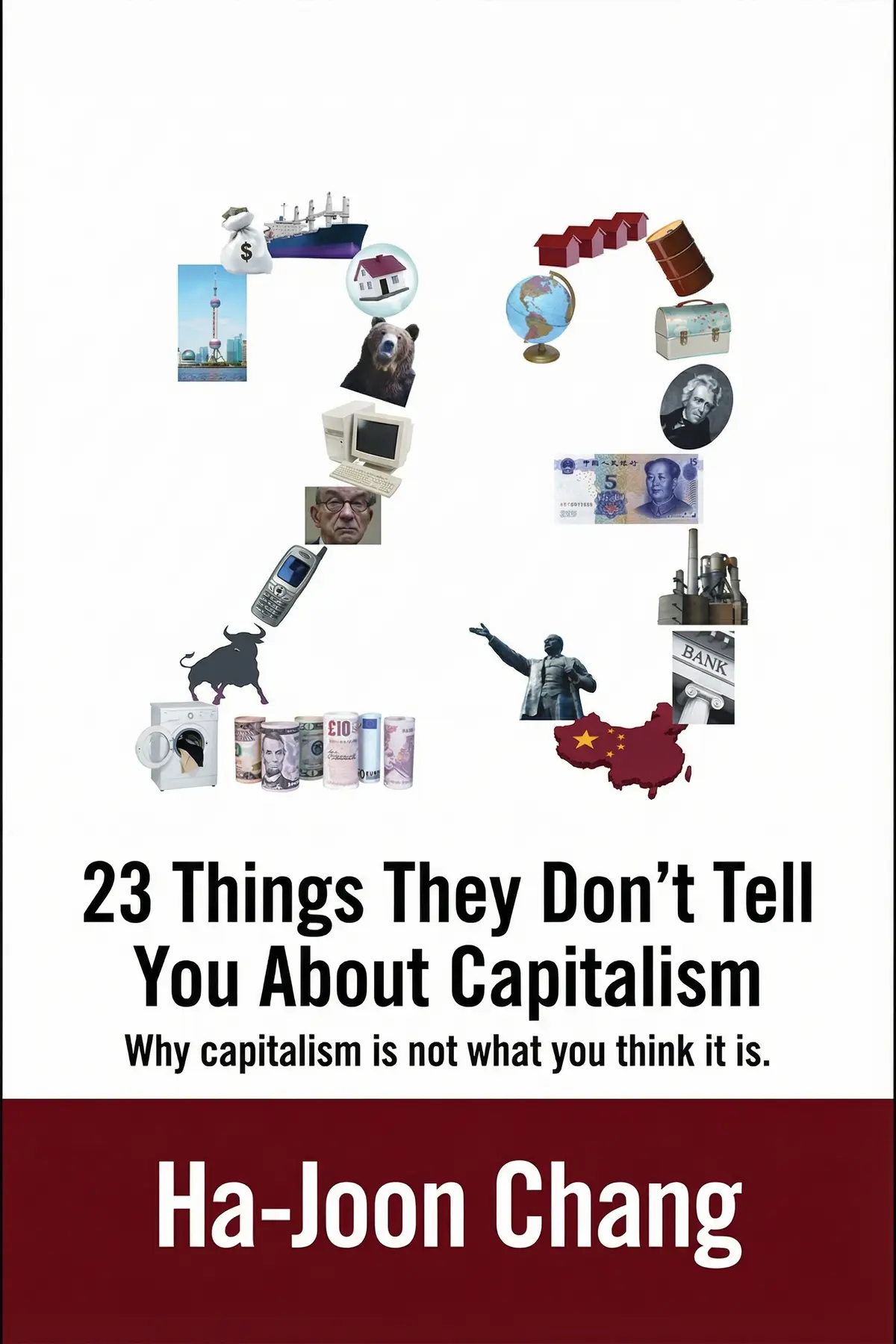
23 Things They Don’t Tell You About Capitalism
Ha-Joon Chang
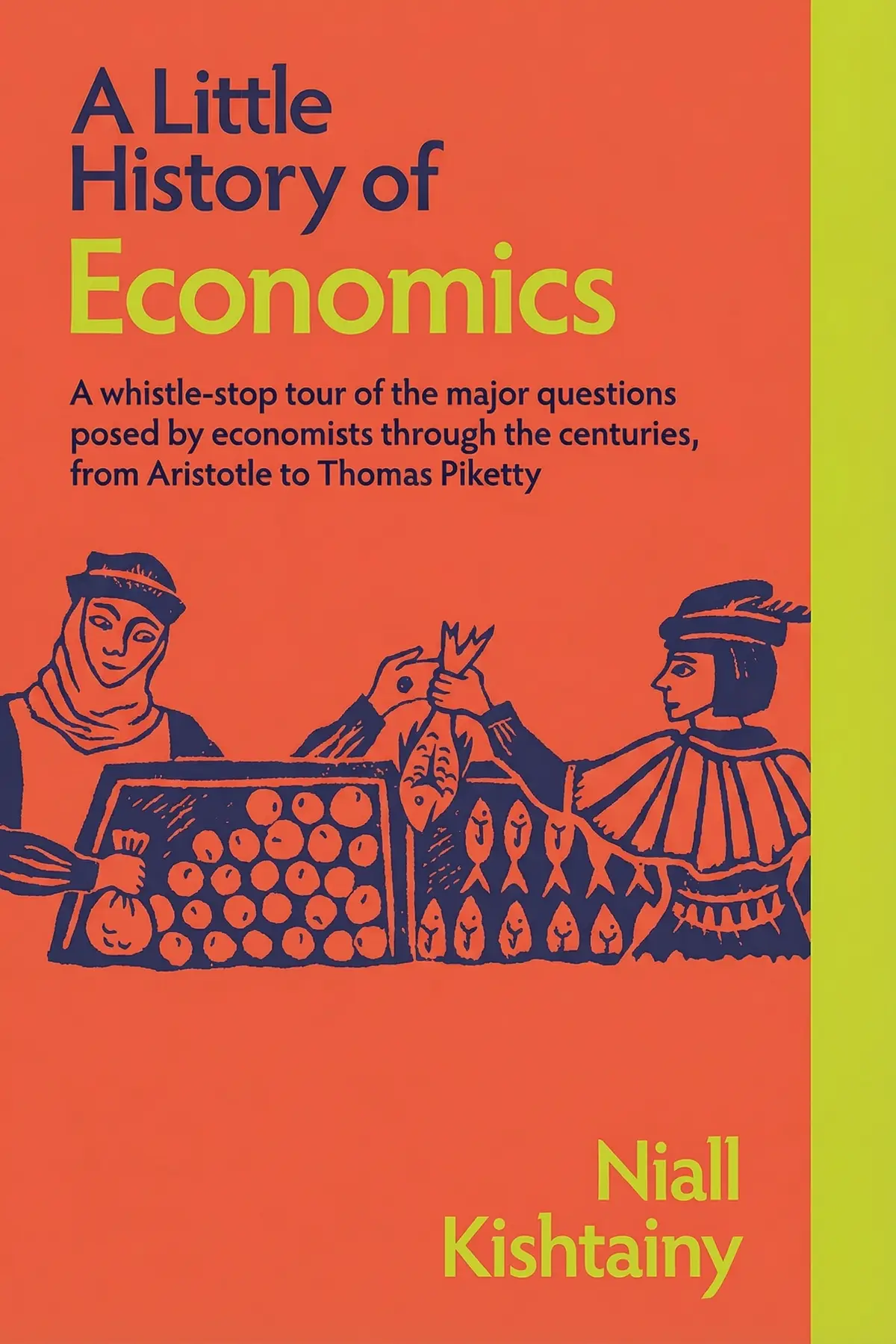
A Little History of Economics
Niall Kishtainy
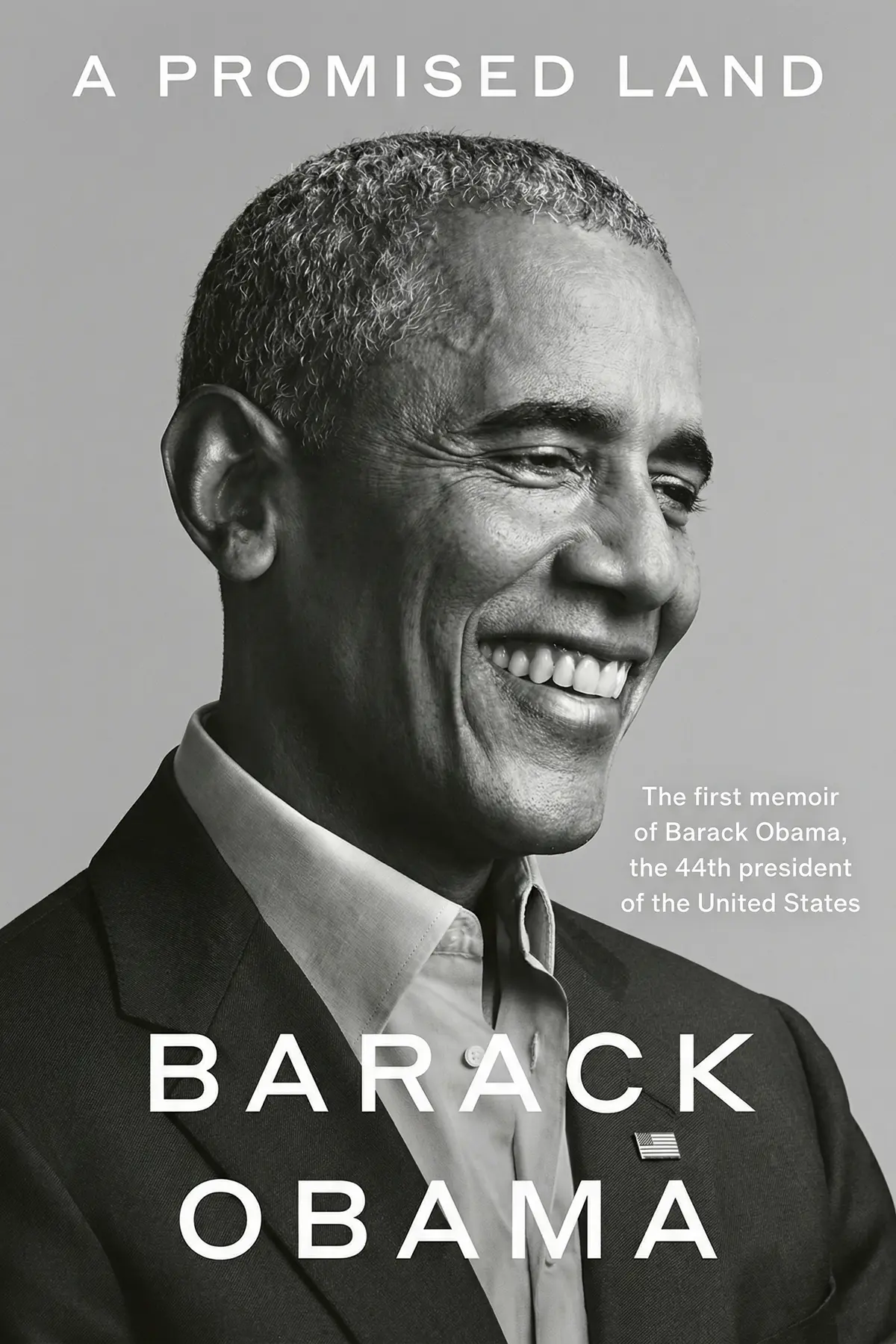
A Promised Land
Barack Obama
AUDIO SUMMARY AVAILABLE
Listen to The Curse of Bigness in 15 minutes
Get the key ideas from The Curse of Bigness by Tim Wu, plus 5,000+ more titles in English and Thai.
- 5,000+ titles
- Listen as much as you want
- 7-day free trial
- Cancel anytime







