
15 min 43 sec
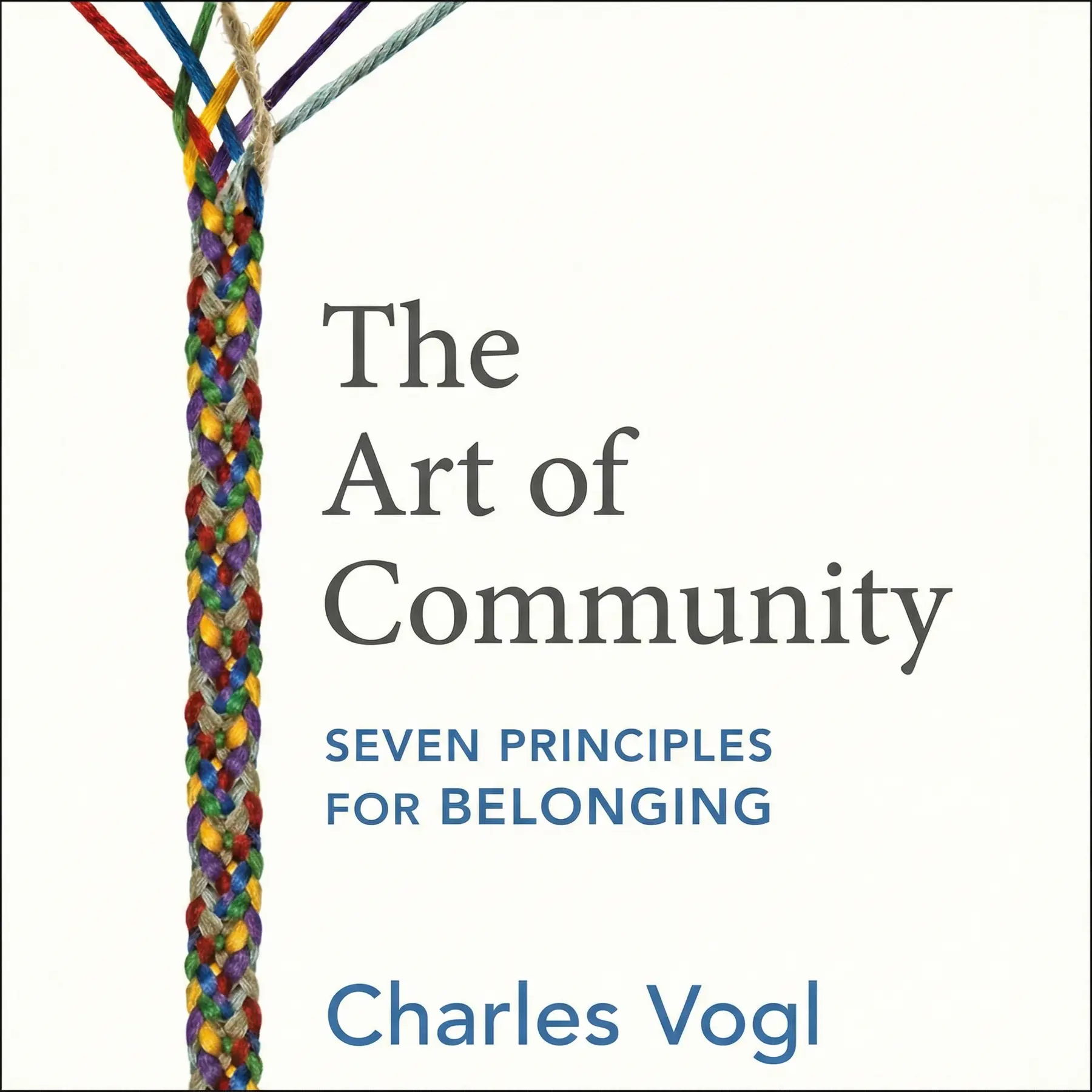
The Art of Community: Seven Principles for Belonging
By Charles Vogl
Discover a practical framework for building resilient, meaningful communities. Learn how to foster deep belonging through shared values, intentional rituals, and clear stages of development that turn strangers into a supportive collective.
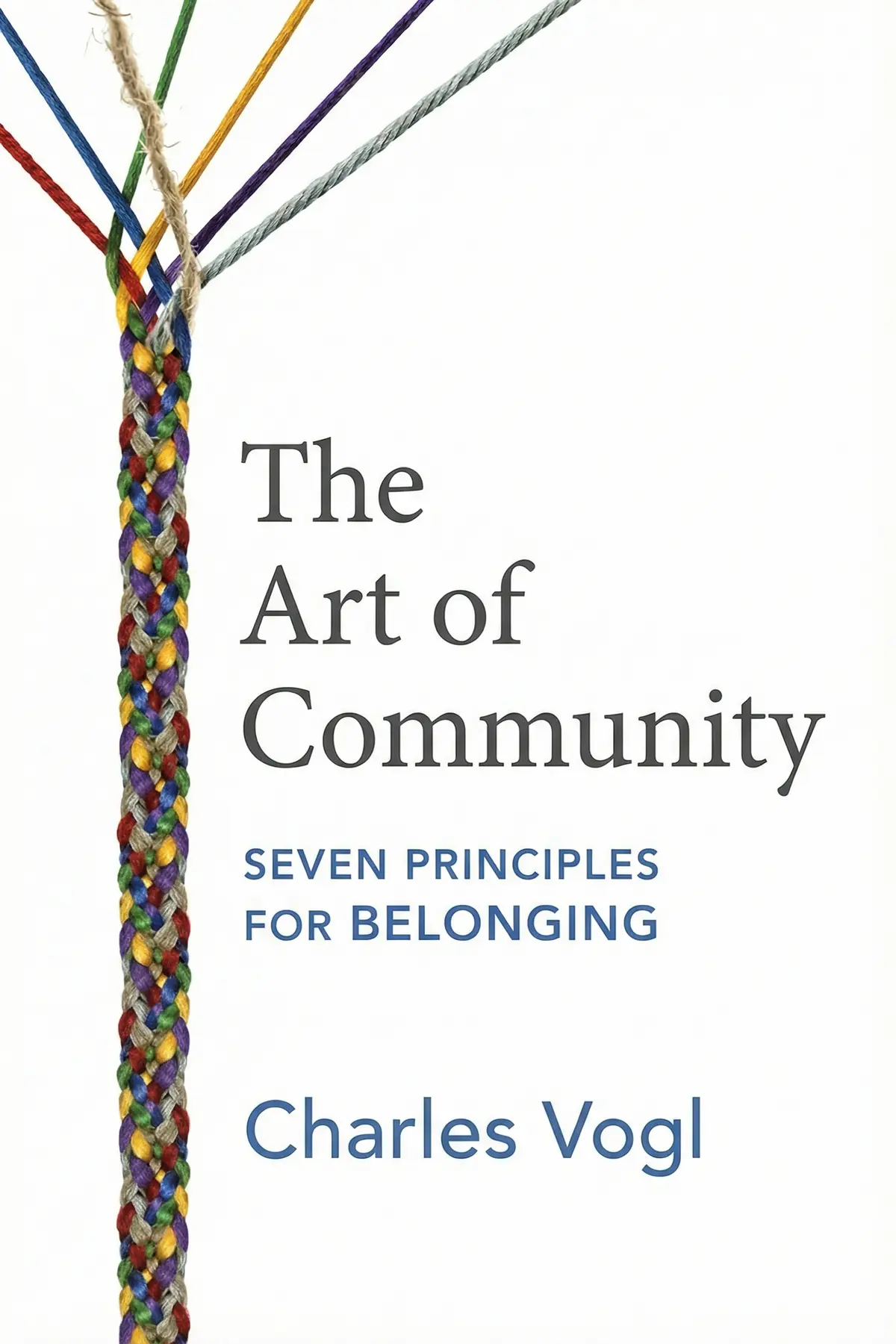
Table of Content
1. Introduction
1 min 27 sec
In an era where digital connections are everywhere yet genuine loneliness is at an all-time high, the quest for a real sense of belonging has never been more urgent. We often use the word ‘community’ loosely—to describe our neighborhoods, our social media followers, or even our coworkers—but true community is something much deeper and more intentional. It is a place where people feel safe, known, and connected by a shared purpose. This is the central premise we are exploring today: how to move from a casual gathering to a resilient, thriving collective.
Creating such a space doesn’t happen by accident. It requires a specific set of tools and a deep understanding of human psychology. We aren’t just looking for a way to get people in the same room; we are looking for the ‘art’ of weaving individuals into a tapestry of mutual support. Throughout this discussion, we will break down a framework that transforms the abstract idea of ‘togetherness’ into a concrete structure.
We will look at how clear boundaries provide safety, how rituals provide meaning, and how progression through different levels of membership keeps a group vibrant. Whether you are leading a massive global organization or just trying to bring your local neighborhood closer together, these principles provide the blueprint. By the end of this summary, you’ll see community not as a destination, but as a living, breathing process that requires constant nurturing and a very specific kind of architectural thinking. Let’s dive into how we can build spaces that don’t just exist, but truly matter to the people within them.
2. The Necessity of Clear Boundaries
1 min 52 sec
Discover why the most inclusive communities actually require a clear line between who is inside and who is outside to thrive.
3. Navigating the Threshold of Initiation
1 min 47 sec
Learn how the process of entering a community sets the stage for long-term commitment and deeper relationships.
4. The Power of Shared Rituals
1 min 52 sec
Explore how repetitive, meaningful activities act as the heartbeat of a community and keep its members connected.
5. Progressing Through the Inner Rings
1 min 43 sec
Understand the natural hierarchy of belonging and how providing a path to deeper involvement sustains a group.
6. Communicating Through Symbols and Tokens
1 min 51 sec
Discover how visual cues and physical objects can reinforce a sense of identity and remind members of their shared bonds.
7. The Role of Shared Values and Language
1 min 53 sec
Learn why a common vocabulary and a clear set of ethics are the bedrock upon which all successful communities are built.
8. Cultivating Elderhood and Mentorship
1 min 47 sec
Discover how the wisdom of long-term members ensures the long-term health and continuity of the collective.
9. Conclusion
1 min 31 sec
Building a community is one of the most challenging yet rewarding endeavors a person can undertake. As we have explored, it is not simply about gathering a group of people together; it is about creating a structured environment where those people can truly belong. By establishing clear boundaries, we create safety. Through intentional thresholds and rituals, we create meaning and commitment. By recognizing the different levels of involvement and the importance of symbols, we provide a path for growth and a sense of shared identity.
Ultimately, the success of a community depends on its values and the people who steward them. The movement toward elderhood and mentorship ensures that the group’s wisdom is preserved and that the next generation is ready to lead. This framework isn’t just a set of rules—it’s a philosophy of human connection. It reminds us that we are social creatures who thrive when we are part of something bigger than ourselves.
As you move forward, look at the groups you belong to or lead. Ask yourself: Is the boundary clear? Are we marking the transitions? Do our rituals reflect our values? By making even small adjustments in these areas, you can begin to transform a casual group into a resilient community. The art of community is the art of making sure no one has to walk alone. It is a powerful antidote to the isolation of the modern world, and it starts with the intentional choices you make today. Let these principles guide you as you build spaces that offer genuine connection, support, and a place to call home.
About this book
What is this book about?
Modern life often leaves us feeling isolated, but the human need for connection remains constant. This summary explores the foundational principles of community building as outlined by Charles Vogl. It moves beyond the idea of community as a mere social club and treats it as a purposeful structure designed to foster safety, growth, and mutual support. You will learn about the essential elements that define a group, including the importance of boundaries, the power of shared rituals, and the significance of symbols. The book provides a roadmap for taking individuals from the periphery of a group to the core leadership circles, ensuring the community remains healthy and sustainable over time. Ultimately, it offers a guide for anyone looking to create a space where people feel truly seen and valued.
Book Information
About the Author
Charles Vogl
Charles Vogl is an author, speaker, and adviser who develops leadership programs within organizations like Airbnb, LinkedIn, Twitch, Amazon, and the US Army. He previously worked as a full-time volunteer at a homeless shelter in California, served in the US Peace Corps in Zambia, and organized worker advocacy efforts in New York. Vogl is also a founding member of the Google Vitality Lab, a project that promotes wellness and leadership development.
Ratings & Reviews
Ratings at a glance
What people think
Listeners describe this work as exceptionally educational and skillfully composed, with one individual pointing out its success in condensing lengthy research into a clear format. Furthermore, they value the way it explores why community matters and organizes the concept into seven principles, resulting in a fast and approachable read. Listeners also appreciate how it guides them in intentionally building significant relationships, while one listener specifically draws attention to its easy-to-follow frameworks.
Top reviews
Wanida
Perhaps the most moving part of this entire book wasn't the framework, but the simple story about the power of an invitation. Charles Vogl captures something beautiful about the human need for belonging, especially in an era where we all feel so disconnected. He breaks down the art of building community into seven principles that feel both ancient and modern at the same time. His definition of community—a group that shares mutual concern for each other's welfare—is something I think we desperately need more of today. I loved the practical examples he gave, specifically the part about his graduate school dinners. It made the theoretical stuff about 'Inner Rings' and 'Boundaries' feel much more attainable and real. This book is a masterclass in how to purposefully establish meaningful connections with the people around you. I think everyone should read this.
Show moreAnthony
Finally got around to reading this, and it’s a masterclass in defining what actually makes a group a 'community' versus just a collection of people. Vogl’s background as a Yale-trained theologian and documentary filmmaker gives him a unique perspective that is both deep and practical. He explains that strong communities aren't just about shared interests, but about shared values and moral proscriptions on how members treat one another. The seven principles he outlines—Boundaries, Initiation, Rituals, Temple, Stories, Symbols, and Inner Rings—are incredibly helpful for anyone trying to build something lasting. I particularly liked the discussion on the 'Inner Ring' trap and how mature communities offer a path for growth and service rather than just status. It’s a quick read, very well-written, and provides exactly the kind of baseline we need in our modern, lonely world.
Show moreNam
Not what I expected, but exactly what I needed to hear regarding the 'everyone is welcome' fallacy. We’re often told that being inclusive means having no boundaries, but Vogl proves that a lack of boundaries actually makes people feel less safe. By establishing clear 'Inside' and 'Outside' markers, you create a space where values can actually be shared and protected. The book is highly informative and does an excellent job distilling years of research into a very accessible format. I found the section on 'Rituals' particularly helpful for my own local meetup group; it gave me concrete ideas on how to make our gatherings feel more special. Vogl’s tone is encouraging and his experience in the Peace Corps shines through in his empathy for others. If you want to move beyond just hosting events and start building real relationships, buy this book.
Show moreArthit
Vogl provides a really solid baseline for anyone trying to understand the invisible architecture of belonging. As someone who has spent years working in non-profits, I’ve seen many groups that look successful on the outside but are poorly organized internally. This book helps you realize that a group is only a community when members share a mutual concern for one another’s welfare. The chapter on 'Boundaries' was a major lightbulb moment for me because it explains why gatekeepers are so important for maintaining a group’s values. I also loved the concept of the 'Power of Invitation.' Vogl tells a story about a man who rarely attended his dinners but felt deeply touched just by being invited every week. That insight alone was worth the price of the book. It’s a quick, efficient read that provides a great framework for purposefully establishing more meaningful connections.
Show moreWatcharin
As someone who leads a volunteer organization, the distinction between a group and a true community was eye-opening. Vogl lays out what it takes to make a successful group by focusing on things like initiation rites and shared stories. It is a very well-written and informative guide that distills years of research into easy-to-follow frameworks. I particularly appreciated the section on 'Symbols' and how 'Tokens' can be used as a keepsake to remember an event or set of values. However, I’ll admit that some of the religious and CrossFit examples felt a bit niche. Not every community needs a 'Temple' in the way he describes it, though the metaphorical application is useful. It is a strong starting point for anyone who wants to grow their organization more effectively. I would have liked more concrete steps, but the theory is sound.
Show moreWaree
The Art of Community effectively distills years of social research into seven distinct, manageable principles for the modern age. It is surprisingly quick to read and manages to cover a wide range of group dynamics without feeling overwhelming or too dense. I thoroughly enjoyed how the author applies these concepts to everything from hobby groups to corporate teams and neighborhood associations. He manages to draw general principles from his theological background without making the book feel overly religious, which I appreciated. Look, building real connection is harder than it looks, and having a map like this makes the process feel much less amorphous. The '7 Principles' offer a clear guideline on how to build a space where people actually feel safe and valued. It’s a highly informative read that I’ve already recommended to several colleagues in my leadership circle.
Show moreChamlong
To be fair, the core of this book could have easily been condensed into a thirty-minute essay or a long-form blog post without losing much value. The signal-to-noise ratio is a bit off for me personally, as much of the content feels repetitive after the first few chapters. I found the most value not in the meat of the book where the author breaks down his seven principles, but rather in the storytelling portions of his introduction. His discussion of 'inner rings' is sensible and includes helpful modern-day examples, yet the prose often feels a bit dry. I did appreciate his point about letting go of the 'everyone is welcome' attitude. We are taught as children to include everybody, but Vogl argues that a true community needs a definition of 'us' to feel safe. It’s a decent read for a work-sponsored book club, but it’s definitely not the life-changing manual the title suggests.
Show morePim
Ever wonder why some groups just 'click' while others fizzle out after a few months? This book attempts to answer that by breaking down community into component parts like rituals, symbols, and stories. While the framework is helpful, I found the best parts were the stories of actually creating communities, like Vogl’s weekly dinners at Yale. The theoretical 'principles' are a bit dry and felt like they belonged in an appendix rather than the main core of the text. Gotta say, I struggled to get through some of the middle chapters because the tone can be quite condescending at times. He spends a lot of time telling you how to reject people who aren't a 'good fit,' which feels a bit exclusionary and cold. It’s worth a skim if you’re a leader, but it’s far from a perfect guide for the average person just trying to make friends.
Show moreDivya
Wanted a handbook but got a textbook instead. While the author clearly has a deep understanding of what makes a group function, the result is a primarily descriptive book that I had hoped would be more prescriptive. Truth is, there is tons of detailed insight describing the characteristics of a community—like the concept of the 'temple' or 'token'—but that doesn't necessarily help me actually build one. These elements usually evolve organically from the ground up, rather than being forced through a specific set of rules. Vogl’s background in theology and his experience with the Peace Corps are impressive, but his writing feels a bit too theoretical and academic for a casual reader. My sense is that he has a lot of wisdom to share, but the editing keeps it trapped in a descriptive survey rather than a clear how-to guide. It’s okay for a baseline, but don’t expect a clear roadmap for your specific group.
Show moreNatalie
Skip this one if you don't enjoy being lectured on how to manipulate social circles under the guise of 'meaningful connection.' I found Vogl’s approach to be strangely ego-driven and, frankly, a bit cult-like in its execution. He literally has to include a disclaimer chapter explaining why his tactics aren't for starting a cult, which should be a massive red flag for any reader. Instead of encouraging organic friendships, he turns the process into a ritualistic, over-complicated series of maneuvers designed to exclude others. The '7 principles' he outlines felt almost identical to the master plans used by high-control groups I studied in college. If you do pick this up, just scan the chapter titles and put it down. The rest of the pages are mostly just Vogl name-dropping his 'cool' friends or stroking his own ego about his graduate school dinners. It’s repetitive, self-serving, and frankly quite manipulative for a book about community.
Show moreReaders also enjoyed

7 Powers: The Foundations of Business Strategy
Hamilton Helmer

A Bigger Prize: How We Can Do Better Than the Competition
Margaret Heffernan
A Year with Peter Drucker: 52 Weeks of Coaching for Leadership Effectiveness
Joseph A. Maciariello
AUDIO SUMMARY AVAILABLE
Listen to The Art of Community in 15 minutes
Get the key ideas from The Art of Community by Charles Vogl, plus 5,000+ more titles in English and Thai.
- 5,000+ titles
- Listen as much as you want
- 7-day free trial
- Cancel anytime







