

16 min 11 sec
The Awakened Brain: The New Science of Spirituality and Our Quest for an Inspired Life
By Lisa Miller
Discover the groundbreaking intersection of neuroscience and spirituality as Dr. Lisa Miller reveals how our brains are biologically wired for connection, resilience, and protection against the modern epidemic of depression.
Table of Content
1. Introduction
1 min 52 sec
In an era where depression and anxiety have become global epidemics, our standard medical answers often feel incomplete. We are frequently told that the solution to mental suffering lies in correcting chemical imbalances or reliving our past traumas to dismantle unhealthy thought patterns. But what if there is a deeper, more fundamental piece of the human puzzle that we are overlooking? Dr. Lisa Miller suggests that our traditional approach to healing might be missing the very biological capacity that makes us resilient: our innate sense of spirituality.
As a professor of psychology and psychiatry at Columbia University, Dr. Miller didn’t start her career looking for the divine. She was a scientist seeking data. Yet, her decades of research, clinical observations, and even her own harrowing personal struggles led her to a startling conclusion: the human brain is hard-wired for spiritual experience. This isn’t about dogmatic religion, but about a specific neural capacity for awareness that connects us to a larger sense of life.
In this exploration of her work, we will look at the ‘awakened brain’—a state of being that shifts us from a narrow, stress-driven focus to a broad, connected perspective. We will see how this shift isn’t just a feeling, but a physical reality that changes the thickness of our brain’s cortex and serves as a powerful shield against mental illness. By the end of this journey, you’ll understand that depression and spiritual awakening are often two sides of the same developmental process, and that by leaning into our biological capacity for faith and connection, we can find a way to thrive even in our darkest moments. We are moving toward a throughline that suggests we aren’t just ‘makers’ of our own lives, but ‘seekers’ who are built to find resonance with the world around us.
2. A Shield Against the Storm
2 min 14 sec
Explore how early clinical observations revealed that shared spiritual practices could create profound behavioral shifts and provide a powerful defense against mental health struggles.
3. The Genetic Blueprint of Awareness
1 min 57 sec
Discover the scientific evidence that proves humans are born with a biological capacity for spiritual belief, independent of their religious upbringing.
4. The Neural Landscape of Resilience
2 min 07 sec
Delve into the physical changes in the brain that distinguish a spiritual mind from a depressed one, revealing a structural battle for mental wellness.
5. From Making to Seeking
2 min 04 sec
Learn how shifting from a controlling, ‘top-down’ mindset to an open, ‘bottom-up’ awareness allows us to perceive signs and synchronicities in our lives.
6. The Achieving Mind vs. The Awakened Mind
2 min 01 sec
Uncover the two distinct neural networks that dictate how we experience reality—one driven by stress and control, the other by love and unity.
7. The Resonance of Oneness
2 min 02 sec
Explore the fascinating science of brain-to-brain synchronization and how we are biologically connected to each other and the natural world.
8. Conclusion
1 min 54 sec
The journey through Dr. Lisa Miller’s research brings us to a transformative realization: our spiritual lives and our mental health are inextricably linked through our biology. We are not merely biological machines destined to suffer through the ‘glitches’ of depression and anxiety. Instead, we are equipped with an innate, genetic capacity for an ‘awakened’ awareness that can heal, protect, and expand our experience of the world.
As we have seen, this awakened brain is characterized by a physically thicker cortex and a shift from a stressed, ‘achieving’ mindset to a connected, ‘seeking’ mindset. It allows us to see the world not as a series of obstacles to be overcome, but as a meaningful dialogue to be joined. Depression, rather than being a dead end, can often be the doorway—a signal that our system is ready for a deeper level of connection. By leaning into nature, noticing synchronicities, and practicing open awareness, we can move away from the narrow isolation of the ego and into the expansive resonance of universal oneness.
As an actionable step toward building this awakened attention, Dr. Miller suggests the ‘three doors’ exercise. Take a moment to reflect on your life as a road. Identify a major hurdle or loss—a ‘closed door.’ Now, look closely at what happened in the wake of that closing. What new path, insight, or connection eventually opened up because that door was shut? Identify three such sequences in your life. By doing this, you train your brain to stop ruminating on the ‘closed’ doors of the achieving mind and start recognizing the ‘open’ doors of the awakened path. You are not just the maker of your journey; you are a seeker, and the world is ready to guide you home.
About this book
What is this book about?
The Awakened Brain explores the scientific foundation of spiritual experience and its profound impact on mental health. Dr. Lisa Miller, a leading researcher in the field, transitions from a traditional clinical perspective to a revolutionary understanding of the human mind. She demonstrates that spirituality is not merely a cultural construct but a biological imperative encoded in our neural circuitry. Through a blend of rigorous clinical studies and personal narrative, the book promises to show readers how to move from a state of isolation and 'achieving' stress to a state of 'awakened' awareness. This shift doesn't just improve mood; it physically alters the brain's structure, offering a robust defense against despair and opening a path toward a life of meaning and universal connection.
Book Information
About the Author
Lisa Miller
Lisa Miller, PhD, is a distinguished professor of psychology and spirituality at Columbia University. She holds joint appointments at Teachers College and the university's medical school within the department of psychiatry. A pioneer in her field, she is also the best-selling author of The Spiritual Child.
Ratings & Reviews
Ratings at a glance
What people think
Listeners consider this a core work that brings together spiritual and scientific perspectives, with one listener noting the way spiritual bonds turn into neurological ones. This engaging, well-crafted book is accessible enough that one listener finished it in less than a week. They value its sincere approach to spirituality and the intriguing research provided, with one listener pointing out the lower depression rates among spiritual individuals. Overall, the text is praised for its effective storytelling and focus on the benefits for brain health.
Top reviews
Bae
After hearing Lisa Miller on a podcast, I knew I had to pick this up immediately, and it did not disappoint. This is a foundational work that manages to bridge the gap between hard science and the human soul with remarkable grace. It’s not just a book about the brain; it’s a manual for living a more connected and meaningful life. Miller’s storytelling is engaging and deeply personal, which I actually found helped humanize the complex data points. Seeing how spiritual connections literally transform into neurological ones was a "lightbulb" moment for me. I finished the whole thing in less than a week because the writing is so fluid and the insights are so profound. It’s the kind of book that makes you want to be a better, more "awakened" version of yourself. Truth is, we need more scientists who are willing to look at the sacred as part of our biological reality.
Show moreMia
Wow. This is honestly the most important book I’ve read in years. We focus so much on the "doing" that we forget the "being." Lisa Miller shows us that our brains are actually wired for a spiritual connection to the world around us, and neglecting that is making us sick. The MRI evidence is clear as day. This isn't just self-help fluff; it’s a legitimate look at how we can heal from the inside out. Personally, I was moved by how she connects her own journey of motherhood with the broader scientific findings. If you’re feeling disconnected or burnt out, please read this. It’s engaging, fast-paced, and potentially life-altering. It offers a new vocabulary for the things many of us have felt but couldn't explain through traditional medicine.
Show moreGor
Not what I expected, but exactly what I needed. I thought I was getting a dry textbook on neurology, but I found a deeply moving exploration of what it means to be human. Miller’s vulnerability about her own struggles with infertility and her professional hurdles makes the scientific findings feel much more urgent and real. I love the idea that depression can be a "spiritual invitation" rather than just a broken circuit in the head. It reframes the struggle in a way that is both empowering and compassionate. The book is well-written and flows like a story, making it easy to digest despite the heavy subject matter. It has certainly encouraged me to cultivate a daily practice of "awakened attention" and to look for the sacred in the mundane. A truly heartfelt and fascinating look at brain health.
Show moreSarocha
In a sea of generic brain books, this one stands out as a genuine original. Lisa Miller takes a massive risk by weaving her clinical research with such a personal, spiritual narrative, and for me, it paid off. The science is there—particularly the fMRI work on cortical thickness in spiritual practitioners—but it’s the heart behind the data that makes it sing. We are living through a crisis of meaning, and this book offers a roadmap back to connection through "awakened" awareness. Some of the more mystical claims gave me pause, but the overarching thesis is too important to ignore. It’s a foundational work for a new era of psychology that doesn't ignore the soul. I’ve already recommended it to several friends who are looking for a way to ground their spiritual feelings in something more tangible and scientifically supported.
Show moreMo
Picked this up because I’ve been noticing a terrifying rise in anxiety among my students and wanted to understand the "why" behind it. Miller’s research suggests that our lack of spiritual focus is a major contributor to this epidemic of despair. The book explains how an "awakened" perspective can act as a shield against mental health issues by fostering a sense of oneness with a larger whole. While the memoir sections felt a little indulgent at times, they did help illustrate how these concepts play out in real life. Frankly, the book is a bit repetitive, and I think it could have been shorter without losing much. However, the core message—that we can actually train our brains to be more spiritual—is incredibly hopeful. It's an essential read for educators, parents, and anyone concerned about the future of mental health in our society.
Show moreChai
Ever wonder why some people seem naturally resilient to life's biggest tragedies while others crumble? Miller explores this through the lens of the "awakened brain," arguing that spiritual engagement creates physical changes in our neural pathways. I appreciated how she broadened the definition of spirituality beyond organized religion, making it accessible for secular readers. The MRI scans showing how spiritual practice can thicken the brain’s cortex are absolutely fascinating and offer real hope for those battling chronic depression. Look, the writing can be a bit repetitive at times, and she definitely leans into some questionable quantum physics metaphors that didn't quite land for me. Despite that, the message is vital. It’s a heartfelt look at how we can shift from an "achieving" mindset to one of deep connection. Most of the takeaways are practical enough for anyone to apply immediately to their own mental health journey.
Show moreBella
Finally got around to reading this, and the timing couldn't have been better for my own mental state. Miller’s distinction between the "achieving brain" and the "awakened brain" is a total game-changer for high-achievers. Most of us spend our lives in high-stress, control-oriented modes, so learning how to open up to the universe’s synchronicities felt like a breath of fresh air. The data on how spiritual awareness protects against depression is solid, though I’ll admit I was skeptical of the parts where she talks about communicating with deer. In my experience, you have to take some of the more mystical anecdotes with a grain of salt to get to the real value of the research. Still, the overall message about our innate capacity for transcendence is beautiful. It’s a quick read that packs a heavy emotional punch for those of us struggling to find meaning.
Show moreMattanee
The chapter on synchronicities really changed how I view my daily life and my interactions with strangers. Miller provides a fascinating framework for understanding why spirituality isn't just "nice to have," but a biological necessity for resilience. I really appreciated the checklist of spiritual habits near the end of the book, which offered concrete ways to develop an awakened heart. While I found her personal journey a bit long-winded in places, it served to illustrate her points about how the universe speaks to us if we're willing to listen. Not gonna lie, I was here for the brain science, so the parts about telepathy were a bit much for me. However, the evidence regarding protection against depression is the most "sticky" and important part of the book. It’s a great read for anyone interested in psychology who wants something more than just another sterile textbook.
Show moreAir
As someone who appreciates the intersection of science and faith, I had high hopes for this one, but it left me conflicted. On one hand, the clinical studies regarding brain health and spiritual practice are compelling and well-documented. On the other hand, Miller frequently wanders into territory that feels decidedly unscientific, such as her misuse of quantum theory to explain human connection. The truth is, it’s hard to stay grounded in the research when the author is describing telepathic moments that lack any peer-reviewed backing. I found the memoir aspect distracting; it felt like it was trying to be two different books at once. One was a rigorous study of neurology, and the other was a spiritual autobiography. While there are definitely useful takeaways for those struggling with isolation, the lack of a truly skeptical perspective makes it a tough sell for those who prefer purely evidence-based psychology.
Show moreNongnuch
This book feels more like a personal diary than the rigorous scientific text I was anticipating based on the subtitle. While Lisa Miller’s research on MRI data and the correlation between spiritual health and depression is genuinely groundbreaking, the narrative gets bogged down in her own life story. I struggled with the long sections about her family struggles and her "telepathic" encounters with nature, which frankly felt a bit too "woo-woo" for a work of clinical psychology. To be fair, the core thesis—that we are hardwired for connection—is incredibly powerful and provides a much-needed perspective on mental health. However, the pacing is quite slow, taking nearly a hundred pages to get into the meat of the actual brain science. If you’re looking for a straight science read, you might find yourself skimming the anecdotal chapters to find the data. It's a frustrating mix of hard science and unverified personal mysticism.
Show moreReaders also enjoyed
Abundance: The Inner Path to Wealth
Deepak Chopra
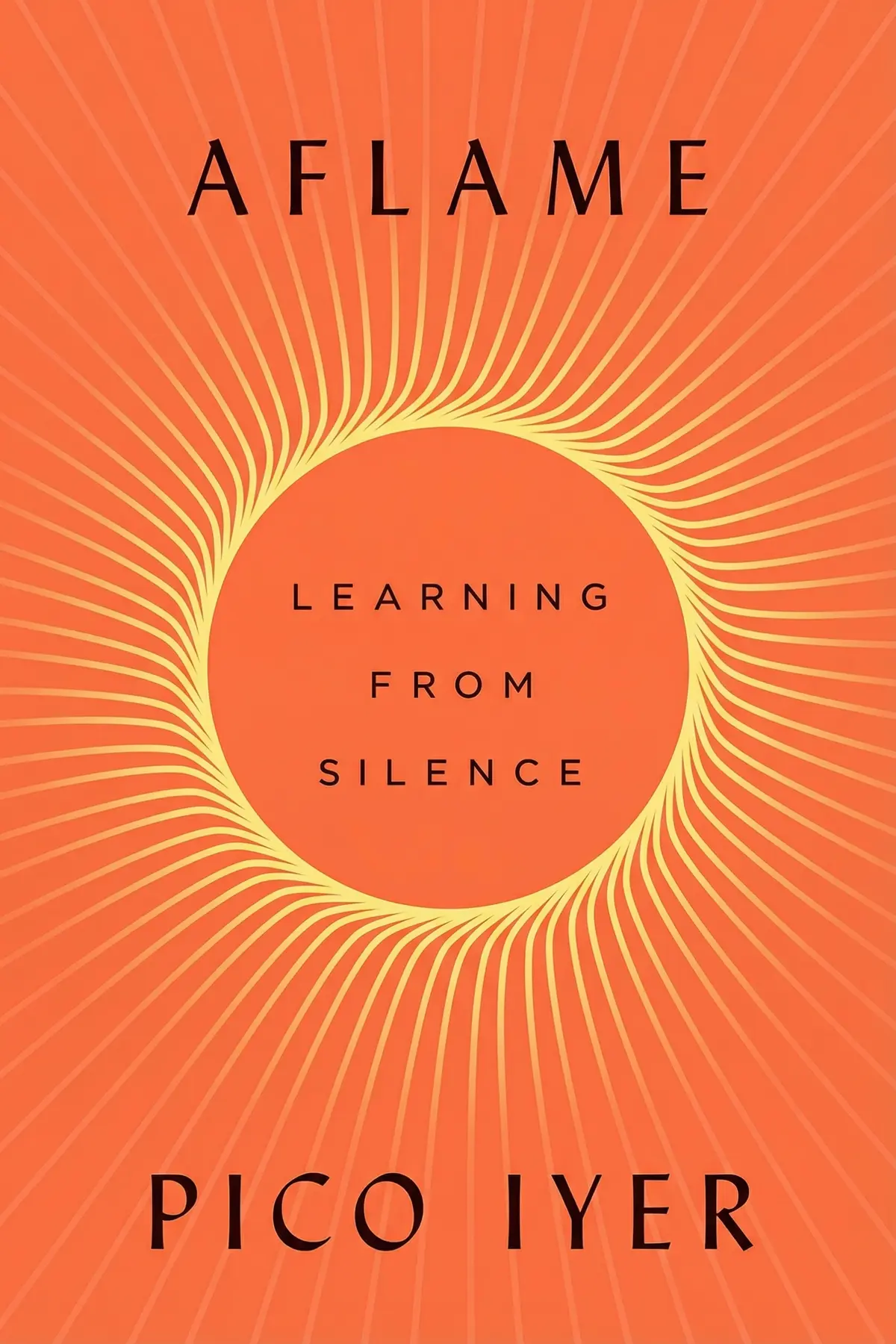
Aflame: Learning from Silence
Pico Iyer

ADHD an A-Z: Figuring It Out Step by Step
Leanne Maskell


AUDIO SUMMARY AVAILABLE
Listen to The Awakened Brain in 15 minutes
Get the key ideas from The Awakened Brain by Lisa Miller, plus 5,000+ more titles in English and Thai.
- 5,000+ titles
- Listen as much as you want
- 7-day free trial
- Cancel anytime







