
22 min 44 sec
Available in:English
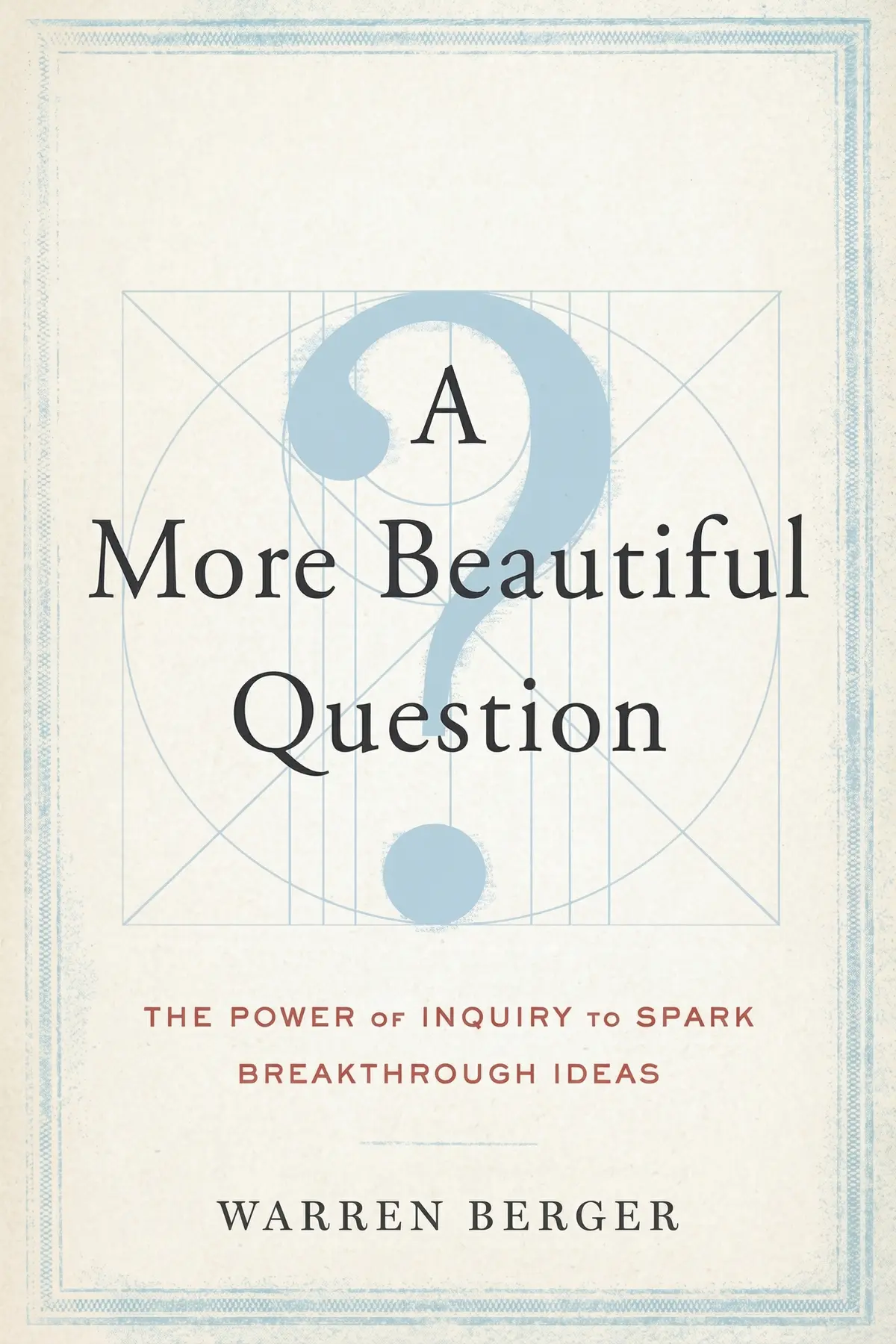
The Bestseller Code: Anatomy of the Blockbuster Novel
Explore the hidden data behind blockbuster novels. This summary reveals how a computer algorithm can predict bestsellers with incredible accuracy by analyzing topics, emotional arcs, and the subtle mechanics of writing style.
Table of Content
1. Introduction
2 min 00 sec
Every year, tens of thousands of novels are released into a crowded market, each one vying for a sliver of the public’s attention. For the authors, it is a labor of love; for the publishers, it is a high-stakes gamble. For a long time, the industry relied on gut instinct and the mysterious ‘it’ factor to decide which manuscripts were worth the investment. But what if there was a way to look past the subjective opinions of critics and editors? What if the secrets to a book’s success were hidden in plain sight, woven into the very fabric of the text itself?
This is the provocative premise of our journey today. We are looking at a groundbreaking study that suggests best-selling novels are not just random lightning strikes. Instead, they share a common architecture—a set of patterns in theme, emotion, and style that can be quantified and measured. Through the lens of data science, we can see why certain stories resonate with millions of people while others fail to launch.
In the following segments, we will explore the ‘bestseller-ometer,’ a sophisticated algorithm capable of predicting a book’s commercial potential with startling accuracy. We will move beyond the traditional boundaries of genre and look at how specific topics, emotional rhythms, and even individual word choices determine a book’s fate. We will see why complex literary flourishes often take a backseat to clear, simple communication, and how the gender of an author—or at least the stylistic signals associated with it—plays a role in reader appeal.
By the end of this summary, you will have a deep understanding of the structural elements that make a book unputdownable. You will learn why a character’s ‘need’ is more important than their description, and how the right title can signal a blockbuster before a reader even opens the cover. This isn’t just about making money in the book trade; it’s about understanding the deep-seated human responses to storytelling. Let’s dive into the code behind the world’s most successful stories.
2. The Mystery of Commercial Popularity
2 min 23 sec
Discover why the books critics love are rarely the ones the public buys, and why predicting a hit has historically been a gamble for the publishing world.
3. Decoding Success with the Bestseller-ometer
2 min 22 sec
Explore the development of a powerful algorithm that can guess which books will top the charts with nearly 90 percent accuracy.
4. The Dominance of Topics Over Genre
2 min 32 sec
Learn why the specific themes a book explores are far more important than the shelf it sits on in the bookstore.
5. Riding the Emotional Roller Coaster
2 min 23 sec
Understand how the peaks and valleys of a story’s emotional arc are the secret weapon of the most successful novelists.
6. The Strength of Simple Style
2 min 13 sec
Discover why the best-selling books often use the most basic language and why ‘plain’ writing is a hallmark of success.
7. The Stylistic Edge of Female Authors
2 min 23 sec
Explore the surprising finding that female writers often score higher on the algorithm’s style metrics than their male counterparts.
8. Characters, Titles, and the Power of 'The Girl'
2 min 23 sec
Uncover the trends in modern titles and why a character’s sense of ‘need’ is the engine that drives a blockbuster.
9. A New Era for Authors and Readers
2 min 04 sec
See how data analysis is changing the game for new writers and how even a computer can find a ‘perfect’ book.
10. Conclusion
2 min 01 sec
As we wrap up our exploration of the bestseller code, it is clear that the world of commercial fiction is far less chaotic than it might appear on the surface. While we like to think of creativity as a mysterious, unquantifiable force, the data tells a different story. Every blockbuster novel, from the grittiest crime thriller to the most heart-wrenching romance, is built upon a foundation of specific, measurable patterns.
We have seen that the path to the bestseller list is paved with simple, direct prose and emotional arcs that mimic the rhythmic intensity of music. We’ve learned that the topics of crime and human relationships are the primary engines of commercial success, far outweighing the importance of genre or explicit content. We’ve also discovered that the most successful characters are those defined by a clear and urgent sense of ‘need,’ and that even the words in a title can signal a book’s destiny.
The lesson here isn’t that authors should start writing like robots. Instead, it’s that there is a deep, structural logic to human engagement. Whether you are a writer or a reader, understanding these patterns allows you to see the ‘skeleton’ beneath the skin of your favorite stories. It explains why some books feel like a chore and others feel like a gift you can’t put down.
Your actionable takeaway from this journey is to become your own ‘bestseller-ometer.’ The next time you pick up a book from the top of the charts, don’t just read it for the plot. Pay attention to the length of the sentences. Notice how often the characters’ emotions shift from high to low. Look for that word ‘need’ and see how it drives the action. By observing these patterns for yourself, you’ll gain a deeper appreciation for the craft of storytelling and a better understanding of why we, as a culture, love the books we love. The code is there, waiting to be read—not just by a computer, but by anyone willing to look closer.
About this book
What is this book about?
Have you ever wondered why some novels skyrocket to the top of the charts while others, seemingly more refined, vanish without a trace? The Bestseller Code provides a fascinating look into the intersection of literature and data science. Authors Jodie Archer and Matthew L. Jockers spent years developing a sophisticated algorithm to decode the specific DNA of a hit novel. By analyzing thousands of books, they uncovered surprising patterns that define commercial success. From the specific emotional beats that keep readers hooked to the types of words that appear most frequently in hits, the authors demonstrate that best-selling status is not just a matter of luck. This summary breaks down the algorithm's findings on why crime pays in fiction, why simple prose often beats flowery language, and how character agency is the ultimate engine of a plot. Whether you are an aspiring author or a curious reader, you will gain a new perspective on the books that capture the world's imagination.
Book Information
About the Author
Jodie Archer
Jodie Archer brings a wealth of industry experience to this study, having served as an editor at Penguin Publishing in the United Kingdom. She earned her PhD from Stanford University and has worked as a consultant for various writers and literary organizations. Matthew L. Jockers is an English professor at the University of Nebraska and serves as the director of the Nebraska Literary Lab. His academic focus lies in text mining and the digital analysis of writing, making him a pioneer in the field of literary data analysis.
Ratings & Reviews
Ratings at a glance
What people think
Listeners consider this a compelling listen filled with essential perspectives and a vast amount of research. The narrative approach is perfectly tailored for authors, and one listener highlights its ability to map out a system for tackling intricate challenges. The book is also praised for its scrutiny of the reading audience and its use of tension. Nevertheless, its reliability draws divided views, with some lauding the incredible science and others voicing dissatisfaction with the ultimate conclusions.
Top reviews
Max
Finally got around to reading this exploration of the 'bestseller-ometer' and I am genuinely impressed by the depth of research involved. Archer and Jockers don't just guess; they provide a fascinating look at how machine learning can dissect a novel's DNA. While some might find the data-heavy approach a bit dry, I thought it illustrated a brilliant process for solving the complex problem of why some books take off while others flop. The insight into how 'okay' is actually a marker for high-performing prose was a total surprise to me. It's not just a manual for writing hits, but a deep dive into readership habits and the underlying rhythms of popular fiction. To be fair, you might not agree with every conclusion, but the sheer scale of the 5,000-book analysis is hard to ignore. This is a must-read for any writer who wants to understand the mechanics of the market without losing their artistic soul.
Show moreAir
What a wild ride through the world of big data and literature! I never thought I’d be so engrossed in a book about algorithms, but the way they used the computer to unmask J.K. Rowling’s pseudonym was brilliant. The level of readership analysis here is top-tier. It challenges the snobbish idea that bestsellers are just trash; instead, it proves they are often the most meticulously structured books on the shelf. Not gonna lie, I was skeptical at first about a machine 'reading' for plot, but the results speak for themselves. The authors have a way of making complex science feel like a page-turner. If you’re interested in how the publishing industry is changing, you need this on your shelf. It’s a massive research project that manages to be both informative and deeply entertaining.
Show moreAom
As a novelist who usually avoids the technical side of the industry, I found this study surprisingly suspenseful. It’s a bit like watching a forensic scientist take apart your favorite painting to see what chemicals were used in the oil. The breakdown of plot curves—specifically how books like 'Fifty Shades of Grey' and 'The Da Vinci Code' hit specific emotional beats—was incredibly eye-opening. Frankly, it makes the publishing world feel a little less like a lottery and more like a craft that can be mastered. The authors write in a style that is approachable for writers, even if you aren't a math whiz. My only gripe is that it feels a bit like a long-form advertisement for their algorithm services at times. Still, the data on word choice and verb usage is gold. I'll definitely be thinking about my use of 'need' and 'want' differently from now on.
Show moreAnawin
The chapter on topic analysis is where this book truly shines, even if the math gets a little fuzzy toward the end. I was fascinated by the idea that a computer can distinguish between a 'bar' as a legal exam and a 'bar' as a place to drink based on surrounding nouns. That kind of precision shows how far natural language processing has come. Look, the 80% accuracy claim is bold, and while they don't give you the full secret sauce, the principles they outline are solid. It provides a unique lens through which to view your own work or the books on the bestseller list. I did notice the occasional slip-up between 'theme' and 'topic,' which was annoying for a book about linguistics. Regardless, the insights into how bestsellers lean into human connection and workplace settings are valuable. It’s a compelling look at the intersection of tech and art.
Show moreAna
After hearing all the buzz about this book in my writing group, I had to see if the 'code' was legitimate. The authors make a strong case for the importance of active characters who 'grab' and 'think' rather than just exist in the scene. I loved the breakdown of how verb choice impacts the reader's engagement. It’s one of those rare nonfiction books that actually gives you something to apply to your craft immediately. There are some flaws in the presentation—some of the charts are a bit hard to decipher without a statistics degree—but the core message is clear. It’s about more than just word counts; it’s about the emotional arc of the story. Frankly, it’s a relief to see some real science applied to the 'gut feeling' of publishing. It’s definitely worth the time for anyone serious about the industry.
Show moreNikolai
Ever wonder why certain novels just seem to explode while others vanish without a trace? This book attempts to solve that mystery using a massive database of modern fiction. I found the analysis of 'human closeness' as a winning topic to be particularly insightful. However, I did notice a few inconsistencies in their math, specifically when they were counting the number of topics in their 'perfect' novel vs. their general rule. It makes you wonder if the editing was as rigorous as the data collection. Still, the overarching themes are hard to argue with. It provides a fascinating look at the 'DNA' of a hit. For a writer, it's a great tool for self-editing and understanding how to structure a narrative that keeps people turning pages. The suspense of seeing which books the computer liked was a fun bonus.
Show moreGiulia
Direct and provocative, this book challenges the traditional gatekeepers of the literary world. Archer and Jockers argue that the secret to success isn't just luck; it's a specific writing style that uses contractions and shorter sentences to create intimacy. I found their readership analysis to be the most compelling part of the work. It’s less about 'dumbing down' and more about how humans naturally process stories. While the book can be a bit repetitive in its praise for its own algorithm, the critical insights are undeniable. To be fair, it's a commercial for their tech, but the information they share is still high-quality. Any aspiring author would benefit from understanding these patterns. It’s a solid addition to any writing library.
Show moreMo
Is there really a secret formula for a blockbuster hit, or is this just another case of finding patterns where none exist? This book sits in that weird space between a brilliant breakthrough and a glorified magazine article. Truth is, I felt like the most actionable advice could have been condensed into a few pages. Following the 'read the fourth chapter' rule for business books might have saved me some time here. They spend a lot of pages repeating their success rates without showing enough of the raw data to satisfy my curiosity. That being said, the sections on John Grisham and Danielle Steel were quite interesting for their consistency. It’s a decent read for the curious, but don’t expect a magic button that writes your novel for you. It’s an engaging read, though perhaps a bit padded.
Show morePranee
Picked this up because I wanted to see if a computer could actually tell me why I like what I like. The results were a bit of a mixed bag for me. While the science is incredible, I was disappointed to find that their model basically tells you to avoid writing fantasy or science fiction if you want to be a 'bestseller.' Personally, I think that's a bit of a narrow view since those genres are huge in the YA and digital markets. It feels like the data is skewed toward a very specific type of New York Times listee. To be fair, the advice on sentence length and avoiding 'very' is standard but validated well here. The book is well-written and clear, but it lacks the depth I wanted for more niche genres. It's a good effort, but it feels like it’s missing a few pieces of the puzzle.
Show moreMaya
Not what I expected from a book that claims to have cracked the code of successful storytelling. While I appreciate the massive research, much of this felt like opinion trying to dress up as hard science. The fact that the authors spent so much time on the word 'okay' being a predictor of success felt more like a statistical anomaly than a real insight. Honestly, it felt like a 5,000-word article stretched out to book length with a lot of unnecessary padding. I also struggled with the lack of transparency regarding 'false positives'—how many duds did the computer think were hits? Without that data, the 80% accuracy claim feels a bit like a marketing gimmick. It’s an engaging enough read if you want some light trivia about Dan Brown, but as a serious tool for writers, it falls short. Too much sales pitch, not enough substance.
Show moreReaders also enjoyed
AUDIO SUMMARY AVAILABLE
Listen to The Bestseller Code in 15 minutes
Get the key ideas from The Bestseller Code by Jodie Archer, plus 5,000+ more titles in English and Thai.
- 5,000+ titles
- Listen as much as you want
- 7-day free trial
- Cancel anytime







