
23 min 51 sec
The Book of Joy: Lasting Happiness in a Changing World
Discover how the Dalai Lama and Archbishop Desmond Tutu find lasting happiness. This summary explores the pillars of joy and provides a roadmap for maintaining inner peace amidst the world's inevitable suffering.
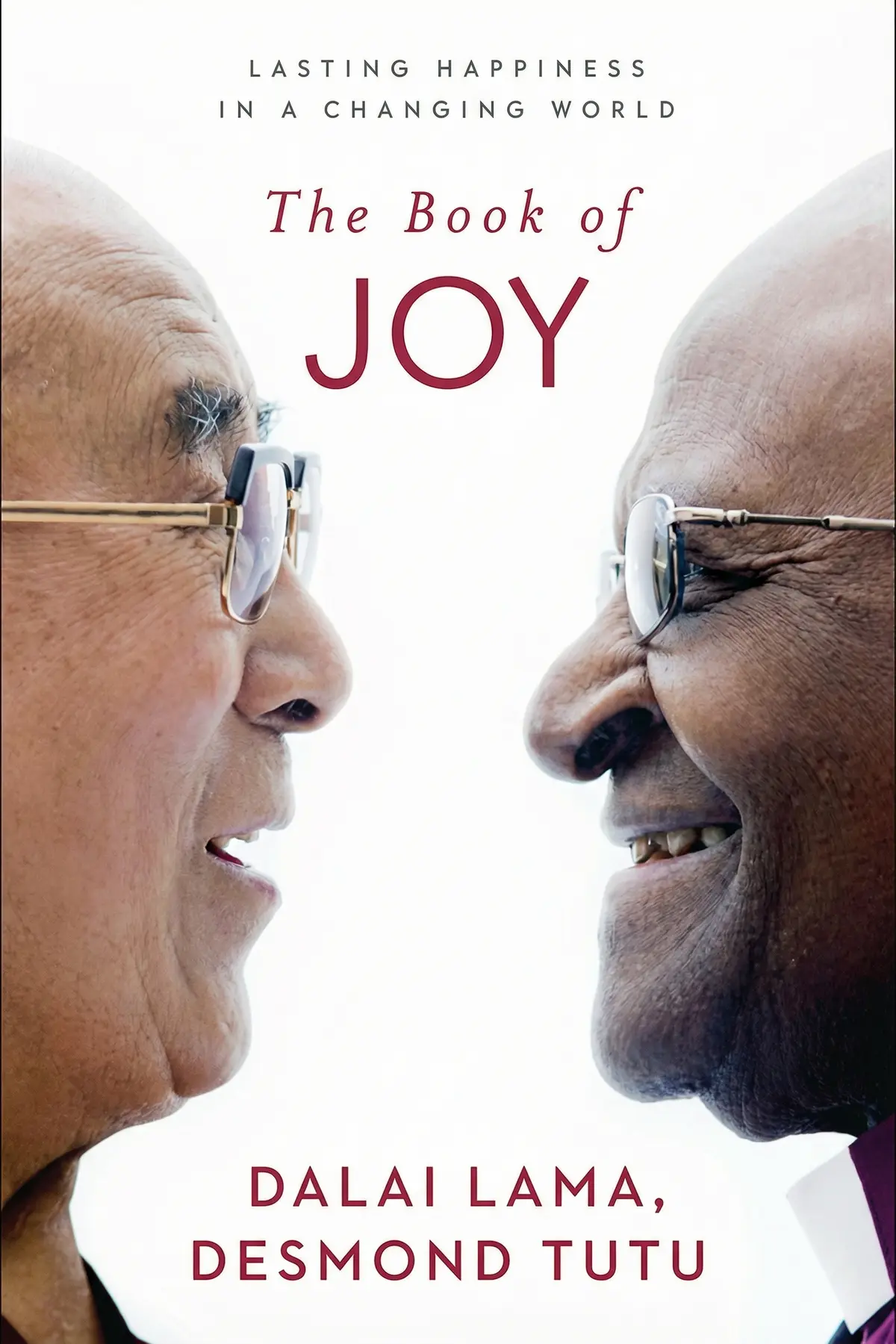
Table of Content
1. Introduction
1 min 36 sec
Imagine two of the most recognized spiritual figures on the planet sitting together, not in a somber temple or a quiet cathedral, but laughing until they have tears in their eyes. This is the image at the heart of our journey today. The world we live in can feel like a relentless machine of stress, deadlines, and bad news. We often find ourselves asking if happiness is even possible when everything around us feels so fragile. To answer this, we look to the combined wisdom of the Dalai Lama and Archbishop Desmond Tutu.
Between them, they have faced exile, political oppression, and the dark reality of human cruelty. Yet, they remain two of the most joyful people you could ever encounter. This isn’t a coincidence; it is the result of a specific way of looking at the world. In this summary, we are going to explore the throughline of their philosophy: the idea that joy is not a fleeting emotion that happens to us, but a state of being that we can actively build.
We will walk through the mental shifts and emotional habits that allow these leaders to stay peaceful. We’ll look at why suffering isn’t just something to avoid, but a necessary part of growth, and how shifting your focus from yourself to others can actually be the most selfishly beneficial thing you can do for your own mental health. By the end of this, you’ll have a clearer understanding of how to find your own center of gravity, regardless of what is happening in the world around you. Let’s dive into the core principles of creating a life filled with enduring joy.
2. The Hidden Value of Human Suffering
2 min 28 sec
Explore why pain is not just a burden but a necessary foundation for deep happiness and empathy, illustrated through the lives of great leaders.
3. Building Mental Immunity
2 min 11 sec
Discover how to strengthen your internal world so that external challenges no longer have the power to ruin your day or your life.
4. Transforming Anger Through Compassion
2 min 13 sec
Understand the root of your rage and learn how a simple shift toward love can instantly dissolve even the most intense frustrations.
5. The Danger of Self-Absorption
2 min 24 sec
Learn how focusing too much on ‘I, me, and mine’ can lead to loneliness and physical illness, and how to break free from this trap.
6. Embracing Our Mortality
2 min 17 sec
Facing the reality of death might seem grim, but it is actually the key to living a life filled with gratitude and vibrancy.
7. The Pillars of Perspective and Humility
2 min 10 sec
Learn how widening your view and seeing yourself as ‘just another human’ can dissolve anxiety and create a deeper sense of belonging.
8. The Pillars of Humor and Acceptance
2 min 08 sec
See how a good laugh and a willing heart can defuse the most tense conflicts and help you navigate life’s unchangeable difficulties.
9. The Pillars of Forgiveness and Gratitude
2 min 04 sec
Uncover why letting go of past wrongs and appreciating the present is the only way to truly enjoy your life today.
10. The Pillars of Compassion and Generosity
2 min 21 sec
Find out why the ‘helper’s high’ is a real biological phenomenon and how giving to others is the ultimate secret to your own happiness.
11. Conclusion
1 min 59 sec
As we reach the end of our journey through the wisdom of these two remarkable men, it’s worth looking back at the throughline we’ve followed. We started by acknowledging that suffering is an inescapable part of the human condition, but we’ve seen that it doesn’t have to be the end of our story. By building mental immunity, transforming our anger into compassion, and moving away from self-absorption, we can create a foundation for lasting joy. The Eight Pillars—perspective, humility, humor, acceptance, forgiveness, gratitude, compassion, and generosity—are not just abstract concepts. They are practical tools that we can use every single day to navigate the complexities of modern life.
The central message is clear: joy is not a destination we reach once all our problems are solved. Instead, it is a way of traveling. It is a choice we make in the midst of the storm. The Dalai Lama and Archbishop Tutu have shown us that even in the face of exile and oppression, it is possible to laugh, to love, and to remain hopeful. This is the promise of their work: that your internal world can be a sanctuary of peace regardless of the external chaos.
To put this into practice today, try a simple exercise. The next time you find yourself in a moment of quiet, perhaps before you sleep or as you wake up, take a moment to reflect on your own mortality. It might feel uncomfortable at first, but try to visualize that life is finite. When you truly realize that your time is a limited resource, notice how your priorities shift. Use this awareness to let go of one minor grudge or to express gratitude for one simple thing you usually take for granted. By embracing the reality of your life, you free yourself to live it with total presence and joy. Happiness isn’t found by escaping the world; it’s found by diving into it with an open and compassionate heart.
About this book
What is this book about?
The Book of Joy captures a historic week-long conversation between two of the world’s most influential spiritual leaders: His Holiness the Dalai Lama and Archbishop Desmond Tutu. Despite a lifetime of hardship—including exile and the struggle against apartheid—these two men radiate a contagious happiness that seems at odds with their traumatic pasts. This summary explores their shared wisdom on how to cultivate a joyful heart in a world that is often defined by chaos, pain, and uncertainty. You will learn about the 'Eight Pillars of Joy' and the mental and emotional shifts necessary to move beyond stress and anger. The promise of this work is not that life will become easy, but that your internal world can become resilient enough to withstand any external storm. By focusing on compassion, humility, and the interconnectedness of human experience, you can transform your perspective and find a sense of peace that is both profound and permanent. It is a guide to moving from self-centered anxiety toward a life of meaning and outward-facing love.
Book Information
About the Author
Dalai Lama
His Holiness the Dalai Lama is the spiritual leader of the Tibetan people and a recipient of the Nobel Peace Prize. He is widely recognized for his teachings on Buddhism, compassion, and global peace. Archbishop Desmond Tutu was a Nobel Peace Prize winner and a South African cleric famous for his activism against apartheid. As a leader in racial reconciliation, he served as the Archbishop of Cape Town and authored influential works such as The Book of Forgiving.
Ratings & Reviews
Ratings at a glance
What people think
Listeners find the material accessible and value its moving subject matter, portraying it as a transformative spiritual voyage. The work delivers deep perspectives on spiritual wisdom and provides numerous practical tools, with one listener pointing out the remarkable nature of the lessons. Listeners enjoy the playful banter between these two world leaders, with one listener emphasizing how their dialogues are woven together, and they appreciate the wit throughout, which brings a smile to those listening.
Top reviews
Noi
This book is a masterclass in how to live a meaningful life without ignoring the harsh realities of pain. I was struck by the 8 Pillars of Joy, especially the sections on humility and forgiveness. Truth is, many spiritual texts feel dense or unapproachable, but the dialogue here makes high-level concepts feel like a cozy chat between old friends. Seeing the Dalai Lama and Archbishop Tutu joke around while discussing exile and apartheid is incredibly moving. It’s less about fleeting happiness and more about building a resilient soul. I found the practice exercises at the end to be a fantastic resource for daily grounding. This is a life-altering read that I plan to revisit every year.
Show morePor
Ever wonder what happens when two Nobel Peace Prize winners just hang out for a week? The Book of Joy provides that answer with a refreshing mix of gravity and silliness. I’ve been looking for something that addresses the current global volatility without being depressing, and this hit the spot perfectly. The banter between His Holiness and the Archbishop kept me smiling through the more difficult discussions on suffering. It’s not just 'positive thinking' fluff; it’s a deep dive into how we can choose our responses to tragedy. Personally, the chapter on 'Acceptance' was the most challenging and rewarding for me. It’s a heartwarming spiritual journey that offers practical tools for anyone feeling pessimistic.
Show moreParichat
Wow, the audiobook version of this is absolutely incredible. Listening to the actors recreate the voices of these two giants made the experience feel so intimate and real. It’s a rare treat to witness such a profound friendship that transcends religion and culture. The way they discuss joy as a 'way of being' rather than a temporary high really changed my perspective on my own stress. I loved the 'manual' at the end which provides concrete steps for meditation and redirection of thoughts. It’s rare to find a book that is both intellectually stimulating and deeply emotional. I’ve recommended this to several friends who are struggling with burnout. Truly exquisite work.
Show moreSaengdao
Imagine sitting at a table with two of the wisest people on earth while they gossip, giggle, and drop life-changing wisdom. That is exactly what reading this feels like. I was moved by the discussion on how suffering is unavoidable, but our reaction to it is where our freedom lies. The book doesn’t shy away from the dark parts of their histories, like the Dalai Lama’s exile or the Archbishop’s life under apartheid. Yet, the tone remains light-hearted and hopeful throughout. It’s a spiritual journey that feels inclusive of all faiths or even no faith at all. Not gonna lie, I teared up a few times just reading about their mutual respect and love.
Show moreKasemsan
After hearing so many people rave about this, I finally sat down with a copy and I’m so glad I did. This isn't your typical self-help manual; it feels more like a documentary in book form. The focus on 'joy' versus 'happiness' is a crucial distinction that most people miss in our modern culture. I loved how it weaves together ancient spiritual practices with modern psychological insights. The stories shared are heartwarming and offer a much-needed recharge for the soul. Look, we live in a volatile time, and having a resource like this to return to is a gift. It’s easily one of the most profound books on spiritual understanding I’ve ever encountered.
Show moreNongnuch
There’s a beautiful simplicity to the teachings in this book that shouldn't be mistaken for a lack of depth. The conversation between these two friends is a masterclass in how to bridge differences through shared humanity and joy. I particularly appreciated the emphasis on how joy is found by bringing joy to others—a lesson that feels more relevant now than ever. The writing is easy to digest and perfect for reading a few pages each morning. It’s a spiritual understanding that goes beyond dogma and gets to the heart of what it means to be human. If you need a reminder that goodness still exists in the world, this is the book you need to pick up.
Show moreAkosua
Picking this up was a bit of a gamble because I’m usually wary of celebrity collaborations, but the chemistry here is undeniable. Douglas Abrams does a decent job weaving the conversations together, though he occasionally over-explains things that the two leaders have already made clear. The 'tell vs. show' issue mentioned by some readers is there, yet the core message remains powerful enough to overcome it. I appreciated the focus on neuro-science and psychology alongside the spiritual teachings. It gives the book a grounded feel that prevents it from becoming too esoteric. Frankly, the parts where they tease each other are the highlights. It’s a solid 4-star read for anyone needing a mindset shift.
Show moreJin
The chapter on humor alone makes this entire book worth the price of admission. It’s fascinating to see how these men, who have faced such immense political and personal tragedy, can still find reasons to laugh until they cry. I found the layout of the 8 Pillars of Joy—perspective, humility, humor, acceptance, forgiveness, gratitude, compassion, and generosity—to be a helpful framework for self-reflection. Got to say, the 'practice' section at the back is probably the most useful part of the whole thing. It turns abstract concepts into actual habits. While the prose is a bit simple, the warmth of the conversation carries it through. It’s a gentle, encouraging guide for a chaotic world.
Show moreCameron
Not what I expected, if I’m being completely honest. While the two main figures are legendary and their insights are obviously valuable, the writing felt incredibly repetitive at times. The author, Douglas Abrams, inserts himself into the narrative way more than necessary, which distracted me from the actual dialogue. I wanted more of the Dalai Lama and the Archbishop and less of the narrator’s third-person descriptions of their facial expressions. To be fair, the message about compassion and the 8 Pillars is important, but the delivery felt a bit light on actual new content. It’s a nice enough book for a quick dose of inspiration, but it didn’t quite live up to the massive hype for me.
Show moreChaiwat
Frankly, I found this a bit too 'pop-psychology' for my taste. I have immense respect for both authors, but the book often repeats the same basic ideas over and over again without adding much depth. It felt like a long-form magazine article stretched out into a full-length book. I also struggled with the narrator’s constant interruptions; he often 'told' us what they were feeling instead of letting their words speak for themselves. That being said, there are some beautiful quotes tucked away in the chapters on forgiveness and compassion. It’s a decent introductory text for someone new to these concepts, but seasoned readers might find it a bit surface-level. It’s okay, just not revolutionary.
Show moreReaders also enjoyed
A Force for Good: The Dalai Lama's Vision for Our World
Daniel Goleman
A New Earth: Awakening to Your Life’s Purpose
Eckhart Tolle
A Return to Love: Reflections on the Principles of a Course in Miracles
Marianne Williamson

59 Seconds: Change Your Life in Under a Minute
Richard Wiseman
Aflame: Learning from Silence
Pico Iyer

Alcoholics Anonymous
Alcoholics Anonymous World Services
AUDIO SUMMARY AVAILABLE
Listen to The Book of Joy in 15 minutes
Get the key ideas from The Book of Joy by Dalai Lama, plus 5,000+ more titles in English and Thai.
- 5,000+ titles
- Listen as much as you want
- 7-day free trial
- Cancel anytime







