

Ali: A Life
Jonathan Eig
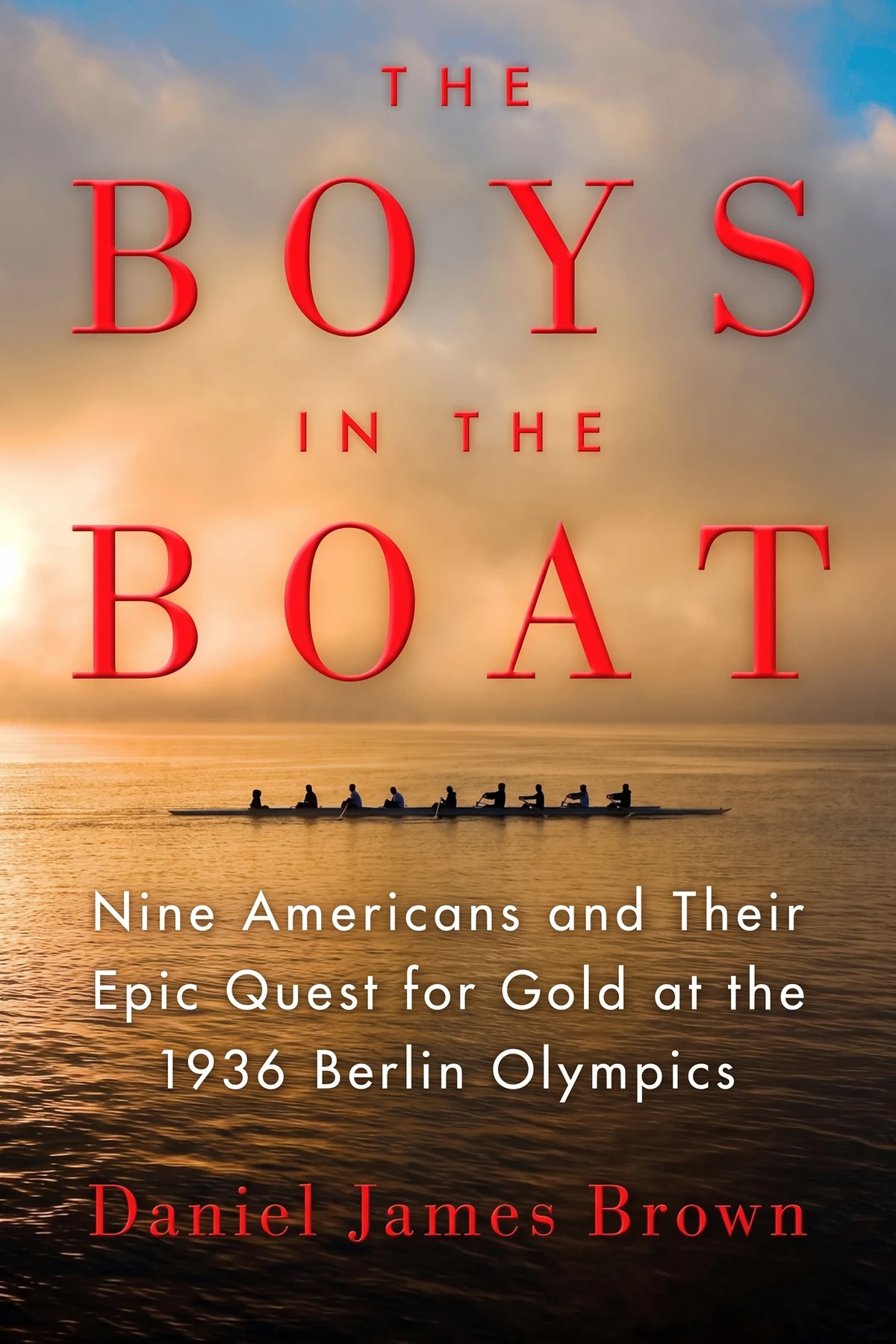
The Boys in the Boat chronicles the inspiring true story of the University of Washington’s 1936 Olympic rowing team, eight working-class young men who overcame incredible odds to challenge the Nazi elite.
1 min 48 sec
Imagine the year is 1936. The world is on the precipice of a global catastrophe, yet for a brief moment, the eyes of every nation are fixed on Berlin. Adolf Hitler is determined to use the Olympic Games as a grand stage, a theatrical performance designed to broadcast a message of German superiority and order to the rest of the world. The atmosphere is thick with propaganda, polished surfaces, and a carefully curated image of peace. But in the midst of this political artifice, a group of eight young men from the University of Washington arrive with a very different objective. They aren’t aristocrats or career athletes; they are the sons of loggers, dairy farmers, and shipyard workers who have spent their lives fighting against the crushing weight of the Great Depression.
The story of these young men, famously chronicled in The Boys in the Boat, is more than just a sports narrative. It is a profound exploration of what happens when individual suffering is forged into collective strength. It takes us from the rain-soaked docks of Seattle to the high-stakes waters of the Grünau regatta course. We see the intersection of engineering brilliance, psychological resilience, and the almost mystical synchronization known in the rowing world as ‘the swing.’
As we walk through this journey, we’ll see how Joe Rantz, a boy who was once left to fend for himself in the woods, found a sense of belonging in a cedar shell. We will look at the artistry of the men who built the boats and the calculated intensity of the coaches who drove the team. Ultimately, this is a throughline of redemption—showing how a group of overlooked outsiders could row their way to the heart of Nazi Germany and show the world what true unity looks like. It is a story about finding one’s place in a boat, and by extension, one’s place in the world.
1 min 48 sec
In an era of scarcity and unemployment, a spot on the university rowing team offered more than just prestige—it offered a path to survival.
1 min 51 sec
One young man’s history of abandonment became the unexpected foundation for his greatest strength on the water.
1 min 46 sec
Rowing transcends mere physical exertion when a crew achieves a rare, mystical state of total harmony.
1 min 46 sec
The secret weapon of the Washington crew wasn’t just their muscles, but the masterful cedar shells they rowed in.
1 min 36 sec
Beneath the surface of every race was a calculated battle of nerves orchestrated by the men on the shore.
1 min 47 sec
The 1936 Olympics were a masterclass in propaganda, designed to hide a dark reality behind a facade of excellence.
1 min 56 sec
Disadvantageous lanes, a sick teammate, and a missed signal set the stage for one of history’s most dramatic finishes.
1 min 28 sec
The victory in Berlin was only the beginning of a lifelong bond that defined the characters of eight men.
1 min 22 sec
In the end, The Boys in the Boat is a story that resonates far beyond the sport of rowing. It is a cinematic, deeply human account of triumph over adversity. We see how Joe Rantz and his teammates took the raw, painful experiences of their youth—the poverty, the abandonment, and the backbreaking labor—and turned them into a source of unbreakable strength. They arrived in Berlin as underdogs and left as legends, not just because they were faster than the Germans or the Italians, but because they were more united.
As we reflect on this journey, the ‘swing’ emerges as the ultimate takeaway. It serves as a powerful metaphor for our own lives and communities. It reminds us that we are at our most powerful not when we are competing against one another, but when we are in sync—when we trust our neighbors and give our all for a shared purpose. The Washington crew showed that even in the darkest of times, when the world seems divided and the future uncertain, there is a path to victory found in harmony and resilience.
So, the next time you find yourself facing a daunting challenge or feeling like an outsider, remember Joe Rantz. Remember the boys who rowed through the wind and the sickness to find their swing. Their story encourages us to keep our heads down, our hearts open, and our oars in the water. Because when we find that rhythm, there is no current we cannot overcome and no gold we cannot reach.
This narrative follows the improbable journey of a group of gritty, working-class students from the American West during the height of the Great Depression. At the center of the story is Joe Rantz, a young man who faced abandonment and poverty before finding a home on the University of Washington’s rowing crew. The book explores the grueling physical and mental demands of elite rowing, emphasizing the concept of the 'swing'—a state of perfect synchronization where a team moves as a single, powerful unit. Beyond the water, the story provides a chilling look at the political stage of the 1936 Berlin Olympics. While Hitler and his propaganda machine sought to use the Games to showcase Aryan supremacy, these eight American boys were focused on the simple, exhausting task of out-rowing the world. The narrative promises a deep dive into the engineering of the perfect racing shell, the strategic brilliance of legendary coaches, and the sheer resilience required to turn a group of individuals into a gold-medal-winning machine. It is a testament to trust, teamwork, and the triumph of the human spirit over both personal and global adversity.
Daniel James Brown is a celebrated author of narrative non-fiction known for his meticulously researched and emotionally resonant historical accounts. He has received numerous awards for his ability to transform historical facts into compelling, story-driven prose. In addition to his work on the 1936 Olympic rowing team, Brown is the author of Under the Flaming Sky: The Great Hinckley Firestorm of 1894 and The Indifferent Stars Above: The Harrowing Saga of a Donner Party Bride.
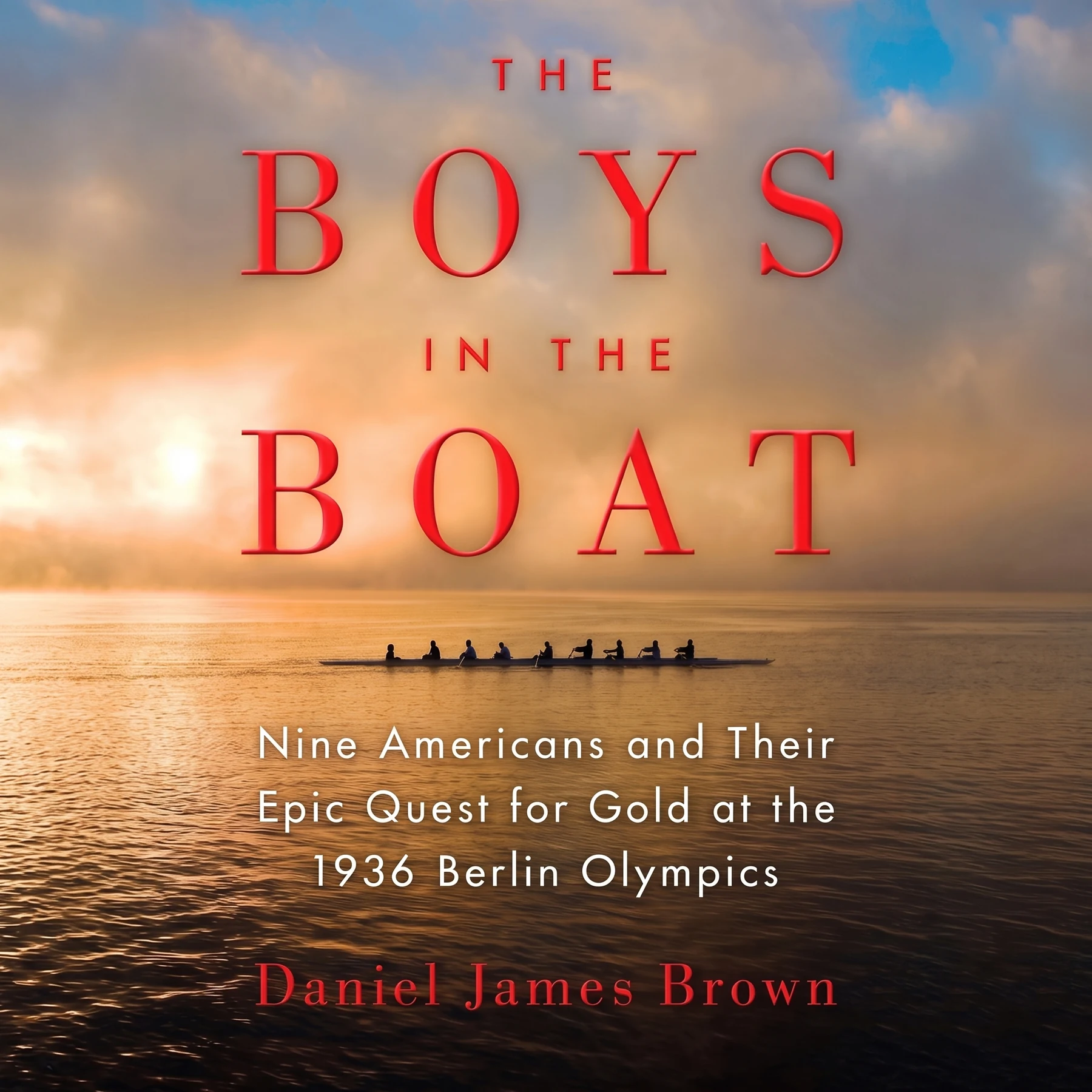
Listeners find this a marvelous account that flows like a novel, featuring an uplifting narrative that stays engaging and never feels dull. Furthermore, the work is meticulously documented and highly educational, full of technical details and facts while remaining historically precise. They value its profound emotional resonance, describing it as heart-wrenching and moving, and appreciate its themes of persistence and the resilience of the human spirit.
Wow. This isn't just a sports book; it’s a visceral journey through the Great Depression and into the heart of Berlin. Daniel James Brown writes with such narrative flair that you’ll swear you’re sitting in the shell with Joe Rantz, feeling every ounce of lactic acid burn in your muscles. I was particularly struck by the grit of these young men who had absolutely nothing, yet forged a bond that could outshine the propaganda machine of the Nazi regime. The technical details about George Pocock’s cedar boats were surprisingly poetic, adding a layer of craftsmanship I didn't know I needed. While the racing sequences are breathless, it's the personal struggle against poverty and abandonment that really sticks with you long after the final page. It’s rare to find non-fiction that feels this cinematic and emotionally resonant.
Show moreAfter hearing so many people rave about this, I finally understood the hype once I met Joe Rantz. His resilience in the face of literal abandonment is enough to make anyone feel a bit more grateful for their own circumstances. Brown manages to capture the spirit of the 1930s with such vividness that the hunger and the dust feel almost tangible. The way the book contrasts the genuine, raw effort of the American boys against the manufactured image of Hitler’s Germany is brilliant and deeply unsettling. You find yourself rooting for these kids not just because they are underdogs, but because they represent a kind of integrity that feels lost today. It’s a heart-wrenching, inspiring, and thoroughly researched account that reminds us what humans can achieve when they find a common rhythm.
Show moreDoes non-fiction get any better than this? Probably not, especially when you consider how Daniel James Brown turns a niche sport into a universal story of survival. The level of detail here is staggering, yet it never feels like a dry history lecture because the emotional stakes are so high. I loved learning about George Pocock; his philosophical approach to boatbuilding added a spiritual dimension to the physical brutality of the races. You can tell the author spent years interviewing the families and digging through archives to get every detail right, from the smell of the cedar to the cold spray of the water. It’s an underdog story in the truest sense, proving that greatness often comes from the most unlikely, impoverished places. This is one of those books that makes you want to go out and work harder at whatever it is you do.
Show moreImagine being ten years old and having your family drive away, leaving you to fend for yourself in a half-built house during the Depression. That’s the reality for Joe Rantz, the heart and soul of this incredible book. I was moved to tears several times by the sheer loneliness he endured and the stoic dignity he maintained throughout his life. The way the crew eventually became his surrogate family is a beautiful testament to the power of teamwork and trust. Brown’s ability to describe the 'swing'—that magical moment when nine individuals move as one—is truly something special. It transcends sports writing and becomes a meditation on what it means to be truly connected to others. It’s an exhausting read but in the best possible way, leaving you feeling inspired and humbled by the strength of the human spirit.
Show moreEverything about this book works, from the meticulously described boat-making process to the high-stakes political drama of 1936. I’m not typically a fan of sports history, but the way Brown writes makes the races feel as exciting as any fictional thriller. You feel the cold, the rain, and the desperation of the boys as they fight for a spot on the team just to stay in school. The descriptions of Berlin were particularly haunting, showing the sinister reality hidden beneath the festive Olympic banners. It’s a thick book, but I flew through it because I had to know how they managed to overcome the obstacles stacked against them. This is a must-read for anyone who loves stories about perseverance and the triumph of the common man over seemingly impossible odds.
Show moreFinally got around to reading this classic and it lived up to every bit of the praise. As someone who grew up in the Pacific Northwest, I loved the vivid descriptions of old Seattle and the rugged beauty of the region during the hard years of the 1930s. The technical aspects of rowing were fascinating to me, particularly the psychological battle between the coxswain and the rowers. It’s a story about finding your place in the world when everything has been taken from you. The bond between the boys is palpable, and the final chapters describing the Olympic final had me on the edge of my seat despite knowing the outcome. It’s a rare book that manages to be both highly informative and deeply moving. If you’re looking for a story that restores your faith in human potential, look no further.
Show morePicked this up on a whim after seeing the movie buzz, and I was pleasantly surprised by how much I learned. The author does an incredible job weaving together the lives of these working-class boys from Washington with the chilling rise of the Third Reich. Truth is, I found some of the rowing minutiae a bit heavy at times, especially when the descriptions of the 'swing' went on for pages. However, the emotional core of the story—Joe Rantz’s heartbreaking childhood and his quest for a sense of belonging—completely carried me through those slower sections. It’s a masterclass in research, making you feel the dampness of the Pacific Northwest and the tension of 1930s geopolitics. If you enjoy history that reads like a thriller, this is definitely worth your time, even if you’ve never touched an oar in your life.
Show moreHow can a book about rowing be this intense? I went into this with zero knowledge of crew and came out feeling like I could spot a cedar shell a mile away. The historical backdrop is what really hooked me, particularly the sections detailing how Leni Riefenstahl and the Nazi propaganda machine meticulously staged the Olympics. It’s a sobering reminder of how easily the world can be deceived by a polished exterior. My only gripe is that the focus is very heavily on Joe, leaving some of the other 'boys' feeling a bit like background characters in their own story. Still, the prose is elegant and the final race in Berlin is written with such pulse-pounding energy that I was literally holding my breath. It’s a solid piece of narrative non-fiction that balances sport, politics, and human grit quite well.
Show moreNot what I expected given the glowing reviews, but I can see why it appeals to a broad audience. The story itself is undeniably powerful, but the execution felt a bit 'paint-by-numbers' for a best-selling non-fiction title. Look, the author is clearly talented, but there’s a lot of fluff here that could have been trimmed to make a more punchy, impactful book. I found the constant switching between Seattle and Germany a bit jarring at times, as it felt like the Nazi sections were trying a bit too hard to add 'weight' to what was already a compelling sports story. I liked Joe and appreciated the insight into the grueling world of rowing, but I wasn't as emotionally invested as I hoped to be. It's a decent read for a plane ride or a vacation, but it didn't quite change my life.
Show moreI'm going to be the outlier here and say that this really didn't float my boat. I felt like I was rowing through molasses trying to get through the middle third of this book. While Joe Rantz is an undeniably sympathetic figure, his personal narrative gets buried under mountains of dry details about wood grains and collegiate athletic rivalries that I simply couldn't bring myself to care about. To be fair, the writing is polished, but the pacing felt incredibly uneven for a story that is supposed to be about a high-speed race. I wanted more of the human element and less of the technical manual on how to build a racing shell. By the time they actually got to Berlin, I was already checked out. It had all the ingredients for a great story, but it ultimately felt bloated and overlong to me.
Show moreJonathan Eig

Charles C. Mann

James Shapiro
Andrew Ross Sorkin

Pankaj Mishra

Fay Bound Alberti

Ben Macintyre

AUDIO SUMMARY AVAILABLE
Get the key ideas from The Boys in the Boat by Daniel James Brown, plus 5,000+ more titles in English and Thai.







