

14 min 27 sec
The Burnout Society
Explore how the modern obsession with productivity and self-optimization creates a culture of exhaustion. This summary reveals why constant achievement leads to burnout and how reclaiming contemplation can restore our well-being.
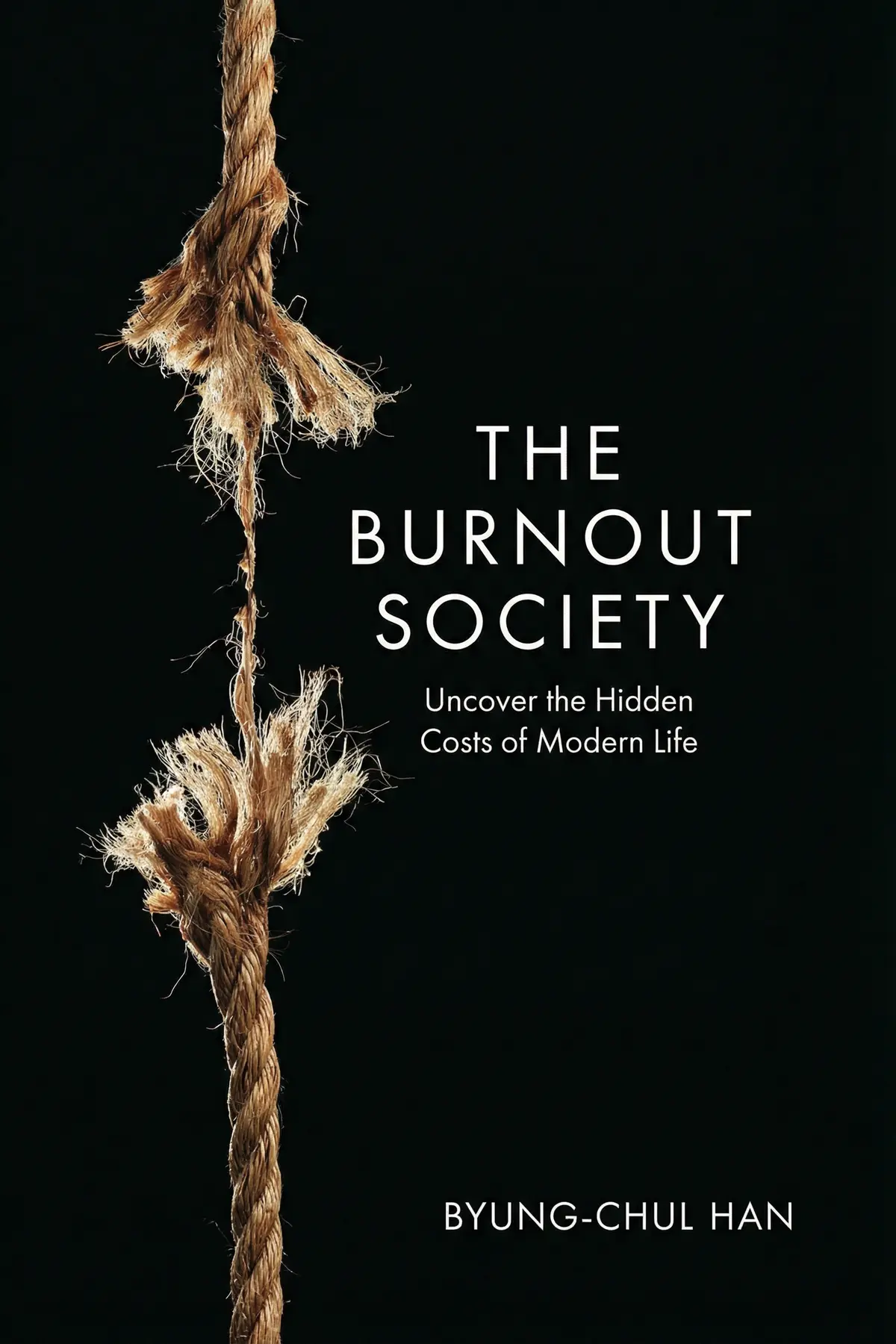
Table of Content
1. Introduction
1 min 32 sec
In our modern world, we are often told that the sky is the limit. We are encouraged to be the masters of our own destiny, to optimize every hour of our day, and to constantly push for the next big achievement. On the surface, this feels like the ultimate form of freedom. We are no longer held back by the rigid social hierarchies or strict external prohibitions of the past. However, there is a growing sense that this freedom has a dark side. Despite having more choices than ever before, many people feel more exhausted, stressed, and unfulfilled than any generation that came before them.
This is the core paradox we are exploring today: how a society built on the promise of unlimited potential has become a breeding ground for burnout. We are moving toward a thorough line that connects our internal drive for success with a broader cultural shift that prioritizes constant action over meaningful reflection. This isn’t just about being busy; it’s about a fundamental change in how we perceive ourselves and our roles in the world.
In the following segments, we will pull back the curtain on the achievement-oriented culture that defines our lives. We will see how our obsession with multitasking is actually a step backward in our evolution and why the things we often try to avoid—like boredom and stillness—are actually the very things we need most to thrive. By the end of this journey, you’ll have a new framework for understanding your own exhaustion and practical insights into how to reclaim a sense of peace in a world that never stops moving.
2. The Shift from Discipline to Self-Exploitation
2 min 17 sec
Discover how the transition from a world of ‘must’ to a world of ‘can’ has created a new, more efficient form of internal pressure.
3. The Regression of Multitasking
2 min 14 sec
Learn why the modern badge of honor known as multitasking is actually a survival trait from the animal kingdom that hinders human creativity.
4. The Creative Power of Deep Boredom
2 min 15 sec
Uncover why the moments when you have nothing to do are actually the most important times for your personal growth and imagination.
5. Navigating the Neuronal Age
2 min 15 sec
Explore why the 21st century is defined by internal mental struggles rather than external threats, and what that means for our health.
6. The Healing Power of a Different Kind of Tiredness
2 min 06 sec
Distinguish between the exhausting burnout of achievement and a more profound, restorative form of fatigue that can lead to peace.
7. Conclusion
1 min 48 sec
As we wrap up our exploration of the burnout society, the central message is clear: the relentless pursuit of achievement is not a path to ultimate freedom, but a journey toward exhaustion. We have seen how the shift from external discipline to internal compulsion has turned us into our own most demanding taskmasters. We’ve explored how the loss of deep attention and the avoidance of boredom have stripped away the very stillness required for a creative and meaningful life. And we’ve recognized that the psychological struggles of our age—like burnout and depression—are not personal failures, but the logical symptoms of a world that is saturated with too much of everything.
The throughline of our discussion has been the need to reclaim our humanity by rediscovering the value of ‘being’ over ‘doing.’ The path forward isn’t about finding a better productivity hack or a more efficient schedule. Instead, it’s about having the courage to set boundaries, to embrace the luxury of boredom, and to redefine success as a state of balance rather than a list of accomplishments.
As you move back into your daily life, consider where you can introduce small pockets of ‘non-doing.’ Can you take a walk with no destination? Can you resist the urge to check your phone during a quiet moment? Can you allow yourself to be tired without feeling guilty? By making these small shifts, you begin to dismantle the internal structures of the burnout society. You move closer to a way of living that honors your need for rest and contemplation, ensuring that your ambition is always anchored by your well-being. True success is not found in the constant ‘can,’ but in the wisdom to know when you have done enough.
About this book
What is this book about?
The Burnout Society offers a deep philosophical critique of the contemporary world, arguing that we have moved past a society of prohibition and into a far more exhausting era of unlimited possibility. While we used to be governed by external rules and 'shoulds,' we are now driven by an internal, relentless 'can.' This shift has transformed us into achievement-oriented subjects who exploit ourselves in the pursuit of success. The promise of this exploration is a radical shift in perspective. By examining the roots of modern psychological ailments like depression, ADHD, and chronic fatigue, the text identifies a systemic trend toward hyper-productivity that actually narrows our human experience. It suggests that the path to a more fulfilling life isn't found in doing more, but in rediscovering the power of boredom, the beauty of stillness, and the necessity of a contemplative life. Listeners will learn to recognize the hidden costs of their own drive for success and find strategies to transition from a state of constant 'doing' to a more balanced state of 'being.'
Book Information
About the Author
Byung-Chul Han
Byung-Chul Han is a prominent South Korean-born philosopher and cultural theorist who currently resides and teaches in Berlin. He is widely recognized for his sharp and insightful critiques of modern society, focusing on how technology, media, and culture influence the human condition. Han has written several influential works, including The Transparency Society and The Agony of Eros, which have established him as a critical voice in contemporary philosophy.
Ratings & Reviews
Ratings at a glance
What people think
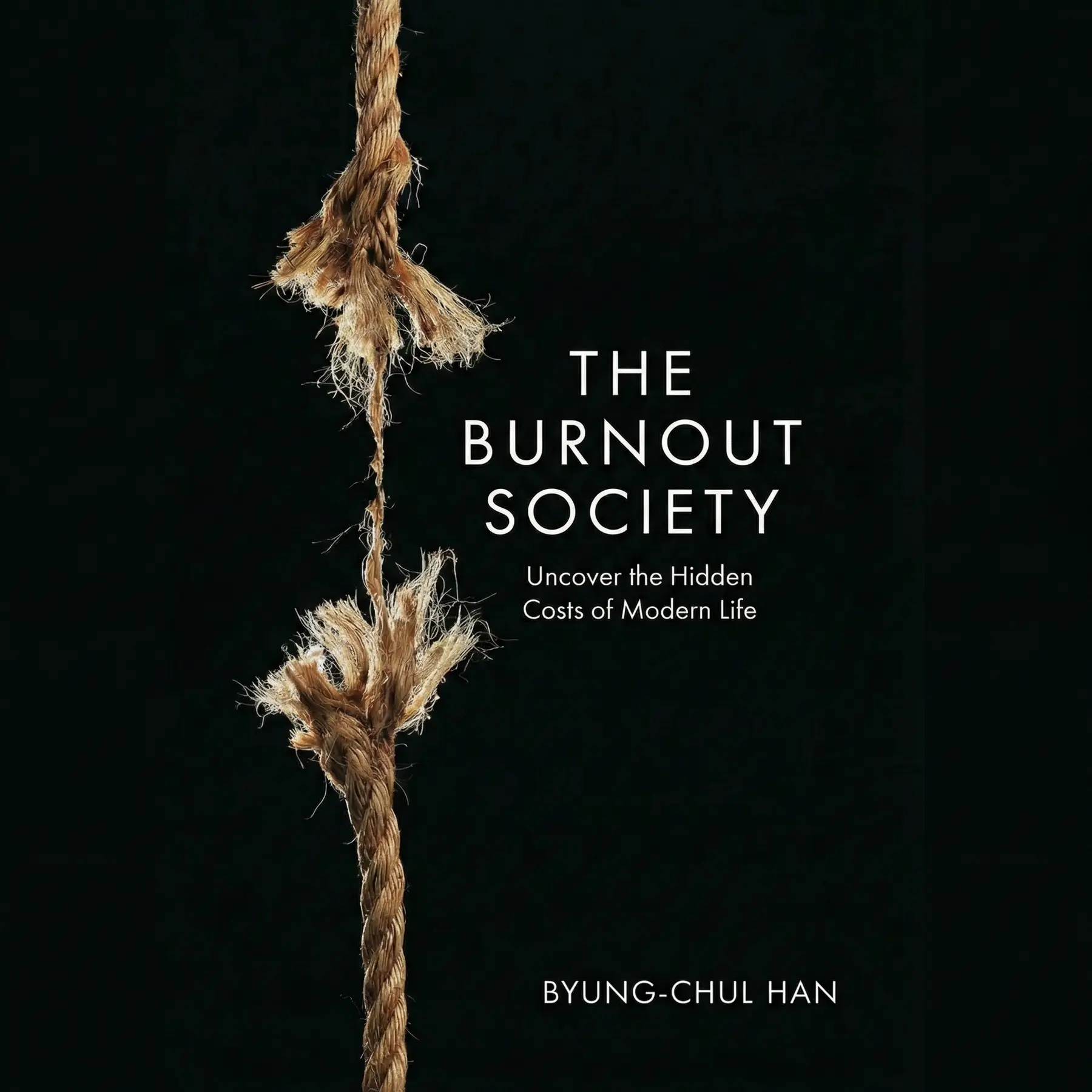
Listeners believe the book offers profound perspectives on contemporary life and consider it a valuable use of time. Opinions on accessibility are split, as some find it simple to follow while others label it as heavy. At just 52 pages, the book’s brevity is criticized, with listeners describing the content as compact and challenging. The vocabulary also draws negative remarks, specifically from one listener who points out an overreliance on German and Latin terminology.
Top reviews
Noah
This book felt like someone finally turned the lights on in a room I’ve been stumbling around in for years. Han’s description of the 'burnt-out soul' as a byproduct of our own internal pressure to achieve hit me like a physical blow to the chest. We are no longer victims of an external oppressor, but rather our own slave-drivers in a world that demands endless positivity and 'yes we can' energy. I found his distinction between animalistic multitasking and human contemplation to be the most profound part of the entire essay. To be fair, the language is dense and unapologetically philosophical, which might alienate readers looking for a simple self-help guide. But if you want a deep, ontological diagnosis of why modern life feels so hollow, this is the most important thing you will read this year. It's a short but explosive masterpiece.
Show moreViolet
The way Byung-Chul Han deconstructs the violence of positivity is absolutely masterful and arguably more relevant now than when it was first published. He argues that we have transitioned into a world where the 'Other' is no longer the enemy, but rather a lack of 'Same' leads to a systemic exhaustion. In my experience, this explains the contemporary mental health crisis better than any clinical manual I’ve encountered. The transition from the 'Should' of the disciplinary era to the 'Can' of the achievement era is a subtle but deadly shift in human psychology. Yes, the vocabulary is challenging and the German-to-English translation can be a bit stiff at times, but the intellectual payoff is well worth the effort. It’s a brief, explosive work that demands to be read, re-read, and then discussed until you’re blue in the face. This is essential reading for the exhausted.
Show moreSuvannee
Wow. This is probably the most dense 60 pages of text I have ever navigated, but every single sentence felt like a revelation. Han captures the precise feeling of being 'tired of oneself' that defines our current era of social media and constant self-performance. I particularly loved his critique of multitasking, which he describes as a regression to an animal state rather than a sign of progress. It makes so much sense when you realize that being 'lost in the moment' is a luxury we’ve traded for productivity. Personally, I didn't mind the academic tone because the concepts themselves are so powerful they need that level of precision. This isn't just a book; it's a diagnostic tool for the modern soul that sees through the 'Yes We Can' facade. I feel seen, even if I also feel a bit more tired.
Show moreLaor
Byung-Chul Han offers a razor-sharp critique of our obsession with productivity, but you’ll need a philosophy degree to navigate some of the jargon. The central thesis—that we have transitioned from Foucault’s disciplinary society to an 'achievement society'—is hauntingly accurate in an age of constant self-optimization. Frankly, the way he describes auto-exploitation as a more efficient form of control than external coercion made me look at my fitness tracker with genuine suspicion. While the translation occasionally feels clunky, the density of ideas packed into these fifty-odd pages is staggering. You might find yourself re-reading sentences three times just to grasp the nuance of his 'positivity of Can' concept. It’s not an easy weekend read, yet it provides a vital framework for understanding why we are all so perpetually exhausted. It is a slim volume that demands a massive amount of mental energy.
Show morePornthip
Picked this up after seeing it all over social media and I have very mixed feelings about the experience. On one hand, the idea that we’ve moved past the 'immunological' age of the 'other' feels a bit dated post-2020, as the author couldn't have predicted a literal global pandemic. On the other hand, his analysis of ADHD and depression as symptoms of a 'surplus of positivity' is nothing short of visionary. The book is incredibly thin, yet it took me twice as long to finish as a standard novel because every paragraph demands your full attention. I do wish the translation was a bit smoother, as some of the compound words are frankly ridiculous and take you out of the flow. Still, the core message about auto-exploitation is something I haven't been able to stop thinking about since I put it down. It definitely lives up to the hype.
Show moreMontri
Finally got around to reading this and I'm still trying to figure out if I'm smarter or just more confused than I was an hour ago. The book is tiny—seriously, it's more of an essay—but it's packed with such heavy philosophical lifting that it feels massive. Han’s point about 'auto-exploitation' being the hallmark of our generation is spot on; we really are our own worst bosses. Gotta say, though, the writing style is a bit much, with convoluted terms like 'no-longer-being-able-to-able' that seem designed to make you feel like you're missing something. I had to Google half the references to Hegel and Nietzsche just to keep my head above water. Despite the struggle, the insights regarding the 'burnout soul' are too good to ignore. It’s a 4-star book that requires a very patient brain and a lot of coffee.
Show moreKaen
As someone who has struggled with chronic exhaustion, I found Han's perspective to be a breath of fresh air compared to the usual 'self-care' platitudes. Instead of telling you to do more yoga, he explains the structural reasons why we are all collectively collapsing under the weight of our own expectations. The distinction between 'negative' violence and the 'positive' violence of over-production is a brilliant conceptual move. To be fair, the first chapter's focus on immunology feels slightly off in a post-pandemic world, but the rest of the book more than makes up for it. The text is admittedly a bit of an 'academic-linguistic' juggle, and the translation can be quite dry. However, the underlying message about the need for 'deep boredom' and contemplation is a necessary antidote to our achievement society. It's a challenging, occasionally frustrating, but ultimately essential piece of social philosophy.
Show moreLeila
Ever wonder why you feel like a failure even when you’re 'crushing it' at work? Han attempts to explain this phenomenon, but the text is so thick with academic-speak and random German phrases that it becomes its own kind of labor. Look, I appreciate the brevity of the book because I don't think I could have handled 200 pages of this level of abstraction. He makes brilliant points about the loss of the 'vita contemplativa' and how we’ve lost the ability to be truly bored. However, the constant name-dropping of Heidegger and Arendt feels a bit like a student trying too hard to impress a professor with fancy references. It’s a 5-star concept trapped in a 2-star execution, so I’m settling in the middle. Read it for the insights, but be prepared for a legitimate headache.
Show morePor
After hearing so much hype about Han, I finally dove into this short tract on the 'achievement society' and left feeling only partially satisfied. The core argument is fascinating: we are no longer disciplined by 'No,' but rather crushed by the infinite pressure of 'Yes.' However, the author’s habit of quoting someone famous just to say 'but they are wrong' without much elaboration grew tiresome very quickly. It’s a bit of an academic circus act, jumping from one reference to another at a pace that prevents any real depth from developing. I did enjoy the section on the importance of the Sabbath and deep boredom, which feels like a radical act in our hyper-connected world. It's a stimulating read, but it leaves many of its most interesting threads hanging in the air. A decent introduction to Han's work, but definitely a flawed one.
Show moreSatit
Not what I expected at all, and honestly, it felt more like a collection of pretentious notes than a cohesive book. The author seems more interested in arguing with dead philosophers than actually describing the lived experience of people suffering from burnout in the 21st century. Truth is, the text is so buried under layers of academic jargon and obscure Latin references that the actual message gets completely lost in the noise. I was looking for an empirical study or at least some grounded observations, but instead, I got a 'rotten porridge' of abstractions that felt designed to exclude the casual reader. At only 50-ish pages, it's an expensive purchase for something that feels this unfinished and disjointed. If you enjoy feeling like you’re talking to a sphinx who hates clarity, this is the book for you. Otherwise, save your money and find a summary.
Show moreReaders also enjoyed
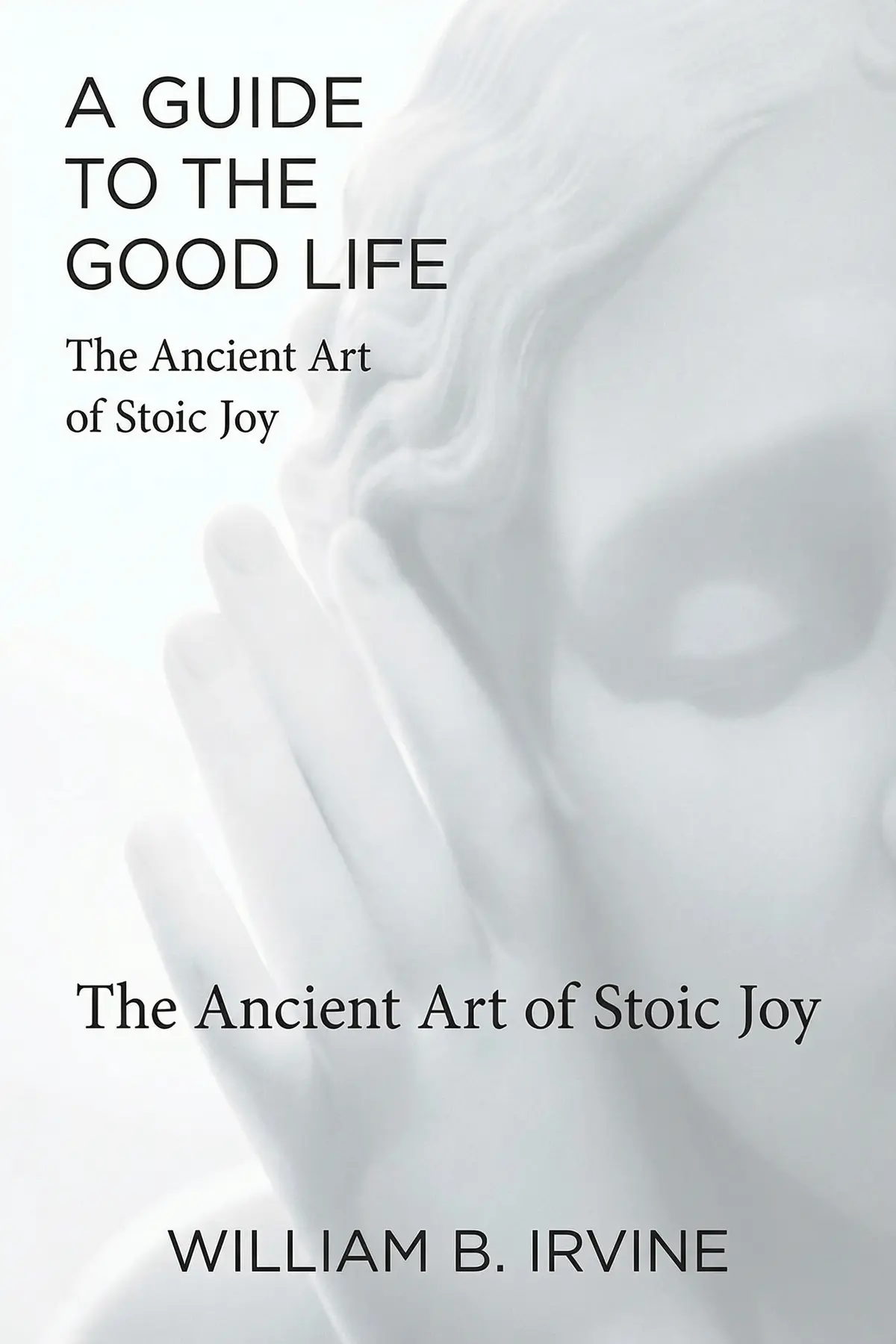
A Guide to the Good Life: The Ancient Art of Stoic Joy
William B. Irvine
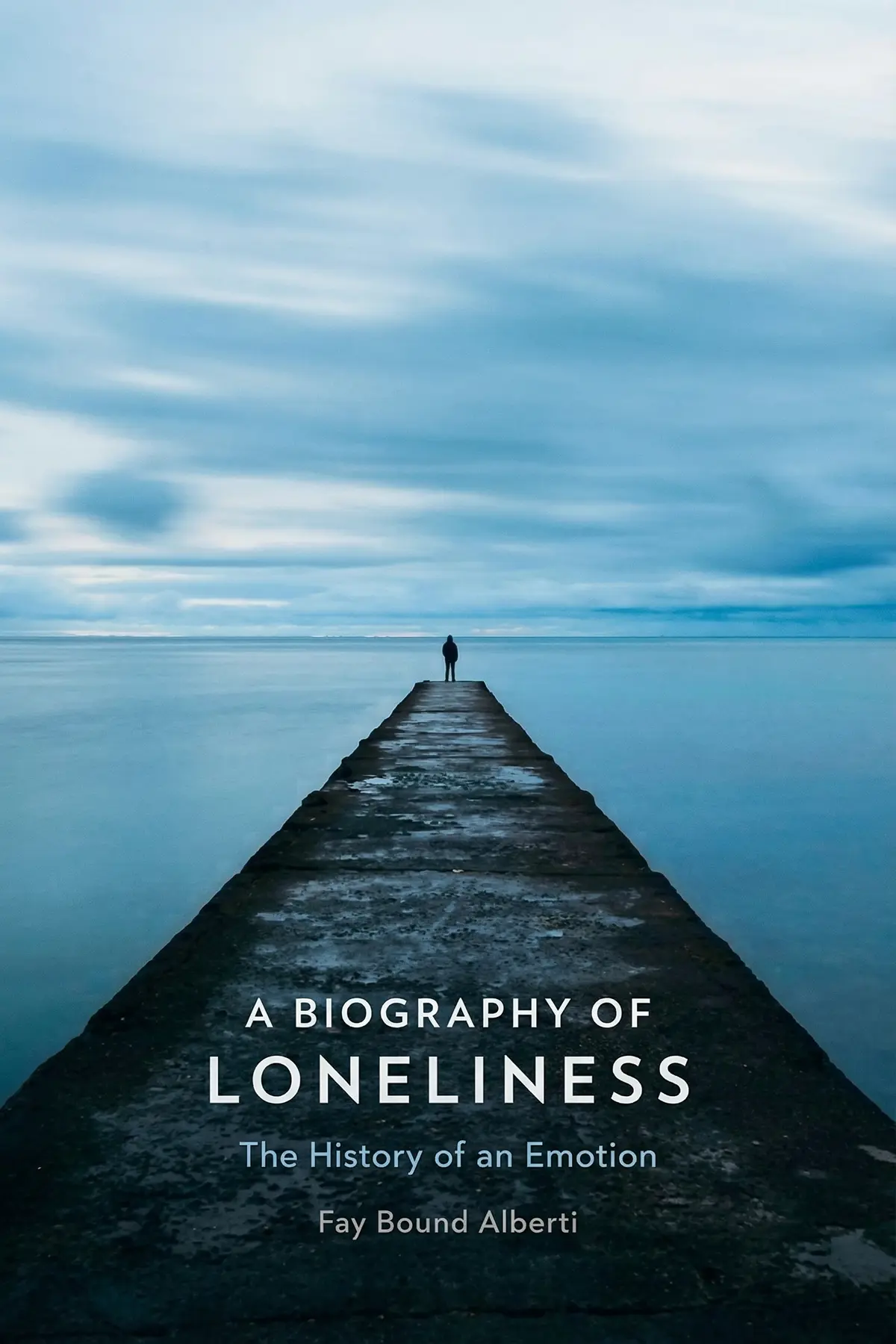
A Biography of Loneliness: The History of an Emotion
Fay Bound Alberti
A Little History of Philosophy
Nigel Warburton
A Force for Good: The Dalai Lama's Vision for Our World
Daniel Goleman
A Theory of Justice
John Rawls
AUDIO SUMMARY AVAILABLE
Listen to The Burnout Society in 15 minutes
Get the key ideas from The Burnout Society by Byung-Chul Han, plus 5,000+ more titles in English and Thai.
- 5,000+ titles
- Listen as much as you want
- 7-day free trial
- Cancel anytime







