
Age of Propaganda: The Everyday Use and Abuse of Persuasion
Anthony Pratkanis
Explore the biological foundations of desire and addiction. This summary reveals how your brain’s pleasure circuits respond to everything from gourmet food and romance to gambling and the runner’s high.
1 min 22 sec
Have you ever paused to consider why a specific bite of chocolate or a sudden windfall of cash feels so overwhelmingly good? It is a sensation we all chase, yet the biological machinery behind it often remains hidden in the shadows of our subconscious. We frequently categorize our enjoyments into neat boxes: some are seen as healthy habits, while others are labeled as dangerous vices. However, if we look beneath the surface at the level of neurons and neurotransmitters, these distinctions begin to blur. Whether you are enjoying a long-distance run or succumbing to a late-night craving, your brain is essentially speaking the same chemical language.
In this journey through the neural landscape, we will investigate the hidden compass that guides our desires. This is not just a story of chemicals like dopamine; it is a story of how our evolutionary history has hardwired us to seek out specific rewards. We will uncover the secrets of why certain substances are more habit-forming than others and why our brains sometimes override our physical needs in favor of a psychological rush. By understanding the mechanics of the medial forebrain pleasure circuit, we gain more than just scientific knowledge—we gain a clearer perspective on the very core of human motivation and the delicate balance between enjoyment and compulsion.
2 min 20 sec
Explore the specific neural highway that processes every joy we feel, from the simplest snack to the most intense life experiences.
2 min 11 sec
Discover why the frequency of a reward can be even more influential than its intensity when it comes to forming a habit.
1 min 48 sec
Uncover how the brain’s internal weight-management system can be bypassed by the allure of processed foods.
2 min 10 sec
See how the brain distinguishes between the drive for physical intimacy and the profound emotional bond of romantic love.
2 min 01 sec
Understand why the brain finds uncertainty so stimulating and how this drives the compulsion to gamble.
2 min 11 sec
Learn how healthy habits and selfless acts can trigger the same rewarding chemicals as our most indulgent vices.
1 min 31 sec
In the end, we see that the human experience is guided by a complex and ancient internal compass. This medial forebrain pleasure circuit does not distinguish between a ‘good’ source of joy and a ‘bad’ one; it simply responds to the chemical signals it receives. We have seen how this system can be hijacked by ultra-processed foods, addictive substances, and the thrill of the gamble. Yet, we have also seen its potential to drive us toward physical fitness, deep romantic connection, and the pursuit of knowledge.
The most important takeaway is that our brains are not static. They are remarkably plastic, meaning they can be reshaped by our choices and our environment. If you find yourself trapped in a cycle of negative habits, remember that the very same mechanism that created the addiction can be used to break it. The key lies in shifting your associations. By consciously focusing on the negative consequences of a vice—the hangovers, the financial loss, or the health scares—you can begin to devalue that reward in your brain’s eyes.
At the same time, by leaning into the ‘virtuous’ pleasures like exercise and learning, you can retrain your pleasure circuit to crave the things that actually sustain you. You are the navigator of your own neural compass. By understanding the science of how you feel, you gain the power to steer your life toward a future of genuine, healthy satisfaction.
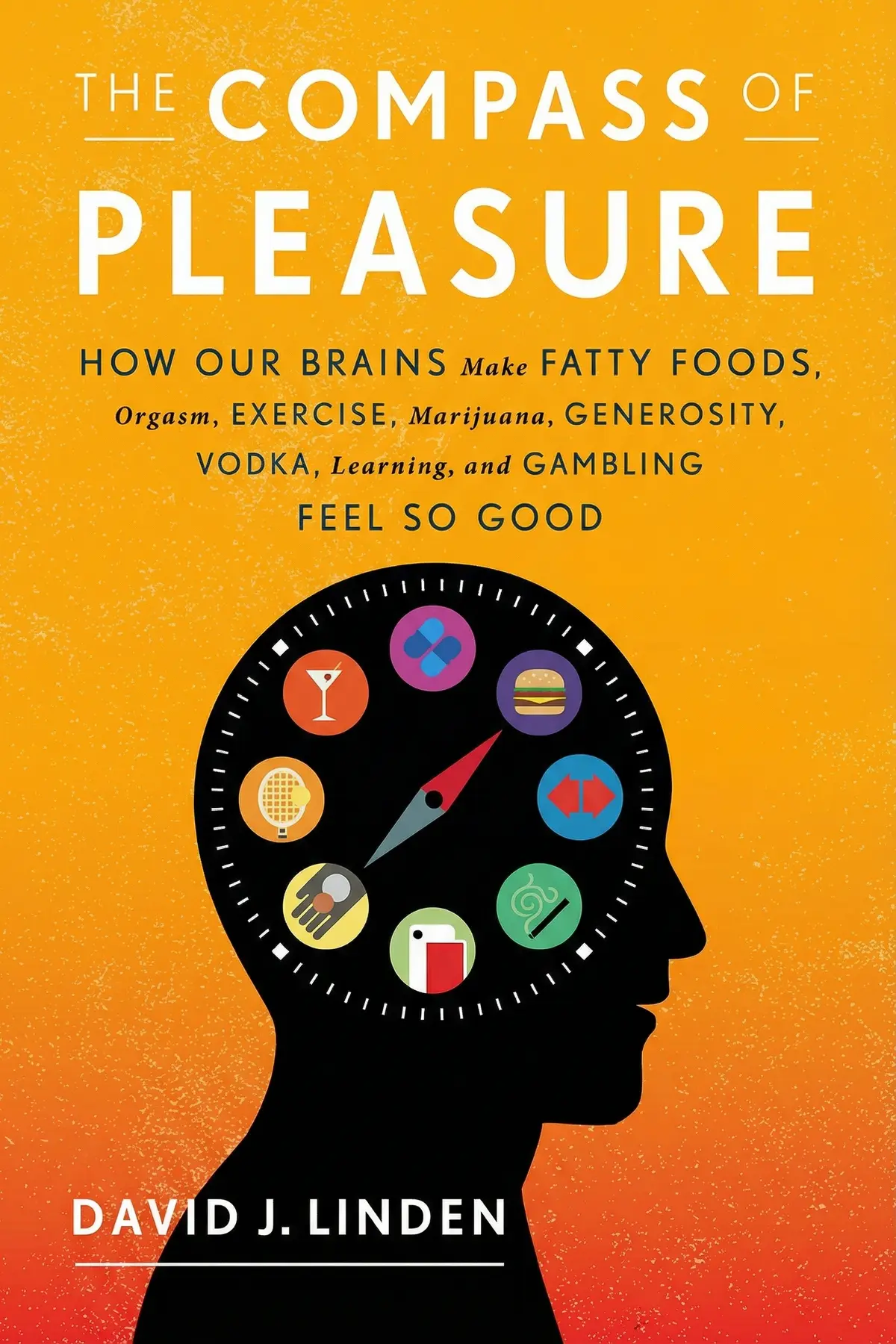
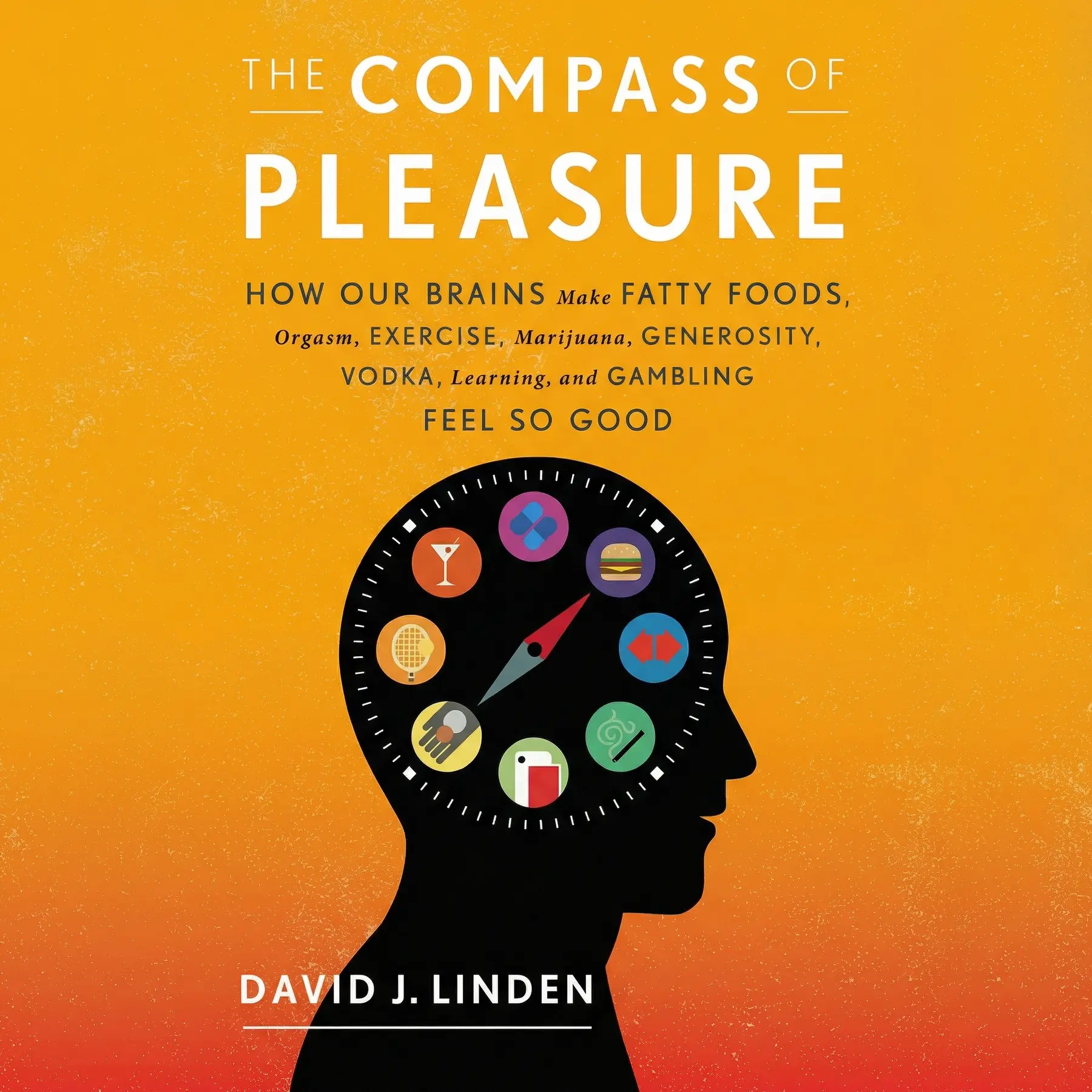
Why do we crave a second slice of cake, even when we are full? Why do some substances hold a tighter grip on our behavior than others? This exploration into the human mind investigates the medial forebrain pleasure circuit, the neural highway responsible for our most intense feelings of gratification. By examining the intersection of neuroscience and daily life, the text provides a comprehensive look at how dopamine functions as a driver for both our greatest achievements and our most destructive habits. You will learn about the distinct differences between the neurological signatures of love and sex, the reason uncertainty makes gambling so alluring, and how the brain can be retrained to find pleasure in healthy activities like exercise and altruism. Ultimately, it offers a scientific lens through which to view human desire and the complex mechanics of addiction.
David J. Linden is a distinguished professor of neuroscience at Johns Hopkins University and serves as the editor-in-chief of the Journal of Neurophysiology. Recognized for his ability to make brain science accessible to the public, he also wrote The Accidental Mind: How Brain Evolution Has Given Us Love, Memory, Dreams and God.
Listeners find the book offers an educational glimpse into modern neuroscience, with one listener mentioning that the science is described in extremely understandable ways. Furthermore, the writing is skillfully composed and full of humor, and listeners value the exploration of pleasure's neurology, as one review highlights how pleasure circuits interact with memory circuits. However, there are conflicting views regarding its accessibility, as some find it simple to follow while others consider it quite dense.
I never thought I’d be so emotionally invested in the sex lives of prairie voles, but here we are. The chapter on love and bonding was easily the highlight of the book for me, explaining the role of vasopressin and dopamine receptors in a way that felt both clinical and surprisingly moving. Linden’s writing is infused with a dry wit that makes even the most complex anatomical descriptions palatable. Frankly, it’s refreshing to read a science book that doesn’t take itself too seriously while still delivering high-quality research. I learned so much about the "compass" that guides our cravings, from gambling habits to why we can't stop at just one slice of pizza. It’s a total braingasm for anyone interested in the biological roots of human behavior. Highly recommended for the curious reader who likes some humor with their science.
Show moreEver wonder why humans are the only species that can get a dopamine hit from an abstract idea or a religious experience? Linden explores this "superpower" with incredible depth, showing how our pleasure circuitry has evolved to support learning and complex cognition. The way he breaks down the neurobiology of the "Santa-gift" dopamine hits our brains give us for achieving arbitrary goals is nothing short of brilliant. This book isn't just about the dark side of addiction; it's about what makes us uniquely human. The prose is well-crafted, and the insights into how the thalamus regulates our long-term weight regardless of our dieting efforts were eye-opening. It changed how I view my own cravings and the invisible forces that drive my daily decisions. A masterclass in making the complex understandable.
Show moreFinally got around to reading this, and I’m kicking myself for waiting so long. It is an essential read for anyone trying to understand the intersection of biology and behavior. Linden manages to explain why we crave everything from heroin to a high-five, showing that the neural pathways are often the same regardless of the stimulus. The humor is spot-on, particularly when discussing the "messy" reality of monogamy in the animal kingdom. Look, if you want to understand why your brain rewards you for things that are clearly bad for your long-term health, this is the book for you. It’s a fantastic insight into the human mind, delivered with the expertise of a world-class neuroscientist and the flair of a gifted storyteller. Five stars for the clarity and depth provided here.
Show moreDavid Linden has a knack for making neurobiology feel like a dinner party conversation. He dives deep into the VTA and the medial forebrain bundle, but he does it with enough wit to keep a non-scientist from drowning in jargon. I particularly enjoyed how he connects our primal urges—like eating and sex—to the same circuits that get hijacked by narcotics. It’s a fascinating look at why we do the things we do, even when we know they're bad for us. To be fair, some sections on chemical modifications and enzymes like COMT were a bit of a slog, but the overall narrative remains engaging. If you've enjoyed books like "The Accidental Mind," you'll find this to be a worthy successor that balances hard data with genuine human curiosity. The writing is well-crafted and keeps you moving through the dense parts.
Show morePicking this up was a gamble that paid off, much like the Bill Lee anecdote Linden uses to illustrate the highs and lows of the betting world. The book provides a thorough exploration of the addiction axis—tolerance, craving, and the terrifying cycle of relapse—all through the lens of our neural wiring. I was particularly struck by the discussion on how our pleasure circuits interact with memory, making certain triggers almost impossible to ignore. Linden writes with a certain elegance, though he doesn't shy away from the gritty details of how drugs like cocaine and nicotine rewire our gray matter. My only real gripe is that the chapter on exercise felt a bit thin compared to the deep dives into substance abuse. Still, it’s a brilliant, informative read for those wanting to understand the 'why' behind their worst habits.
Show moreAfter hearing about Linden’s work on a podcast, I had to see if the book lived up to the hype. It does. The exploration of how our brains are "accidental" and how the pleasure center acts as a compass for survival is masterfully done. I was especially fascinated by the chapter on eating and the 1.2 million calories Linden tracked; it’s a great reality check for anyone who thinks weight loss is just about "willpower." The science is explained in a way that feels accessible but never "dumbed down." Not gonna lie, some of the animal study descriptions are a bit grim, but they are necessary to illustrate the points about how these circuits actually function. It’s a witty, well-paced journey through the parts of our brain we rarely think about. Definitely worth the read.
Show moreThe way Linden weaves together anecdotes and hard science makes this a standout in the pop-cog genre. I particularly appreciated the discussion on the "pleasure/learning center" and how it can be hijacked by commercial culture to create a Pavlovian society of consumers. It’s a sobering thought, but one that is backed up by fascinating data on synaptic connections and VTA activity. The writing is snappy and the pacing is generally good, though the lack of a strong concluding "call to action" might bother some readers. In my experience, it’s rare to find a scientist who can write this well for the public without losing the nuance of the research. It’s a slim volume but it’s packed with insights that will linger long after you finish the final page.
Show moreWhile the subject matter is undeniably fascinating, I found the execution to be a bit of a mixed bag. Linden is clearly brilliant, and his passion for neuroscience shines through every page, but the technical density is real. Look, I don’t mind a challenge, but when the text starts spiraling into specific protein modifications like DARPP-32, my eyes began to glaze over. It feels like a textbook at times, which might alienate readers looking for a breezy "pop-science" read. Additionally, the research feels a little dated now, especially the sections on video games and exercise, where the science has moved on significantly since 2011. It’s a solid, informative peek into the brain's reward system, but you’ll need some serious stamina to get through the more academic passages. Useful, but definitely dry in spots.
Show moreYet another entry in the crowded field of "brain books," and while it’s better than most, it still suffers from some common tropes. Personally, I found the focus on the dopamine system to be the strongest part of the book, but the sections on gambling and meditation felt like they were treading very familiar ground. Linden’s wit is a plus, and he certainly knows his stuff, but the middle sections felt a bit repetitive. The book describes the science in extremely understandable ways at first, then suddenly dives into the deep end of biochemistry without much warning. It’s an interesting short book if you’re new to the topic, but seasoned readers of neuroscience might find themselves skimming the parts they've already read elsewhere. A decent 3-star effort that lacks a bit of modern punch.
Show moreNot what I expected given the rave reviews I've seen elsewhere. The truth is, this book feels incredibly stuck in its era, and the tone oscillates wildly between being overly simplistic and frustratingly technical. I was hoping for more practical insights into overcoming addiction or understanding my own habits, but instead, I got a lot of descriptions of lab rats and monkeys being poked and prodded. It felt more like a technical manual for a first-year neuroscience student than a book for a general audience. The humor often felt forced, and the lack of a definitive conclusion left me feeling unsatisfied. If you're looking for a modern take on brain science that offers actionable advice, there are better, more recent options available that don't feel quite so dated and clinical.
Show moreAnthony Pratkanis

Lisa Kaltenegger



Richard Wiseman
AUDIO SUMMARY AVAILABLE
Get the key ideas from The Compass of Pleasure by David J. Linden, plus 5,000+ more titles in English and Thai.







