
21 Lessons for the 21st Century
Yuval Noah Harari
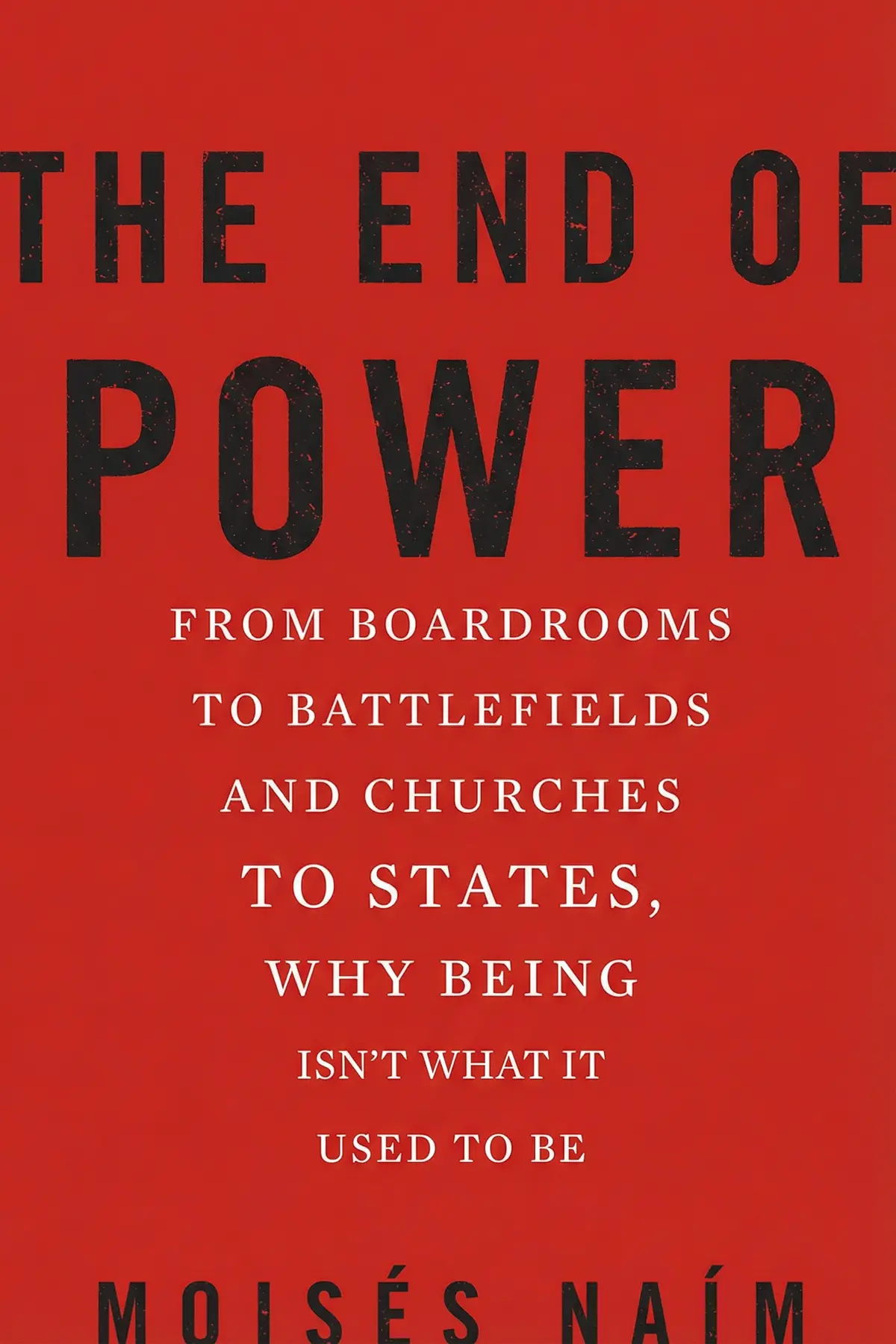
Moisés Naím explores how traditional power is decaying across politics, business, and religion, revealing why it is now easier to challenge leaders and harder for those in charge to maintain control.
1 min 36 sec
Have you ever looked at the world today and felt like things are spinning a bit out of control? If you feel that way, you aren’t alone. For decades, we’ve operated under the assumption that a few major players—presidents, CEOs, and high-ranking religious leaders—held the steering wheel of civilization. But something has changed. The old world where a single superpower or a handful of giant corporations dictated the global agenda is fading into the rearview mirror. Today, the very nature of being in charge is undergoing a radical, irreversible transformation.
In this exploration of Moisés Naím’s groundbreaking work, we are going to dive into the concept of the “decay of power.” We aren’t just talking about power changing hands from one person to another, like a relay race. Instead, we are looking at how power itself is losing its potency. It is becoming easier to acquire, harder to exercise, and incredibly easy to lose. This isn’t just happening in the halls of government; it’s happening in boardrooms, battlefields, and even in our local churches.
Throughout this journey, we’ll see how the traditional barriers that used to keep the “big guys” safe are crumbling. We will explore why massive brands can be destroyed in the blink of an eye and why the world’s most powerful militaries often find themselves outmaneuvered by small, poorly funded insurgencies. By the end of this summary, you will have a new lens through which to view the news, politics, and the global economy. You’ll understand why the world feels so fragmented and, more importantly, what we can do to navigate a future where nobody seems to be in charge. This is the story of how the giants of our era became vulnerable and what that means for the rest of us.
2 min 08 sec
Discover why the traditional walls protecting the elite are falling and how power has become a shadow of its former self in our modern era.
2 min 05 sec
Explore how the sheer volume of people, wealth, and information is making it nearly impossible for any single entity to maintain control.
2 min 02 sec
Learn how the unprecedented mobility of people and ideas has turned the world into a place where anyone can ‘vote with their feet.’
2 min 05 sec
Discover how changing values and a growing skepticism toward authority are rewriting the rules of social and cultural institutions.
2 min 06 sec
See why modern presidents and prime ministers are finding their hands tied as political power fragments into a million pieces.
2 min 09 sec
Uncover the surprising reality of modern conflict, where small, resourceful groups are beating massive armies at their own game.
1 min 56 sec
Find out why being a ‘big brand’ is no longer a guarantee of success and how small players are disrupting the global market.
2 min 06 sec
See how religion, philanthropy, and media are being transformed by individuals who no longer need large institutions to lead the way.
2 min 09 sec
While freer societies are a benefit, discover the dangerous side effects of power decay, including gridlock and a lack of long-term vision.
1 min 59 sec
Learn how we can protect ourselves from the chaos of power decay by rebuilding trust and resisting the lure of simple answers.
1 min 37 sec
As we’ve seen throughout this journey, the world is in the midst of a transition that is as profound as the industrial revolution. The era where a few people could sit in a room and decide the fate of millions is over. Power has been democratized, but it has also been diluted. We now live in a world where it is easier than ever to challenge the status quo, but harder than ever to build anything that lasts. This is the paradox of the 21st century: we have more freedom, yet we feel less in control.
Moisés Naím’s message is both a warning and a call to action. We cannot afford to simply watch as our institutions crumble. While it is exciting to see the underdog win and the giant stumble, we also need to recognize that a world without any form of stable authority is a dangerous place. The challenges we face—from climate change to global economic instability—require collective action that can only happen if we have trusted, effective leaders.
So, as you go forward, keep an eye out for the decay of power in your own life. Notice how your favorite brands are struggling to stay relevant, or how your political leaders seem increasingly hemmed in by their own supporters. But don’t just be a passive observer. Support the institutions that are trying to adapt and modernize. Demand more than just a “like” or a “share” from yourself and your peers. Real change requires the hard work of building consensus, and in a world where power is decaying, that work is more important than ever. We are moving into an era of unprecedented individual influence—now it’s up to us to decide how to use that influence to build a world that is not just free, but also stable and just.
The End of Power takes a deep dive into the shifting landscape of global influence. It argues that we are witnessing a fundamental change where power is no longer concentrated in a few hands but is instead fragmenting and decaying. Moisés Naím explains that while it has become easier for newcomers to gain power, it has simultaneously become much harder for established leaders to use that power effectively or keep it for long. Through an analysis of the 'More,' 'Mobility,' and 'Mentality' revolutions, the book explains how abundance, travel, and changing social expectations have undermined the barriers that once protected elites. From military insurgencies to corporate upstarts and grassroots political movements, the promise of this work is a clearer understanding of why our world feels increasingly chaotic and leaderless. It offers a framework for recognizing the dangers of this power vacuum and suggests ways to rebuild the institutions necessary for a stable future.
Moisés Naím has served as the trade minister of Venezuela and as the executive director of the World Bank. He is also the former editor in chief of Foreign Policy and is a fellow at the Carnegie Endowment for International Peace.
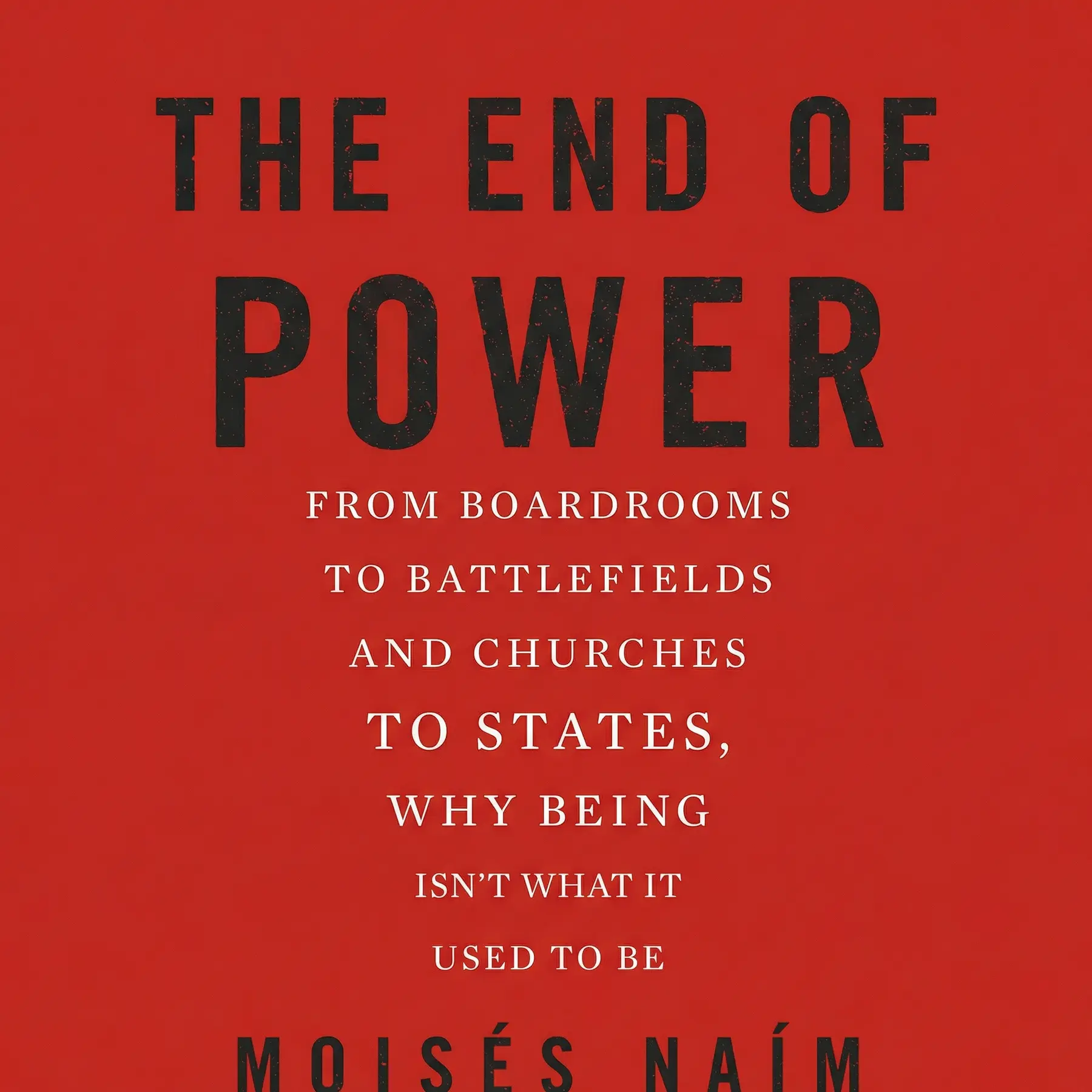
Listeners find the book accessible and thoroughly researched, providing unexpected clarity and stimulating reflections on the intriguing, optimistic subject of power dynamics. They value the quality of the prose and the novel way power is examined, with one listener describing it as a brilliant synthesis of global-scale thoughts. The work is well-received for its political insights, as one listener points out its refreshing perspective on shifts in world power structures. However, listeners express conflicting views on the book's overall effectiveness in exploring power.
The way Naím dissects the erosion of traditional authority is nothing short of brilliant. He captures how the giants—large corporations, established religions, and massive militaries—are being hamstrung by what he calls micropowers. Personally, I found the 'More, Mobility, and Mentality' framework to be an incredibly useful lens for viewing the current geopolitical chaos. While some might find the economic data a bit dense, it provides a much-needed foundation for his claims. This isn’t just another dry academic text; it’s a wake-up call for anyone who thinks the old rules of engagement still apply. Frankly, the idea that power is now easier to lose than to hold onto explains so much about our current political volatility. It’s a refreshing, hopeful look at how the barriers to entry are falling for everyone.
Show moreFinally, a book that explains why everything feels so chaotic without resorting to doom-and-gloom conspiracy theories. Naím’s writing is surprisingly clear, making complex economic and social theories accessible to the average reader. I loved the 'Mobility' revolution chapter because it highlights how much harder it is to control a population that can simply leave or bypass local restrictions. It’s a brilliant synthesis of global-scale thoughts that left me feeling more informed about the undercurrents of the 21st century. The idea that power is becoming 'evanescent' is a hauntingly beautiful way to describe our current state of affairs. This is definitely a book I’ll be recommending to my colleagues in management. It’s a refreshing look at why the old ways of 'command and control' are failing.
Show moreAs a political science nerd, I appreciated how this book challenges the idea that power is a zero-sum game that never changes. Naím argues convincingly that while the 'big players' are still relevant, their hands are tied in ways that would have been unthinkable fifty years ago. I was particularly fascinated by the 'Mentality' revolution and how a global shift in expectations is fueling distrust in every institution. Look, the book isn't perfect—it tends to circle back to the same three points a few too many times. But the sheer breadth of examples, from the decline of the Catholic Church to the rise of fringe political parties, makes it a compelling read. It changed how I view the headlines every morning, especially regarding how quickly leaders can fall from grace.
Show moreIt’s rare to find a book that synthesizes global trends so clearly without falling into the trap of oversimplification. Naím takes a sophisticated look at how technology acts as an enabler rather than the sole cause of our shifting power structures. The section on how bureaucracy, once a tool for efficiency as Weber described, has become a weight on large institutions was particularly insightful. My only real gripe is that the author quotes some questionable figures like Thomas Friedman, which made me squint a bit at his sources. That said, the documentation is generally solid and the insights are thought-provoking for anyone in business or politics. Truth is, we are living through a period where the 'small' can now veto the 'large' with ease. This book explains that phenomenon better than most.
Show morePicked this up after hearing it was the first pick for Zuckerberg's book club, and I can see why it sparked a discussion. The way it connects the rise of democracy with the decay of traditional power hierarchies is fascinating. I especially liked the discussion on how phone cards and cheap tech have done more to shrink the world than the internet itself. Gotta say, it makes a lot of sense when you look at how political movements are organized today. My only issue was that the author seems to ignore how certain types of power—like massive wealth—seem to be concentrating even more. Despite that, the '3 Ms' framework provides a solid vocabulary for talking about these shifts. It's a thought-provoking read that stays with you.
Show moreThis is a brilliant synthesis of how the world has changed since the Cold War ended. Naím avoids the trap of being a 'terrible simplifier,' though he warns us against them in his final chapters. The book is well-documented and offers a nuanced view of why big governments and armies can’t seem to get anything done. I found the analysis of the 'mentality' shift to be the most compelling part of his argument. People simply aren't as willing to follow orders as they used to be, and that has massive implications for every sector of society. While the ending is a bit weak on specific solutions, the first two hundred pages are absolute dynamite. It’s an essential read for anyone trying to make sense of the modern world.
Show moreLet’s get one thing straight: this book isn’t actually about the 'end' of power, despite the catchy title. It’s much more about the fragmentation and shifting of influence from the top down to the individual level. I found myself agreeing with the sample reviewers who said the title is a bit of a marketing gimmick. Not gonna lie, I got a little frustrated when the author introduced a great analytical matrix only to abandon it for the rest of the chapters. The research is broad, but it lacks the granular depth I was hoping for in a book of this scale. It’s a decent primer if you want to understand why world leaders seem so paralyzed lately. Just don't expect a revolutionary manifesto that gives you all the answers.
Show moreIs power really dead? Naím says it's just harder to use, and while he makes a solid case, the book is incredibly wordy. I found the examples of 'micropowers' interrupting 'megaplayers' to be the most interesting part of the text. However, you have to dig through a lot of dry prose to get to the good stuff. Personally, I think the argument could have been summarized in a lengthy magazine article without losing much of its impact. He repeats himself quite a bit, almost as if he’s trying to convince himself as much as the reader. It’s worth a read for the perspective shift, but keep your expectations in check regarding the pace. It’s a slow burn that doesn't always reward the effort.
Show moreWhat started as a promising deep dive into social dynamics quickly devolved into a repetitive slog. To be fair, Naím’s initial definition of power as the ability to get your way is a strong starting point. However, the book feels like a long-form essay that was stretched to three hundred pages to satisfy a publisher's requirements. The writing is often dry and lacks the engaging narrative flair that makes other socio-economic books truly memorable. I also struggled with the conclusion, which felt vague and disconnected from the rest of the analysis. Instead of providing a roadmap for the future, he just seems to pine for a stability that no longer exists. It’s a bit of an academic exercise that fails to offer practical solutions for the paralysis he describes.
Show moreI really wanted to like this book, especially since it came so highly recommended, but the errors were hard to ignore. When an author fundamentally mangles a concept like entropy, it makes me wonder what else they might be getting wrong in their data. The narrative is bloated with statistics that feel like they were cherry-picked to fit the thesis rather than explored with a critical eye. It felt like the 'More' revolution was just another way of saying 'there are more people,' which isn't exactly a groundbreaking revelation. In my experience, a good non-fiction book should challenge you, but this just left me feeling annoyed by the repetitive phrasing. The 'common power' suggestion at the end was so abstract it bordered on the useless.
Show moreYuval Noah Harari
Jacinda Ardern
Pankaj Mishra
James Comey
Anthony Pratkanis
Barack Obama
Masaji Ishikawa
AUDIO SUMMARY AVAILABLE
Get the key ideas from The End of Power by Moisés Naím, plus 5,000+ more titles in English and Thai.







