
16 min 42 sec
The End of Race Politics: Arguments for a Colorblind America
Explore a compelling argument for returning to the principle of colorblindness. This summary examines how modern identity politics has deviated from civil rights ideals and proposes a path toward true human equality.
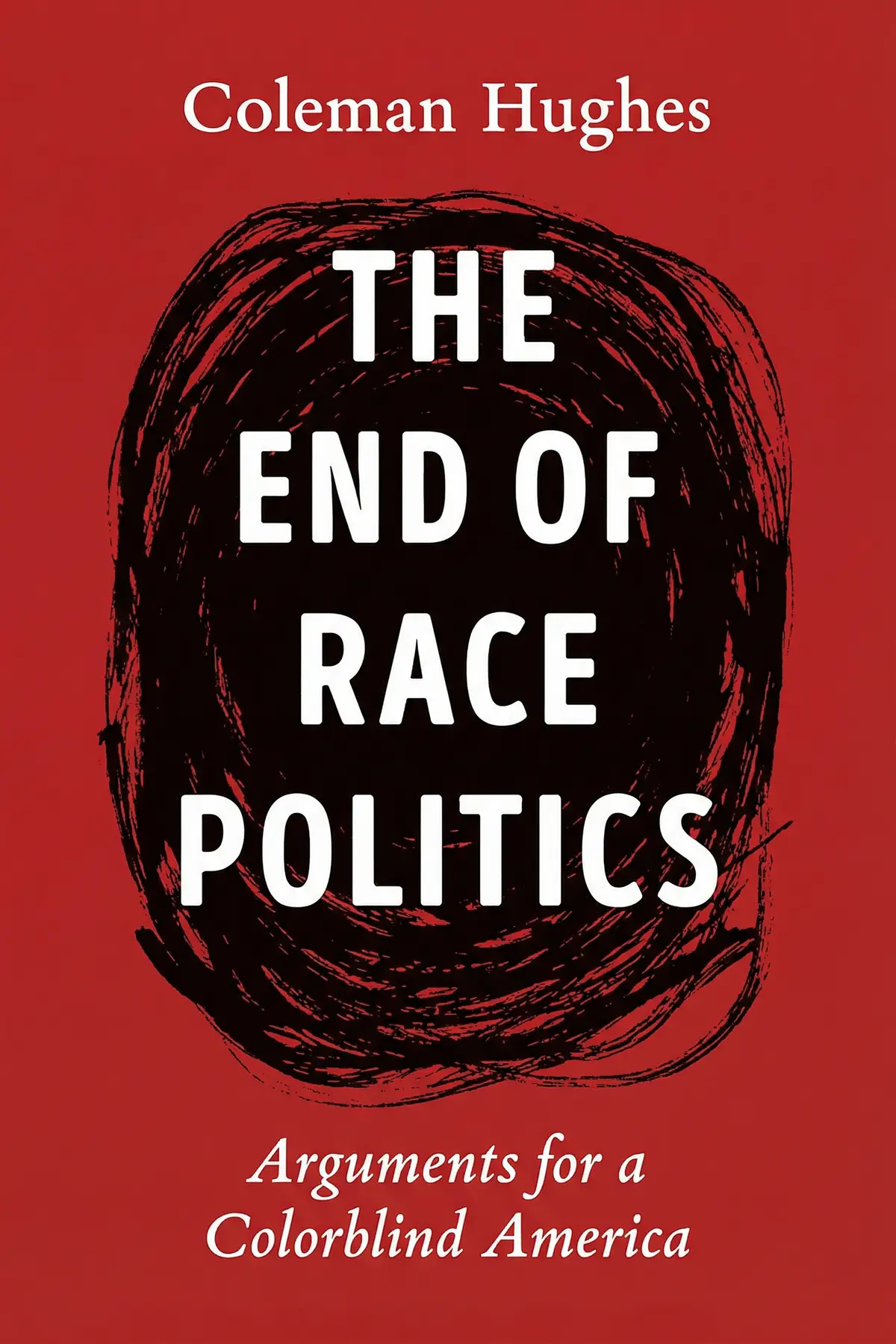
Table of Content
1. Introduction
1 min 26 sec
In recent years, the conversation around race in America has shifted dramatically. What was once a unified push toward a world where skin color mattered less has become a complex landscape of identity politics, where race seems to matter more than ever. You might feel that the atmosphere is more polarized, the debates more heated, and the solutions more confusing. It’s in this environment that we find ourselves questioning the very foundations of racial justice. Is the current path of emphasizing our differences really the way to a better future? Or have we lost sight of the original dream that powered the most successful human rights movements in history?
This journey explores a powerful and often controversial alternative: the return to the principle of colorblindness. It’s an idea that suggests the best way to overcome racism is to stop using race as a primary lens for viewing the world and each other. We are going to look at the transition from traditional civil rights goals to what is now being called neoracism—a contemporary form of identity politics that, despite its name, often reinforces the same tribal thinking it claims to oppose. We will delve into how these ideas have permeated our most influential institutions and why our digital age has accelerated this shift. Ultimately, the goal here is to find a throughline back to our shared humanity, focusing on what unites us as individuals rather than what separates us into groups. It’s a call to move beyond the politics of race and toward a vision of progress that honors the unique dignity of every human being.
2. The Evolution from Racism to Neoracism
2 min 21 sec
Explore the shifting definitions of race and racism, and discover how modern anti-racist movements may be unintentionally fostering a new form of racial stereotyping.
3. The Radical Roots of Colorblindness
2 min 12 sec
Uncover the true history of the colorblind ideal, showing how it was the driving force behind abolition and the fight against segregation.
4. The Institutionalization of Identity Politics
2 min 21 sec
Examine how neoracist ideologies have moved from academic theory to the core of government, education, and the media.
5. The Digital Age and the Growth of Tribalism
2 min 17 sec
Understand how the rise of social media and smartphones has accelerated racial polarization by rewarding emotional and divisive narratives.
6. Dismantling the Myths of Modern Identity Politics
2 min 13 sec
Break down the common fallacies that sustain racial division, from the disparity fallacy to the idea of inherited trauma.
7. A Future Based on Skills and Expectations
2 min 17 sec
Discover why focusing on early education and individual achievement is a more effective path to equality than relying on diversity quotas.
8. Conclusion
1 min 35 sec
The journey through the complexities of race and politics in modern America brings us to a clear realization: the path we are currently on is leading us away from, not toward, the dream of a truly equal society. By embracing neoracism and identity politics, we have inadvertently resurrected the very tribal thinking that generations of activists fought to dismantle. We have seen how these ideas have permeated our institutions, fueled by the fires of social media and the decline of traditional community values. But there is another way.
The throughline back to a harmonious society is the principle of colorblindness. This isn’t a passive refusal to see the world as it is; it is an active, ethical commitment to treat every person as an individual of inherent worth. It means rejecting the myths that keep us divided and focusing instead on the real, foundational work of improving education and opportunity for everyone. Real progress isn’t found in a quota or a racial double standard; it’s found in the shared flourishing that occurs when we judge each other by the content of our character.
As you move forward, consider the power of your own perspective. In your daily interactions, in the way you consume information, and in the policies you support, you have the choice to either reinforce racial divisions or to transcend them. The goal is a nation where skin color is as irrelevant to a person’s success as the color of their eyes. By recommitting to our common humanity and the radical ideal of a colorblind future, we can finally move beyond the politics of race and build a world where every individual has the freedom to truly belong.
About this book
What is this book about?
In a world increasingly defined by racial identity, this exploration challenges the modern orthodoxy of anti-racism. It suggests that our current focus on racial categories, while well-intentioned, may actually be deepening the very divides it seeks to bridge. The narrative traces the history of the colorblind ideal—the belief that we should treat individuals without regard to their skin color—and argues that this principle was the true engine of the civil rights movement. By examining the rise of what is termed neoracism, the text highlights how elite institutions in government, media, and education have adopted double standards that categorize people by group identity rather than individual character. The promise of this work is a return to a more harmonious society by debunking common myths about racial disparities and trauma. It offers a vision for the future where progress is measured not by quotas, but by the shared flourishment of all individuals based on their common humanity.
Book Information
About the Author
Coleman Hughes
Coleman Hughes is an influential American writer and podcast host recognized for his independent perspectives on race and social issues. A fellow at the Manhattan Institute for Policy Research, he has gained prominence for his defense of colorblindness and his testimony regarding reparations. He hosts the podcast Conversations with Coleman and contributes to major outlets like The New York Times and The Wall Street Journal.
Ratings & Reviews
Ratings at a glance
What people think
Listeners find the material accessible despite the intricacy of the subject matter, highlighting the clear prose and thorough research. They also value its stance as a strong challenge to the ideology of identity politics, favoring its logical and sensible framework. The pacing is frequently mentioned as a positive, with one listener describing the tone as both fervent and steady, and listeners generally applaud its brilliance, with one review emphasizing the inclusion of thought experiments.
Top reviews
Zoey
Coleman Hughes provides a masterclass in clarity here, dismantling the complex web of modern identity politics with surgical precision. He introduces the term 'neoracism' to describe the very ideologies that claim to fight prejudice while actually reinforcing racial silos. Personally, I found his breakdown of the 'Disparity Fallacy' to be the most compelling section of the book. Instead of shouting, Hughes uses a calm, measured tone that makes his arguments feel like an invitation to think rather than a lecture. The prose moves quickly, avoiding the dense jargon that usually bogs down these types of social commentaries. While some might find his commitment to colorblindness controversial, the logic he presents is difficult to ignore if you value consistency. It’s a refreshing change of pace from the hysterical rhetoric that dominates our social media feeds lately. This is essential reading for anyone trying to navigate the messy reality of American race relations without losing their mind.
Show moreJai
Why does it feel like common sense has become a radical act in 2024? Hughes makes a powerful case for returning to the core principles of the civil rights movement, specifically the idea of treating people as individuals rather than racial avatars. The book is remarkably free of theatrics, opting instead for data-driven insights and historical context. Frankly, it’s a relief to read someone who isn’t trying to make me feel guilty for things I can’t control. He correctly identifies that a lot of modern 'anti-racism' actually looks a lot like old-school racial essentialism. His argument isn't that race doesn't exist, but that it shouldn't be the most important thing about us. The pacing is excellent throughout, and he manages to explain complex legal concepts like the Brown v. Board of Education rationale without being boring. I’ve already recommended this to several friends who are tired of the constant identity-driven bickering online.
Show moreSofia
Wow, the experiment involving the MLK quote was a total eye-opener for me. It perfectly illustrates how we have become obsessed with the identity of the messenger rather than the truth of the message itself. Hughes argues that the goal should be a society where your skin color is as irrelevant as your eye color when it comes to the law. In my experience, this used to be the consensus, and he does a great job of tracing when and why we moved away from it. The prose is clean and the arguments are structured with the kind of rigor you’d expect from a philosopher. He doesn't shy away from his own experiences as a black man, which adds a layer of authenticity to his critique of the 'Myth of Superior Knowledge.' It’s a brave book that prioritizes truth over popularity. We need more voices like this in the public square to bridge the growing divide.
Show moreTantipat
As someone who has struggled to articulate why the 'anti-racist' movement felt off, this book was a total revelation. Hughes provides the vocabulary to push back against 'neoracism' without sounding like a reactionary. He focuses on the 'Racial Ad Hominem' and explains how it shuts down legitimate debate by attacking the speaker’s identity. The chapter on the 'Myth of No Progress' was especially impactful for me because it highlights how much ground we’ve actually gained. Personally, I think his point about race-based policies benefiting elites rather than the truly disenfranchised is his strongest argument. The writing is punchy and direct, making it a great choice for a book club or a weekend read. It’s not just a critique; it’s a plea for a more humanistic way of seeing one another. Whether you're on the left or the right, there's something here to challenge you.
Show moreRotjanee
Picked this up on a whim after seeing a clip of Hughes testifying before Congress, and I'm glad I did. The book is an excellent rebuttal to the idea that we must constantly center race in every interaction. Hughes uses these brilliant thought experiments that really force you to question your own biases. For example, he asks if a policy is truly just if its labels were reversed, which is a simple but effective test. The pacing is fantastic—I finished the whole thing in two sittings because the chapters are so well-organized. It’s a common-sense approach that feels like a breath of fresh air after years of reading academic jargon. He isn't saying racism doesn't exist; he's saying that focusing on it exclusively is making the problem worse. This book is a must-read for anyone who wants a more unified future.
Show moreJeeranan
Not what I expected, but in a good way. I thought this would be another partisan hit piece, but Hughes is actually very fair to his opponents. He clearly lays out the 'neoracist' position before methodically explaining why he thinks it’s flawed. The section on the 'Myth of Black Weakness' was particularly thought-provoking, especially given how it contrasts with the victimhood narrative we see in the media. In my experience, the book is incredibly intelligent and well-paced. He manages to weave together history, philosophy, and current events without ever feeling disjointed. One minor gripe is that he could have spent more time on how to actually implement colorblind policies in a way that doesn't just preserve the status quo. Still, it’s one of the most important books on race I’ve read in years. It’s logical, passionate, and above all, deeply hopeful about where we can go from here.
Show moreJoseph
After hearing Hughes on several podcasts, I finally dove into the full text and found a remarkably well-researched rebuttal to current trends. He takes on big names like Kendi and DiAngelo, but he does so without the mean-spiritedness you see in most political books today. To be fair, I think he brushes past some of the stickier systemic issues a bit too quickly, but his focus on class as a better proxy for disadvantage is a solid point. The writing is incredibly accessible for such a heavy topic. I particularly liked how he used the smartphone revolution to explain why we feel more divided even as certain metrics of progress improve. It’s a bold stance to take in the current climate, but Hughes handles the heat with intellectual grace. Even if you don’t agree with every policy suggestion, his thought experiments about resume anonymization are worth considering. It’s a quick read that packs a punch.
Show moreHarper
The book is undeniably well-written and serves as a sharp rebuttal to the current identitarian wave, though I wanted a bit more depth in certain chapters. Hughes is at his best when he’s dissecting the 'Seven Myths' of neoracism, providing clear examples of how these ideas actually hinder progress. However, I felt his dismissal of 'inherited trauma' was a bit too brief given how much weight that concept carries in modern sociology. Not gonna lie, I was hoping for more detailed policy solutions beyond the standard call for colorblindness. Still, the intelligence on display is undeniable, and his ability to synthesize different viewpoints is impressive. It’s a great starting point for a conversation that usually ends in screaming matches. He manages to stay passionate without becoming unhinged, which is a rare feat in modern publishing. I highly recommend this for anyone wanting to look past the surface of today's headlines.
Show moreNoah
Look, the way Hughes handles the legacy of Dr. King is both refreshing and necessary in our current political climate. He argues that modern activists have essentially hijacked King's words to support policies he would have likely opposed. The comparison he draws between the rhetoric of white supremacists and some modern 'anti-racists' is absolutely chilling but well-supported. Truth is, the book makes you uncomfortable in the best way possible by challenging your preconceived notions about 'progress.' I appreciated the specific analogies he used, especially concerning the cultural power of the black community versus economic power. It’s an easy read but don't let that fool you into thinking the ideas are simple. He covers a massive amount of ground in a relatively short page count. If you're tired of feeling like you're walking on eggshells when talking about race, this book provides a solid foundation for more honest conversations.
Show moreSamroeng
Frankly, Hughes is a gifted writer, but I found his central premise about colorblindness to be somewhat naive in a world of systemic inequality. While I appreciate his calm tone and logical approach, he seems to underestimate how deeply racial categories are baked into our institutions. To be fair, his critique of Kendi’s 'discrimination as remedy' is logically sound, but his alternative often feels like it ignores the reality of many marginalized communities. He spends a lot of time on 'cultural power' but doesn't quite convince me that it balances out the massive economic disparities we see today. The chapter on 'benign disparities' felt like he was stretching his data a bit too thin to fit his narrative. It’s an interesting read for sure, but it lacks the sociological depth required for such a massive topic. It definitely feels like it’s looking at a very complex problem through a very narrow lens.
Show moreReaders also enjoyed
A Warning
Miles Taylor

A Biography of Loneliness: The History of an Emotion
Fay Bound Alberti
A Force for Good: The Dalai Lama's Vision for Our World
Daniel Goleman
Abolish Rent: How Tenants Can End the Housing Crisis
Tracy Rosenthal
Abortion: Our Bodies, Their Lies, and the Truths We Use to
Jessica Valenti
AUDIO SUMMARY AVAILABLE
Listen to The End of Race Politics in 15 minutes
Get the key ideas from The End of Race Politics by Coleman Hughes, plus 5,000+ more titles in English and Thai.
- 5,000+ titles
- Listen as much as you want
- 7-day free trial
- Cancel anytime







