
A Long Way Gone: Memoirs of a Boy Soldier
Ishmael Beah
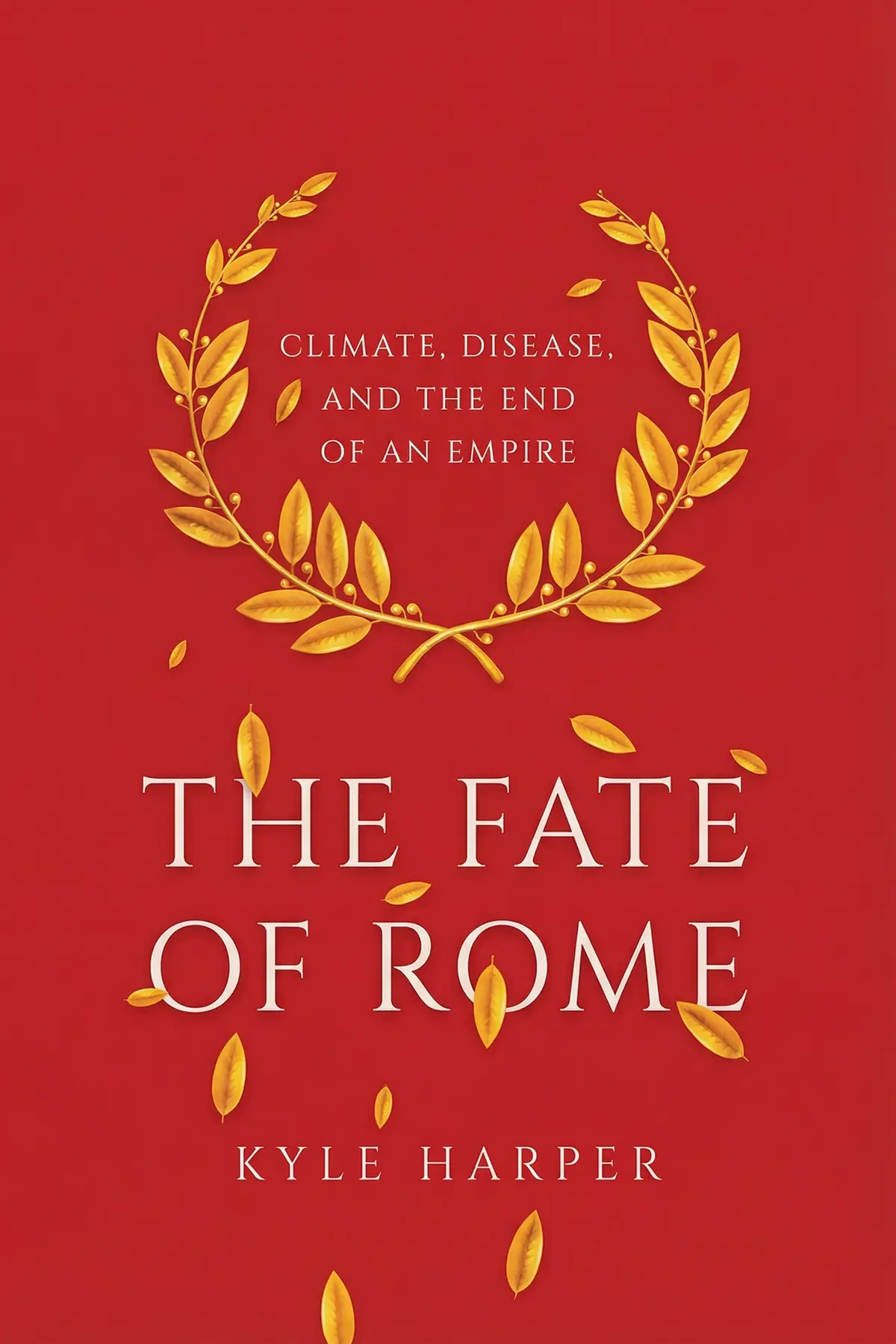
Explore the hidden environmental forces that toppled an empire. This summary reveals how shifts in climate and devastating pandemics worked alongside human politics to determine the ultimate fate of ancient Rome.
1 min 41 sec
When we picture the fall of the Roman Empire, we often imagine scenes of chaotic battles, marble statues being toppled by barbarians, and a line of increasingly incompetent or decadent emperors. We’ve been taught that Rome fell because of political intrigue, economic overreach, and the eventual breach of its borders. While those human dramas are certainly part of the story, they aren’t the whole story. In fact, they might just be the surface-level symptoms of much deeper, more primal forces at work.
In recent years, a new generation of historians has begun to look beyond the written records of ancient scribes. They are looking into the earth itself—into the layers of ice frozen in glaciers, the growth rings of ancient trees, and the genetic code found in centuries-old human remains. What they’ve discovered is a narrative that fundamentally changes our understanding of the ancient world. This is the story of how the climate and the microscopic world of germs dictated the rise, the peak, and the eventual disappearance of one of history’s greatest superpowers.
In this exploration, we are going to look at the environment as a central character in the Roman drama. We will see how a rare stretch of perfect weather gave the Romans the confidence and the calories to conquer the Mediterranean, and how a sudden shift in the planet’s temperature, combined with the arrival of lethal new diseases, stripped away that power. This is more than a history of Rome; it’s a lesson in how human civilization remains inextricably linked to the natural world. Through the lens of the latest scientific evidence, we will uncover the throughline of Rome’s survival and eventual surrender to forces far beyond human control.
2 min 06 sec
Discover how a rare period of stable, warm weather acted as the silent architect behind Rome’s most prosperous era and its rapid territorial expansion.
2 min 11 sec
Uncover the paradox of Roman life: while the empire was wealthy and connected, its citizens were smaller and more disease-prone than their ancestors.
2 min 04 sec
Learn how the arrival of a devastating new pathogen in the second century shattered Rome’s sense of invincibility and triggered a lasting economic crisis.
2 min 13 sec
Explore the ‘First Fall’ of Rome in the third century, where a cooling climate and a terrifying new pandemic pushed the empire to the brink of collapse.
1 min 47 sec
Trace the path of the Huns and Goths to see how a mega-drought in Central Asia forced whole nations to collide with Rome’s borders.
1 min 58 sec
Discover the terrifying first appearance of the bubonic plague and how it decimated the Eastern Roman Empire just as it tried to reclaim its former glory.
2 min 04 sec
Witness the dramatic end of an era as a series of massive volcanic eruptions plunged the world into darkness and sealed the fate of the Roman world.
1 min 40 sec
The story of Rome is often told as a morality play about human ambition and its inevitable decay. But as we have seen through these shifts in perspective, the true story is much more grounded in the physical reality of our planet. Rome was a brilliant achievement, but it was also a biological experiment. It was a civilization that bet everything on a stable climate and a connected world, only to find that those very things could become its greatest vulnerabilities when nature shifted.
The throughline of the Roman experience is one of unintended consequences. The very roads that allowed for the spread of Roman law also allowed for the spread of the plague. The agricultural systems that fed millions were only possible because of a temporary fluke in the earth’s climate. When that fluke ended and the pathogens arrived, the human institutions of the empire—its armies, its laws, and its economy—simply weren’t enough to save it.
What can we take away from the fate of Rome? Perhaps the most important lesson is a sense of humility. We live in an age where we feel more in control of our environment than ever before, yet we are still part of the same biological and atmospheric systems that governed the ancient world. The Roman experience reminds us that the environment is not just a backdrop to history; it is history. Our prosperity, like theirs, is tied to the stability of the natural world. By understanding how the Romans were shaped by climate and disease, we can better appreciate the fragility of our own modern systems and the vital importance of living in balance with the planet that sustains us. Rome didn’t just fall; it was pushed by the overwhelming power of a changing earth.
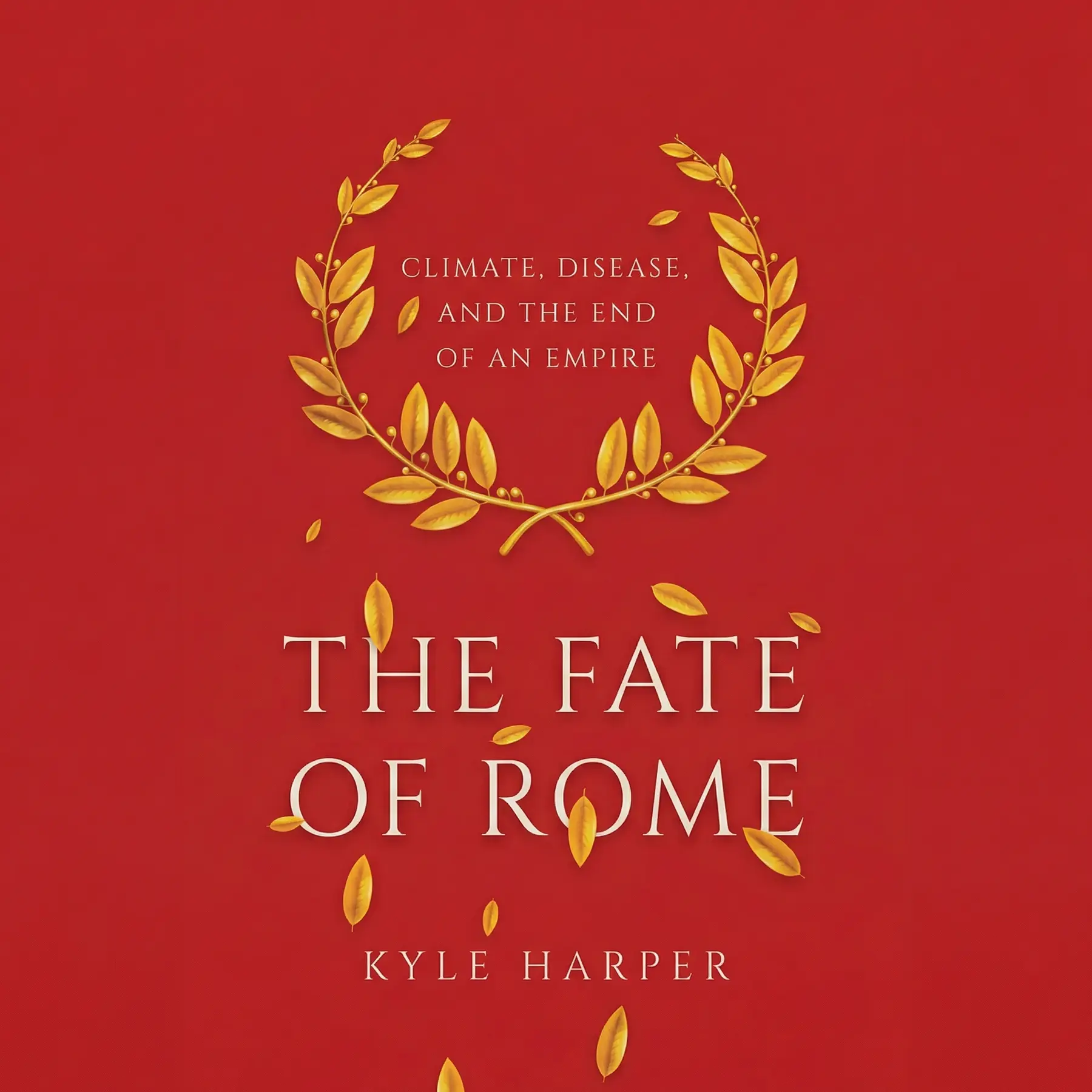
The Fate of Rome offers a groundbreaking re-examination of the Roman Empire’s decline, shifting the focus from purely human factors like corrupt emperors and invading barbarians to the powerful influence of the natural world. Historian Kyle Harper utilizes modern scientific data—from tree rings to ice cores—to illustrate how Rome’s greatest successes were built upon a unique period of climate stability and how its collapse was accelerated by ecological volatility. The book promises a journey through the intersection of human history and environmental science. It tracks the Roman Climate Optimum, a rare window of favorable weather that allowed the empire to flourish, followed by the devastating arrival of the Antonine Plague and the Plague of Cyprian. Finally, it details the onset of a "Little Ice Age" and the arrival of the bubonic plague, which dealt the finishing blow to the Eastern Empire. By understanding these natural pressures, listeners gain a profound perspective on how thin the veneer of civilization truly is when faced with the overwhelming power of the earth’s biological and atmospheric shifts.
Kyle Harper is a distinguished scholar of Roman history and a Professor of Classics and Letters at the University of Oklahoma, where he also serves as Senior Vice President and Provost. His expertise lies in integrating social and environmental history to provide a fuller picture of the ancient world. Harper is the author of several acclaimed works, including Slavery in the Late Roman World, AD 275–425, and From Shame to Sin: The Christian Transformation of Sexual Morality, both of which have received prestigious awards in the field of historical research.
Listeners find this to be a premier choice among titles on Roman history, praising its sophisticated prose and intriguing way of delivering facts. Its historical substance is well-regarded; one listener noting how it changed their view of Roman history, and one review highlighting the complex relationships between climate and disease. Listeners characterize it as an absorbing narrative that remains truly engaging. Opinions on the tempo vary; while some find the flow compelling, others note it can be turgid at times.
Kyle Harper has crafted something truly special here by blending high-level science with traditional narrative history. For years, we’ve been told Rome fell because of lead pipes, Christianity, or incompetent emperors, but Harper points toward the invisible killers: bacteria and volcanoes. It is fascinating to see how the 'Roman Climate Optimum' essentially subsidized the empire’s growth with unnaturally stable weather. When that climate broke, the empire broke. The way he tracks the evolution of pathogens like the bubonic plague alongside the collapse of the grain trade is nothing short of masterful. It’s a dense read, and you definitely need to pay attention to the scientific data, but the payoff is a completely transformed understanding of the ancient world. This isn't just another book about Caesar; it’s a biography of the planet and its impact on the greatest empire in history. Absolutely essential for any history buff.
Show moreWow. This completely shifted my perspective on what 'history' actually means. We usually view the environment as a static background, but Harper treats it as a lead character. The sections on the Antonine Plague and the subsequent rise of religious devotion were particularly haunting. It’s wild to think that smallpox might have been the real reason the Roman economy collapsed in the 2nd century. The author does a great job showing how Roman 'success'—their roads, their trade, their massive cities—actually created the perfect highway for pathogens to kill them. It’s a sobering reminder of our own global connectivity. The prose is academic and sophisticated, which I appreciated, though it does demand your full concentration. I especially loved the ending, where he connects the environmental collapse of the Mediterranean to the eventual rise of Islam. This is a big-picture history at its absolute best.
Show moreFinally got around to finishing this, and the chapter on the volcanic eruptions in the 6th century was wild. I never knew 536 AD was basically the worst year to be alive. Harper explains how solar cycles and volcanic ash clouds triggered the 'Late Antique Little Ice Age,' which basically starved the empire out. It’s a fascinating look at how fragile even the most 'advanced' societies are when the earth decides to change. The book is heavily researched—you can tell Harper is a professor because he leaves no stone unturned. Some people find the writing dry, but I found it authoritative and precise. It's not a beach read, but it is a deeply rewarding one if you care about how our world actually works. It makes you realize that Rome didn't just 'fall'; it was battered by a series of natural disasters that would have ended any civilization. Highly recommended for fans of science-heavy history.
Show moreThe depth of scientific data Harper integrates—from tree rings to ancient DNA sequencing—is nothing short of masterful. It’s rare to see a historian so comfortably bridge the gap between the humanities and the hard sciences. I was particularly struck by the discussion of the 'Cyprianic Plague' and the possibility of it being an early form of Ebola. While he admits that's speculative, the way he uses the archaeological record to back up his claims is very convincing. The book illustrates how the Romans were victims of their own success; their urbanization and massive trade networks became their undoing when the climate turned cold and wet. It’s a brilliant, sobering look at the intersection of human ambition and natural limits. The writing is elegant, if a bit dense at times, but the information is so groundbreaking that I didn't mind the slower pace. A must-read for anyone interested in the Late Antique period.
Show moreIt’s rare to find a book that feels so timely despite being about events from fifteen hundred years ago. Harper’s 'Fate of Rome' is a stunning achievement that places the fall of the empire in a global, environmental context. The way he details the shift from a warm, stable climate to the 'Late Antique Little Ice Age' provides a necessary corrective to the idea that Rome fell simply because of moral decay or bad generals. Instead, we see an empire struggling against the literal cooling of the world and the arrival of the bubonic plague. The narrative of the 6th century is particularly gripping—the 'year without a summer' and the collapse of the social order felt almost like reading a post-apocalyptic novel. It’s an accomplished literary work that stays with you long after you finish it. While it demands a lot from the reader, the insights into how nature dictates the terms of human survival are invaluable.
Show moreEver wonder why the baddest armies in the world suddenly couldn't hold the line? Harper argues it wasn't just 'barbarians at the gate' but rather the very environment they inhabited. It's a heavy read, occasionally dipping into those '75-cent words' that make you reach for a dictionary, but the payoff is worth it. He explains how the Roman Climate Optimum—a period of freakishly stable, warm weather—basically subsidized the empire's expansion. When that stability vanished, so did the food supply and the tax base. It makes the fall feel less like a series of bad decisions by emperors and more like an inevitable collision with biology. If you can push through the dryer, more technical passages about solar cycles and tree rings, you’ll see the ancient world in a totally different light. It’s a dense, challenging, and ultimately rewarding look at the fragility of civilization.
Show moreAs a long-time fan of Roman history, I found this take incredibly refreshing. I've read dozens of books on the Goths and the Huns, but I never realized how much a simple drought in the Eurasian steppe influenced those migrations. Harper makes a compelling case that the Huns weren't just aggressive; they were climate refugees. My only real complaint is that the book can be a bit repetitive. He really hammers home the 'climate and germs' theme in every single chapter, sometimes using very flowery language to say something that could have been stated more simply. Still, the science is top-notch. Seeing how Justinian’s dreams of a reunited empire were crushed by a tiny flea-borne bacteria is just tragic. It adds a layer of 'what if' to history that I haven't seen explored with this much empirical evidence before. Definitely worth the time for the insights alone.
Show moreFrankly, I never considered how aridity in the Eurasian steppe could have triggered the Hunnic invasions, but Harper makes it seem so obvious. This book is a great reminder that humans aren't the only ones making history. The analysis of the Roman Climate Optimum was my favorite part—it explains why the empire was so prosperous in the beginning. However, I have to agree with some other reviewers that the book is a bit 'wordy.' There are times when the author uses five sentences of academic jargon when one simple sentence would have done the job. It makes the middle section feel a bit turgid. That said, the actual content is 5-star quality. The way he handles the rise of Christianity in the wake of these plagues is genuinely interesting and adds a sociological layer to the environmental story. A very solid 4-star read that will definitely make you think.
Show moreTo be fair, this is a bit of a slog if you aren't ready for a textbook-style deep dive. While the central thesis—that nature, not just politics, ended Rome—is brilliant, the writing style is incredibly dry. I found myself checking how many pages were left in a chapter more than once. Harper clearly knows his stuff, but he often prioritizes technical data over narrative flow. The timeline can also be a bit circular; he tends to jump forward to a major plague and then double back to climate shifts that happened decades prior, which got confusing. It’s a 3.5-star book for me. I’m glad I read it because the information on the 'Year Without a Summer' and the Justinianic plague is eye-opening, but it lacks the 'page-turner' quality I’ve found in other modern history books. If you love data and paleoclimatology, you'll love it. If you want a story, maybe look elsewhere.
Show moreLook, I really wanted to like this, but the prose is just so turgid that I struggled to stay engaged. I appreciate the scientific rigor, but the author has a habit of being incredibly circular in his timeline. You’ll be reading about the 6th-century plague, and then suddenly you're back in the 2nd century discussing the Antonine smallpox outbreak again without a clear transition. It felt like I was reading a collection of academic papers rather than a cohesive narrative. Some of the vocabulary is unnecessarily 'intellectual,' which just adds to the dryness of the subject matter. While the premise—that climate and disease killed Rome—is fascinating, the execution was a chore for me. I’d recommend it for researchers or hardcore history nerds, but the general public might find it more frustrating than it’s worth. I was hoping for a more fluid story and got a data dump instead.
Show moreIshmael Beah
William J. Bernstein
Ben Macintyre

Charles C. Mann
James Shapiro
AUDIO SUMMARY AVAILABLE
Get the key ideas from The Fate of Rome by Kyle Harper, plus 5,000+ more titles in English and Thai.







