
20 min 44 sec
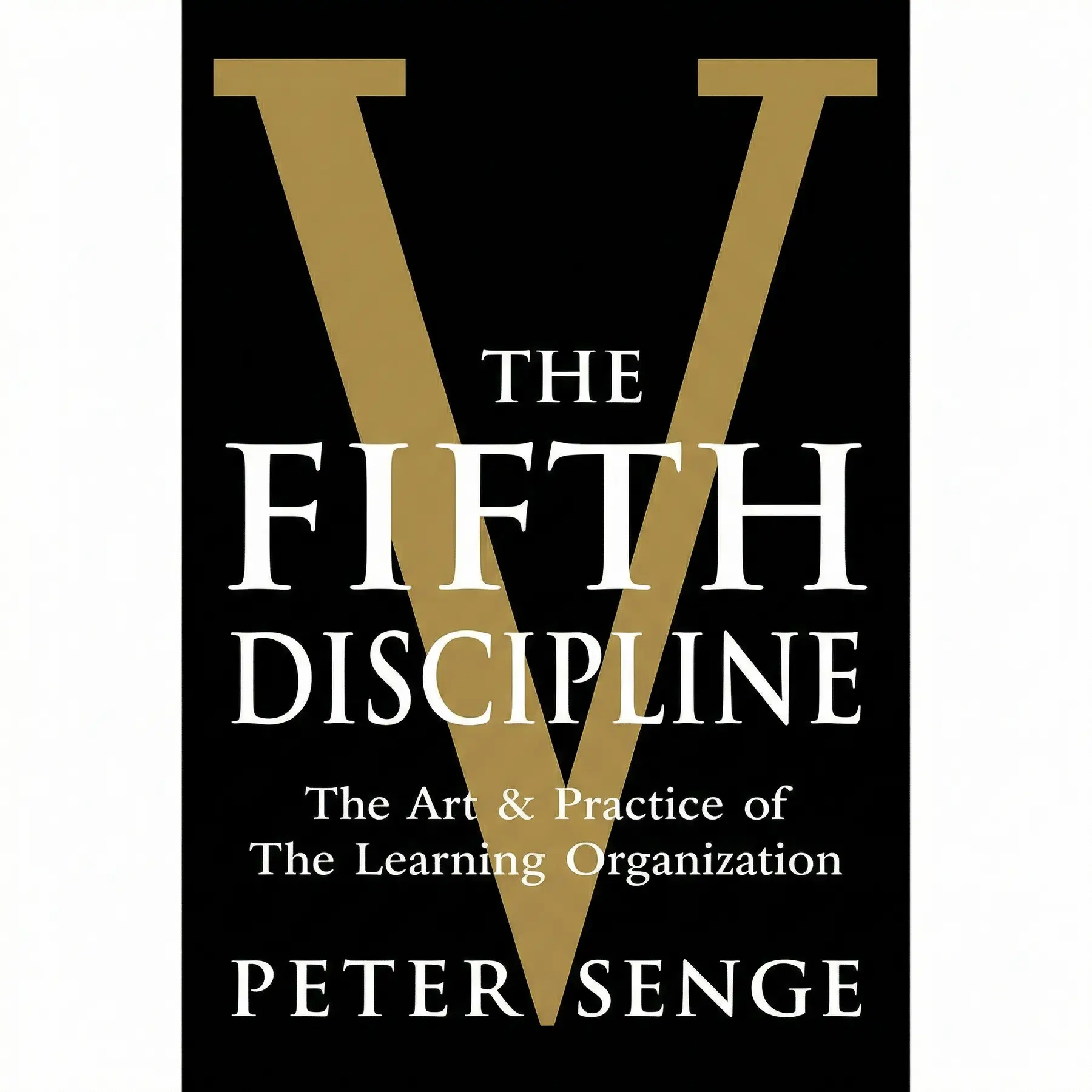
The Fifth Discipline: The Art & Practice of The Learning Organization
By Peter Senge
Explore how systems thinking and organizational learning can revitalize your workplace. This summary reveals the five essential disciplines for turning rigid corporate structures into dynamic environments that foster continuous growth.
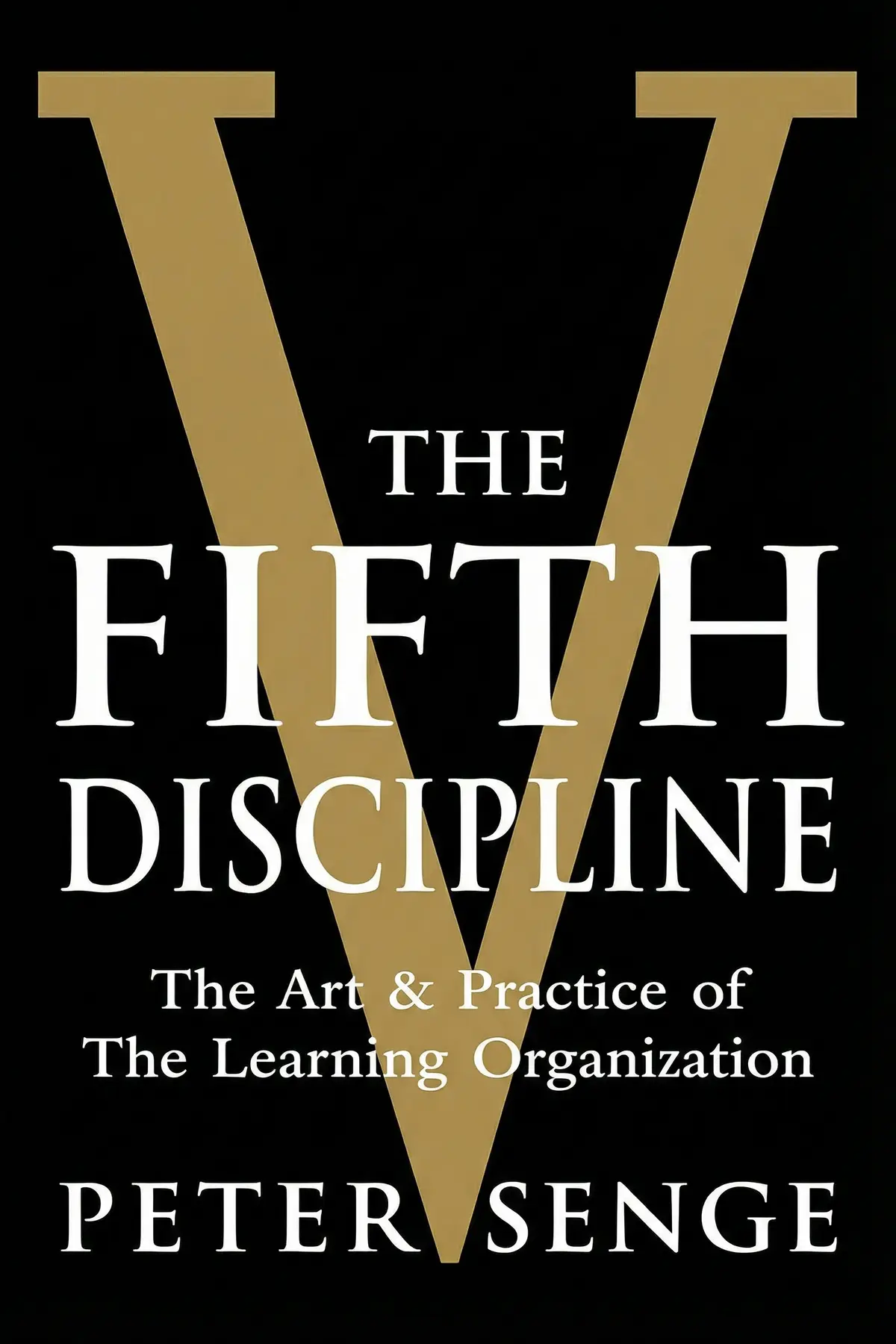
Table of Content
1. Introduction
1 min 40 sec
Think about the last time you felt a genuine, electric sense of excitement at your job. For many professionals, this memory is unfortunately rare. Most people view their working years as a long countdown to retirement, treating their careers as a series of tasks to be endured rather than a journey of discovery. But what if our workplaces were designed differently? What if your office was a place where curiosity was not just allowed but actively nurtured? Imagine a professional environment where you felt supported by your colleagues and inspired by a leadership team that encouraged you to reach your full potential.
Peter Senge, an expert in organizational dynamics, has spent decades helping companies achieve exactly this. He argues that the key to a thriving business is becoming a learning organization—a place where people are constantly expanding their capacity to create the results they truly desire. In this summary, we are going to explore the five foundational disciplines that make this possible. We’ll look at why so many modern corporations accidentally kill the natural human instinct to learn, and how we can restart that engine of growth.
This isn’t just a list of management tips; it’s a fundamental shift in perspective. We will look at why the American auto industry struggled to adapt to change and how a shared vision helped a company like Apple redefine the world of technology. Most importantly, we will delve into systems thinking, the discipline that ties everything else together. By the end of this journey, you’ll understand how to stop reacting to the latest crisis and start building a future that reflects your highest aspirations. Let’s begin by looking at the natural learner that lives within all of us and why our current work environments often put that instinct to sleep.
2. Overcoming the Barriers to Organizational Learning
2 min 41 sec
Humans are born with an insatiable hunger for knowledge, yet many corporate structures inadvertently suppress this natural drive. Discover the invisible barriers that turn curious employees into clock-watchers.
3. The Pursuit of Personal Mastery
2 min 24 sec
Personal growth isn’t just for individuals—it’s a vital engine for corporate success. Learn how the gap between reality and our vision can become a powerful force for progress.
4. Uncovering and Challenging Mental Models
2 min 30 sec
We all see the world through a lens of hidden assumptions. Discover how these mental models can lead to disaster—and how examining them can spark innovation.
5. The Power of a Genuinely Shared Vision
2 min 28 sec
A vision isn’t just a poster on a wall—it’s a shared purpose that unites a team. Learn how to move from compliance to true commitment through authentic collaboration.
6. Mastering Team Learning Through Dialogue
2 min 20 sec
Talented individuals don’t always make a talented team. Explore the art of dialogue and how it can transform conflicting voices into a powerful, aligned force.
7. The Fifth Discipline: The Power of Systems Thinking
2 min 30 sec
Why do our solutions so often create new problems? Dive into the core of systems thinking to see the hidden circular patterns that shape our lives and organizations.
8. Redefining the Role of the Leader
2 min 15 sec
The era of the all-knowing hero-leader is over. Explore how modern leaders must become designers, teachers, and stewards to foster a true learning culture.
9. Conclusion
1 min 56 sec
As we look back at the five disciplines, a clear picture emerges of what a learning organization truly is. It isn’t just a place with a fancy mission statement or a collection of high-performing individuals. It is a living, breathing community that has mastered the art of adaptation. By fostering personal mastery, we ensure that every individual is driven by their own inner fire. By examining our mental models, we stay grounded in reality rather than being blinded by our own assumptions. Through team learning and shared vision, we align our efforts toward a common goal. And finally, through systems thinking, we gain the wisdom to see the hidden patterns that govern our world.
Transforming an organization in this way is not a quick fix. It is a long-term commitment that requires patience, courage, and a healthy dose of humility. But the rewards are immense. When people are given the opportunity to learn and grow, they bring a level of passion and creativity to their work that is simply impossible in a traditional command-and-control environment. They stop being cogs in a machine and start being active participants in a shared journey.
So, how can you start applying these ideas today? You don’t have to wait for a total corporate overhaul. You can begin by reimagining how you conduct your next meeting. Instead of a formal, rigid presentation, try setting up a space for genuine dialogue. Encourage people to share their assumptions and listen deeply to their perspectives. Or, take a moment to look at a recurring problem in your department and try to map out the circular feedback loops that might be keeping it in place. Every small step toward becoming a learner is a step toward a more fulfilling and successful future. The natural learner inside you is still there, waiting to be rediscovered. It’s time to give that toddler the space to explore once again.
About this book
What is this book about?
Have you ever wondered why some organizations thrive during periods of chaos while others crumble under the slightest pressure? The answer lies in the concept of a learning organization. This work explores the idea that most companies are hampered by their own internal structures, which inadvertently stifle curiosity and prevent employees from seeing the bigger picture. By identifying and addressing these barriers, a company can transform into a living entity that evolves alongside its people. The promise of this exploration is a complete shift in how you view management and collaboration. It introduces five specific disciplines—ranging from personal mastery to shared vision—that provide a blueprint for this transformation. At the center of it all is the titular fifth discipline, systems thinking. This methodology encourages us to look past immediate symptoms and understand the deep, interconnected patterns that drive long-term success. Whether you are an executive or an entry-level professional, these insights offer a path toward more meaningful work and more resilient organizations.
Book Information
About the Author
Peter Senge
Peter Senge is a highly respected figure in the world of management theory. He serves as a senior lecturer at the MIT Sloan School of Management and is the founder of the Society for Organizational Learning. His groundbreaking work, The Fifth Discipline, has reached a massive global audience, selling over two million copies. It was further distinguished by the Harvard Business Review as one of the most influential management books produced in the last 75 years. Senge has also shared his expertise through other notable publications, including Presence and The Necessary Revolution.
Ratings & Reviews
Ratings at a glance
What people think
Listeners find this work straightforward and skillfully crafted, offering deep perspectives on systems thinking and organizational growth. They value the reflective models for evaluating leadership and view it as a necessary tool for all leadership roles. It efficiently builds the foundations of systems logic and supports the creation of a collective vision, making it a solid investment.
Top reviews
Nang
As someone who has spent two decades in middle management, I found this to be of biblical importance for my career growth. Senge’s masterpiece on the "learning organization" is the gold standard for anyone trying to navigate complex corporate structures. The concept of the Fifth Discipline—systems thinking—acts as the glue that binds personal mastery and team learning into a coherent whole. While some critics complain about the length, I found the detailed case studies to be incredibly thought-provoking and helpful for self-examining my own leadership biases. It’s not just a business book; it’s a manual for seeing the world through a holistic lens. Frankly, if you aren't applying these principles, you're just reacting to symptoms instead of solving root causes.
Show morePloy
After hearing my mentor quote this book for years, I finally dove into the revised edition. This isn't just a book; it’s a complete mindset shift that forces you to look at the interconnectedness of every decision within a company. Senge explains how "learning disabilities" in organizations lead to stagnation, then provides a brilliant recipe for systems citizenship. The appendices alone are worth the price of admission for the snapshot of the U-process and the detailed list of system archetypes. While the prose can be thick, the thought-provoking nature of the framework kept me highlighting page after page. It’s an authentic look at what it takes to build a truly adaptive, resilient workplace in an increasingly complex world. Highly recommended for all leadership roles.
Show morePhimwan
I've been searching for a way to better articulate our team's internal friction, and this book hit the nail on the head. Systems thinking is the missing link in most leadership training, and Senge explains it with a depth that modern business books just can't match. The interplay between personal mastery and shared vision creates a synergy that can transform even the most stagnant corporate culture. Personally, you have to be in the right headspace to tackle the more academic passages, but the rewards are immense. I found the sections on "limits to growth" to be particularly relevant to our current economic climate. This is a well-written, essential guide for anyone who wants to lead with intention rather than just reacting to crises.
Show morePrasarn
Picked this up after my manager practically begged me to look into systems thinking, and I'm glad I did. Senge’s framework for organizational development is legitimately transformative, though I'll admit it’s a bit of a slog at times. The way he breaks down "personal mastery" and "mental models" helps you realize why teams get stuck in the same toxic patterns. It definitely feels like a textbook in some chapters, which might turn off casual readers looking for a quick business hack. However, if you stick with it, the insights into shared vision are well worth the effort. It’s a dense 400 pages that could have been 250, but the core message remains a must-have for any serious leader. In my experience, the effort pays off.
Show moreNoi
The Fifth Discipline remains a foundational text that every aspiring executive should keep on their nightstand. Senge brilliantly outlines how organizations can shift from mere compliance to a culture of genuine commitment and collective inquiry. I was especially struck by the section on team learning and how individual brilliance doesn't always translate to group intelligence. My only real gripe is that the 1990s examples feel a bit dated in our current hyper-digital, remote-work reality. Still, the fundamental laws of systems thinking are timeless and provide a clear roadmap for building a sustainable vision. It’s a heavy read, but the mental shift it triggers is absolutely worth the investment of your time. This book effectively lays the groundwork for a healthier workplace.
Show moreCarlos
Finally got around to reading this "bible" of management after seeing it referenced in so many other business books. It’s easy to see why Senge is held in such high regard; his ability to weave together personal growth and organizational strategy is top-notch. The five disciplines offer a robust framework for self-examining leadership habits that often go unchecked in high-pressure environments. I particularly enjoyed the focus on "mental models" and how they dictate our collective behavior without us even realizing it. Gotta say, the book is definitely longer than it needs to be, and some sections feel like they’re trying too hard to be profound. Regardless, the practical value of systems thinking makes it a mandatory read for anyone serious about change.
Show moreRafael
Honestly, I expected a dry textbook but found a deeply human approach to how we work together. Senge manages to make complex systemic theories feel accessible, even if he does take the long way around to get to his main points. The focus on "team learning" and "supportive group inquiry" provides a much-needed alternative to the typical top-down management structures. I did feel that some of the extra stories could have been trimmed to make the book more punchy and direct. However, the insights into creating a culture of commitment rather than just compliance are incredibly powerful for modern managers. It’s a worthwhile investment that builds a strong foundation for any long-term organizational strategy. Just take it slow.
Show moreMatteo
Ever wonder why corporate change initiatives fail so spectacularly most of the time? This book provides the answers, but you have to dig through quite a bit of fluff to find them. Senge is clearly passionate, yet his writing style often leans into a monotone, academic lecture that killed my reading flow. I appreciated the deep dive into system archetypes and the "beer game" example, but the later chapters felt overly evangelical and philosophical for my taste. Truth is, while the five disciplines are essential for any learning organization, this classic is showing its age. It’s an important foundation, but I think modern readers might find the same information summarized more effectively in other sources. A bit bloated but occasionally brilliant.
Show moreAhmed
The chapter on system archetypes was a revelation, even if the rest of the book felt like a marathon. Look, the core ideas here are brilliant—identifying the patterns that control events is a skill every leader needs. But Senge seems to think more words equals more wisdom, leading to a text that feels unnecessarily dense and academic. I struggled with the monotone delivery, which felt more like a lecture than a conversation about organizational growth. I appreciate how he validates diverse management styles, yet the "evangelizing" tone in the final sections became a bit much to handle. It’s a decent resource for systems thinkers, but prepare yourself for a lot of slogging through repetitive passages. Not gonna lie, I skipped the last fifty pages.
Show moreHom
This was a total slog that felt like it was written for a graduate seminar rather than actual practitioners. I really wanted to like this because the "systems thinking" buzzword is everywhere, but Senge’s delivery is incredibly dry and bloated. He takes a hundred pages to explain concepts that could be handled in twenty, often mucking them up with his own philosophical takes rather than letting the experts speak. To be fair, the discussion on mental models is valuable, but the quasi-philosophical fluff makes it hard to stay engaged. I found myself checking the page count every ten minutes, wondering when he’d finally get to the point. It’s a classic, sure, but it’s a classic that desperately needs a ruthless editor to cut the repetitive filler.
Show moreReaders also enjoyed
All In: How Great Leaders Build Unstoppable Teams
Mike Michalowicz
7 Powers: The Foundations of Business Strategy
Hamilton Helmer

A Bigger Prize: How We Can Do Better Than the Competition
Margaret Heffernan
AUDIO SUMMARY AVAILABLE
Listen to The Fifth Discipline in 15 minutes
Get the key ideas from The Fifth Discipline by Peter Senge, plus 5,000+ more titles in English and Thai.
- 5,000+ titles
- Listen as much as you want
- 7-day free trial
- Cancel anytime







