
15 min 11 sec
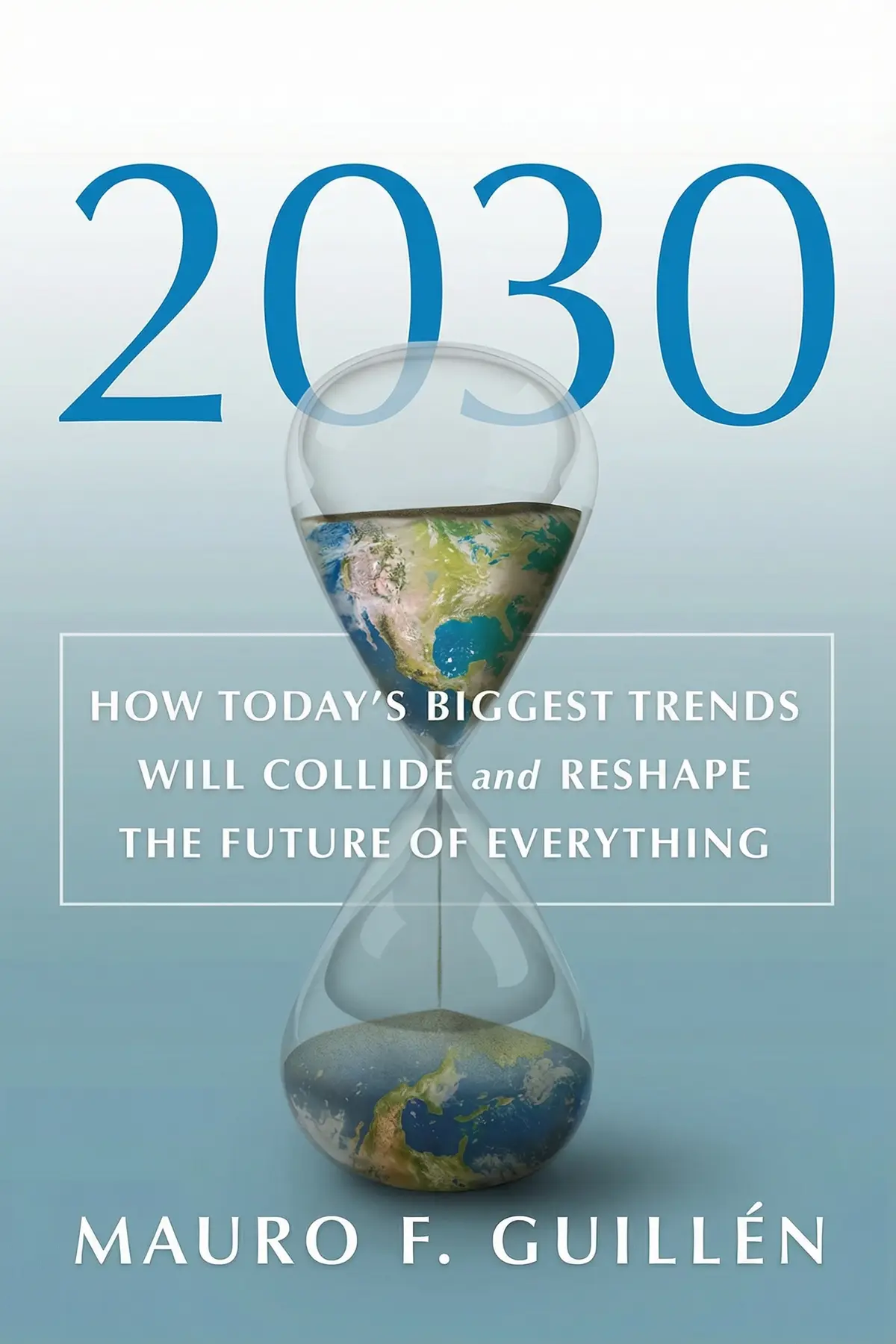
The Filter Bubble: How the New Personalized Web Is Changing What We Read and How We Think
By Eli Pariser
Explore how the internet’s invisible algorithms curate your reality, creating personalized silos that limit your perspective, reinforce existing biases, and fundamentally reshape how you interact with information and society in the digital age.
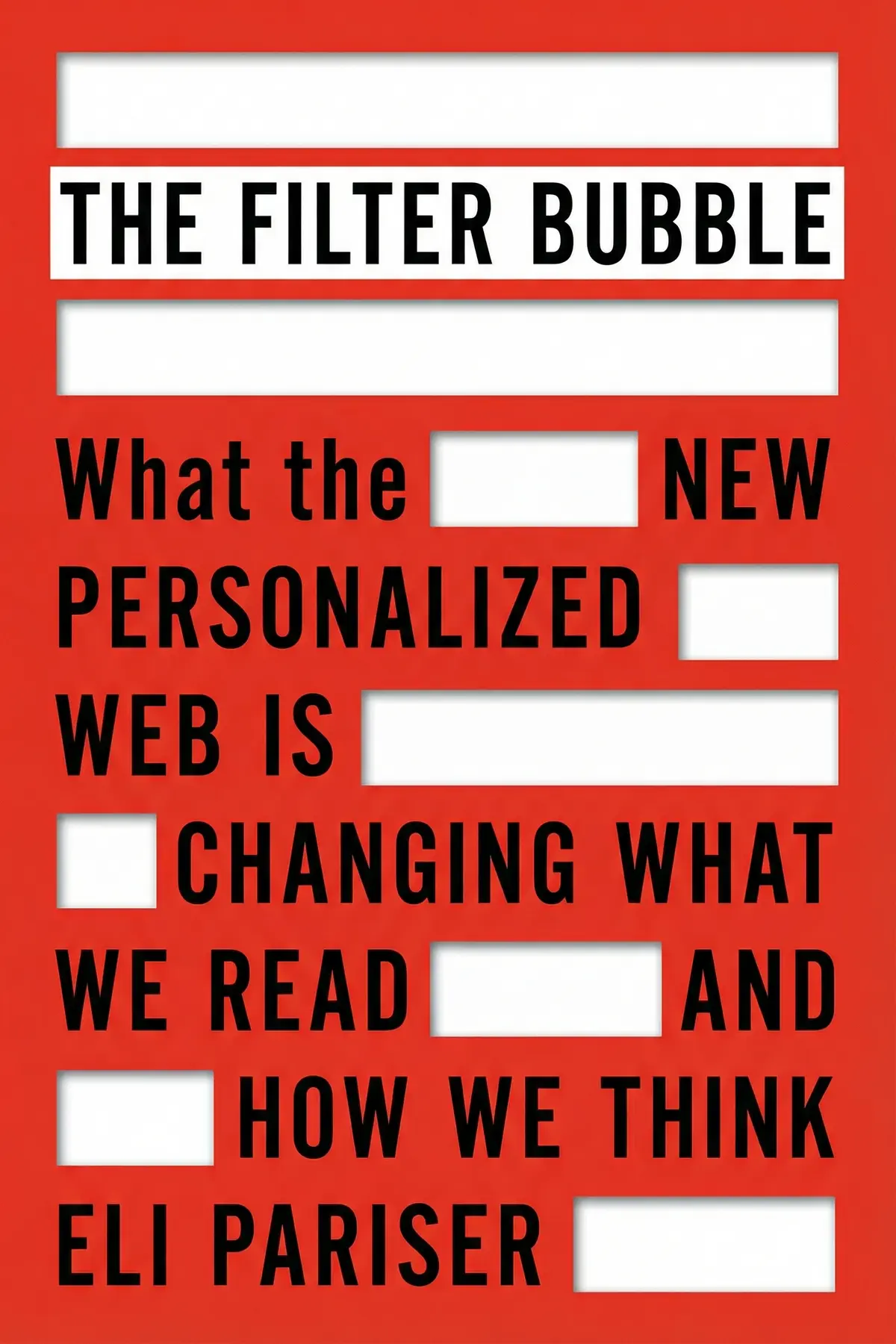
Table of Content
1. Introduction
1 min 54 sec
Imagine walking through a library where the books on the shelves literally change based on who is looking at them. If you’re a sports fan, the history section vanishes and is replaced by athlete biographies. If you’re a political conservative, the progressive manifestos are tucked away in a basement you can’t access. At first, this might seem like a convenience—a way to find exactly what you want without any effort. But soon, you realize you’ve lost something vital: the ability to encounter anything new, challenging, or unexpected. This is the central premise of our journey today as we explore the digital landscape through the lens of Eli Pariser’s influential work.
We live in an era where the internet is no longer a static map of information. Instead, it has become a living, breathing organism that adapts to our every click, scroll, and search. This adaptation is marketed as personalization, a tool to help us navigate the overwhelming flood of data that defines modern life. But as we will see, this convenience comes with a hidden cost. We are increasingly confined to what Pariser calls a ‘filter bubble’—a private, unique universe of information curated specifically for us by invisible algorithms.
In this discussion, we’re going to look at the mechanics behind this personalization. We will trace the path from the sheer explosion of digital data to the sophisticated tracking methods used by tech giants. We’ll examine how this shift has fundamentally altered the landscape of journalism and news consumption, moving away from human editors to lines of code. More importantly, we’ll explore the psychological and social consequences of living in these bubbles, from the reinforcement of our own biases to the erosion of our natural curiosity. By the time we’re finished, you’ll have a clearer understanding of the invisible walls surrounding your digital life and, hopefully, the tools to start breaking through them.
2. The Necessity of the Digital Filter
2 min 07 sec
As the sheer volume of global data reaches incomprehensible levels, we find ourselves relying on algorithms just to make sense of the daily digital deluge.
3. The Data Gold Mine
1 min 53 sec
Tech companies are engaged in a constant race to gather the most intimate details of your life to power their personalization engines.
4. From Human Editors to Algorithmic Gatekeepers
1 min 57 sec
The traditional role of the news editor has been replaced by software, fundamentally changing how we perceive public events and social truths.
5. The Erosion of Curiosity and the Rise of Bias
1 min 49 sec
Filter bubbles exploit our natural tendency to seek confirmation, effectively closing the ‘information gaps’ that spark human learning.
6. The Self-Fulfilling Identity Loop
1 min 40 sec
Algorithms don’t just find you; they help build a ‘theory of you’ that can trap you in a static version of your own personality.
7. The Physical Frontier of Personalization
1 min 57 sec
As tracking technology moves into the physical world through facial recognition, the filter bubble is expanding beyond our screens.
8. Conclusion
1 min 54 sec
As we wrap up our exploration of the digital landscape, the throughline becomes clear: the very tools we created to help us navigate the vastness of the internet have ended up narrowing our horizons. The filter bubble is a masterpiece of engineering designed for convenience and commercial efficiency, but it ignores the messy, diverse, and challenging realities that make for a healthy society and a vibrant intellectual life. We have moved from a world of shared facts to a world of personalized truths, and the psychological walls of these bubbles are only getting thicker.
However, understanding the existence of the bubble is the first step toward popping it. The goal isn’t to abandon technology or the benefits of personalization, but to approach them with a new sense of awareness. We must realize that the ‘relevance’ promised by algorithms is often just a synonym for ‘familiarity.’ To grow, we have to intentionally seek out the unfamiliar. We have to be willing to look past the first page of search results, to engage with news sources that challenge our biases, and to remember that there is a whole universe of information existing outside the boundaries of our private digital backyards.
The internet still holds the potential to be a window to the world, rather than just a mirror of ourselves. By being conscious of the ‘you loop’ and the invisible gatekeepers of our information, we can start to reclaim our curiosity. The next time you see a recommendation that feels perfectly suited to your tastes, take a moment to wonder what was filtered out to make room for it. Step outside the bubble, embrace the information gap, and rediscover the excitement of encountering something truly unexpected. The digital world is much bigger than the one currently being shown to you; all you have to do is look for the edges.
About this book
What is this book about?
Have you ever felt like the internet knows you a little too well? In this deep dive, we explore the phenomenon of the digital echo chamber. While we often think of the web as a vast, open window to the world, it has increasingly become a mirror reflecting our own preferences back at us. This transformation is driven by sophisticated algorithms designed to filter out the noise, but in doing so, they often filter out the truth and diversity of thought we need most. The promise of this exploration is to pull back the curtain on the invisible forces shaping your online experience. You will learn how companies like Google and Facebook use your personal data to construct a customized reality, known as a filter bubble. By understanding the mechanics of personalization and its psychological impact, you will be better equipped to reclaim your digital agency and seek out a more balanced view of the world around us.
Book Information
About the Author
Eli Pariser
Eli Pariser is a prominent political activist and the board president of MoveOn.org, a well-known advocacy group. He also cofounded Upworthy, a website dedicated to viral content. Pariser has established himself as a thought leader on the intersection of technology and society, with his insights appearing in prestigious publications such as the Washington Post and the Wall Street Journal.
Ratings & Reviews
Ratings at a glance
What people think
Listeners find the work enlightening and thorough, noting the impressive research and quality of the writing. They also value the focus on internet personalization and view it as essential reading. That said, opinions on the tempo are varied, as several listeners feel it gets redundant. Furthermore, reactions to the core concept are mixed, with one listener even labeling it a conspiracy theory book.
Top reviews
Chanon
Finally got around to reading this, and wow, the research is incredibly comprehensive and well-structured for a non-fiction tech book. Pariser does a fantastic job explaining the 'Filter Bubble'—that invisible algorithmic editing of the web that limits what we see based on our behavior. I was particularly fascinated by the chapter on the 'Adderall Society,' where he compares our hyper-focused, filtered internet feeds to the effects of a stimulant. Some might find his tone a bit urgent, but I think it’s necessary given how much control we’ve handed over to Facebook and Google without even realizing it. The book is well-written and easy to digest, making complex data science concepts accessible to the average reader. Personally, I think this should be mandatory reading in schools. We need to be aware of the invisible walls being built around our digital lives before we forget there’s a world outside of them.
Show moreFelix
The concept of the 'You Loop' is something everyone needs to understand before they click another 'like' button. I was absolutely terrified reading about how much information companies like Google have 'captured' regarding our private lives and habits. Pariser writes with a sense of urgency that is totally infectious; I finished the whole thing in just two sittings. He brilliantly illustrates how our online identity is being shaped by algorithms that prioritize engagement over truth or civic health. In my experience, most people have no idea that their Facebook feed is a customized mirror of their own beliefs. This book pulls back the curtain on that process in a way that is both intellectually stimulating and deeply personal. It’s a must-read for the tech-savvy and the casual browser alike. Truly one of the most important books on the social impact of the internet.
Show moreTak
This book is essentially a deep dive into the themes Pariser first introduced in his famous TED talk, and it remains a vital read for anyone trying to navigate the modern web. I found the research into how companies like Acxiom and Google collect our data to be incredibly enlightening, even if some of the conclusions felt a bit alarmist. The author argues that we’re losing our common ground because algorithms are constantly tailoring our experiences to fit our existing biases. While the prose is a bit repetitive toward the middle, the core concept of the 'You Loop' is brilliant. It describes how our past clicks dictate our future information, effectively trapping us in a cycle of the familiar. Truth is, I hadn't realized how much the shift from human editors to automated algorithms would change the fabric of our democracy. It’s a bit scary to think about how much has changed in just a decade since this was published.
Show morePridi
As a frequent internet user, I found the breakdown of how Google and Facebook curate our worlds to be genuinely unsettling. Pariser explains that we are no longer seeing the same internet as our neighbors, which has massive implications for how we discuss politics and social issues. The way he describes the 'user as content' is spot on; our every click is a signal used to further narrow our horizons. Look, the book isn't perfect—it gets a bit bogged down in the technical weeds sometimes—but the message is incredibly important. I appreciated the specific examples of how search results for 'Climate Change' can vary wildly between users. It really makes you question what you're missing out on. Even if you don't agree with his political leanings, the questions he poses about transparency and algorithmic accountability are ones we can't afford to ignore any longer.
Show morePenelope
Ever wonder why your search results look nothing like your neighbor's? This book explains the invisible machinery behind that phenomenon with clear, engaging prose. I’ve been following this topic since the Mosaic browser days, and Pariser captures the shift from the 'free anarchy' of the early web to the corporate-controlled silos of today perfectly. He argues that by giving us exactly what we want, the internet is depriving us of what we need: challenging, diverse viewpoints. The section on how advertisers bypass our cognitive defenses was particularly eye-opening for me. While some of the tech references feel slightly dated now, the underlying principles of social engineering are more relevant than ever. My only real gripe is that he doesn't offer many concrete solutions at the end, leaving the reader feeling a bit helpless. Still, it’s a comprehensive look at a problem that has only grown since 2011.
Show moreSomkid
Truth is, I appreciated how Pariser stays relatively non-partisan despite his background in activism. He treats the subject of information filtering with a level head, focusing more on the technical and cognitive aspects than the political ones. The chapters on how programming and algorithms work were particularly useful for a non-tech person like me. He makes a strong case for why we need 'serendipity' and 'challenge' in our information diets to remain functional citizens in a democracy. I did find the book a bit repetitive at times, as if he was trying to hit a specific page count, but the quality of the insights kept me going. It’s a fascinating look at the 'unintended consequences' of making the web more user-friendly. If you value your privacy and your ability to think for yourself, give this a read.
Show moreAroon
Look, the writing style can be a bit rhetorically inflamed at times, but the core message is vital for our current era. Pariser warns us that we are becoming passive consumers of a reality that is being curated just for us, often to serve the interests of advertisers. I found the examples of how personalization affects everything from job searches to political outreach to be very well-researched. Gotta say, it changed the way I think about my daily browsing habits almost immediately. I now find myself actively seeking out 'contrarian' news just to try and pop my own bubble! While it lacks a clear 'how-to' guide for fixing the problem, the awareness it provides is a great first step. A very well-written and comprehensive look at a complex issue that affects every single one of us.
Show moreTar
After hearing so much about the 'Filter Bubble' concept, I expected a more cohesive and tightly argued book. Instead, what I got was a bit of a mixed bag that felt repetitive by the halfway mark. Pariser is clearly a talented writer, and he makes some excellent points about how personalization can lead to a lack of 'serendipity' in our information diets. However, his suggestion that we are all being manipulated into separate universes feels a bit like an oversimplification of how people actually consume media. Not gonna lie, the chapter titles are often more exciting than the content underneath them—'The Robot with Gaydar' was a particularly disappointing section that didn't deliver on its heading. It’s a decent primer on the dangers of big tech, but it lacks the depth I was hoping for after seeing his talk. It’s a solid B+ effort that could have been a great long-form article.
Show moreRoydao
Picked this up from the library on a whim and came away with mixed feelings. On one hand, the research is top-notch and the concept of information filtering is something we all need to be more aware of in our daily lives. On the other hand, the author's tone can be quite biased, and he often assumes that any form of filtering is inherently 'evil' or manipulative. To be fair, I agree that we should have more control over our data, but Pariser seems to want to return to a world where a few elite editors decide what news is important for everyone. Isn't that just another kind of filter bubble? The pacing is also a bit off, as the same points are hammered home repeatedly across different chapters. It’s an enlightening read, but take some of the more dire predictions with a grain of salt.
Show moreNikolai
Is this a legitimate look at technology or just a collection of paranoid conspiracy theories? Frankly, I found the book to be a series of essay fragments that were stretched out way too long to fill a book-length manuscript. Pariser’s central complaint is that personalization is 'hiding' things from us, but he seems to long for a 'golden age' of objective journalism that never actually existed. Libraries and newspapers have always been curated; he just doesn't like that a computer is doing it now. His argument in the 'Adderall' section felt like a reach, using guilt-by-association rather than actual logic. Also, the use of endnotes instead of footnotes is a pet peeve of mine; it makes it much harder to check his sources while reading. To be fair, he raises some interesting points about data privacy, but the rhetorically inflamed style made it hard to take the more serious arguments seriously.
Show moreReaders also enjoyed


AUDIO SUMMARY AVAILABLE
Listen to The Filter Bubble in 15 minutes
Get the key ideas from The Filter Bubble by Eli Pariser, plus 5,000+ more titles in English and Thai.
- 5,000+ titles
- Listen as much as you want
- 7-day free trial
- Cancel anytime







