
19 min 24 sec
The Future of the Professions: How Technology Will Transform the Work of Human Experts
A deep dive into how technology is dismantling the traditional monopolies of professional experts, reshaping the landscape of medicine, law, and education through automation and shared digital knowledge.
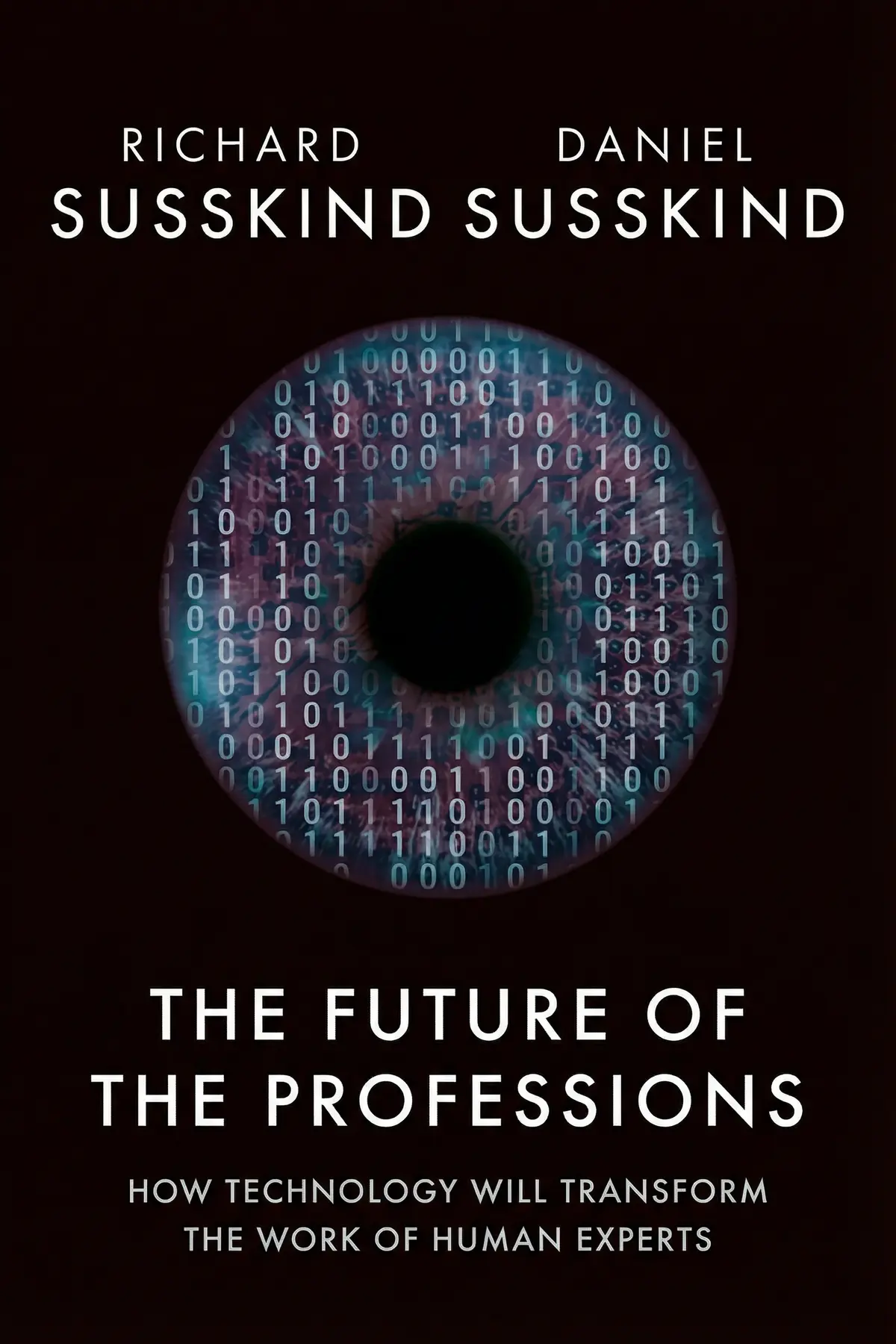
Table of Content
1. Introduction
1 min 43 sec
Think about the last time you faced a truly daunting problem—perhaps a legal dispute, a confusing medical symptom, or a complex tax filing. Your first instinct was likely to call a professional. For generations, we have viewed doctors, lawyers, and accountants as the indispensable guardians of specialized knowledge. They were the ones who went to school for years so that we wouldn’t have to, and in return for their expertise, we granted them exclusive rights to their fields and often paid significant fees for their time.
But a shift is happening right under our feet. Today, you might find yourself diagnosing a cough via a search engine, managing your business accounts through an automated app, or learning a new language through a free online platform. The line between the specialized expert and the informed amateur is beginning to blur. This raises a fundamental question about the structure of our modern economy: Do we still need human professionals to be the gatekeepers of knowledge, or is technology making that model obsolete?
In this exploration of the changing landscape of work, we are going to look at how technology is not just assisting professionals but fundamentally transforming what it means to be an expert. We will examine why the traditional ‘bargain’ between society and its professionals is being renegotiated. Through the lens of big data, artificial intelligence, and global connectivity, we will see a future where professional services are more accessible, affordable, and efficient than ever before. This journey will take us from the high-stakes world of robotic surgery to the data-crunching power of supercomputers that can win game shows. Ultimately, we’ll discover that while the roles of human experts are changing, the opportunities for sharing and utilizing knowledge are expanding in ways we’ve only just begun to imagine.
2. The Social Contract of Expertise
1 min 58 sec
Discover the hidden agreement that gives professionals their power and why society has historically relied on these exclusive ‘clubs’ for guidance.
3. The Disruption of the Information Monopoly
2 min 04 sec
The internet is breaking down the walls that once kept specialized knowledge behind expensive professional barriers, leading to a crisis of trust and access.
4. Automation and the New Efficiency
2 min 07 sec
Learn how routine tasks are being handed over to machines, freeing humans to tackle the complexities that truly require a personal touch.
5. Case Study: The Digital Transformation of Taxes
2 min 00 sec
See how the world of accounting and tax filing is leading the way in showing how algorithms can outperform traditional human advisors.
6. The Era of Big Data and Supercomputing
2 min 05 sec
Explore the staggering power of machines like IBM’s Watson and how they are redefining what it means to ‘process’ knowledge.
7. Knowledge as a Non-Rival Good
1 min 57 sec
Understand why sharing expertise online doesn’t diminish its value, but actually makes it more powerful for everyone involved.
8. The Architecture of Standardized Work
1 min 51 sec
Standardization is moving from the factory floor to the office, reducing costs and errors while raising new questions about liability.
9. New Roles in an Automated Landscape
1 min 58 sec
Machines might be taking over traditional tasks, but they are also opening doors to entirely new career paths that we are only beginning to name.
10. Conclusion
1 min 41 sec
As we look toward the horizon, it’s clear that the ‘Future of the Professions’ is not a far-off concept—it’s already here. The traditional model of the expert as a solitary, protected gatekeeper is being replaced by a more open, collaborative, and system-driven approach. This doesn’t mean that human expertise is becoming less valuable; in fact, the opposite is true. Our collective knowledge is more precious than ever, but the way we access and use that knowledge is undergoing a total revolution.
We are moving from a world of information scarcity to a world of information abundance. This transition will require us to rethink how we train our professionals, how we pay for their services, and how we ensure that these new technological systems are safe and fair. The throughline of this transformation is accessibility. By automating the routine and democratizing the complex, we are making it possible for billions of people to access the care, education, and legal protection they deserve.
Ultimately, the lesson is one of adaptation. The professionals who thrive in this new era will be those who embrace technology as a way to extend their reach and enhance their impact. They will be the ones who focus on the problems that machines can’t yet solve: high-level strategy, complex ethics, and deep human empathy. Technology is not the end of the professional; it is the beginning of a new chapter where expertise is no longer a luxury for the few, but a powerful tool for the many. By working alongside our machines, we can build a future where specialized knowledge truly serves the entire world.
About this book
What is this book about?
The Future of the Professions explores the fundamental shift in how expertise is delivered and consumed in the modern age. For centuries, professionals like doctors, lawyers, and accountants have acted as gatekeepers to specialized information, charging high fees for their exclusive access to knowledge. However, as the digital revolution gains momentum, this traditional model is under heavy fire from automation and artificial intelligence. This book promises to explain why the old 'grand bargain' between society and experts is failing. It illustrates how big data, diagnostic algorithms, and online platforms are democratizing complex services, making them more affordable and efficient. Readers will discover a future where technology doesn't just assist human professionals but replaces many of their traditional tasks, creating a world where expertise is no longer a scarce resource but a common good available to everyone.
Book Information
About the Author
Richard Susskind
Richard Susskind is an international speaker and expert advisor on information technology and the law. He serves as the president of the Society for Computers and Law and holds a chair on the Advisory Board of the Oxford Internet Institute. He is also the author of The End of Lawyers? Rethinking the Nature of Legal Services. Daniel Susskind is Richard’s son and a lecturer in Economics at Oxford University. He has previously worked for the British Government within the Prime Minister’s Strategy Unit and served as a Senior Policy Advisor at the Cabinet Office.
Growth: A History and a Reckoning
Daniel Susskind
Ratings & Reviews
Ratings at a glance
What people think
Listeners describe this work as deeply researched and evocative, noting its lucid prose and perceptive reasoning. They view it as essential reading for those in professional fields, especially in law, and value its engaging material and overall worth. They commend its impact, with one listener highlighting how it delivers better outcomes for clients and society.
Top reviews
Zanya
Ever wonder what happens to the 'grand bargain' when software can diagnose a patient or draft a contract better than a human can? This book tackles that head-on with a level of intellectual rigour you don't often see in 'future of work' titles. I was gripped by the idea that our current professions are just an 'artefact' of a print-based society. The Susskinds argue convincingly that we are moving toward a world where practical expertise is a shared resource, not a guarded secret. It’s a visionary work that challenges the ethics of keeping knowledge behind a paywall. Yes, it’s a bit long-winded, and the father-son duo clearly loves a good framework, but the value for money here is immense. It’s a must-read for anyone who thinks their specialized degree makes them immune to the coming technological wave. It is truly effective at delivering a new perspective on how society functions.
Show moreFrida
This is a fundamental shift in how we perceive professional expertise, moving away from the 'bespoke' model toward something more accessible. I’ve read a lot of tech-optimist books, but this one is different because it’s grounded in the history and sociology of the professions. The Susskinds don't just say 'AI is coming'; they explain why the current gatekeeper model is failing society. It’s a dense read, but the clarity of their argument regarding the democratization of knowledge is worth every minute spent. They successfully dismantle the idea that professional work is too 'special' to be automated. For anyone interested in the intersection of ethics, technology, and economics, this is essential. It’s arguably one of the most important books on the future of the middle class written this decade. Well-researched and incredibly stimulating.
Show moreJai
As someone who has worked in the legal field for over a decade, this was a sobering but necessary read. The Susskinds aren't just guessing; they provide a deeply researched roadmap for how automation is dismantling the traditional 'bespoke' service model. I found the section on the 'grand bargain' between professions and society particularly enlightening, even if it feels like that contract is being torn up as we speak. While the book is certainly dense—bordering on academic at times—the insights into how we deliver 'practical expertise' are gold. My only real gripe is that it can be incredibly repetitive in the middle chapters. You could probably skim some of the 'AI fallacy' sections and still get the gist of the argument. Still, it’s a thought-provoking piece that forced me to reconsider my own career longevity in a world of increasingly capable systems.
Show moreJin
The analogy of the 'hole in the wall' versus the drill is what finally made the authors' point click for me. We don’t want doctors or lawyers; we want health and justice. If technology can provide those outcomes more efficiently, the traditional 'bespoke' professional becomes a luxury we might not need. The book is incredibly thorough, covering everything from architecture to divinity, and it really makes you think about the morality of our current systems. I found the discussion on 'para-professionals' and 'knowledge engineering' especially relevant to where the market is heading. It loses a star because the writing style is quite dense and a bit repetitive, but the fundamental message is too important to ignore. It’s a clear-eyed look at a future that is already arriving, and it offers much better outcomes for clients if we embrace the change.
Show moreSomkid
To be fair, this reads much more like a textbook for a high-level university course than a weekend page-turner. It is deeply researched and provides a very structured way to look at how different industries will evolve. I liked the focus on 'latent demand'—the idea that many people avoid professionals because of the cost, and technology could solve that. However, the authors are definitely 'hell bent' on throwing frameworks at you at every opportunity. It can get a bit tedious when they explain the same 'AI fallacy' for the fifth time. But if you can get past the dry prose, the strategic value of the content is undeniable. It’s a solid resource for anyone needing to map out their industry's future. It provides clear writing and insightful arguments for those willing to do the work.
Show moreNoppadol
Look, the transition from 'print-based' professional silos to a digital commons isn't going to be pretty for everyone. This book is a blunt instrument used to hammer home that reality. It’s not a fun read, and it’s definitely not for the casual reader looking for 'gee whiz' technology stories. It is a serious, scholarly investigation into the obsolescence of the current professional model. I appreciated the depth of the research and the sheer scale of the professions they analyzed, from journalism to the clergy. While it is certainly repetitive and could have benefited from a much more aggressive editor, the core insights are vital. In my experience, these kinds of shifts happen slowly then all at once, and the Susskinds capture that beautifully. It’s a stimulating, if somewhat exhausting, look at the end of an era.
Show moreTang
While the Susskinds provide a mountain of research to back their claims, the actual reading experience is a bit of a slog. It’s clear that they know their stuff, particularly when it comes to the legal and medical fields, but the tone is incredibly dry. I appreciated the distinction they made between 'tasks' and 'jobs,' which is a helpful way to think about automation. However, the book repeats itself so often that I started wondering if I’d accidentally flipped back fifty pages. It feels like a collection of separate papers stitched together rather than a cohesive narrative. It’s insightful, but you have to be willing to dig through a lot of repetition to find the gems. Truth is, it’s a good reference book for the shelf, but not exactly a fun Saturday afternoon read. If you want a quick summary, this isn't it.
Show morePan
Picked this up because I was curious about how AI might change my kid's future careers, but I found it a mixed bag. On one hand, the logic is sound—the way we distribute expertise is archaic and expensive. On the other hand, the authors’ delivery is so clinical it’s hard to stay excited. There’s a lot of focus on 'production line' breakdowns of professional tasks, which makes sense but feels a bit cold. I was hoping for more examples of what the 'new' jobs might be, rather than just a post-mortem on the old ones. It’s a well-written textbook, but it lacks the human element I was looking for. To be fair, if you’re a partner at a big law firm, this will probably scare the life out of you, which might be the point of the book’s provocative stance.
Show moreBella
The authors definitely have a lot to say, but did it really need to be 350 pages? The core argument—that technology will eventually replace high-priced experts—is fascinating, yet it’s buried under mountains of dry definitions and academic fluff. I felt like I was reading a textbook meant for a graduate seminar rather than a book for the general public. It’s a 35-page idea stretched to its absolute breaking point with a lot of pompous word play that doesn't actually add much value. They keep coming back to the same points about automation and the loss of the professional silo without offering many concrete answers for what people should actually do next. Frankly, it was a struggle to stay awake through the sections on tax and audit. It’s well-vetted, sure, but it lacks the spark needed to keep a casual reader engaged. I was extremely disappointed by the repetitive nature of the writing.
Show morePrinya
I wanted to be inspired, but I found myself drowning in definitions and repetitive frameworks that stated the obvious. If you've been reading the news for the last five years, you already know that AI and big data are changing the workforce. The authors spend way too much time 'categorizing' things and not enough time exploring the actual technology behind these shifts. It felt very derivative, like a long-winded curation of other people's better ideas. Plus, they seem to avoid the really hard questions about what new professions will actually look like, focusing instead on how the old ones will die. Not gonna lie, it’s a buzzkill of a book that could have been a sharp, 100-page manifesto. Instead, it’s a heavy volume that feels more like homework than a forward-looking insight.
Show moreReaders also enjoyed
AUDIO SUMMARY AVAILABLE
Listen to The Future of the Professions in 15 minutes
Get the key ideas from The Future of the Professions by Richard Susskind, plus 5,000+ more titles in English and Thai.
- 5,000+ titles
- Listen as much as you want
- 7-day free trial
- Cancel anytime







