
20 min 22 sec
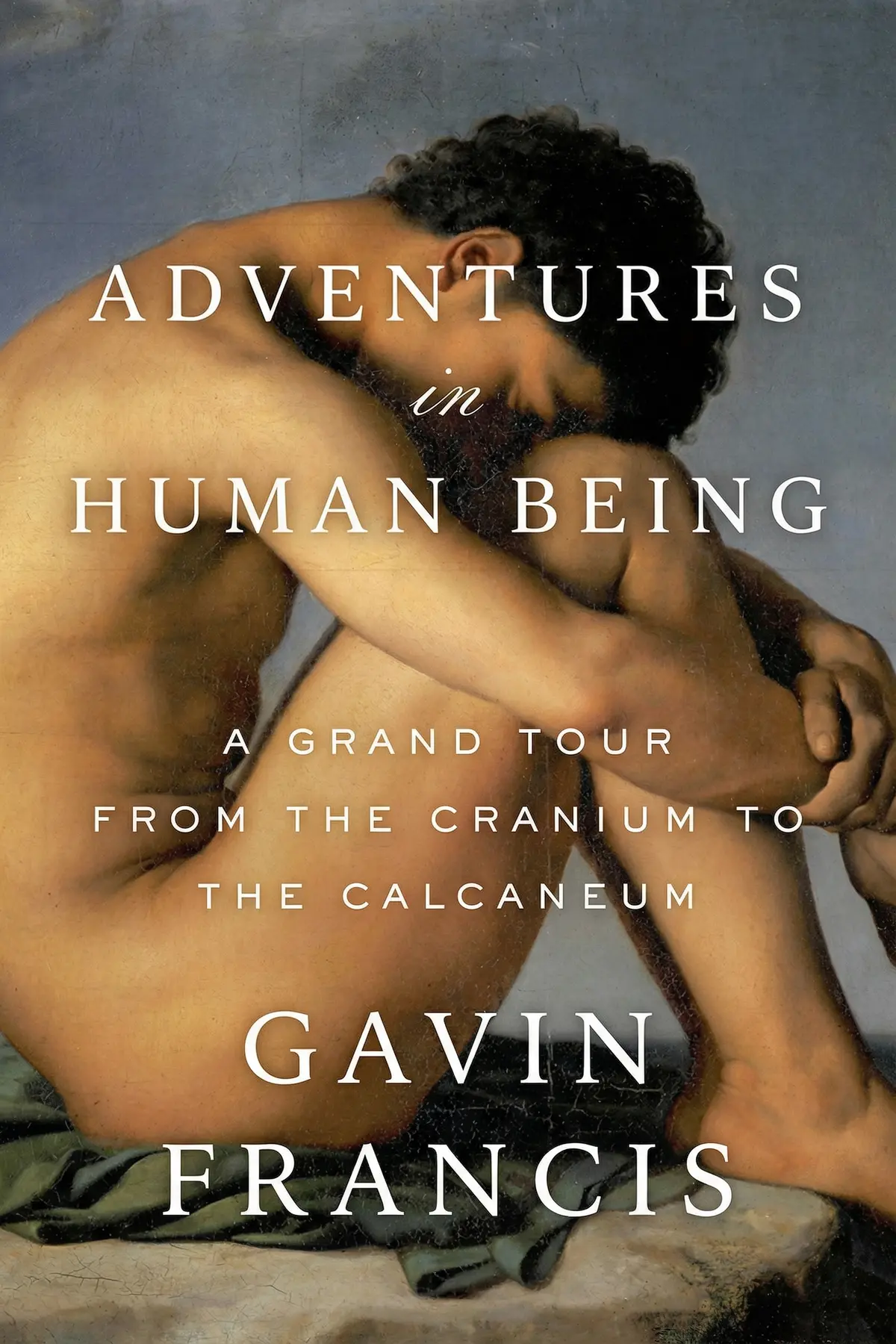
The Genius of Birds
Discover the hidden depths of avian intelligence. Jennifer Ackerman explores how birds solve complex puzzles, use sophisticated tools, and demonstrate social empathy, challenging everything we thought we knew about the term birdbrained.
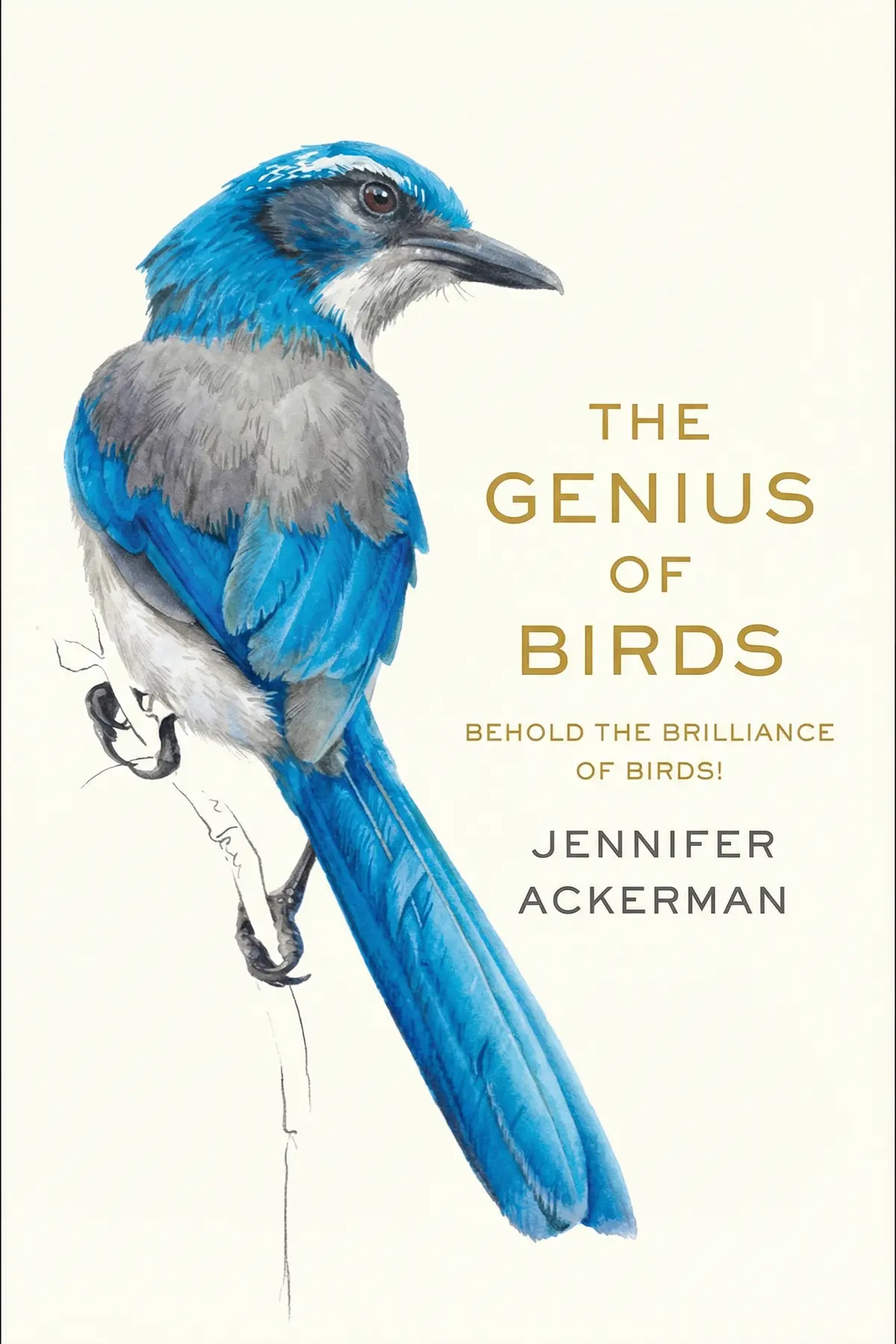
Table of Content
1. Introduction
1 min 55 sec
When we think about the smartest creatures on the planet, our minds usually drift toward the usual suspects. We think of the complex social bonds and playful antics of dolphins, the incredible problem-solving skills of chimpanzees, or the legendary memories of elephants. These animals have long been the poster children for non-human intelligence, celebrated for their large brains and human-like behaviors. However, there is a massive group of animals that we often overlook, or worse, dismiss with a derogatory label. We call people birdbrained when they do something foolish, implying that having a small, avian mind is synonymous with a lack of wit.
But as Jennifer Ackerman reveals, this couldn’t be further from the truth. The more we look into the world of birds, the more we see a brilliance that rivals the most advanced mammals. It turns out that birds are not just creatures of simple instinct; they are savvy, social, and even artistic. They possess a genius that has been honed over millions of years, allowing them to navigate the globe with pinpoint accuracy, build elaborate architectural structures, and solve logical puzzles that would stump many primates.
In this exploration, we are going to dive deep into the avian mind. We will see how their brains are structured for maximum efficiency and how their cognitive abilities manifest in surprising ways. We’ll look at crows that manufacture their own tools, mockingbirds that act as the world’s most versatile musicians, and sparrows that have learned to thrive in the middle of our concrete jungles. By the end of this journey, you’ll never look at a common backyard bird the same way again. We are setting out to understand the true nature of throughline in the bird kingdom—a line that connects survival, social complexity, and high-level cognition. It’s time to move past the old stereotypes and appreciate the genuine brilliance of our feathered neighbors.
2. Redefining Avian Cognition
2 min 39 sec
What if the size of a brain doesn’t tell the whole story? Explore how birds pack massive intelligence into tiny spaces through structural efficiency.
3. The Master Toolmakers
2 min 18 sec
Crows don’t just use tools—they engineer them with precision that rivals our own. Discover how these master builders are rewriting what we thought we knew about animal intelligence.
4. The Complexity of Avian Societies
2 min 27 sec
Birds navigate social hierarchies as complex as human politics—and some species show signs of empathy, self-awareness, and emotional bonds that challenge everything we thought we knew about animal intelligence.
5. Vocal Learning and the Music of the Mind
2 min 12 sec
Songbirds don’t just chirp—they learn like human children, and their musical talent reveals something profound about intelligence itself. Discover why the most elaborate songs are nature’s ultimate proof of brainpower.
6. Avian Artistry and Aesthetic Choice
2 min 15 sec
Birds aren’t just building nests—they’re creating masterpieces. Discover how bowerbirds use color, perspective, and optical illusions to craft galleries that rival human artistry, revealing that aesthetic genius runs deeper than we ever imagined.
7. The Miracle of Avian Navigation
2 min 20 sec
Birds navigate thousands of miles with uncanny precision using a biological GPS you can’t even imagine. Discover the dual-system genius—mental maps and magnetic sensing—that makes human navigation look primitive.
8. Adaptability in a Changing World
2 min 34 sec
Specialist or generalist? Discover why a sparrow’s willingness to eat cigarette butts might matter more for survival than a mountain chickadee’s specialized genius.
9. Conclusion
1 min 42 sec
The journey through the avian world reveals a profound truth: intelligence is not a single peak that only humans have summited. Instead, it is a vast landscape of different abilities, and birds have mastered many of its most difficult terrains. From the structural brilliance of a brain that can rewire itself to remember thousands of locations, to the creative spark that leads a bowerbird to use optical illusions, our feathered neighbors are far more than just creatures of habit. They are thinkers, artists, and navigators who have found unique ways to solve the universal problems of survival and reproduction.
We’ve seen that the term birdbrained is not an insult, but a testament to a highly refined form of biological engineering. Birds have shown us that you don’t need a heavy, massive brain to possess foresight, empathy, or linguistic complexity. Their lives are rich with social drama and technical innovation. As we move forward, the most important thing we can take from this understanding is a sense of humility. We share our planet with millions of tiny geniuses, each perceiving the world through a lens we are only just beginning to understand.
The next time you see a crow investigating a piece of trash or a sparrow nesting in a city eaves, take a moment to consider the processing power behind those eyes. The genius of birds is all around us, hidden in plain sight. By appreciating their cognitive complexity, we gain a deeper respect for the diversity of life and a clearer understanding of the many different ways a mind can work. Intelligence is a multifaceted gem, and birds are among its most brilliant facets.
About this book
What is this book about?
The Genius of Birds offers a fascinating look into the minds of our feathered neighbors, revealing that avian intelligence is far more sophisticated than previously imagined. The book moves beyond simple instinct to showcase how various species exhibit logic, foresight, and even artistic flair. From the problem-solving abilities of crows to the complex vocal learning of mockingbirds, it demonstrates that birds possess cognitive skills that often rival those of primates. Readers will learn about the unique biological structures that allow birds to perform incredible feats of navigation and memory. The narrative also explores the social lives of birds, highlighting behaviors like mourning and self-recognition. Ultimately, this exploration promises to reshape your perspective on the natural world, proving that intelligence is not a uniquely human trait and that the avian mind is a marvel of evolutionary engineering.
Book Information
About the Author
Jennifer Ackerman
Jennifer Ackerman is an accomplished science writer with a career spanning more than two decades. Her previous publications include Sex Sleep Eat Drink: A Day in the Life of Your Body and Ah-Choo: The Uncommon Life of Your Common Cold. Her work has earned her several prestigious honors, such as a Literature Fellowship in Nonfiction from the National Endowment for the Arts.
Ratings & Reviews
Ratings at a glance
What people think
Listeners find this book to be a superb account that details exhaustive studies and compelling avian habits. The writing is skillfully composed, with one listener noting its approachability for a general audience, and listeners find it stimulating and educational, providing deeper insight into avian brain function. They value how the text examines various levels of bird intelligence, ensuring the material is both captivating and enjoyable.
Top reviews
Chatchai
Wow. This book completely changed the way I look at the pigeons in the park and the ravens in my neighborhood. Jennifer Ackerman presents a compelling argument that we have vastly underestimated our feathered friends for centuries. The section on the New Caledonian crow was particularly mind-blowing, especially regarding their ability to manufacture tools like hooks from sticks. I appreciated how she translated complex neurobiology into something a layperson could actually grasp without feeling patronized. It’s a thought-provoking deep dive into how different brain architectures can produce similar levels of cognitive complexity. Honestly, the next time I see a scrub jay, I’ll be wondering if it's currently planning a deceptive 'shell game' with its nut cache. This is a must-read for anyone who loves nature or needs a reminder that humans aren't the only geniuses on this planet.
Show moreBua
Jennifer Ackerman has a gift for taking dense, peer-reviewed ornithological studies and weaving them into a narrative that feels both urgent and enchanting. I was captivated by the description of chickadees and their sophisticated alarm calls that change based on the specific threat level of a predator. The book does an excellent job of explaining how bird brains, though small, are densely packed with neurons, proving that size isn't everything when it comes to processing power. Frankly, I was moved by the anecdotes regarding avian empathy and how certain species mourn their dead. Every chapter felt like a new revelation about the secret lives happening right in our backyards. If you've ever dismissed a bird as a simple creature of instinct, this book will prove you wrong in the best way possible.
Show moreNatchaya
Ever wonder why we use the term 'bird-brain' as an insult when these creatures are clearly capable of complex problem-solving? This book is a delightful debunking of that myth, showcasing the incredible cognitive abilities of birds across the globe. From the playful, destructive keas of New Zealand to the calculating ravens of the north, Ackerman paints a portrait of a diverse and highly intelligent class of animals. The writing is accessible and engaging, perfect for reading on a weekend afternoon. I loved the balance between hard science and charming anecdotes, which kept the pacing brisk and the information digestible. It’s rare to find a science book that feels this personal and appreciative of its subject matter. This belongs on the shelf of every nature lover.
Show moreKanchana
Finally got around to reading this and I'm genuinely impressed by the level of research Ackerman compiled here. The book is a masterclass in science communication, making the intricacies of neural pathways and evolutionary biology feel like a page-turning thriller. I was particularly struck by the description of how birds can distinguish between different styles of human art, like Picasso versus Monet. It really forces you to reconsider what 'intelligence' even means if it can manifest in such radically different forms. The book is beautifully written, informative, and filled with a sense of genuine wonder that is often missing from academic writing. Even if you aren't a 'birder,' the sheer ingenuity of these animals will leave you fascinated. Truly an enlightening read from start to finish.
Show moreNarongrit
After hearing several fellow birders rave about this, I finally sat down with Ackerman’s exploration of avian cognition. To be fair, most of the content is a synthesis of existing research rather than brand-new discoveries, but the way she weaves it into a narrative is incredibly skillful. I loved the chapters on the artistic bowerbirds and their use of the color blue, which really challenged my views on animal aesthetics. However, I did find some sections a bit repetitive, as she circles back to the same points about food caching multiple times. The writing is accessible and fluid, making it a quick read despite the dense scientific subject matter. It’s certainly a solid addition to the library of any natural history enthusiast, even if you’ve already read Bernd Heinrich’s work.
Show moreHassan
Picked this up because a friend mentioned the section on scrub jays playing 'shell games' with their food caches to outsmart thieves. It’s a fascinating look at the 'why' behind bird behavior, moving beyond simple observation to explore the evolutionary pressures that drive intelligence. The prose is elegant and the tone is mostly observational, though Ackerman’s passion for the subject shines through every page. I particularly enjoyed the discussion on how birds learn to sing and the parallels she draws with human language development. My only real gripe is that the book sometimes veers into anthropomorphism, attributing human emotions to birds where simpler biological explanations might suffice. Still, it’s a wonderful read that will make you look at the 'bird-brained' pigeons in a totally new light.
Show moreChai
As someone who spends a lot of time in nature, I found the chapters on navigation and the 'sixth sense' of birds absolutely gripping. The mystery of how a bird can find its way across thousands of miles remains one of biology's greatest puzzles, and Ackerman handles it with grace. The book is well-structured, moving from physical brain architecture to social intelligence and technical problem-solving. Truth is, some of the 8-step puzzles these birds solve would probably stump a few humans I know! While I agree with other reviewers that some points are belabored, the overall impact of the book is profound. It’s a humbling reminder that we are just one of many species with a unique brand of genius. I definitely recommend it to anyone interested in evolution or animal behavior.
Show moreTom
Look, the stories about keas stealing windshield wipers and sliding down snowy roofs are undeniably entertaining, but the book felt padded in places. At times, the author writes like a student trying to hit a word count by repeating the same anecdotes about memory and tool use across different chapters. I was also disappointed by the lack of photographs; describing the elaborate, decorated nests of bowerbirds is one thing, but actually seeing them would have added so much value. Personally, I found the middle sections on vocal learning to be a bit of a slog compared to the early, high-energy chapters. It’s a decent overview of bird intelligence, yet it lacks the rigorous focus I was expecting from a serious science book. It's okay, just not the life-changing experience others described.
Show morePacharapol
To be fair, I went into this hoping for more information on the songbirds I see at my feeder, like chickadees and nuthatches. Instead, the book focuses heavily on the 'geniuses' like the New Caledonian crows and ravens, which are interesting but not what I see daily. The author spends quite a bit of time on the same three or four studies, and it starts to feel a bit like she's padding the page count by the halfway mark. I did appreciate the bibliography and the detailed index, as it makes for a good reference tool for further reading. However, the tone was a bit too 'gee-whiz' for my taste, and I would have preferred a more analytical approach to the data. It’s a fine introductory text, but seasoned birders might find it a bit elementary.
Show moreMeen
Not what I expected from a highly-rated science book, especially given the glowing blurbs on the back cover. While the topic is fascinating, I caught several factual errors that made me question the rest of the research, such as the incorrect claim about Monarch butterflies and Batesian mimicry. Furthermore, if you are listening to the audiobook version, be warned that the narrator's frequent mispronunciations of basic anatomical terms like 'hippocampus' are incredibly distracting. The text also suffers from a heavy focus on 'smart' birds like crows and parrots while largely ignoring the common songbirds that most of us actually see at our feeders. It felt more like a collection of trivia than a cohesive scientific study. In my experience, there are much better books on animal intelligence that offer more original insights without the repetitive filler.
Show moreReaders also enjoyed

Alien Earths: The New Science of Planet Hunting in the Cosmos
Lisa Kaltenegger






A Life Decoded: My Genome: My Life
J. Craig Venter

A Planet of Viruses
Carl Zimmer
AUDIO SUMMARY AVAILABLE
Listen to The Genius of Birds in 15 minutes
Get the key ideas from The Genius of Birds by Jennifer Ackerman, plus 5,000+ more titles in English and Thai.
- 5,000+ titles
- Listen as much as you want
- 7-day free trial
- Cancel anytime







