
19 min 05 sec
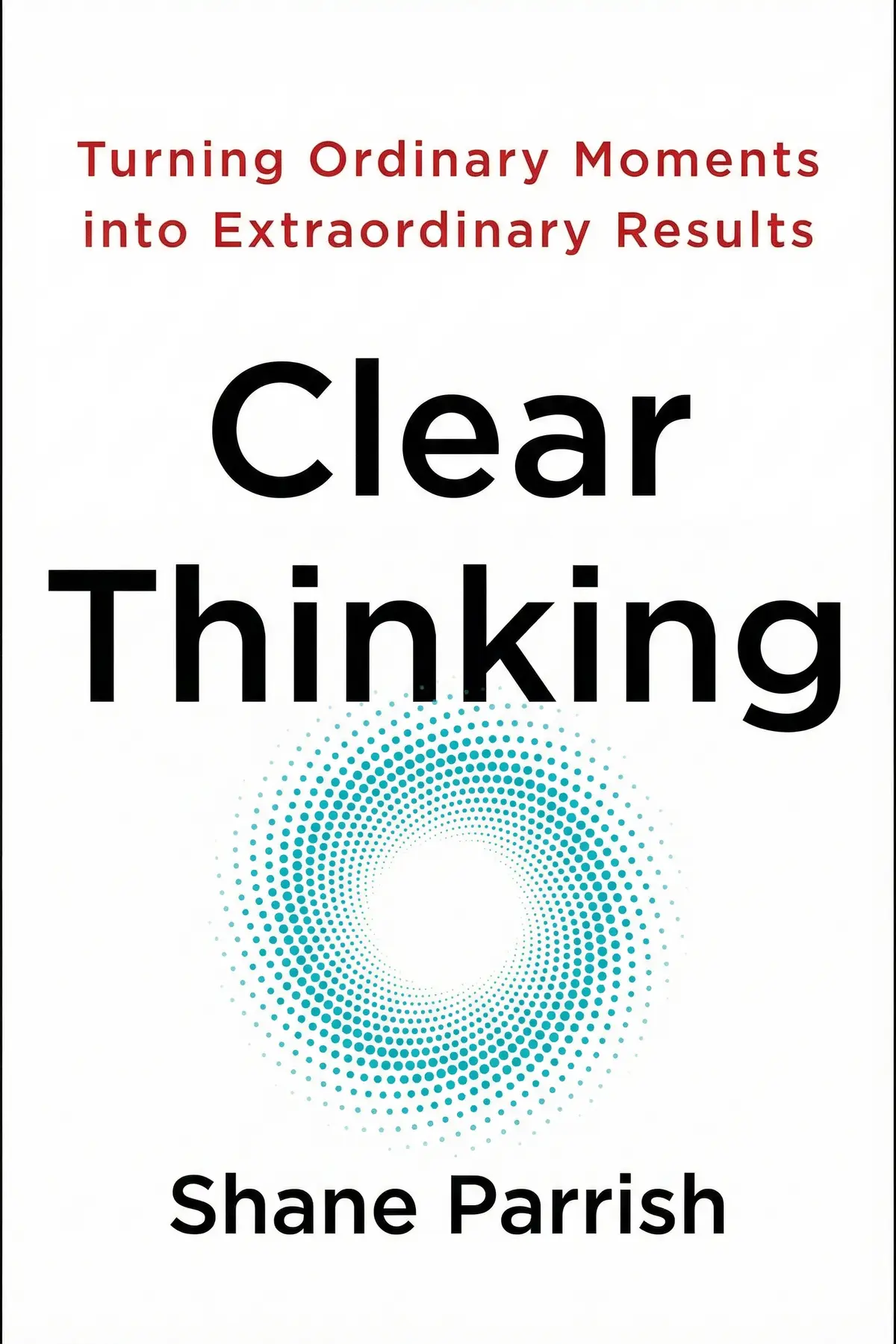
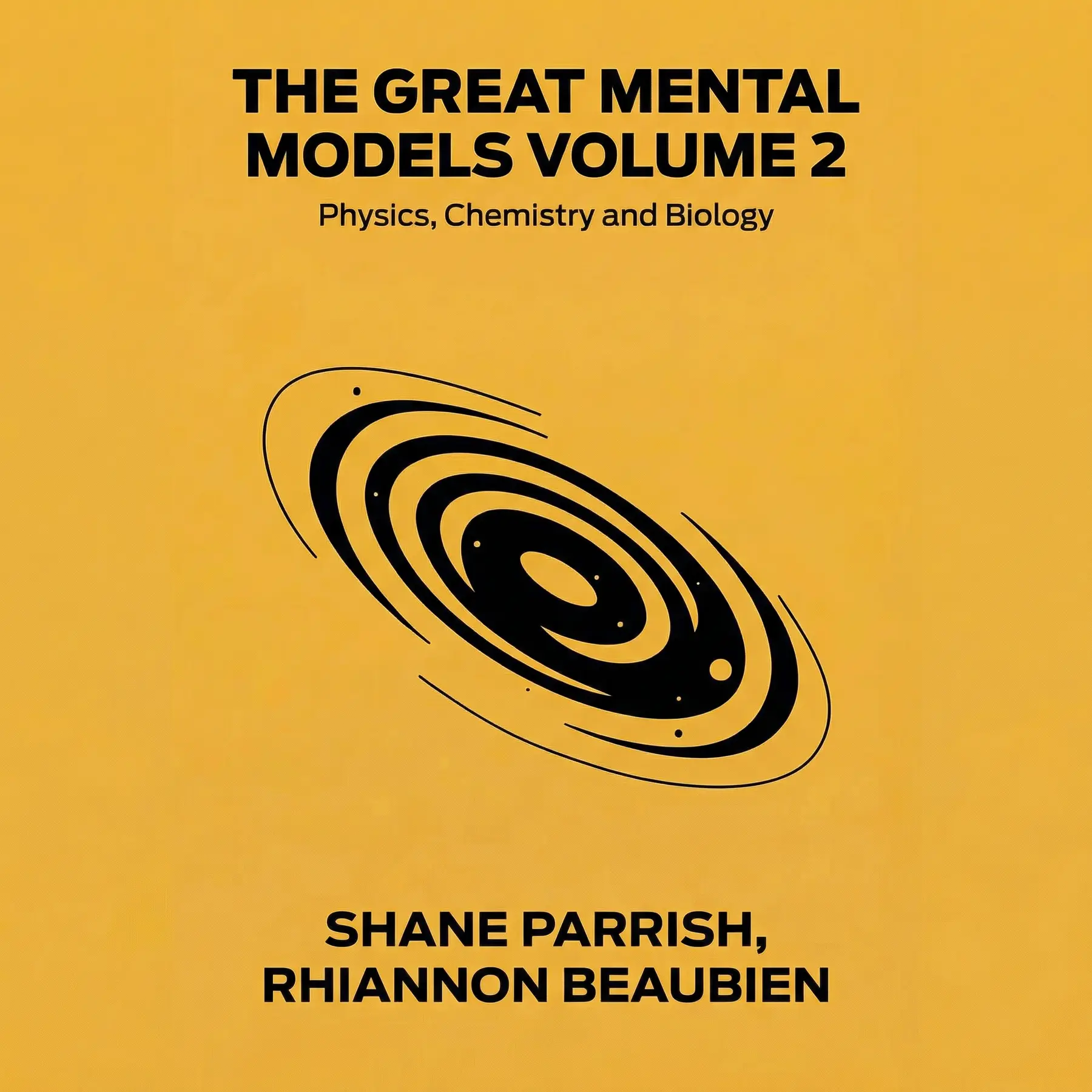
The Great Mental Models Volume 2: Physics, Chemistry and Biology
Explore how the fundamental laws of physics, chemistry, and biology provide powerful frameworks for understanding human behavior, history, and social systems in this multidisciplinary guide to clearer thinking.

Table of Content
1. Introduction
2 min 10 sec
Think for a moment about the immense challenge of Arctic exploration in the early days of maritime travel. When humans first ventured into those frozen northern waters, they faced a literal wall of ice. Their standard response was to build heavy, sturdy ships and try to ram through the floes. It seemed logical: if the ice is hard, hit it harder. But nature is rarely so cooperative. These ships frequently found themselves trapped, crushed, or sunk by the very environment they tried to overpower.
Then came a shift in perspective. A ship called the Fram was designed not to fight the ice, but to work with the laws of physics. It had a shallow, curved hull that resembled a bowl. When the ice closed in and began to squeeze, the Fram didn’t resist; instead, it simply popped upward, sliding on top of the ice rather than being crushed by it. This is the essence of a mental model—a way of understanding how the world works so that you can navigate it effectively rather than fighting against its fundamental principles.
In this exploration of The Great Mental Models Volume 2, we move beyond the mechanical and into the biological and chemical. We are going to look at how the ‘hard’ sciences—disciplines we often think of as being confined to laboratories or textbooks—actually provide the most accurate maps for understanding human history, social behavior, and personal growth. By looking at everything from the way zebras outrun lions to the way metals are combined into alloys, we can find frameworks that explain the French Revolution, the spread of the Renaissance, and even why some habits are so hard to break.
Our goal today is to build a mental toolkit. We’ll examine seven core ideas that serve as lenses through which the chaos of the world becomes clear. We will see why social change is often slow, how usefulness determines what survives in our culture, and why some people seem to be catalysts for massive shifts in society. By the end of this journey, you’ll have a new set of perspectives that allow you to work with nature’s laws, much like the designers of the Fram, to rise above the challenges of your own life and environment.
2. Social Inertia and the Impact of Mass
2 min 21 sec
Discover why some dangerous substances are quickly banned while others persist for decades, and how the physical concept of mass explains the resistance to social change.
3. The Survival of the Useful
2 min 06 sec
Explore how natural selection isn’t just for animals; it also dictates which languages we speak and which cultural traditions endure through the centuries.
4. Adaptability and the Peril of Static Thinking
2 min 03 sec
Learn how a small moth’s survival during the Industrial Revolution mirrors the strategic failures and successes of nations during world-altering conflicts.
5. The Power of Social Catalysts
1 min 54 sec
Investigate how specific events and inventions act like chemical catalysts, speeding up the rate of social transformation without changing the final destination.
6. Knowledge as an Intellectual Alloy
2 min 06 sec
See why the strongest insights come from blending different types of understanding, much like how copper and tin combine to create the strength of bronze.
7. Reciprocity and the Laws of Social Physics
2 min 03 sec
Understand how Newton’s Third Law of Motion applies to human interaction and why selflessness might be a biological necessity for well-being.
8. Hierarchy and the Choice of Leadership
2 min 20 sec
Explore the biological roots of pecking orders and learn why the best leaders are those who prioritize listening over competing.
9. Conclusion
2 min 02 sec
As we close our exploration of The Great Mental Models Volume 2, it is helpful to return to the idea that these scientific principles are like a set of high-quality camera lenses. Depending on which lens you choose, the same landscape can look entirely different. When you look at a social problem through the lens of inertia, you see why it’s so hard to change. When you look at it through the lens of natural selection, you see what makes it survive. And when you look at it through the lens of catalysis, you see how to speed up progress.
The ‘hard’ sciences are not just about atoms, cells, and equations. They are about the fundamental patterns that govern reality. By borrowing these models from physics, chemistry, and biology, we gain a more objective and reliable way to analyze the human world. We move away from emotional reactions and toward a deeper understanding of cause and effect. We begin to see that the world is not just a series of random events, but a complex system operating under a set of consistent rules.
The throughline of all these models is the importance of working with the world as it is, rather than how we wish it to be. Whether you are trying to lead a team, change a habit, or understand a historical event, these scientific frameworks provide a grounded perspective that is often missing from more subjective fields. They encourage us to be more like the designers of the Fram—observing the forces at play and designing our lives to rise above them.
As you move forward, try to keep these models in the back of your mind. When you encounter a obstacle, ask yourself: ‘Is this a mass problem or an adaptation problem?’ When you see a sudden shift in culture, ask: ‘What was the catalyst here?’ By constantly applying these lenses, you will find that your thinking becomes clearer, your decisions become more sound, and your understanding of the world becomes infinitely richer. This is the power of a multi-disciplinary mind—the ability to see the invisible laws of nature at work in every corner of human existence.
About this book
What is this book about?
The Great Mental Models Volume 2 explores the intersection of hard science and human experience. By drawing on the core principles of physics, chemistry, and biology, Shane Parrish and Rhiannon Beaubien provide a toolkit of mental models that help us make sense of the complex world around us. This summary reveals why the same laws that govern the motion of atoms and the evolution of species also dictate the rise and fall of empires, the spread of ideas, and the structure of our societies. Listeners will learn how to apply scientific concepts like inertia, natural selection, and catalysis to everyday life. The promise of this book is not just to teach science, but to offer a new way of seeing. By internalizing these models, you can improve your decision-making, anticipate social changes, and understand the deep-rooted hierarchies that shape our lives. Whether you are navigating professional challenges or trying to grasp historical shifts, these scientific lenses provide the clarity needed to act with wisdom and precision.
Book Information
About the Author
Shane Parrish
Shane Parrish worked as a cybersecurity expert for Canada’s top intelligence agency before founding Farnam Street, an organization dedicated to helping people think smarter in an ever-changing world. His work has been featured in the New York Times and the Wall Street Journal, and he hosts the Knowledge Project podcast. Rhiannon Beaubien is a Canadian writer and the author of Alone Among Spies, a novel drawing on her intelligence background. She is a key member of Farnam Street, where she contributes to its blog and manages the development of the Great Mental Models book series.
The Great Mental Models: General Thinking Concepts
Shane Parrish

The Great Mental Models Volume 3: Systems and Mathematics
Rhiannon Beaubien

The Great Mental Models, Volume 4: Economics and Art
Shane Parrish
Ratings & Reviews
Ratings at a glance
What people think
Listeners find *The Great Mental Models Volume 2* to be a captivating examination of how core concepts from biology, chemistry, and physics translate to workplace and social environments. Though perspectives on the level of scientific depth differ—as one listener mentions that certain ideas seem overly basic or intuitive—numerous people value the "beautiful structure" and distinctive metaphors found throughout the work. Furthermore, they appreciate how historical narratives are employed to clarify complex notions, like connecting the velocity concept to Napoleon’s tactical approach. They also highlight how successfully biological principles such as "Gause’s Law" and the "Red Queen Effect" are converted into practical frameworks for adaptation and competitive strategy.
Top reviews
Araya
The chapter on physics and military strategy was exactly the kind of cross-disciplinary thinking I was looking for. Linking Napoleon’s tactical speed to the actual physics definition of velocity—speed plus direction—offered a fresh perspective on why 'busy' doesn't always mean 'productive.' While some might argue the science is light, the metaphors are robust enough to change how you view leadership and momentum. I found the section on alloys particularly insightful as a way to think about building diverse teams with complementary strengths. It’s not a textbook, so don’t expect deep formulas, but rather a collection of mental scaffolding for complex problems. Truly, the illustrations and historical anecdotes make these abstract concepts feel concrete and applicable in a way that sticks.
Show moreKatya
Ever wonder why staying in the same spot feels like you're falling behind in your career? This book explains that phenomenon through the lens of the Red Queen Effect, illustrating that constant adaptation isn't just for survival—it’s the baseline requirement for staying in the game. I loved how the authors took Gause’s Law from biology to explain why finding your own niche is better than fighting a losing battle in a crowded market. The writing is clear, concise, and avoids the usual fluff found in modern self-help. Some might find the science oversimplified, but I think that's the point of a mental model: it’s a tool for thinking, not a thesis paper. It’s definitely a book I’ll be annotating and returning to whenever I feel stuck in my professional growth.
Show moreMichael
Finally got around to the second volume, and it really hits home for anyone interested in the intersection of science and social dynamics. The concept of 'learning as a catalyst' changed my entire perspective on my daily study habits and how they act as force multipliers for my career. It's fascinating to see how principles like inertia and friction can be used to diagnose why organizations fail to change or innovate. Truth is, the authors have a knack for taking intimidating concepts from chemistry and making them feel like common sense. While a few of the examples felt slightly repetitive, the overall impact of the book is undeniably positive for one's cognitive flexibility. This series is becoming an essential part of my library for navigating the complexities of modern life.
Show moreMikael
This book provides a masterclass in applying hard science to the messy world of business and interpersonal relationships. Gause’s Law was particularly enlightening, offering a biological explanation for why two companies cannot occupy the exact same niche for long. I appreciated the nuance in the discussion of incentives and how they drive the tendency to minimize energy output in large organizations. Not gonna lie, I was skeptical about the chemistry metaphors at first, but the authors managed to weave them into a very cohesive narrative. There are occasional moments where the science feels a bit simplified, yet the practical utility of the models remains high. If you’re looking to sharpen your analytical skills, this volume offers a refreshing set of unique examples and stories to learn from.
Show moreWararat
After following the Farnam Street blog for years, I had high expectations for this second installment focusing on the physical sciences. The structure is beautiful and the storytelling—especially the bits about biological niches and Gause's Law—helps contextualize difficult social dynamics. It’s a great companion to the first volume, though I must admit a few sections felt like they were treading familiar territory if you've already read their online articles. To be fair, the physical book itself is a work of art and having these models organized in one place is incredibly valuable for reference. The Red Queen effect was a standout reminder of why stagnation is the quickest path to irrelevance in any industry. I just wish there was a bit more technical depth in the chemistry section.
Show moreLucia
Picked this up to improve my decision-making toolkit, and the section on leverage alone was worth the entry price. Unlike other interpretations that see leverage as an exploitative tool, this book frames it as a way to maximize output without burning out. The transition from physical levers to social and financial ones is handled with a level of clarity that is rare in business literature. My only gripe is that some of the thermodynamics analogies felt a bit forced and didn’t land as cleanly as the biological ones. Still, the unique interplay between scientific frameworks and historical anecdotes makes for an engaging read that pushes you to think differently. If you want to understand the hidden forces shaping your environment, this is a solid addition to your shelf.
Show moreWichai
As someone who appreciates a well-structured non-fiction read, I was pleasantly surprised by the depth of the literary references in this volume. It’s not just a science book; it’s a philosophical exploration of how we interact with the world around us. The way they explain the concept of 'alloying'—combining different elements to create something stronger—really resonated with my experience in project management. I did find the pacing a bit uneven in the middle chapters, particularly around the thermodynamics section, which felt a little dry compared to the rest. However, the insights on cooperation and hierarchical organization more than made up for those slower moments. It’s a thought-provoking experience that encourages you to slow down and meditate on how these models apply to your own life.
Show moreTuck
Look, the way Parrish and Beaubien bridge the gap between biology and professional adaptation is clever and highly readable. I especially enjoyed the breakdown of 'velocity'—it’s a simple reminder that moving fast is useless if you’re headed in the wrong direction. The book is full of these small 'aha' moments that help you reframe everyday obstacles into solvable problems using scientific frameworks. Some critics might point out that the science isn't groundbreaking, but the way it's applied to social issues is where the real value lies. I found the section on reciprocity and cooperation to be a great refresher on the foundational elements of building trust. It's a solid four-star read that I would recommend to anyone looking to diversify their mental toolbox without getting bogged down in jargon.
Show moreKob
Frankly, this was a bit of a mixed bag for me despite my love for the first volume. While I appreciate the attempt to apply chemistry to social life, some of the analogies felt stretched to the breaking point or even bordering on pseudoscience. For instance, the discussion on catalysis felt a bit vague and lacked the scientific rigor I expected from a book with 'Great' in the title. Look, the Red Queen Effect and Gause’s Law are fantastic concepts, but they are common knowledge for anyone who has read basic biology or business theory recently. If you are new to mental models, this is a five-star resource, but for seasoned readers, it might feel a little bit like a high school refresher course. It’s a quick, pretty read, but lacks the 'aha!' moments I was craving.
Show moreManop
To be fair, the production quality of this book is top-notch, with beautiful illustrations and a layout that makes it very easy to digest. However, the level of 'obviousness' in some chapters was a bit frustrating for someone with a basic science background. Do we really need a long explanation of how alloys work without a more rigorous application to complex social problems? The book touches on great ideas like the Red Queen effect, but it often stops just when things are getting interesting. In my experience, the authors tend to favor breadth over depth, which might leave more analytical readers feeling a bit unsatisfied. It’s a nice coffee table book or a gift for a student, but it didn't quite provide the intellectual challenge I was hoping for after reading the blog.
Show moreReaders also enjoyed

59 Seconds: Change Your Life in Under a Minute
Richard Wiseman



A Guide to the Good Life: The Ancient Art of Stoic Joy
William B. Irvine
A High-Performing Mind: Strengthen Your Mind and Live Your Best Life
Andrew D. Thompson


Abundance: The Inner Path to Wealth
Deepak Chopra
AUDIO SUMMARY AVAILABLE
Listen to The Great Mental Models Volume 2 in 15 minutes
Get the key ideas from The Great Mental Models Volume 2 by Shane Parrish, plus 5,000+ more titles in English and Thai.
- 5,000+ titles
- Listen as much as you want
- 7-day free trial
- Cancel anytime







