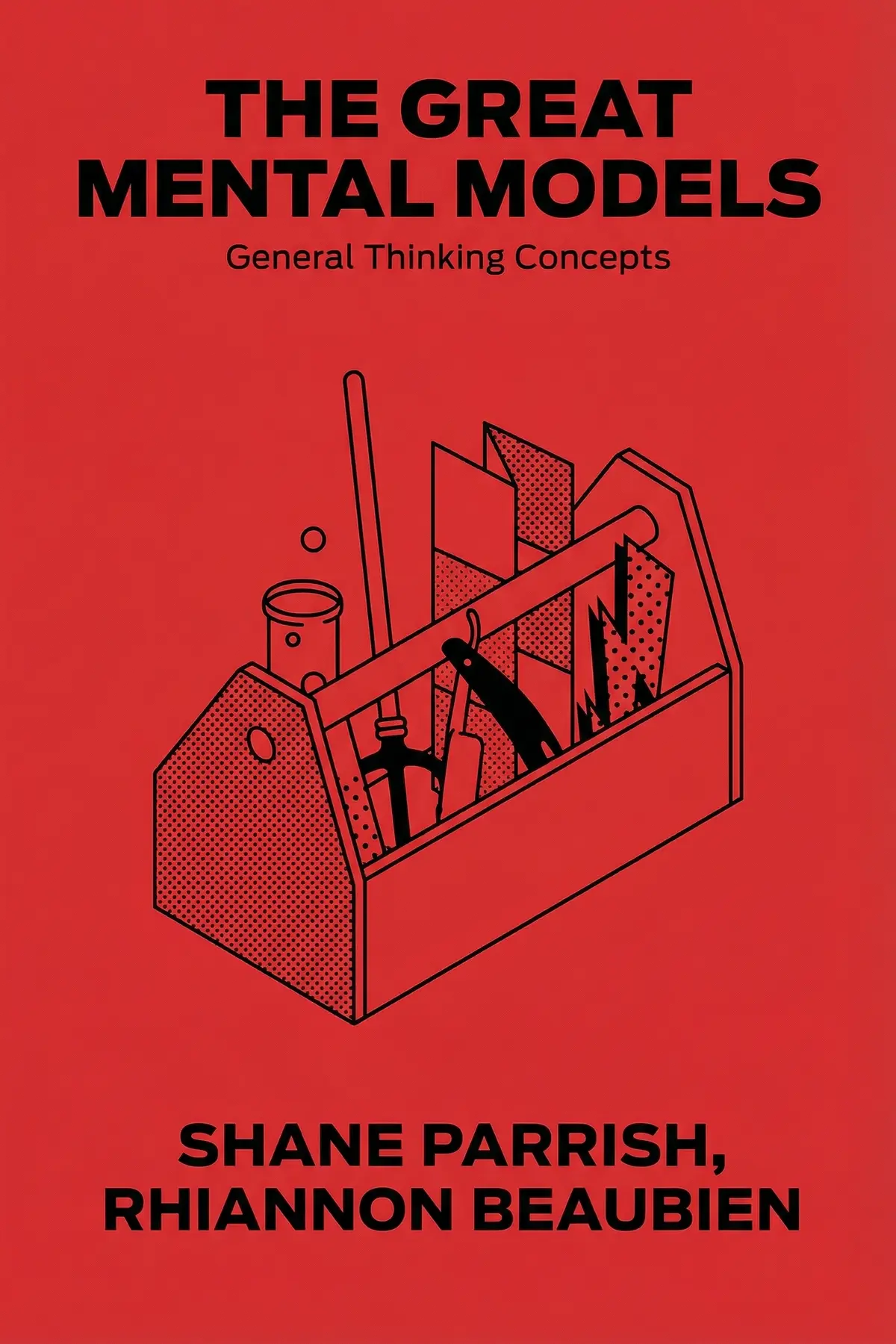
The Great Mental Models: General Thinking Concepts
Shane Parrish
Explore how the principles of systems thinking and mathematics can sharpen your decision-making. Learn to identify feedback loops, navigate bottlenecks, and build margins of safety to solve complex real-world problems more effectively.

1 min 55 sec
Have you ever considered that your mind operates with a set of invisible blind spots? Think about the last time you were behind the wheel of a car. You have a vast windshield that gives you a panoramic view of what is ahead, yet you know instinctively that this isn’t the whole story. To navigate safely, you rely on a system of mirrors—the rearview, the side-view—and the occasional glance over your shoulder. Without these multiple perspectives, you are driving with a dangerous lack of information. Life is exactly the same. We often navigate our careers, our relationships, and our personal growth looking only through the front windshield, unaware of the complexities lurking just out of sight.
This is where the concept of a mental model becomes transformative. At its core, a mental model is a reliable framework—a representation of how something in the world actually works. You are likely already using several of them without even realizing it. However, the limit of our effectiveness is often determined by the variety of tools we have at our disposal. If you only look at the world through one lens, you will inevitably miss the nuances that lead to better decisions. To truly understand the world, we must cultivate a diverse library of these frameworks, drawing from different disciplines to ensure our thinking is robust and well-rounded.
In this exploration of The Great Mental Models Volume 3, we are going to dive deep into two specific and powerful areas: systems thinking and mathematics. These aren’t just academic subjects; they are the bedrock of how the universe functions. By understanding the patterns of logic and the interconnected nature of systems, you can train your brain to see the hidden structures behind everyday events. Over the course of this summary, we will unpack seven core models that will help you solve problems more creatively and, perhaps more importantly, prevent them from occurring in the first place. Get ready to expand your cognitive toolbox and change the way you see the world around you.
2 min 51 sec
Discover why having a single way of thinking is like owning a toolbox with only one tool, and how a broader perspective unlocks new solutions.
3 min 17 sec
Learn how the invisible cycles of cause and effect shape everything from your thermostat to social norms and personal success.
3 min 15 sec
Understand how the slowest part of any process dictates your overall success and how to turn constraints into creative breakthroughs.
3 min 04 sec
Explore why the most successful people always leave room for error and how a simple buffer can prevent total catastrophe.
3 min 17 sec
Understand how creating repeatable, if-then processes can take the guesswork out of complex problems and lead to consistent results.
3 min 20 sec
Learn why our brains struggle to accept chance and how letting go of the need for order can actually fuel your creative spark.
3 min 09 sec
See how small, consistent investments in knowledge and relationships grow like a bank account, leading to massive long-term rewards.
3 min 08 sec
Find out how to avoid being misled by anecdotes and how to gather truly representative information for better decisions.
1 min 38 sec
As we wrap up our journey through systems and mathematics, the overarching theme is clear: your ability to navigate the complexities of life is directly tied to the diversity of your mental library. We’ve seen how expanding your repertoire of models allows you to see around corners, how recognizing feedback loops gives you control over your habits, and how building a margin of safety protects you from the inevitable storms of chance. These aren’t just abstract concepts; they are the practical tools of the world’s most effective problem-solvers. By embracing the persistence of algorithms and the reality of randomness, you move away from a reactive way of living and toward a strategic, intentional approach to every challenge you face.
The true value of these models, however, doesn’t come from just understanding them intellectually—it comes from putting them to work. Knowledge without application is like a toolbox sitting in a locked shed. To truly benefit from what you’ve learned, you need to bring these concepts into your daily life. A great way to start is by picking just one mental model each week. If you choose feedback loops, spend your week looking for them in your workplace, your diet, and your social circles. Write down what you see. If you choose compounding, look for the small actions you can take today that will pay off a year from now. By reflecting on your experiences through these lenses, you will slowly but surely sharpen your intuition and improve your decision-making. The world is a complex place, but with the right models, you can learn to see the patterns in the chaos.
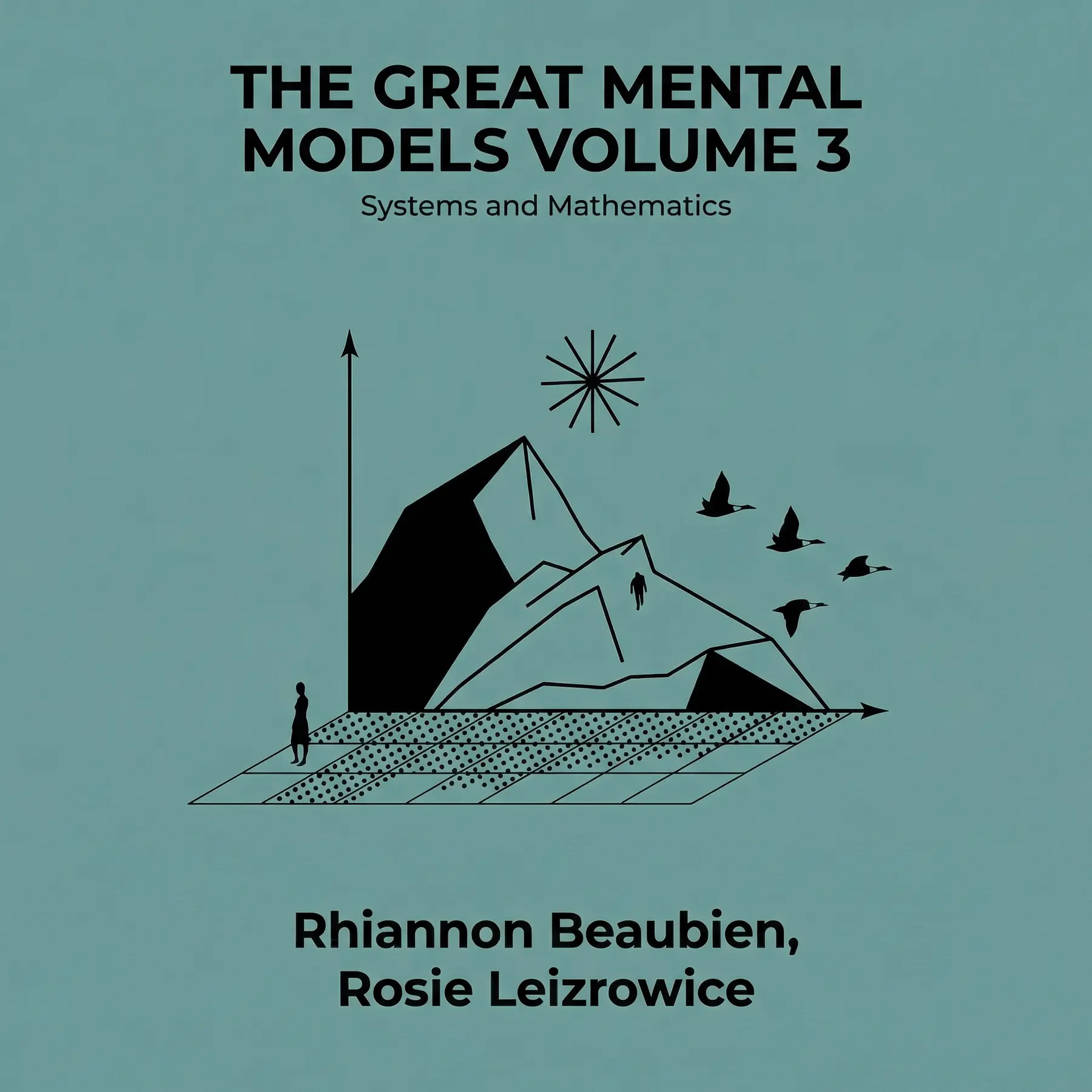
The Great Mental Models Volume 3 delves into the intersection of systems thinking and mathematical logic to provide a comprehensive toolkit for better thinking. While our natural instincts often lead us toward cognitive blind spots, this guide offers a structured way to view the world through a more accurate lens. It explains why expanding your mental library is the only way to truly understand the complex, interconnected web of modern life. By exploring concepts like feedback loops, algorithms, and compounding, the book promises to transform how you approach challenges. It moves beyond abstract theory, showing how historical figures and scientific breakthroughs have relied on these models to achieve success. Whether you are managing a team, pursuing a personal goal, or simply trying to understand the news, these models offer a durable framework for navigating uncertainty and maximizing your long-term potential.
Rhiannon Beaubien is the managing editor and a primary writer at Farnam Street Media, based in Ottawa, Canada. She plays a leading role in the development and creation of The Great Mental Models book series. Rosie Leizrowice serves as the director of the Farnam Street membership program. In addition to her work on the book series, she contributes regular content to the company blog, focusing on practical wisdom and intellectual development.
Listeners find this installment to be a functional and eye-opening handbook that successfully breaks down complicated mathematical principles and systems thinking into understandable "lenses" for making better choices. Additionally, they value the practical illustrations and relaxed terminology that make the advice relevant to both career and home life, with one listener remarking that the tip to master a single model per week is exceptionally smart. They also emphasize the book's merit as a lifelong learning instrument, complimenting its reliable sources and its capacity to educate readers on how to think rather than just what to think. Furthermore, listeners consider the material highly adaptable for all life phases, while one reviewer notes how the work helps sort through excessive information to resolve routine obstacles.
Finally got around to finishing the third installment, and it doesn't disappoint if you're a fan of the Farnam Street approach. The way it tackles systems thinking makes incredibly abstract concepts feel like tools you can actually pick up and use tomorrow. I found the "lenses" metaphor particularly helpful for my work in project management where everything is interconnected. It doesn't just give you facts; it teaches you a specific way to filter the noise of the world. While some might find the definitions a bit informal, I think that's exactly what makes it so accessible for a broad audience. It’s an essential addition to any lifelong learner's library.
Show moreThe chapter on mathematical models was probably the highlight for me, though I’ll admit some of the applications felt a bit stretched compared to my college stats classes. Despite that slight deviation, the book remains an enlightening guide for anyone trying to improve their decision-making frameworks. It’s beautifully written and clearly well-researched with strong sources throughout. Truth is, I preferred this volume over the second one because the focus on systems feels more relevant to my current stage of life. It’s a solid addition to the series that continues Charlie Munger’s legacy of multi-disciplinary thinking. I highly recommend it for the clarity it provides.
Show moreAs someone who has followed the FS podcast for years, I was eager to see how they’d handle the more technical aspects of mental models. This volume is essentially a masterclass in distilling huge, complex ideas into manageable frameworks for daily life. Each model is presented with clear real-life examples that keep the material from feeling like a dry textbook. Personally, the suggestion to focus on just one model per week has been a total game-changer for my self-reflection routine. It prevents information overload while building a genuine latticework of knowledge over time. Truly an indispensable tool for navigating modern life with a bit more wisdom.
Show moreWow. It’s rare to find a book that actually teaches you how to think rather than just telling you what to think about. Volume 3 hits that sweet spot by focusing on systems and math in a way that feels applicable to both your professional career and your personal relationships. The authors have a knack for taking obscure facts and turning them into "aha" moments that stick with you long after you close the cover. Not gonna lie, I’ve already started rereading certain sections to make sure I’ve fully internalized the concepts. It’s a dense read in terms of value, but the prose makes it go by quickly.
Show moreThis book is one of the better ones I’ve read this year because of its sheer versatility. Whether you’re trying to navigate office politics or solve a complex engineering problem, the systems thinking models provide a clear path forward. I love the composition of each chapter—the way they blend trivia with actionable wisdom is just brilliant. It helps you manage the massive amount of information we’re bombarded with daily by giving you specific filters to use. It’s an incredible exercise in cognitive discipline. I’d recommend this to anyone, especially young professionals just starting to navigate the messy realities of the business world.
Show moreEver wonder why some people seem to make better decisions consistently while others struggle with the same recurring problems? This volume explains why by looking at the underlying structures of the world through a mathematical and systemic lens. The authors have done a fantastic job of making these "obscure" concepts feel relevant to the average person's day-to-day challenges. I particularly appreciated the focus on strong sources and the way they honor the original intent of these models. It's a fun, educational read that effectively simplifies the complex without being condescending to the reader. It is a must-have for your permanent shelf.
Show moreAfter hearing Shane Parrish talk about these concepts for so long, it's great to have them organized in such a high-quality format. The book excels at providing informal definitions that strip away the academic jargon, making things like feedback loops and power laws easy to grasp. I did feel like some of the real-life examples were a bit brief, leaving me wanting more depth on the historical context. However, the overall utility of the book as a decision-making guide is undeniable. It’s a versatile resource that I can see myself returning to at different stages of my life as my priorities shift.
Show moreLook, if you're into the whole "latticework of mental models" idea, this is a must-buy, even if it has a few minor flaws. The transition from systems to math is a bit jarring at times, and the pacing feels slightly uneven across the different chapters. But the core value is there: it provides a practical framework for anyone who values well-considered decision-making. The real-life examples are well-chosen and help to anchor the more abstract ideas in reality. It’s a very solid read that reinforces the habit of thinking through multiple perspectives before jumping to any major conclusions. Definitely worth the time and investment.
Show moreTo be fair, this is a decent book, but I didn't find it quite as revolutionary as the first volume in the series. Some of the sections felt a bit like they were treading familiar ground if you’ve already read a lot of systems thinking literature. The math concepts were simplified to the point where they lost some of their original nuance, which might frustrate those with a technical background. That said, the writing style remains engaging and the "lenses" approach is still a very practical way to view the world. It’s a good primer for beginners, just not a deep dive for experts looking for new territory.
Show moreNot what I expected given the high praise for the previous entries in the series. Frankly, the content felt a bit superficial and lacked the rigorous analysis I was looking for in a book about mathematical mental models. It felt more like a collection of blog posts than a cohesive, deep-dive exploration of complex systems. The examples were fine, but they didn’t provide the "latticework" depth that Charlie Munger famously advocated for. If you’re brand new to these ideas, you might find some value here, but seasoned thinkers might find it a bit too elementary and light on actual substance for their needs.
Show more

William B. Irvine
Andrew D. Thompson


Deepak Chopra

Richard Wiseman
AUDIO SUMMARY AVAILABLE
Get the key ideas from The Great Mental Models Volume 3 by Rhiannon Beaubien, plus 5,000+ more titles in English and Thai.