
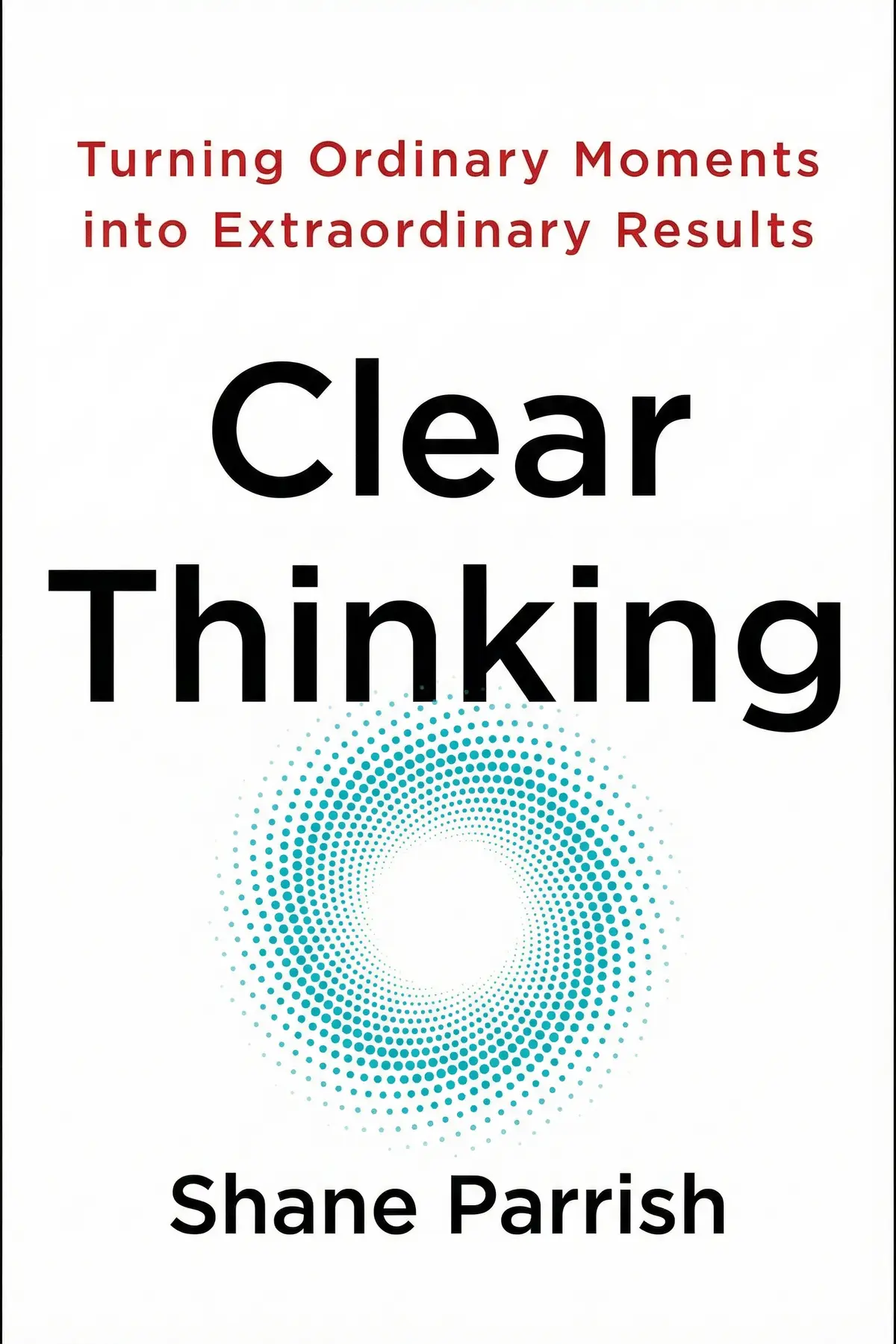
20 min 11 sec
Available in:English
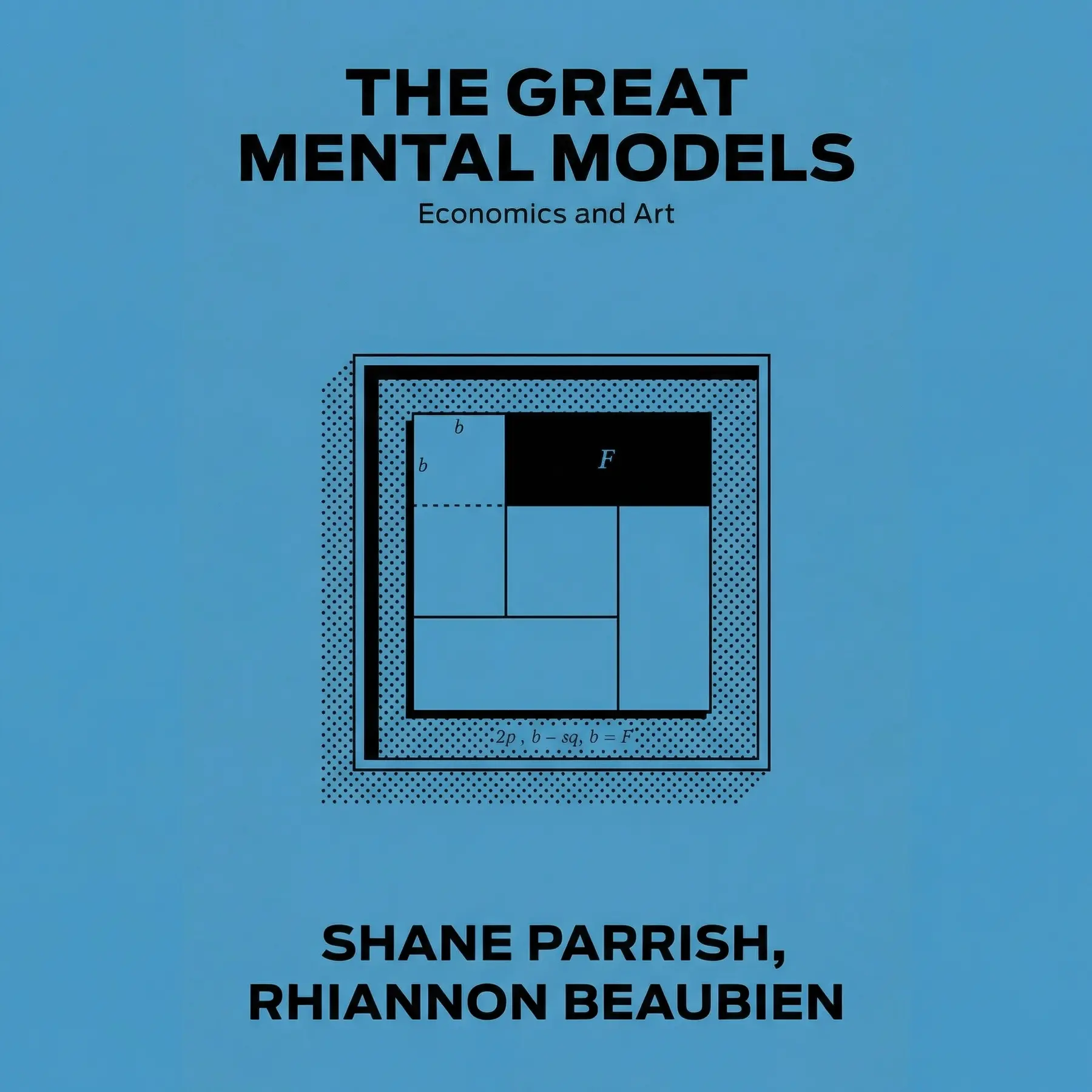
The Great Mental Models, Volume 4: Economics and Art
Explore the intersection of economic logic and artistic expression. This guide reveals how mental models like scarcity, specialization, and narrative structure provide a blueprint for making smarter decisions in a complex world.
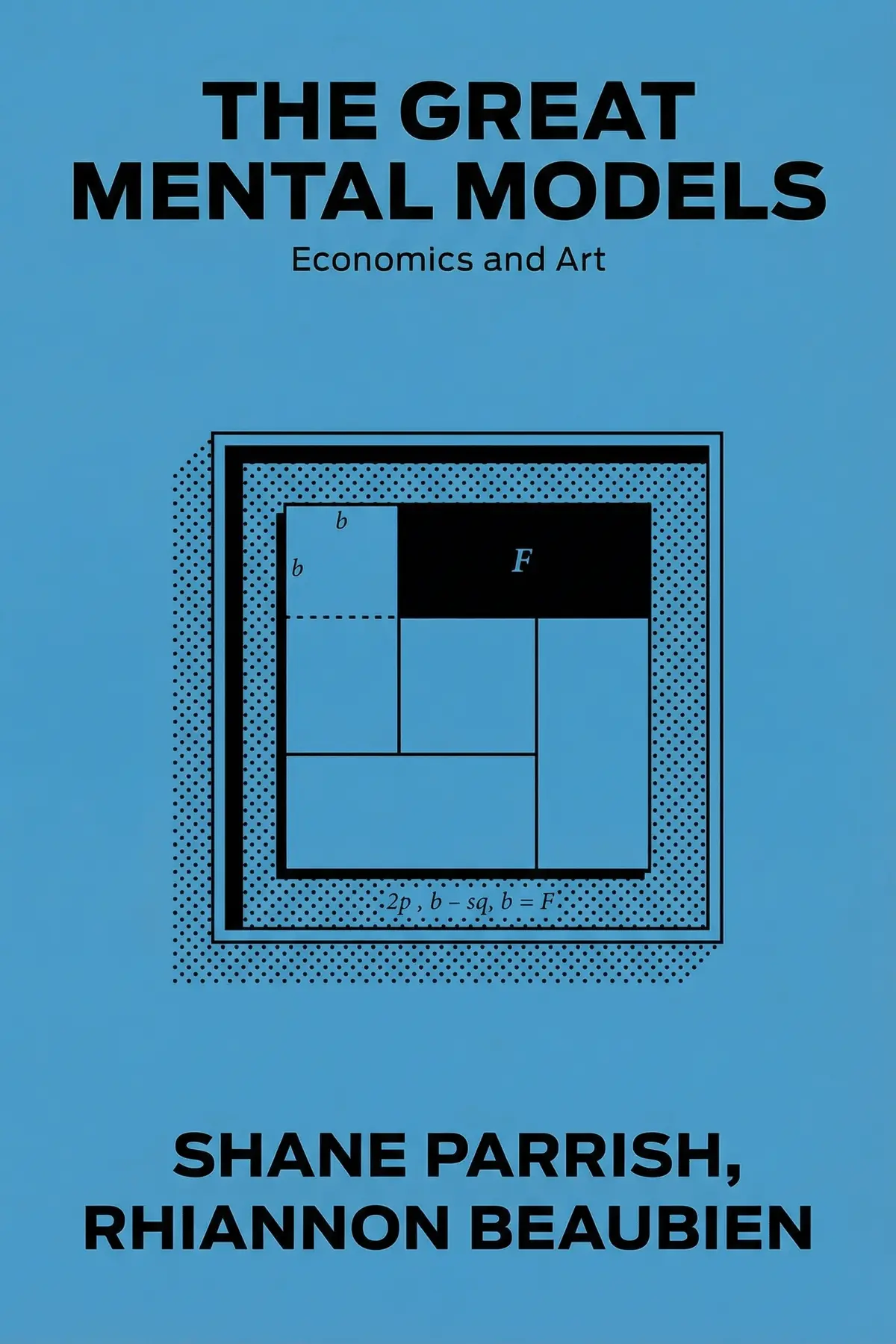
Table of Content
1. Introduction
1 min 43 sec
When we think about the forces that shape our lives, we often look toward the obvious—our education, our careers, or our relationships. But beneath the surface of these daily experiences lies a complex network of invisible frameworks. These are mental models, the tools that help us process information and make sense of a chaotic world. In the fourth volume of the acclaimed series, The Great Mental Models, authors Shane Parrish and Rhiannon Beaubien invite us to look at the world through two distinct but surprisingly complementary lenses: economics and art.
At first glance, economics and art might seem like opposites. One is often associated with cold numbers, spreadsheets, and the harsh realities of the market, while the other is seen as a realm of emotion, creativity, and subjective beauty. However, as this exploration reveals, both domains are deeply concerned with the same fundamental question: How do we navigate the complexities of the human experience? Economics shows us how we allocate what we have, while art shows us how we interpret what we see.
Throughout this journey, we will see that these concepts are not just academic theories but practical tools. They are value-neutral, meaning they aren’t inherently good or bad on their own. Instead, their power lies in how we choose to apply them. By the end of this summary, you’ll have a new set of perspectives to help you understand why prices fluctuate, why stories move us, and how you can make choices that align more closely with your deepest priorities. Let’s dive into the foundational ideas that bridge the gap between the logic of the marketplace and the soul of the studio.
2. The Infinite Want and the Finite World
2 min 51 sec
Discover why the tension between our endless desires and limited resources is the engine behind every decision we make and every innovation we create.
3. The Power of Many and the Price of Speed
2 min 49 sec
Learn how the hidden web of human cooperation allows us to achieve the impossible, and why the pursuit of perfect efficiency isn’t always the best strategy.
4. Stability, Power, and the Engine of Progress
2 min 49 sec
Explore the delicate balance between market competition and the disruptive force of innovation that keeps society moving forward.
5. The Invisible Dialogue of Art
2 min 51 sec
See how every creative act is a conversation between the creator and the observer, shaped by shared expectations and the power of difference.
6. Frames, Symbols, and the Order of Events
2 min 53 sec
Uncover how the way we present information and the stories we tell ourselves can fundamentally alter our perception of reality.
7. The Stage We Step Onto and the Roles We Play
2 min 22 sec
Discover how your environment dictates your possibilities and why every interaction is an opportunity for adaptive performance.
8. Conclusion
1 min 53 sec
As we wrap up our exploration of The Great Mental Models, Volume 4, it becomes clear that economics and art are not just subjects to be studied—they are lenses through which we can view every aspect of our existence. From the economic side, we’ve learned that we live in a world defined by scarcity and trade-offs. Every choice we make carries an opportunity cost, and our modern lives are supported by a vast, invisible network of specialized cooperation. By understanding these market forces, we can navigate professional landscapes with greater strategic clarity and build systems that are both efficient and resilient.
From the artistic side, we’ve seen that our reality is shaped by how we frame information and the stories we tell. We’ve learned that we are always performing for an audience and that our environment—our setting—often dictates what we are capable of achieving. Art teaches us the power of representation and the importance of contrast in making our voices heard. When you combine the logical rigor of economics with the nuanced empathy of art, you gain a holistic toolkit for living.
The throughline of this work is the idea of intentionality. Instead of being passive subjects of economic trends or unconscious consumers of media, these mental models empower us to be active participants. We can recognize when a monopoly is stifling innovation, when a narrative is being framed to mislead us, and when a change in our environment is necessary for our growth. As you move forward, try to spot these models in your daily life. Look for the trade-offs in your decisions, the framing in your news, and the performance in your interactions. By doing so, you’ll find that the world becomes a little less confusing and a lot more manageable. Thank you for joining us for this BookBit. If you found these insights helpful, please leave us a rating—your feedback helps us continue to bring these ideas to life. We’ll see you in the next one.
About this book
What is this book about?
The Great Mental Models, Volume 4 offers a deep dive into two seemingly disparate worlds: economics and art. While economics provides a framework for understanding how resources are managed and how markets function through principles like supply and demand and creative destruction, art offers a lens into human connection, storytelling, and the power of framing. By bridging these two domains, the book provides readers with a versatile toolkit for navigating personal and professional challenges. The promise of this work is to help you see the hidden structures governing your daily life. You will learn how to identify the trade-offs in every choice, recognize the interdependence of modern society, and use the tools of storytelling to communicate more effectively. Whether you are managing a business or trying to find meaning in your personal experiences, these mental models serve as timeless guides for clearer thinking and more intentional action.
Book Information
About the Author
Shane Parrish
Shane Parrish is the founder of Farnam Street, a platform dedicated to helping people make smarter decisions and live more meaningful lives. Known for his insights into mental models and decision-making, Parrish draws on his background in cybersecurity to emphasize practical wisdom. Rhiannon Beaubien is a writer and editor at Farnam Street who collaborates with Parrish on exploring psychology and the dynamics of effective choice. With a background in creative writing and human behavior, she blends storytelling with practical advice to help readers apply timeless principles for growth.
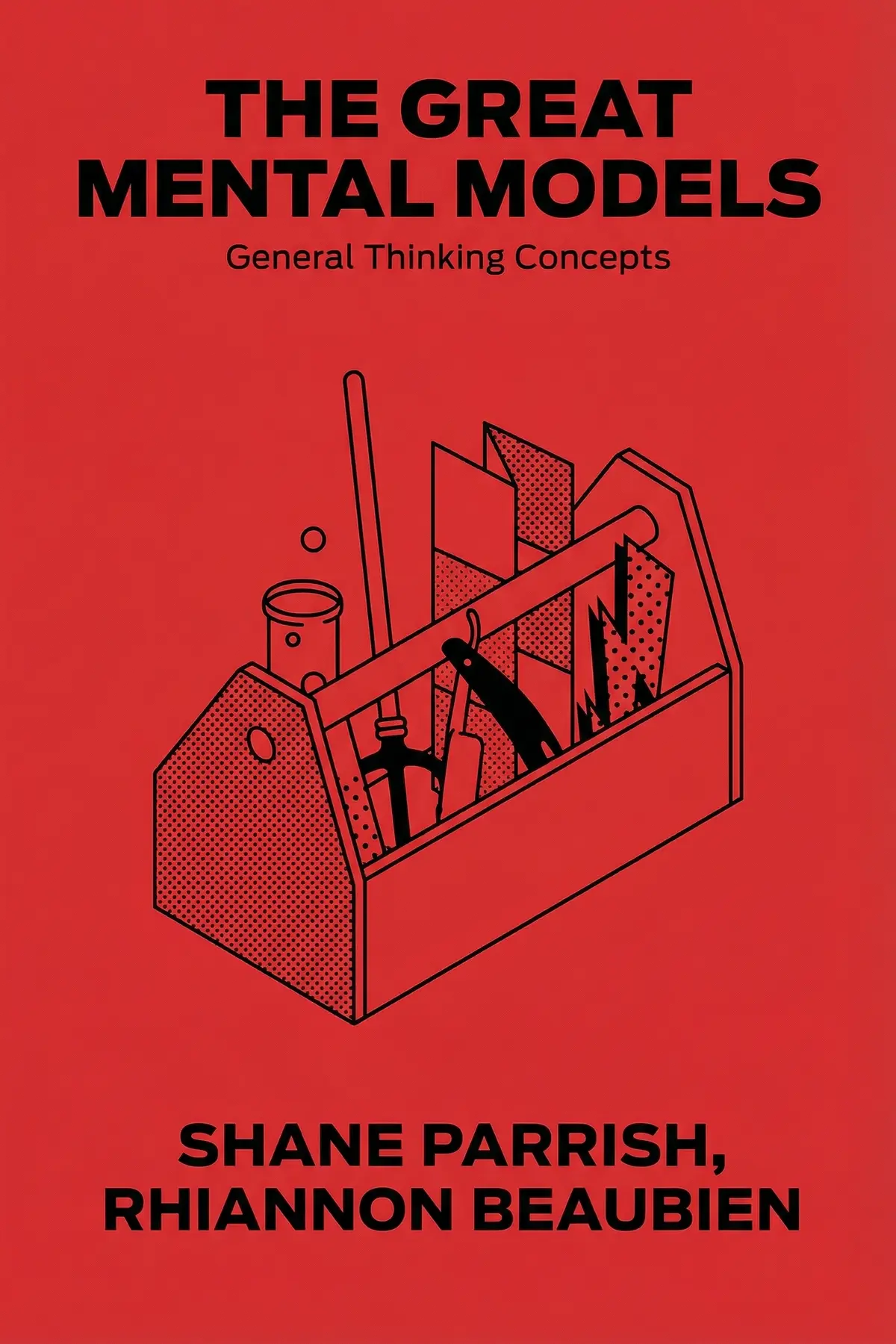
The Great Mental Models: General Thinking Concepts
Shane Parrish
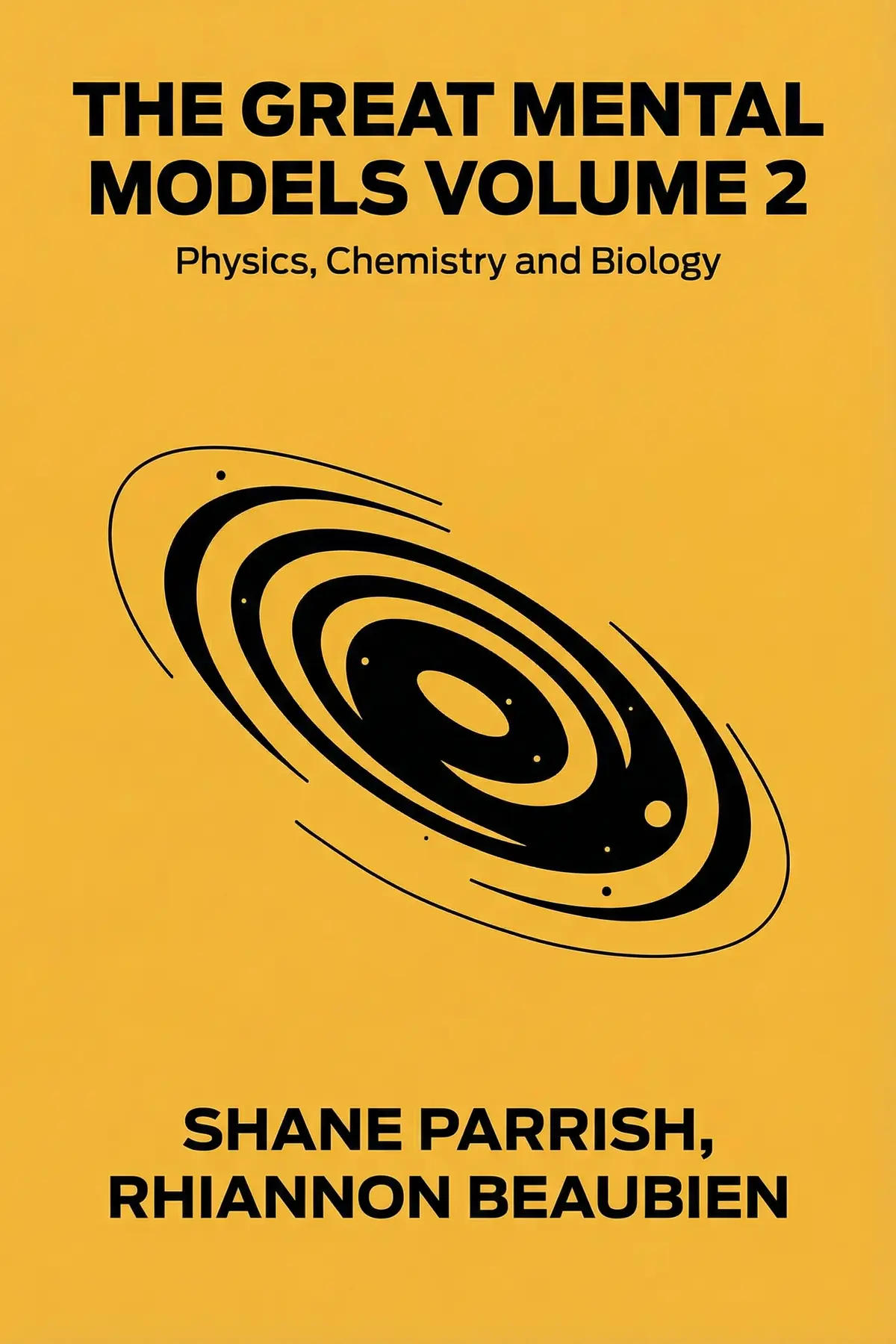

The Great Mental Models Volume 3: Systems and Mathematics
Rhiannon Beaubien
Ratings & Reviews
Ratings at a glance
What people think
Listeners find the book’s wealth of information beneficial, and one listener highlights how it builds an amazing foundation for understanding the world. Nevertheless, reactions to the series remain mixed among listeners.
Top reviews
Jib
This book acts as a remarkable capstone for anyone looking to build a multidisciplinary knowledge base. I found the section on economics particularly enlightening because it goes beyond just numbers to explain the psychology of scarcity and optimization. Parrish uses the 'I, Pencil' example to perfectly illustrate how interdependent we all are in a globalized world. While the art section felt a little more abstract, the concepts of contrast and framing still provided a useful lens for looking at daily communication. Frankly, having these models at your disposal feels like having a secret map to human behavior. It is a solid foundation for understanding the world better and making smarter decisions.
Show moreCha
After hearing Parrish discuss these concepts on his podcast for years, I finally got around to finishing the fourth volume. It offers an amazing foundation for understanding the hidden forces that drive our decisions every day. I was fascinated by the section on creative destruction and how letting go of outdated systems is necessary for growth. The authors have a unique way of taking complex economic theories and turning them into practical tools for life. Even the art section, which I thought would be less relevant, changed how I view storytelling and characters in my professional interactions. This series is a must-read for anyone serious about clear thinking.
Show moreRose
Wow, the way Parrish explores 'I, Pencil' to explain interdependence really hit home for me. It’s a powerful reminder that none of us are truly self-sufficient, and acknowledging that can lead to better collaboration and support systems. I love how the book emphasizes that models like 'plot' and 'character' aren't just for writers—they are frameworks for understanding our own lives. Truth is, I feel much more equipped to handle uncertainty after reading about creative destruction and the necessity of change. This volume ties the series together nicely and provides a diverse set of tools for anyone wanting to get closer to reality.
Show moreFelix
Ever wonder why you make certain trade-offs without even thinking about them? Volume 4 breaks down supply, demand, and specialization in a way that makes you realize how often we over-optimize our lives at the expense of flexibility. The authors do a great job of bridging the gap between cold economic principles and the creative nuance of art. I especially enjoyed the discussion on how 'setting' dictates our behavior, much like a stage influences an actor. To be fair, some of the examples from niche books felt a bit like the author was showing off his library. However, the core message about building resilience through diverse mental frameworks is incredibly valuable.
Show moreChamlong
The chapter on scarcity and optimization provides an incredible foundation for anyone trying to navigate the complexities of modern life. It forces you to look at every decision through the lens of trade-offs, which is something we often ignore in our 'always-on' culture. I found the inclusion of 'genre' and 'audience' as mental models to be a brilliant touch that I hadn't considered before. Not gonna lie, I think the economics section is much stronger and more practical than the art portion. Still, the overall series is one of the best investments I’ve made in my personal development library. Parrish and Beaubien have created something truly special here.
Show moreGrace
In my experience, the art models like contrast and plot were much more insightful than the basic economic laws mentioned in the first half. While supply and demand are fundamental, the way the authors apply artistic principles to communication and persuasion was a breath of fresh air. It makes you realize that we are constantly performing for an audience, whether we realize it or not. My only real gripe is that some of the chapters felt a bit short and could have used more robust real-world applications. Regardless, it’s a high-quality read that encourages you to think more critically about the world around you.
Show moreBoss
To be fair, the shift from economics to art in the second half felt a bit jarring and less cohesive than previous volumes. While the early chapters on scarcity and competitive advantage were quite sharp, the art section seemed rather rudimentary by comparison. Parrish continues with a very specific, cookie-cutter chapter format that can feel repetitive if you read the book in one sitting. I appreciate the effort to make these concepts accessible to beginners, but as a fan of the series, I was hoping for more advanced applications. It’s a decent refresher on some important concepts, but it definitely feels like the weakest entry in the set.
Show moreOrm
Looking back at the whole series, this feels like the most beginner-friendly entry yet, which is both a blessing and a curse. While it’s great for someone who has never studied economics, I found the explanations of scarcity and monopolies to be quite basic. The authors tend to use a very structured format that introduces a model and then gives two specific examples. This works for clarity, but it lacks the deep, nuanced exploration found in Volume 1. I also wasn't a fan of the physical book design this time around. It's a useful book for a quick refresher, but don't expect it to blow your mind if you're already well-read.
Show moreSukit
Not what I expected given the depth of the earlier volumes on physics and chemistry. This volume feels a bit like a collection of blog posts rather than a deep dive into the 'great' models of the world. The chapter on art and representation was interesting, but it didn't feel as 'hard-hitting' as the models from the earlier books. I also noticed the authors' tendency to flaunt their reading lists through unconvincing examples that didn't always stick the landing. It’s still a good book with a positive knowledge base, but it’s definitely the point where the series starts to lose its steam. Good for a one-time read.
Show moreEleanor
Picked this up after following the series for years, but I found the design and layout of Volume 4 to be a massive letdown compared to the others. The book had some good examples in bits and pieces, but it lacks the punchy, revelatory nature of the physics volume. Many of the economic principles like supply and demand are things you likely already know if you've spent any time in the business world. The writing style feels a bit dry here, and the 'niche' references often distracted from the main point. If you are brand new to mental models, this might be okay, but for advanced thinkers, it’s a bit of a bore.
Show moreReaders also enjoyed

A High-Performing Mind: Strengthen Your Mind and Live Your Best Life
Andrew D. Thompson


Abundance: The Inner Path to Wealth
Deepak Chopra
1929: Inside the Greatest Crash in Wall Street History--and How It
Andrew Ross Sorkin

23 Things They Don’t Tell You About Capitalism
Ha-Joon Chang
A Little History of Economics
Niall Kishtainy
AUDIO SUMMARY AVAILABLE
Listen to The Great Mental Models, Volume 4 in 15 minutes
Get the key ideas from The Great Mental Models, Volume 4 by Shane Parrish, plus 5,000+ more titles in English and Thai.
- 5,000+ titles
- Listen as much as you want
- 7-day free trial
- Cancel anytime







