
26 min 11 sec
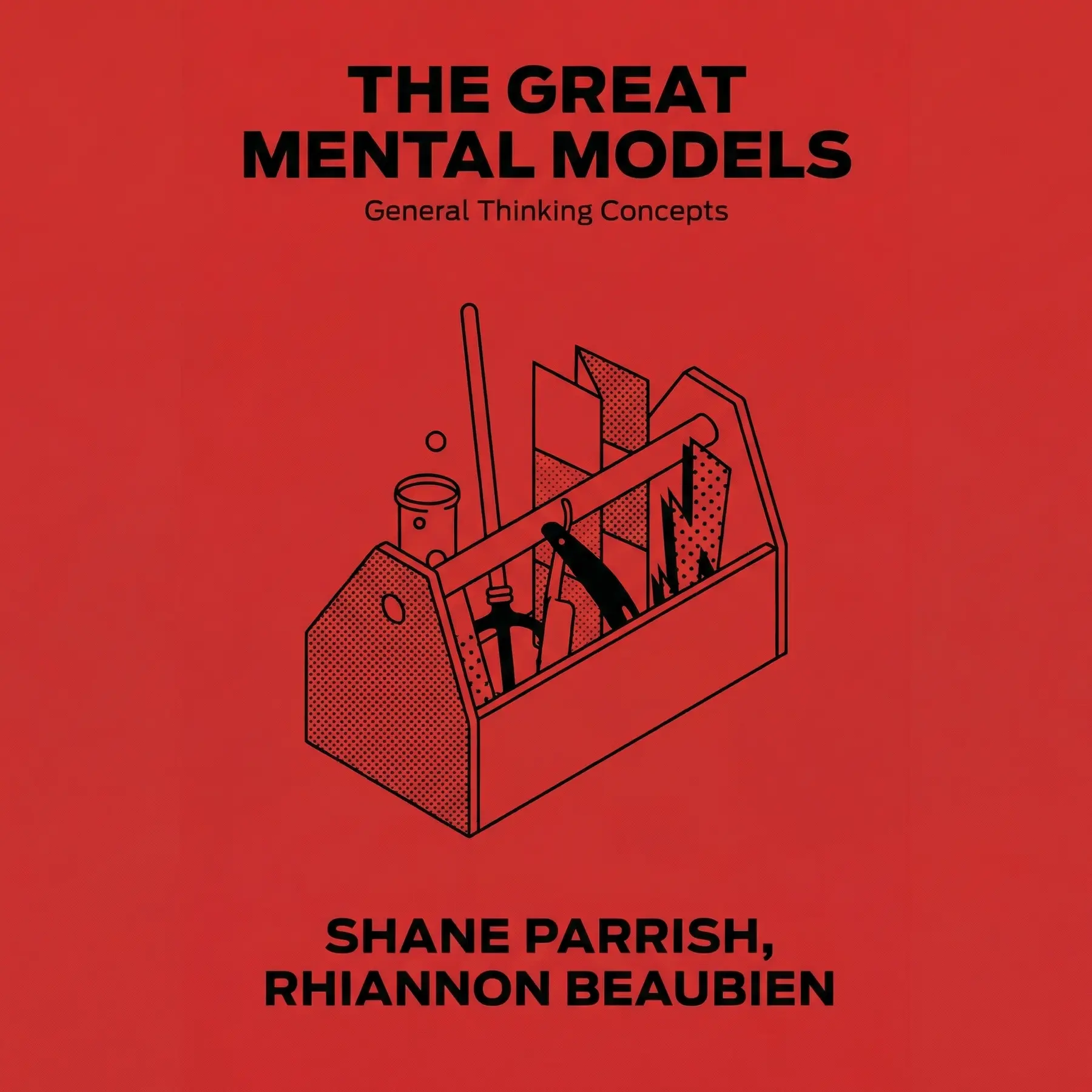
The Great Mental Models: General Thinking Concepts
Master the art of clear thinking by building a robust cognitive toolbox. Learn nine essential frameworks to navigate life’s complexities, improve decision-making, and understand the hidden structures of reality.
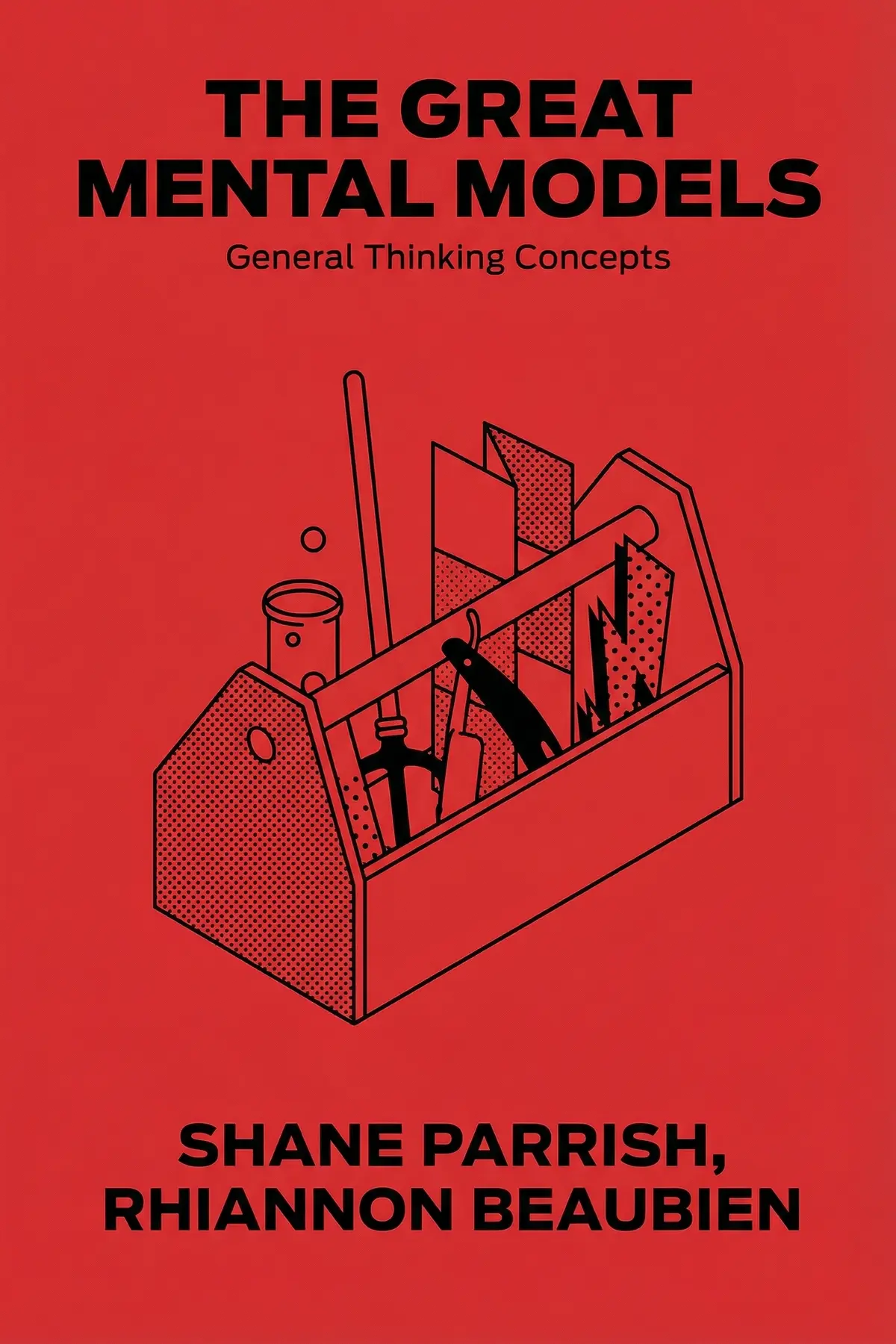
Table of Content
1. Introduction
2 min 21 sec
Think for a moment about the physical tools you use to interact with the world. If you need to hang a heavy painting on a wall, you don’t reach for a pair of scissors; you reach for a hammer and a nail. If you want to dig a garden, you grab a shovel, not a spoon. We understand instinctively that the quality of our work is deeply connected to the suitability of our tools. Yet, when it comes to the most important task we perform every day—thinking—we often try to get by with a very limited set of mental equipment. We rely on the same few perspectives we learned in school or during our first few years on the job, regardless of whether those perspectives actually fit the problem at hand.
This is where the concept of mental models comes in. A mental model is essentially a representation of how something works. They are the internal blueprints we use to understand life, make decisions, and solve problems. The reality of the world is too vast and intricate for any human brain to process in its entirety. To survive and thrive, we create simplifications. However, if our mental models are too narrow or outdated, our decisions suffer. We start seeing every problem as a nail because the only tool we have in our mental toolbox is a hammer.
In the following narration, we are going to explore nine of the most powerful and versatile mental models ever devised. These aren’t just academic theories; they are practical, high-leverage frameworks derived from science, history, and philosophy. By weaving these models into a “latticework” of knowledge, you can begin to see the world from multiple angles at once. This multi-disciplinary approach allows you to spot patterns that others miss and avoid the traps that come from a one-dimensional worldview.
We will start by examining how we map out reality and why the map is never the thing itself. Then, we’ll look at how to define the boundaries of what we truly know, and how to strip a problem down to its core components. We’ll also dive into the art of thinking backward, the utility of mental simulations, and the necessity of looking at the long-term ripple effects of our actions. Finally, we will touch on how to weigh probabilities and choose the simplest, most logical explanations for the mysteries of human behavior. By the end, you’ll have a more complete and reliable set of gears for your intellectual engine, ready to take on the complexities of modern life.
2. Mapping Reality vs. Reality Itself
2 min 45 sec
Understand why our mental shortcuts are necessary for survival but dangerous if we forget they are merely simplifications of a much larger world.
3. The Importance of Knowing Your Limits
2 min 27 sec
Learn how to identify your areas of true expertise and why the most dangerous person is the one who doesn’t know where their knowledge ends.
4. Building from the Ground Up
2 min 29 sec
Discover how to break free from conventional thinking by stripping problems down to their most basic, undeniable truths.
5. Turning Problems Upside Down
2 min 40 sec
Explore the power of inversion, a technique that allows you to solve difficult challenges by focusing on what to avoid rather than what to achieve.
6. The Laboratory of the Mind
2 min 18 sec
Learn how to use mental simulations to test radical ideas and clarify your values without risking time, money, or reputation.
7. Thinking Beyond the Immediate
2 min 27 sec
Discover why the first result of any decision is rarely the most important one, and how to anticipate the long-term ripple effects of your actions.
8. The Power of Probabilities
2 min 30 sec
Master the art of Bayesian updating to navigate an uncertain world without falling prey to panic or outdated assumptions.
9. Choosing the Simplest Path
2 min 13 sec
Learn to use Occam’s Razor to cut through complex theories and focus on the explanations that are most likely to be true.
10. Assuming Ignorance Over Malice
2 min 18 sec
Improve your relationships and reduce stress by learning to see the difference between intentional harm and simple human error.
11. Conclusion
1 min 43 sec
As we have seen, the quality of our thinking is determined by the variety and reliability of the models we use to process information. No single model—no matter how powerful—can explain everything. If you rely only on first principles, you might miss the subtle social nuances that Hanlon’s Razor explains. If you only look at first-order consequences, you’ll be blindsided by the long-term ripple effects that second-order thinking would have revealed. The secret to great thinking is to build a latticework of these models, where they support and check one another.
The most important thing to remember is that these are not just ideas to be understood; they are tools to be used. A map is worthless if you never look at it while you’re walking. A hammer is just a paperweight if it stays in the drawer. To truly benefit from these frameworks, you must consciously integrate them into your daily life. When you face a difficult choice at work, ask yourself: “Am I operating inside my circle of competence?” When you feel a surge of anger at a friend, ask: “Could this be explained by a simple mistake rather than malice?” When you’re stuck on a creative problem, try inverting it.
This process takes effort. It is much easier to fall back on old habits and gut reactions. But the reward for this effort is a life lived with greater clarity and fewer avoidable errors. By constantly refining your mental models and seeking out new ones, you develop a deeper understanding of the world’s hidden structures. You move from being a passive observer of life to being an active, strategic navigator. Start today by picking just one of these models—perhaps inversion or second-order thinking—and apply it to a challenge you’re currently facing. You’ll be surprised at how much more the world begins to make sense when you’re looking through the right lens.
About this book
What is this book about?
The world is an incredibly complex place, yet we often try to navigate its challenges using only the narrow perspectives of our specific professions or experiences. This creates blind spots that lead to poor choices and missed opportunities. This summary explores the foundational mental models that successful people use to understand the world more clearly. By adopting these nine core concepts, you can shift from reactive thinking to proactive strategy. From the importance of understanding the limits of your own expertise to the power of breaking problems down into their most basic elements, you will learn how to approach any situation with a sharper lens. The promise of this work is not just to give you more information, but to provide a cohesive system for processing that information. Whether you are navigating a career change, managing a team, or simply trying to live more intentionally, these mental tools will help you identify the signals in the noise and act with greater confidence and accuracy.
Book Information
About the Author
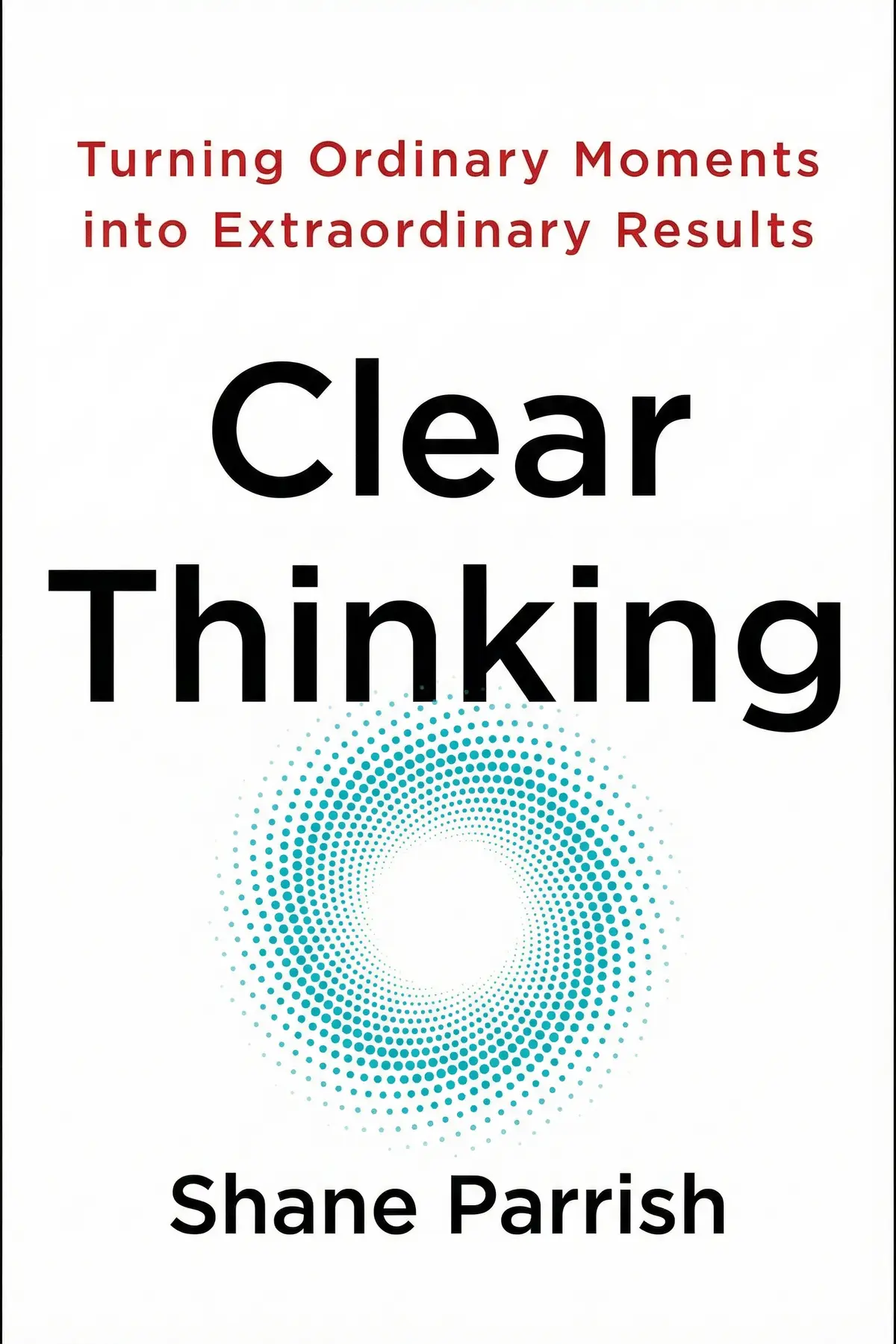
Shane Parrish
Shane Parrish is a former cybersecurity expert who served with the Communications Security Establishment, a division of Canada’s Department of National Defence. He is the creator of the popular blog Farnam Street and host of The Knowledge Project podcast. Rhiannon Beaubien is also a former member of the Communications Security Establishment and a lead writer for the Farnam Street blog, focusing on applying multidisciplinary knowledge to everyday life.

Ratings & Reviews
Ratings at a glance
What people think
Listeners find this volume helpful for its presentation of mental models and enjoy its clear writing style, as one listener points out how the examples strengthen the concepts. Furthermore, the text offers solid life frameworks using practical illustrations, and listeners consider it an approachable guide for honing thought processes. On the other hand, the depth of information gets varied reactions, with some finding it high-quality while others feel it isn't detailed enough. Pacing also draws differing opinions, though one listener mentions that the organization works well for those reading about these topics for the first time.
Top reviews
Hana
This book serves as a masterclass in multidisciplinary thinking by distilling complex cognitive frameworks into manageable, actionable chunks. Why did I wait so long to read this? Most business books are fluffed up with hundreds of pages of useless anecdotes, but Parrish and Beaubien keep things remarkably lean and impactful throughout the entire volume. The concept of the 'Circle of Competence' really hit home for me because it forces an honest appraisal of what we actually know versus what we think we know. It’s about more than just intelligence; it’s about the temperament to stay within your bounds. The writing is clear, concise, and remarkably universal. I found myself highlighting nearly every page of the 'Inversion' chapter. If you want to sharpen your decision-making and avoid common cognitive pitfalls, this is the manual you need on your desk.
Show moreNim
Picked this up after following the Farnam Street blog for years, and it did not disappoint one bit. The physical quality of the hardcover is stunning, but the content is the real star here. It provides a foundational toolkit for anyone tired of making the same avoidable mistakes over and over again. I particularly loved the breakdown of 'Second-Order Thinking.' It’s a simple concept—considering the consequences of the consequences—yet so few of us actually do it in the heat of the moment. The examples, like the snake problem in India, perfectly illustrate how well-intentioned policies can backfire spectacularly. It is rare to find a book that is this practical and this readable at the same time. It has completely changed how I approach my weekly planning and long-term career goals. Truly a must-read for the modern thinker.
Show moreSavannah
The chapter on Inversion alone is worth the price of admission. Instead of asking how to succeed, you ask how to fail, and then you work backward to avoid those specific pitfalls. It’s brilliant. Parrish has a gift for taking high-level concepts from physics and biology and applying them to everyday business problems. This isn't just a book you read once; it’s a framework you keep returning to when you're stuck. I found the 'Probabilistic Thinking' section especially helpful for my investment strategy. It moves past the 'gut feeling' approach and moves toward a more calculated, Bayesian way of looking at the world. Truth is, we all have massive blind spots. This book doesn't just point them out; it gives you the specific lenses needed to see through them. I can't wait for the next volumes in the series to be released.
Show moreWatcharee
As a longtime fan of Charlie Munger’s 'latticework of mental models' approach, I have been looking for a book like this for a decade. Shane has done a magnificent job making these big ideas approachable for the average person. The writing is punchy. The layout is beautiful. More importantly, the models are presented with rich, historical context that makes them stick in your memory. I especially appreciated the 'First Principles Thinking' section. It’s so easy to just do what everyone else is doing, but breaking things down to their fundamental truths is how real innovation happens. It’s an encyclopedia of the most useful ideas from the most important disciplines. You owe it to yourself to own a copy of this. It’s the kind of book that pays for itself with just one better decision. Highest recommendation possible.
Show moreWeera
Finally got around to reading this hardcover edition and I’m blown away by the clarity of the presentation. It’s rare to find non-fiction that is this visually appealing while remaining deeply informative. The authors have managed to create a universal guide that feels as relevant to a stay-at-home parent as it does to a CEO. My favorite part was the exploration of 'The Map is Not the Territory.' It’s a vital reminder that we often fall in love with our plans and forget to look at the actual world in front of us. The book encourages a healthy dose of intellectual humility. It teaches you to be a cartographer of your own mind. If you feel like you're constantly overwhelmed by information, this book will help you filter the signal from the noise. It’s concise, practical, and incredibly high-quality.
Show moreVarinee
Frankly, it felt a bit like a collection of ideas Parrish has been pointing out for years, but that doesn't diminish its utility. While I agree with some critics that it’s not a deeply academic work, I think that’s actually its greatest strength. We don't always need dense jargon; sometimes we just need a hand-on-the-plow guide to thinking better. The pacing is excellent. I finished it in two sittings and felt significantly more focused afterward. I do wish the examples were a bit more diverse—some felt a little too centered on historical military figures—but the core message remains powerful. 'Occam’s Razor' is explained with such simplicity that you'll wonder why you ever overcomplicated your problems in the first place. It’s a solid 4-star read that I will likely revisit once a year to keep these models fresh.
Show moreAroha
Can we talk about how useful 'Circle of Competence' is for career planning? This book doesn't just tell you what to think; it tells you how to think. It’s a subtle but massive difference. I found the writing style to be very accessible, though I did find a few of the 'Thought Experiments' to be a bit disconnected from reality. Regardless, the overarching themes are incredibly valuable for anyone in a leadership position. The concept of 'Inversion' has already changed the way I run my team meetings. Instead of asking for ideas, I ask what would make our project fail, and the results have been eye-opening. There are a few grains of common sense here and there, but the way they are structured into a cohesive system is what makes the book worth reading. It’s a great tool for sharpening your edge.
Show moreRatchada
Not what I expected, unfortunately. Let’s be real: the content is actually quite good, but the delivery in the audiobook version is a massive hurdle. Shane Parrish is clearly a brilliant guy, but his narration is incredibly monotone and sounds like he’s bored with his own writing. It made it very difficult to stay engaged during my morning commute. As for the models themselves, they are solid but very basic. If you’ve never heard of Occam’s Razor or Hanlon’s Razor, you will get a ton of value here. However, if you are already a fan of Charlie Munger or Nassim Taleb, you might find yourself skimming large sections. I think the book functions better as a reference guide than a cover-to-cover read. The 'Map is not the Territory' section was the highlight for me, offering a much-needed reminder that our models are just simplifications of a messy reality.
Show morePriya
Look, the content here is solid but the information density feels a bit light for a full-priced book. Many of these chapters felt like expanded versions of blog posts I’ve already read for free online. That isn't to say it's bad—having them all in one place is convenient—but I was hoping for more original research or deeper academic rigor. The examples used to explain 'Hanlon’s Razor' were a bit repetitive and felt like common sense for anyone who has worked in a corporate environment for more than a year. It’s a great primer for beginners or perhaps a graduation gift for a student, but seasoned professionals might find it a bit elementary. To be fair, the section on 'Thought Experiments' was quite engaging and offered some new ways to visualize complex problems. It's a quick, easy read for sharpening your thinking during an off-season.
Show moreEnd
Ever wonder if a book can be too simple for its own good? While the title promises 'Great' mental models, what we actually get is a surface-level collection of ideas that anyone with a basic interest in philosophy or logic has already encountered. Honestly, the depth is lacking. If you have spent any time reading Aristotle or studying formal epistemology, this will feel like a 'For Dummies' guide without the self-awareness. It lacks the rigorous defense of arguments found in classic texts. Instead of diving deep into the foundations of knowledge, the authors provide a curated list of anecdotes that often feel disconnected from the models they are supposed to illustrate. It’s well-intentioned, sure, but it’s far from an exhaustive source. I’d recommend sticking to the Farnam Street blog articles or picking up a real logic textbook if you want to actually challenge your brain.
Show moreReaders also enjoyed

59 Seconds: Change Your Life in Under a Minute
Richard Wiseman

A Guide to the Good Life: The Ancient Art of Stoic Joy
William B. Irvine
A High-Performing Mind: Strengthen Your Mind and Live Your Best Life
Andrew D. Thompson

AUDIO SUMMARY AVAILABLE
Listen to The Great Mental Models in 15 minutes
Get the key ideas from The Great Mental Models by Shane Parrish, plus 5,000+ more titles in English and Thai.
- 5,000+ titles
- Listen as much as you want
- 7-day free trial
- Cancel anytime







