
A Splendid Exchange: How Trade Shaped the World
William J. Bernstein
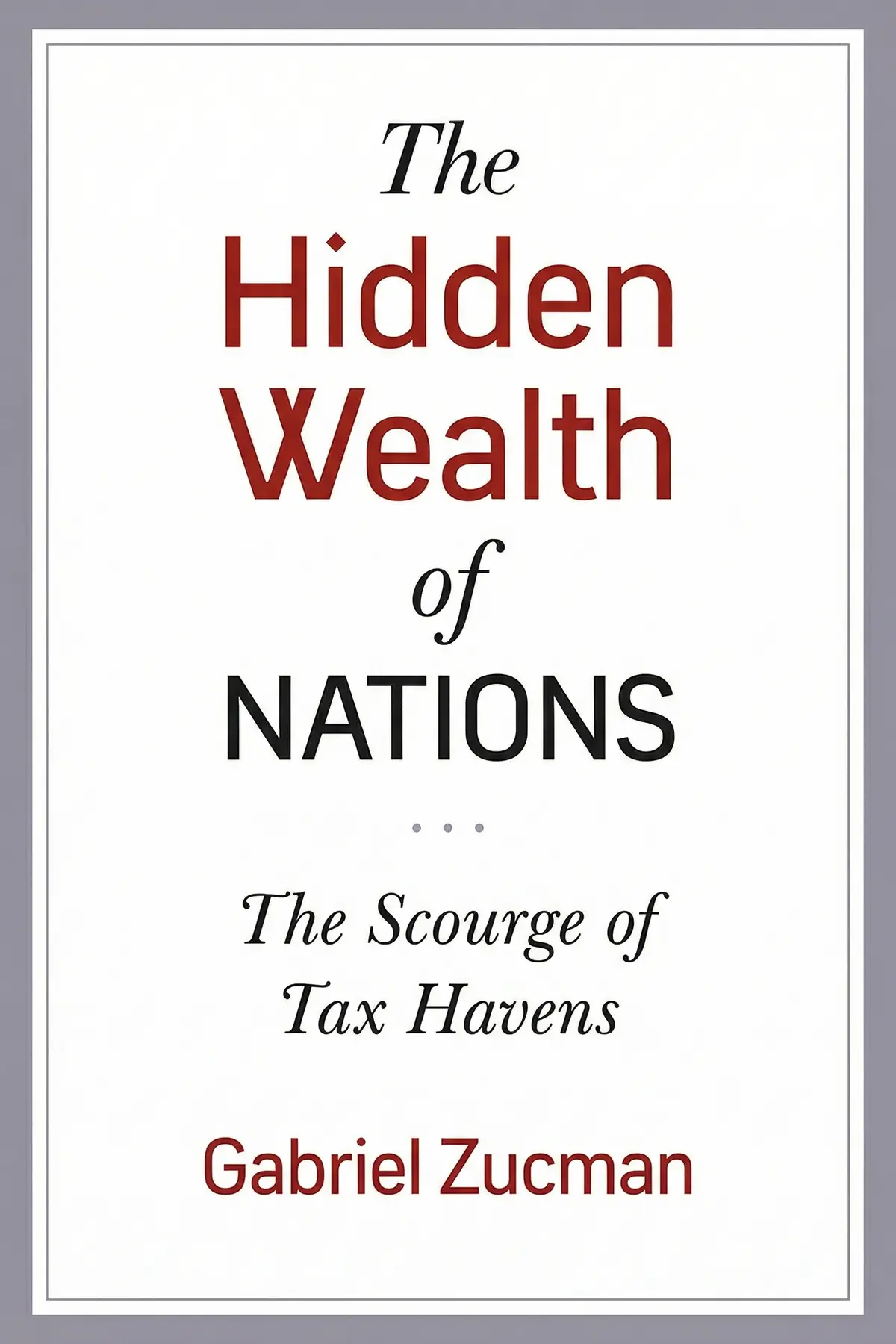
Explore the shadowy world of offshore banking and tax havens. This summary reveals the staggering amount of hidden global wealth and offers bold solutions to reclaim billions for the public good.
1 min 35 sec
Imagine a vault so large it holds nearly eight trillion dollars, yet it remains completely invisible to the governments of the world. This isn’t the plot of a thriller; it is the reality of our current global financial system. Every year, a massive portion of the world’s wealth is funneled into offshore accounts, tucked away in jurisdictions designed to keep secrets. This hidden capital represents a significant loss to the public treasury, money that could be used for education, healthcare, and infrastructure. In Gabriel Zucman’s investigation into these murky waters, we are invited to look past the headlines of scandals and into the core of how tax havens actually function.
The throughline of this exploration is the tension between national laws and a globalized economy. While countries try to maintain their social contracts through taxation, the wealthiest individuals and the largest corporations have found ways to transcend borders, effectively opting out of the system. This summary will take you through the history of how these havens began as a reaction to the turmoil of the early twentieth century and evolved into a sophisticated network that challenges the very stability of modern nations. We will examine the sheer scale of this hidden wealth, the specific accounting gaps that make it possible, and the reason why past attempts to fix the problem have fallen short. More importantly, we will look at the concrete, actionable strategies that could bring this money back into the light and ensure a fairer economic future for everyone.
2 min 30 sec
Discover how the aftermath of World War I created a desperate need for revenue, leading to the birth of the world’s most famous tax haven.
2 min 18 sec
Learn how economists track money that is designed to stay hidden by looking for the gaps in global accounting books.
2 min 09 sec
Uncover the direct link between offshore tax evasion and the decline of public services and rising social inequality.
2 min 09 sec
Explore the catch-22 that makes most global attempts to stop tax evasion ineffective and the political hurdles in the way.
2 min 12 sec
Discover the two bold steps that could dismantle the world of tax havens and bring hidden billions back to the light.
1 min 57 sec
Learn how the world’s biggest companies move profits across borders legally and how a new tax model could stop it.
1 min 48 sec
As we have seen, the hidden wealth of nations is not a mystery without a solution; it is a systemic flaw that can be corrected with enough collective political will. The staggering seven-plus trillion dollars currently sitting in offshore accounts is a testament to a global financial architecture that has prioritized secrecy over the common good. By looking back at the history of tax havens, we see they were born out of specific historical moments, and they can be dismantled through modern, coordinated efforts. The current system of ‘requesting’ information is a relic of the past that has proven to be an utter failure, serving only to provide a veneer of action while the problem continues to grow.
The path forward requires a shift toward radical transparency. By adopting a global model of automatic information exchange and creating a comprehensive financial register, the international community can reclaim the billions lost to evasion every year. Furthermore, by updating our corporate tax laws to reflect the reality of a globalized digital market—taxing profits where sales actually occur—we can close the loopholes that allow the world’s largest companies to opt out of their social responsibilities.
The stakes couldn’t be higher. Every dollar hidden in a tax haven is a dollar not spent on the public services that sustain the middle class and provide a safety net for the vulnerable. Reclaiming this wealth is not just an economic necessity; it is a moral imperative to restore fairness to the global economy and ensure that the social contract remains intact for future generations. The tools for this transformation are within reach; all that remains is the courage to use them.
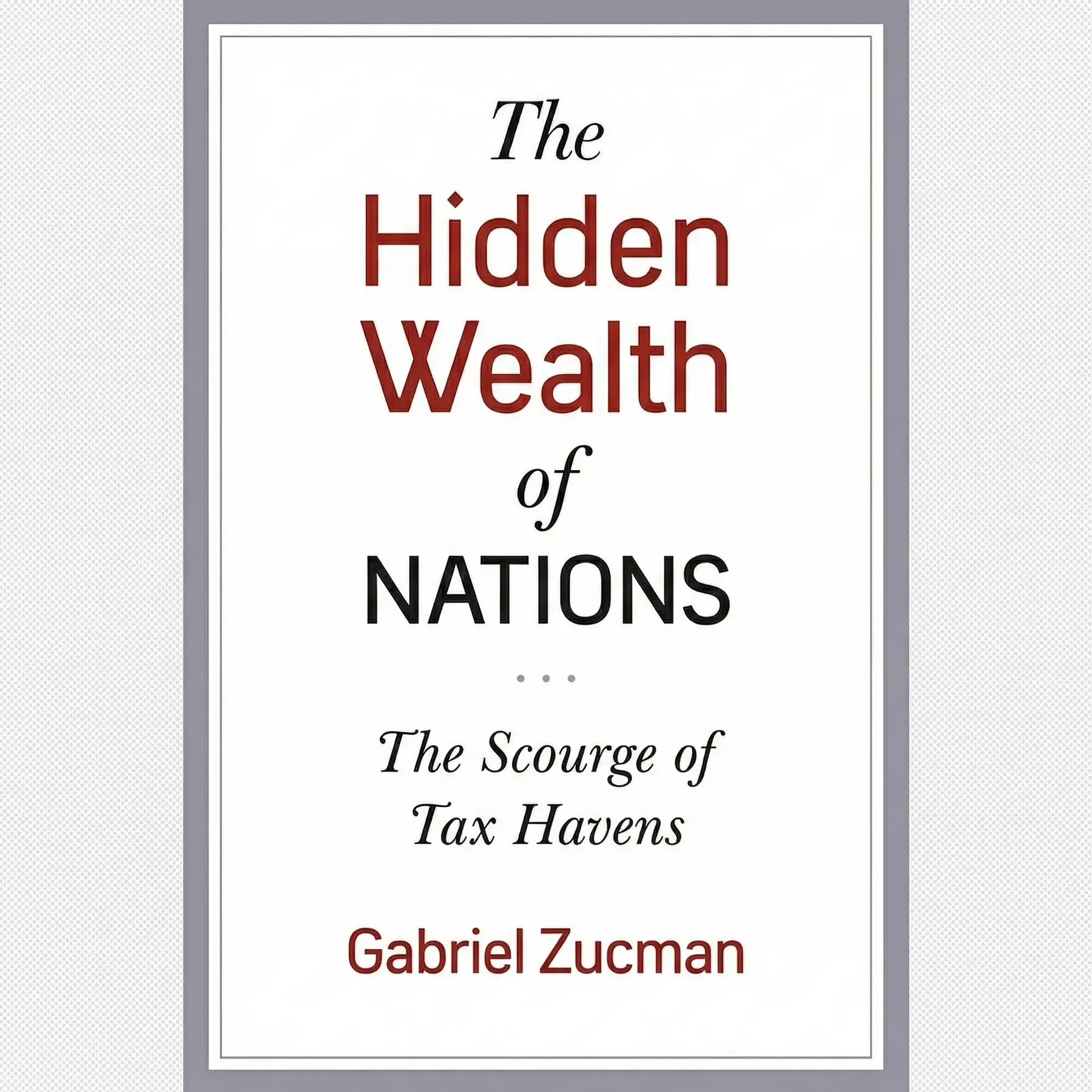
The Hidden Wealth of Nations investigates the massive, invisible infrastructure of the global financial system that allows the ultra-wealthy and multinational corporations to bypass their tax obligations. By diving into the historical origins of tax havens—from post-WWI Switzerland to the deregulated markets of the 1980s—the narrative exposes the mechanics of how over seven trillion dollars has vanished from official ledgers. This book is more than just a critique of greed; it is a rigorous economic analysis of how tax evasion fuels inequality and cripples government budgets. It promises to explain the ingenious accounting tricks used to hide assets and the failure of international agreements to close these loopholes. Most importantly, it provides a roadmap for reform, suggesting a global financial register and a complete overhaul of how we tax corporate profits. If you have ever wondered why public services are underfunded while global wealth reaches record highs, this summary provides the essential answers.
Gabriel Zucman is a prominent French economist and an associate professor of economics at the University of California, Berkeley. He is widely recognized for his expertise in wealth inequality and tax havens. His research and insights are frequently featured in prestigious academic publications, including the Quarterly Journal of Economics, where he explores the intersection of global finance and public policy.
Listeners find the text accessible and succinct, which makes it an excellent primer for those interested in tax havens. The book offers actionable remedies and is viewed as essential for grasping offshore finance, while one listener called out its rare data base on financial flows among nations. Furthermore, listeners enjoy the prose, with one listener describing it as well-written, and they value the work’s potential for debate, as one listener noted it represents a fascinating area for future study and conversation.
Finally got around to reading Zucman’s take on offshore finance, and it’s a total game-changer for my understanding of global inequality. Thomas Piketty’s foreword sets the stage perfectly, but Zucman really steals the show with his ability to make dense economic data feel like a fast-paced investigative thriller. Personally, I was shocked to learn that nearly eight percent of the world’s household financial wealth is stashed in tax havens. The book is remarkably nontechnical, which makes it accessible for anyone who wants to understand how the ultra-wealthy avoid contributing to the public good. It is a concise, impeccably structured piece of intellectual excellence that provides a rare database on how money actually flows between nations. You don't need a PhD in economics to follow his logic regarding why we need a global financial register immediately. This should be mandatory reading for every voter who cares about the future of our democracy and social justice.
Show moreWow, Zucman really manages to strip away the complexity of tax havens and reveal the raw data behind this massive theft of public funds. He treats financial secrecy like a negative externality, comparing it to greenhouse gas emissions because of the costly impact it has on the entire world. I found his argument for imposing trade tariffs on uncooperative havens like Switzerland or Luxembourg to be incredibly well-reasoned and bold. It is not just about tax competition; it is about theft, pure and simple, from the coffers of developing and developed nations alike. The writing style is lively and direct, avoiding the dry academic tone that usually plagues books about international finance and banking. I appreciate how he names names and identifies specific 'platform' countries that have sold their sovereignty to facilitate fraud. This is a seminal work that proves we can change the system if we actually find the political will to act.
Show moreThis book is probably the most concise and powerful delivery of staggering financial figures I have encountered in the last decade. Zucman calculates that tax evasion on investment income alone reached $125 billion in 2014, and that is using conservative hypotheses! Got to say, the way he structures his argument—from the problem to the history and finally to the solutions—is incredibly effective for such a slim volume. He explains that we aren't just talking about a few bad apples, but a systemic capture of power by interests that benefit from financial secrecy. The discussion about France and Germany teaming up to impose customs duties on Switzerland was a particularly fascinating 'hot take' on economic deterrence. It is an exceptionally structured piece of intellectual excellence that I'm glad I finally tackled. Even though it's been out for a few years, the core message remains incredibly relevant to our current political climate.
Show morePicked this up on a whim and was immediately sucked into Zucman's breakdown of how a global wealth register could actually function. The idea of a flat 20 percent tax on corporate money seems so common-sense when he explains it, yet so far from our current reality. I loved how he illustrated the 'deadly spiral' of austerity and how battling offshore havens could help reverse it for countries like Spain and Italy. It’s a very concise read that manages to be both informative and incredibly frustrating at the same time. The fact that we lose $190 billion per year to government coffers because of these hiding spots is just mind-blowing. Zucman's writing is brilliant and non-technical, allowing the average reader to understand exactly how the system is rigged. This is a must-read for anyone who wants to see the global community thrive instead of just a select few 'libertarian utopians.' Absolute excellence in economic writing.
Show moreThe chapter on 'Tax Fraud 101' should be required reading in every high school civics class because it explains the shell game so clearly. Zucman uses the hypothetical example of a CEO named Michael to show how fake companies in the Cayman Islands can hide millions in Geneva bank accounts. Truth is, I never realized how simple it was for those with enough capital to just opt out of the tax system entirely. The book is incredibly easy to read and provides practical solutions rather than just complaining about the state of the world. My only complaint is that it feels a bit short, and I would have loved more detail on the specific banks involved in these transactions. Still, for a brief introduction to the rise and impact of tax havens, you really cannot find a better resource. It illuminates how government spending cuts are often a choice rather than an economic necessity.
Show moreAfter hearing about the Panama Papers for years, I needed a foundational resource to explain how these neoliberal libertarian utopias actually function for the world's elite. Zucman provides exactly that, diagnosing why half-hearted solutions from the OECD have failed and why we need more aggressive acts of deterrence. The book explains how approximately one out of every ten taxable dollars goes untaxed, which is a staggering figure that hurts teachers and low-income communities the most. I was surprised to see the U.S. held up as a potential standard for forcing cooperation, which wasn't what I expected given our own history with tax loopholes. It is a short, powerful delivery of figures that should make anyone angry about the current state of global austerity measures. While some of the proposals for a global wealth tax seem like a pipe dream, Zucman makes them feel logically inevitable. Definitely an interesting field for research and further discussion among my peers.
Show moreFrankly, it is refreshing to read an economist who doesn't hide behind jargon but instead names the 'countries' that sell their sovereignty to the highest bidder. Zucman’s prose is concise and well-reasoned, making the complex structures of offshore accounts easy to follow even for a non-economist like myself. I particularly liked his breakdown of how Greece wouldn't have to suffer through such intense austerity if they could simply bring their elites to heel. The book manages to achieve several different goals in a very short amount of time, providing both a history and a roadmap for reform. It is a bit depressing to realize that the only thing standing in the way of change is the political influence of bankers. However, the proposal for a public register of stocks and bonds is a brilliant, practical solution that deserves more attention. It's a foundational resource that everyone interested in global justice should have on their shelf.
Show moreAs someone who follows economic trends closely, I found this to be a decent introduction, though it felt a bit light on the darker side of the equation. To be fair, Zucman admits that he is focusing primarily on legal wealth concealment rather than the laundering of illicit profits from criminal activities. However, by ignoring how these offshore vehicles are central to mis-invoicing and drug trafficking, the book leaves a massive hole in the narrative. China is almost entirely absent from the analysis, which seems like a significant oversight in a book about the modern global economy. Look, the data on financial flows is fascinating and definitely rare, but the scope is a bit too narrow for my tastes. It is a good starting point for beginners, but more seasoned readers might find themselves wanting a more comprehensive look at the intersection of crime and finance.
Show moreEver wonder where all the money goes when governments claim they need to implement austerity measures? Zucman has the answer, and his 'let's go get it' attitude is definitely infectious throughout the early chapters of the book. To be honest, you don't really need to read the whole thing to get the gist, which is basically that trillions are missing because rich people are hiding it. While the data is impressive and the writing is well-paced, the book feels a little bit like a long essay that was stretched out. I enjoyed the sections on the history of Swiss banking, but some of the later chapters on global registers felt a bit repetitive. It's an important read, but maybe not as groundbreaking as the Piketty endorsement suggests if you already follow financial news. Still, it serves as a good, short introduction for those who are new to the topic of tax havens.
Show moreNot what I expected from a book with such a grand title, as it largely ignores the role of illicit profits from organized crime. While the focus on tax avoidance by wealthy individuals is well-documented here, the author completely skips over the way these same mechanisms facilitate global money laundering. Frankly, the omission of China’s role in offshore finance makes the entire analysis feel dated or incomplete for a book published in this decade. In my experience, you can't talk about the 'hidden wealth of nations' without addressing the massive flows of dirty money that aren't just from ' Michael the CEO' types. The writing is clear and the statistics on Switzerland are interesting, but the narrow focus makes it feel like half a book. It’s an easy read, but it lacks the depth required to truly understand the global shadow economy. I think there are better, more comprehensive investigative pieces out there that cover the same ground with more grit.
Show moreWilliam J. Bernstein
John Rawls

Miles Taylor

Yanis Varoufakis
AUDIO SUMMARY AVAILABLE
Get the key ideas from The Hidden Wealth of Nations by Gabriel Zucman, plus 5,000+ more titles in English and Thai.







