
16 min 55 sec
The Hunger Habit: Why We Eat When We're Not Hungry and How to Stop
The Hunger Habit explores the neuroscience behind emotional eating. Dr. Judson Brewer provides a mindfulness-based framework to break the cycle of cravings and build a sustainable, healthy relationship with food.
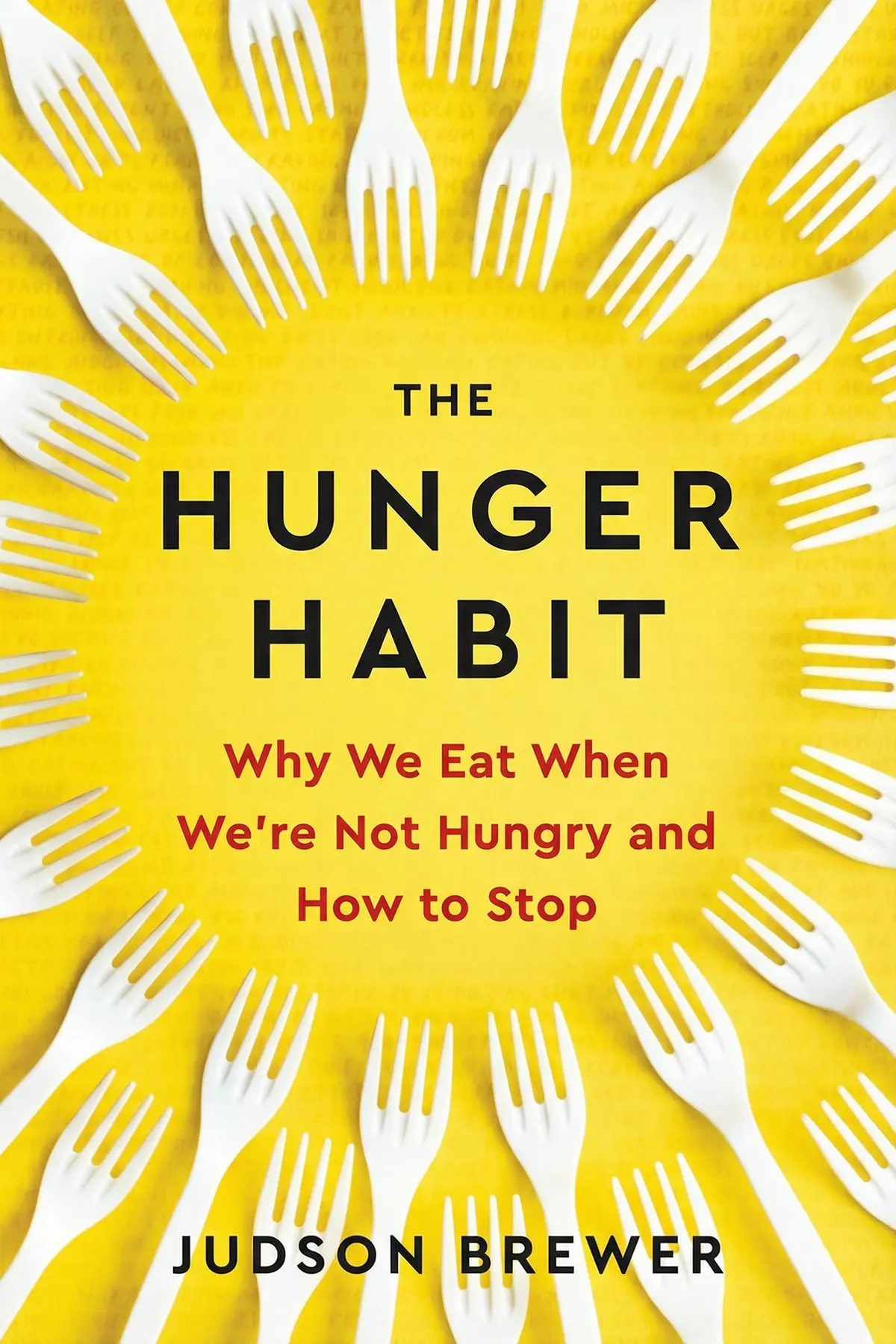
Table of Content
1. Introduction
1 min 47 sec
Have you ever found yourself standing in front of the refrigerator at ten o’clock at night, not because your stomach was growling, but because you had a stressful day? This is a struggle millions of people face, and for decades, the standard advice has been to simply try harder—to use more willpower, to follow a stricter diet, or to exercise more discipline. But what if the reason we fail at these efforts isn’t a lack of character, but a misunderstanding of how our brains actually work?
In The Hunger Habit, Dr. Judson Brewer, a renowned neuroscientist and psychiatrist, invites us to look at our relationship with food through the lens of habit loops. He suggests that many of our eating behaviors are not about nutrition at all; they are learned responses to emotional triggers like boredom, anxiety, or sadness. Because these behaviors are rooted in the survival centers of the brain, they are largely immune to the logical, thinking part of our minds. This is why you can know exactly what you should eat, yet still reach for the bag of chips.
Throughout this summary, we will explore how to stop fighting against your brain and start working with it. We will move away from the ‘willpower’ model and toward an ‘awareness’ model. You’ll learn how to map out your eating habits, identify the difference between physical hunger and emotional cravings, and use the power of curiosity to naturally shift your preferences. By the end, the goal isn’t just to lose weight or change your diet, but to heal your relationship with eating entirely, replacing the cycle of guilt and restriction with a sense of ease and genuine satisfaction. This journey is about understanding the ‘why’ behind the bite, which is the first step toward lasting change.
2. The Ancient Origins of Modern Cravings
1 min 56 sec
Explore how our brain’s survival mechanisms, originally designed to help us find food, have evolved into a complex system of emotional habits and dopamine loops.
3. The Fallacy of Willpower and Cognitive Control
2 min 01 sec
Learn why relying on mental strength often leads to failure and how our brain’s architecture prioritizes habits over logical decisions.
4. Differentiating Between Hunger and Heart Hunger
1 min 46 sec
Uncover the vital distinction between physical nutritional needs and the emotional voids we often try to fill with food.
5. Mapping the Habit Loop as a Path to Awareness
1 min 48 sec
Discover the ‘First Gear’ of habit change: identifying the triggers and behaviors that keep you stuck in a cycle of mindless eating.
6. The Power of Disenchantment
2 min 00 sec
Learn how to use mindfulness to update your brain’s reward value, making unhealthy habits naturally less appealing without the need for force.
7. Using Curiosity as a Replacement Reward
1 min 57 sec
Shift from the pain of cravings to the joy of exploration by employing curiosity as a tool to navigate difficult emotions.
8. Finding the Bigger Better Offer (BBO)
1 min 54 sec
Master the ‘Third Gear’ of habit change by identifying and choosing behaviors that provide deeper, more lasting satisfaction than emotional eating.
9. Conclusion
1 min 46 sec
Breaking the hunger habit is not about winning a war against your body; it’s about ending the war entirely. As we have explored, our brains are not broken; they are simply doing what they were designed to do—seek rewards and avoid pain. The problem arises when we get stuck in cycles that provide temporary relief but long-term dissatisfaction. Dr. Judson Brewer’s approach offers a compassionate, science-backed exit ramp from these cycles.
By moving through the three gears—mapping your loops, updating your reward values through mindful observation, and finding the Bigger Better Offer—you can transform your relationship with food. This process requires patience and a shift in mindset. It asks you to trade judgment for curiosity and to replace restriction with awareness. It reminds us that the most powerful tool for change isn’t a new diet plan, but our own capacity to pay attention to our lives as they are happening.
As you move forward, remember that every craving is an opportunity for practice, not a test you have to pass. If you find yourself falling into an old habit, don’t use it as a reason to give up. Instead, use it as data. Map the loop, notice the result, and stay curious. The more you practice being present with your experiences, the more your brain will naturally gravitate toward what truly nourishes you. Food freedom is possible, and it begins with a single, curious ‘Hmm.’ Stay kind to yourself, stay curious about your patterns, and trust that your brain is capable of learning a new, more satisfying way to live.
About this book
What is this book about?
The Hunger Habit addresses the common struggle of why we eat when we aren't actually hungry. It moves away from the traditional model of willpower and restriction, arguing that these methods are neurologically destined to fail. Instead, the book delves into the mechanics of the brain’s habit-forming circuits, explaining how our survival instincts have been hijacked by modern food and emotional stress. The promise of this work is a path toward food freedom through awareness. By understanding the Trigger-Behavior-Reward loop, listeners can learn to decode their cravings and update their brain's internal reward system. It offers a practical, step-by-step guide to shifting from mindless consumption to mindful satisfaction, replacing the cycle of shame with curiosity and self-compassion.
Book Information
About the Author
Judson Brewer
Judson Brewer is an addiction psychiatrist and neuroscientist specializing in habit change. He serves as a professor at Brown University’s School of Public Health and Medical School. Brewer’s first book, The Craving Mind, has been translated into more than sixteen languages, and his follow-up, Unwinding Anxiety, quickly became a New York Times best seller. His insights have also reached a wide audience through his popular TED Talk, “A Simple Way to Break a Bad Habit,” which has garnered over 19 million views.
Ratings & Reviews
Ratings at a glance
What people think
Listeners find the book beneficial, with one individual mentioning that it teaches how to link the body and the brain once again. Furthermore, they value the focus on research, with one person describing it as an interesting combination of science based on evidence. The book also gains praise for its kind-hearted perspective, and one listener notes that it has truly transformed their relationship with food. Listeners also enjoy the quality of the storytelling, with one remarking that the stories almost jumped off the pages. However, listeners express mixed views concerning the overall effectiveness of the book.
Top reviews
Siraporn
Dr. Brewer has crafted something truly special here that moves beyond the typical calorie-counting nonsense we're fed daily. Instead of demanding more discipline, he invites us to bring awareness to the actual experience of eating. I found the storytelling particularly compelling; the anecdotes about people in his program really helped the concepts of reward-based learning stick. The focus on self-compassion felt like a breath of fresh air compared to the harshness of most health books. While the science is heavy at times, it’s grounded in a way that feels actionable rather than academic. It made me feel genuinely hopeful about finally breaking my midnight snacking cycle. This isn't just about weight—it's about peace.
Show moreRuangrat
Finally, a book that moves past the 'just use willpower' rhetoric that fails most of us! Judson Brewer uses his background in psychiatry to show why discipline is a finite resource that eventually runs out. By focusing on reward-based learning, he teaches you how to update your brain's value of certain foods. I've spent years feeling guilty about my cravings, but learning about the dopamine loops helped me stop the shame spiral. The book works well alongside his app, though you can definitely implement the strategies on your own. It’s research-driven, compassionate, and potentially life-changing for anyone who feels out of control around food.
Show moreVarinee
Changing my relationship with food has been a lifelong battle, but the concept of 'kind curiosity' changed the game for me. I used to beat myself up every time I finished a bag of cookies, which only led to more stress-eating. Brewer’s approach taught me to actually notice how the cookies made me feel—often sluggish and bloated—which naturally decreased the craving over time. It’s a slow process, but it feels much more sustainable than any restrictive diet I’ve tried in the past. The writing is warm and inviting, making complex neurological concepts easy to digest. I’ve already recommended this to several friends who struggle with emotional eating.
Show moreManika
Ever wonder why you reach for the chips even when you aren't actually hungry? Brewer explains the neuroscience of this habit in a way that is both accessible and fascinating. I especially liked the RAIN technique—Recognize, Accept, Investigate, Nurture—as a practical tool for those moments when a craving hits. The book does a great job of explaining how our brains get hijacked by hyper-palatable processed foods. However, I did find some of the middle chapters a bit repetitive, as if the same point was being made multiple times to fill space. Still, the core message about disenchantment with junk food is a powerful one that I’ve started applying to my own grocery runs.
Show moreGabriel
The neuroscience behind the habit loop is explained with such clarity that it actually makes sense why traditional diets fail 95% of the time. Brewer doesn't just tell you to eat less; he explains the orbitofrontal cortex’s role in decision-making and how to 'hack' it with curiosity. I found the sections on 'kind curiosity' to be the most useful part of the entire book. It turns a moment of failure—like overeating at a party—into a data point for learning. My only gripe is that the tone can occasionally feel a bit salesy regarding his specific digital program. If you can look past that, there is a wealth of evidence-based science here to help you reconnect your brain and body.
Show moreOscar
As someone who thrives on data, I loved the deep dive into the orbitofrontal cortex and dopamine triggers that run our eating habits. The book provides a compelling blend of clinical research and practical application. I tried the 21-day exercises and found that simply pausing to ask 'is this what I actually need?' was surprisingly effective. It isn't a quick fix, and the author is very honest about the effort required to rewire these long-standing patterns. I would have liked a bit more discussion on how to handle social pressure around food, but the internal tools provided are excellent. A solid 4-star read for anyone interested in the why behind their hunger.
Show moreChon
Picked this up because I was tired of the binge-restrict cycle that kept me stuck for years. What I found was a very thorough framework for rebuilding the connection between my brain and my stomach. The author explains how snackified modern food is engineered to keep us coming back, which helped me stop blaming my lack of character. While the mindfulness exercises are effective, they do require a significant amount of mental energy to maintain during a busy workday. It's not a magic pill, but it's a much more humane way of looking at health than anything else on the shelf. The stories of other people's struggles made me feel much less alone.
Show moreKanokwan
The content here is solid, though if you've already dived into intuitive eating, much of this will feel like a retread of familiar ground. It’s a well-written compilation of mindfulness techniques, and the 21-day challenge structure provides a nice roadmap for those who need guidance. I appreciated the emphasis on being kind to oneself, which is a far cry from the 'no pain, no gain' mentality of typical diet programs. That said, I didn't feel like I learned anything revolutionary that isn't covered in a standard mindfulness app. It's a 'good to have' book rather than a 'must-read' if you’re already familiar with Brewer’s previous work on anxiety or smoking.
Show moreJib
To be fair, I went into this with high hopes, but the execution felt dated and slightly harmful for those with a history of disordered eating. While the author understands the mechanics of the habit loop, he fails to acknowledge the systemic issues and diet culture that create these 'habits' in the first place. It feels like the same old personal responsibility narrative wrapped in a fancy mindfulness bow. There is very little recognition of how trauma or food insecurity impacts our relationship with what we eat. If you’re in a larger body, you might find the underlying anti-fat bias frustrating to navigate throughout the chapters. I’d suggest sticking to more inclusive intuitive eating resources instead.
Show moreMingkwan
Look, I appreciate the science, but this felt like a 300-page advertisement for an expensive app that I don't want to buy. The first few chapters are interesting and offer a good overview of how habits form, but it quickly becomes repetitive. Much of the advice boils down to 'be mindful,' which is great, but does it really require an entire book? I felt like the author was padding the word count with anecdotes that didn't always land. For someone who has already done some work on mindfulness, there isn't enough new material here to justify the price. It’s not a bad book, just one that could have been a long-form article instead.
Show more
Readers also enjoyed


AUDIO SUMMARY AVAILABLE
Listen to The Hunger Habit in 15 minutes
Get the key ideas from The Hunger Habit by Judson Brewer, plus 5,000+ more titles in English and Thai.
- 5,000+ titles
- Listen as much as you want
- 7-day free trial
- Cancel anytime







