
20 min 26 sec
Unwinding Anxiety: New Science Shows How to Break the Cycles of Worry and Fear to Heal Your Mind
Unwinding Anxiety explores the neurological roots of worry and provides a science-based framework for breaking habit loops. By utilizing mindfulness and curiosity, you can retrain your brain to escape the cycle of panic.
Table of Content
1. Introduction
1 min 47 sec
In an era characterized by constant connectivity and global uncertainty, it feels as though we are living through a collective crisis of the mind. Many of us find ourselves trapped in a state of perpetual unease, where the simple act of trying to relax feels like an impossible task. Whether it’s the inability to sleep because of a racing mind or the sudden surge of panic in a crowded room, anxiety has become a defining feature of modern life. We are told to just ‘calm down’ or ‘think positive,’ but anyone who has wrestled with deep-seated worry knows that rational logic rarely wins a fight against a panic attack.
This is because anxiety isn’t just a fleeting emotion; it’s a deeply ingrained habit. We often think of habits as things we do—like biting our nails or reaching for a snack—but thinking patterns can be habits too. When we feel a spark of fear, our brain looks for a way to cope. For many, that coping mechanism is worry. We think that by obsessively playing out every possible disaster, we are somehow preparing ourselves. In reality, we are just feeding a cycle that keeps us stuck.
To truly move past this, we have to look under the hood of our own biology. We need to understand the ‘why’ behind our worry. By looking at how our brains evolved to keep us safe, we can begin to see why our modern environment triggers such intense, often irrational responses. The path to peace isn’t about fighting your brain; it’s about understanding it and then carefully retraining it. Over the course of this summary, we will explore a roadmap for deconstructing these anxious loops and replacing them with a more expansive, curious, and resilient way of being. This isn’t about a quick fix, but about a fundamental shift in how you relate to your own thoughts.
2. The Evolutionary Roots of Fear
2 min 33 sec
Discover how our ancient survival mechanisms, designed to protect us from physical predators, are now being triggered by the abstract uncertainties of the modern world.
3. Worry as an Addictive Behavior
2 min 07 sec
Explore the surprising connection between your anxious thoughts and the same reward-based learning systems that drive substance abuse and social media habits.
4. The Power of Mapping Habit Loops
1 min 59 sec
Learn why willpower is insufficient for changing deep-seated habits and how simply identifying your triggers can begin to dismantle the cycle of anxiety.
5. Confronting the Autopilot Brain
1 min 58 sec
Understand the ‘Default Mode Network’ and how our tendency to live on autopilot fuels obsessive thinking and prevents us from finding mental clarity.
6. Updating the Reward Value
1 min 50 sec
Discover how to break bad habits by showing your brain that its ‘coping mechanisms’ are no longer providing the benefits it once believed.
7. Curiosity as the Ultimate Antidote
2 min 07 sec
Learn how to replace the ‘contraction’ of anxiety with the ‘expansion’ of curiosity, transforming your relationship with uncomfortable sensations.
8. Kindness and the RAIN Technique
2 min 12 sec
Discover a step-by-step method for navigating intense emotions without being swept away by the ‘second arrow’ of self-criticism.
9. The Path of Anxiety Sobriety
1 min 47 sec
Master the art of ‘anxiety sobriety’ by focusing on the present moment and using the breath as an anchor during life’s inevitable storms.
10. Conclusion
2 min 06 sec
The journey through the landscape of our own minds reveals a fundamental truth: we cannot fight our way to peace. Anxiety is a formidable opponent when we meet it with resistance, but it begins to dissolve when met with understanding and awareness. By recognizing that our worry is a biological habit—an ancient survival mechanism operating on outdated information—we can stop blaming ourselves for our struggles. We are not broken; we are simply wired in a way that doesn’t always suit the complexities of the twenty-first century.
The path forward is paved with curiosity and compassion. We’ve learned that mapping our habit loops gives us the clarity to see the cycles we are trapped in. We’ve discovered that by truly paying attention to the ‘reward’ of our anxious behaviors, we can update our brain’s internal value system and find the ‘Bigger Better Offer’ of the present moment. Through techniques like RAIN and the power of the breath, we can find stability even in the midst of uncertainty. This is ‘anxiety sobriety’—a commitment to showing up for our lives, one moment at a time, without the need to hide behind the protective, yet suffocating, veil of worry.
As you move forward, remember that every interaction is an opportunity to practice. A simple but effective way to start is by changing your response to small, daily stressors. For instance, think about your behavior in traffic. Instead of reacting with anger or frustration when someone cuts you off—a response that only tightens your own internal state—try an experiment. Consciously offer them a kind thought. It might feel strange at first, but notice how it changes your internal chemistry. Shifting from aggression to kindness feels better; it’s a more rewarding state for your brain. By choosing these ‘bigger, better rewards’ in the small moments, you build the neural muscle to choose them in the big ones. Your brain is capable of change, and with patience and curiosity, you can truly unwind the knots of anxiety.
About this book
What is this book about?
This summary delves into the mechanics of the human mind to explain why anxiety often feels like an unbreakable cycle. It reveals that worry is not just a feeling, but a habit reinforced by our brain's ancient survival mechanisms. When our rational mind is overwhelmed by uncertainty, our primitive 'survival brain' takes over, leading to repetitive behaviors like obsessive thinking, procrastination, or even emotional eating. The book offers a practical, three-step method to dismantle these destructive patterns. You will learn how to map your personal habit loops, evaluate the true 'reward' of your anxious behaviors, and introduce a 'Bigger Better Offer' to your brain. By shifting from a state of contraction and fear to one of curiosity and openness, you can effectively reprogram your neural pathways. This guide provides the tools necessary to move from a life on autopilot to one of conscious awareness and lasting peace.
Book Information
About the Author
Judson Brewer
Judson Brewer, MD, PhD, is a prominent neuroscientist and psychiatrist specializing in addiction. He serves as the director of research and innovation at Brown University's Mindfulness Center. Additionally, he holds associate professorships at Brown’s School of Public Health and Medical School. His work focuses on the intersection of mindfulness and brain science, and his TED talk on habit change has reached over 16 million viewers.
Ratings & Reviews
Ratings at a glance
What people think
Listeners find the book to be both useful and efficacious, specifically valuing its operant learning framework and the extensive scientific research included. Furthermore, the writing is lauded for its clarity and quality, incorporating relatable personal narratives that offer a deeply human perspective. On the other hand, the tempo draws varied reactions, with several listeners observing that the initial half progresses quite slowly.
Top reviews
Sangduan
Finally got around to reading Dr. Brewer's work after struggling with panic attacks for years. It turns out that I’ve been fueling my own fire without even knowing it by falling into these subconscious habit loops. Frankly, the science here regarding reward-based learning is a game-changer because it moves away from the "just try harder" mentality that usually fails me. I particularly appreciated the focus on curiosity as a replacement for that crushing sensation of contraction we feel when things get heavy. While the writing is very accessible and feels deeply humanistic, I'll admit some of the anecdotes felt a bit long-winded toward the middle. Still, the practical tools like RAIN are things I'm actually using daily now. It is a relief to have a map of my own mind.
Show morePing
Wow, I never realized how much my worrying was actually just a bad habit my brain learned to keep me safe. This book takes a very different path than your standard self-help fluff by focusing on how the brain’s reward system can be hacked. Frankly, the idea that we can't willpower our way out of anxiety was such a huge relief for me to hear. The three-step process is clear, and the RAIN technique (Recognize, Accept, Investigate, Note) is something I can do anywhere. I think the humanistic tone makes it feel less like a clinical textbook and more like a conversation with a wise friend. If you can push through the slightly repetitive pacing, the insights are absolutely worth the time. It really helps you find your "flow" again.
Show moreFrida
Picked this up because my therapist recommended the concept of 'disenchanting' bad habits. I was skeptical at first, but Brewer’s approach to "updated reward values" actually works. Instead of telling myself I shouldn't worry, I started paying attention to how exhausting the worry actually feels. Once your brain realizes the reward isn't there, the habit starts to crumble on its own. In my experience, this is much more powerful than any "positive thinking" exercise I've ever tried. The book is well-written and balances hard science with personal anecdotes that make the concepts feel attainable. Information really is power when it comes to the mind. Highly recommended for anyone who feels stuck in their own head.
Show moreLily
As someone who has tried every mindfulness app under the sun, this felt different because it actually explains the why behind the worry. Brewer breaks down how our "old brain" overrides our logic, which helps take the shame out of the equation. Not gonna lie, the first few chapters were a slow crawl through technical details, but once you get to the "three gears," everything starts clicking into place. I loved the idea of using curiosity as a "bigger, better offer" for the brain. It’s a very practical approach that feels much more sustainable than just forcing yourself to be calm. The personal stories from his patients add a nice touch, though they can sometimes feel a bit like padding. Overall, a solid read for anyone stuck in a cycle of overthinking.
Show moreAnthony
The chapter on reward-based learning really opened my eyes to why I reach for my phone or a snack whenever work gets stressful. It’s not just a lack of discipline; it’s a feedback loop that my brain thinks is helpful. Judson Brewer writes in a way that is very readable, even when he's diving into the functions of the prefrontal cortex. I did find the book a bit meandering in the later half, and I felt like I was reading the same advice about "loving-kindness" that you find in every other meditation book. However, the core concept of "disenchanting" bad habits by actually paying attention to how they feel is brilliant. It makes so much sense. It's a very grounded, science-based approach to mental health.
Show moreEnd
After hearing about Judson Brewer's apps, I decided to grab the print version to save some money. The information here is basically a more affordable version of his "Unwinding Anxiety" program, which I appreciate. Gotta say, it’s a very practical guide for anyone who likes to understand the mechanics of their behavior. My only real gripe is that it skips over the "why" of the initial stress—it deals with the habits but not always the underlying trauma or life circumstances. Still, as a tool for behavioral change, it’s top-notch. The emphasis on being "kindly curious" about our discomfort is a lot more effective than beating ourselves up. A very useful addition to any mental health library.
Show moreChloe
Truth is, I found the early sections a bit of a slog through neurobiology, but the payoff in the second half is immense. The way the author explains the "third gear" of curiosity as a way to step out of autopilot is incredibly helpful for daily life. I’ve started noting my thoughts as just "thinking" rather than absolute truths, and it has genuinely lowered my overall stress levels. The book can be a bit repetitive, and yes, it draws heavily on mindfulness traditions that have been around for ages. However, the way it’s framed through the lens of modern neuroscience makes it much easier for a skeptic like me to swallow. It’s a readable, effective, and deeply practical manual for the modern brain.
Show moreIngrid
This whole book could have been a long-form essay, to be fair. While I respect Brewer’s credentials and his work on addiction, the pacing of this volume is incredibly sluggish. He spends a massive amount of time on the neurobiology of smoking and overeating, which made me feel like I was reading a book on substance abuse rather than general anxiety. To be frank, the "big secret" is essentially just mindfulness with a fancy new label. If you’ve read any Jon Kabat-Zinn, you’ve heard a lot of this before. That said, the specific framework of mapping your triggers and results is helpful for visual learners. It just repeats the same three concepts until you're tired of hearing them. Useful, but definitely repetitive in the end.
Show moreSamira
Ever wonder why willpower never seems to work for your nerves? Brewer has the answer, though he takes a very long time to get to the point. The book is definitely informative, and the science behind the "survival brain" is fascinating, but the writing style is a bit circular. I found myself skimming several sections that felt like they were just rephrasing things I’d read ten pages earlier. To be fair, the mapping of habit loops is a fantastic exercise that gave me a lot of clarity on my procrastination. I just wish the editor had tightened up the narrative significantly. It’s a good resource, but you’ll need some patience to dig out the most valuable nuggets of wisdom.
Show morePhimwan
Not what I expected at all. I was looking for a guide on managing social anxiety and panic, but this felt more like a manual for breaking a nicotine habit. The author argues that anxiety is just another addiction, but personally, I don't think that comparison holds up for everyone. Examining my feelings curiously while I'm in the middle of a meltdown didn't magically stop the physical symptoms like he suggested it would. Look, I can describe my racing heart and sweaty palms in great detail, but that awareness doesn't actually provide the relief promised here. It’s very pop-sci and contains way too much fluff about the author's personal life for my taste. I’d suggest skipping this one and looking for something more focused on CBT.
Show more
Readers also enjoyed
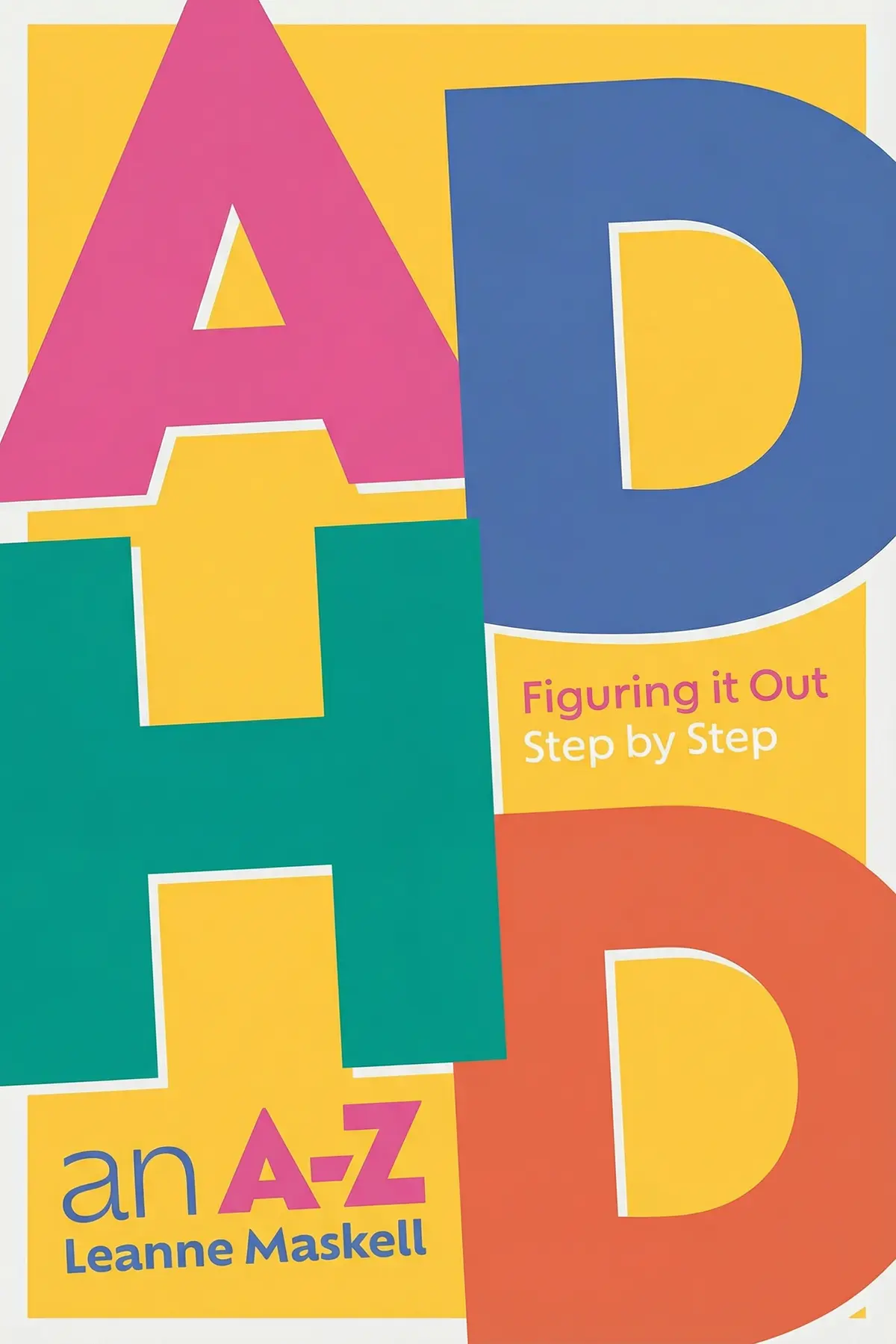
ADHD an A-Z: Figuring It Out Step by Step
Leanne Maskell
Alcoholics Anonymous
Alcoholics Anonymous World Services
AUDIO SUMMARY AVAILABLE
Listen to Unwinding Anxiety in 15 minutes
Get the key ideas from Unwinding Anxiety by Judson Brewer, plus 5,000+ more titles in English and Thai.
- 5,000+ titles
- Listen as much as you want
- 7-day free trial
- Cancel anytime







