
21 min 54 sec
The Mediator’s Handbook
The Mediator's Handbook provides a comprehensive guide to navigating disputes through neutral facilitation. It offers structured techniques to transform hostility into collaborative problem-solving for lasting, mutually beneficial results.
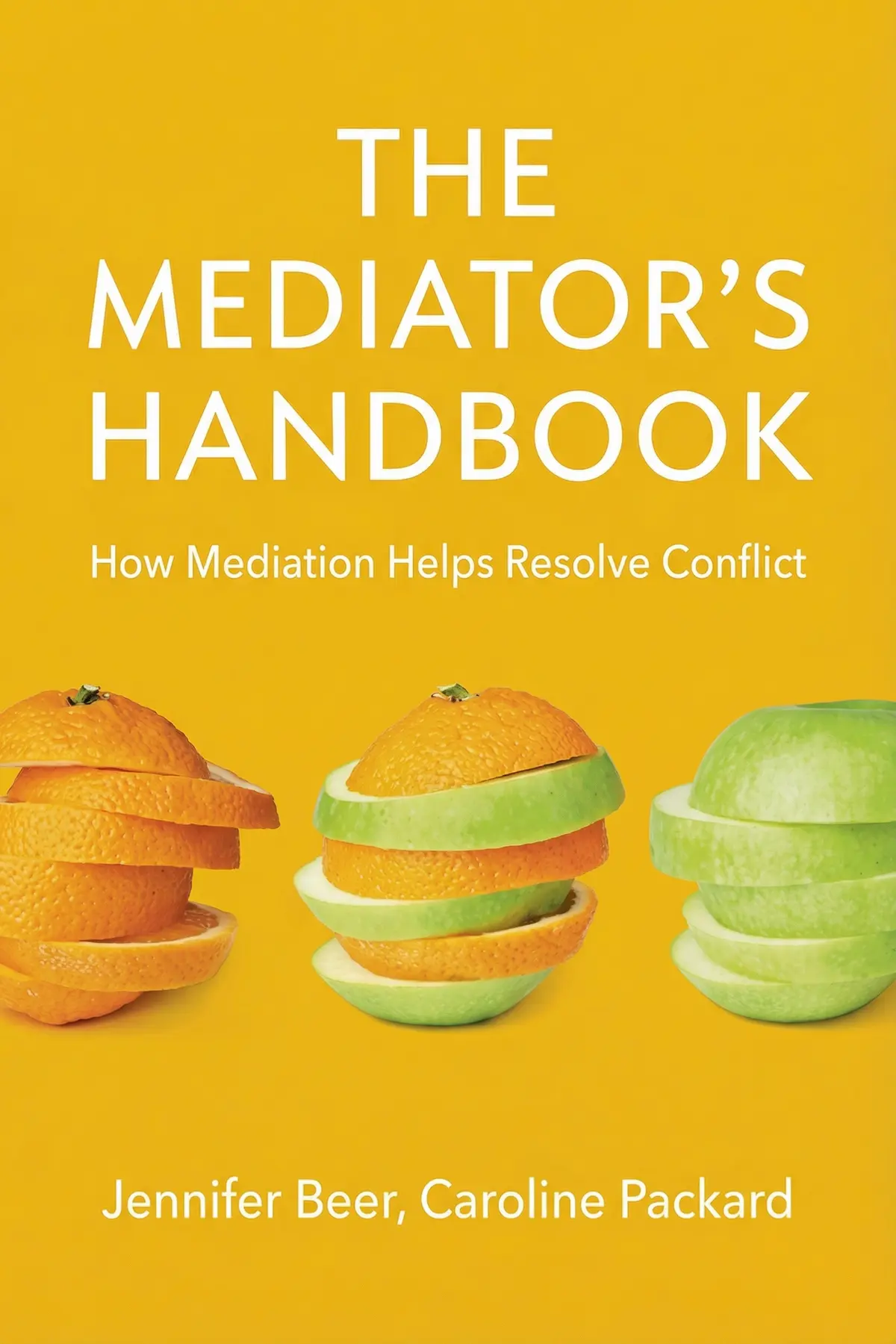
Table of Content
1. Introduction
1 min 35 sec
Think about the last time you found yourself in a heated disagreement. Maybe it was a neighbor whose dog wouldn’t stop barking, a colleague who took credit for your work, or a family member who just didn’t see eye-to-eye with you on a sensitive issue. In those moments, it’s easy to feel like the only options are to explode in anger or retreat into a resentful silence. Both choices usually leave the problem unsolved and the relationship damaged. But there is a third way: the path of mediation.
In this summary of The Mediator’s Handbook by Jennifer Beer and Caroline Packard, we are going to explore a process that doesn’t rely on a judge’s gavel or a winner-take-all mentality. Instead, it relies on the power of structured dialogue and the presence of a neutral guide. Mediation is the art of helping people talk through their problems in a way that allows them to remain in control of the outcome. It’s about creating a space where the noise of conflict can be quieted long enough for the actual signals of human needs to be heard.
Over the course of this summary, we will break down how to look beneath the surface of a fight to see what’s really at stake. We’ll look at the specific stages of a mediation session, from the very first opening remarks to the final handshake of an agreement. We’ll also examine the essential toolkit of the mediator—the skills of listening, reframing, and reality-testing that turn a chaotic argument into a productive negotiation. Whether you’re looking to become a professional mediator or you just want to handle your own conflicts with more grace and effectiveness, the insights ahead will provide a clear, actionable throughline for turning tension into resolution.
2. The Philosophy of Facilitation
2 min 20 sec
Mediation differs from legal battles by giving control back to the people involved, focusing on voluntary participation and mutual understanding rather than forced verdicts.
3. Mapping the Conflict Triangle
2 min 16 sec
Conflict is rarely just about the surface issue; it involves a complex interplay between the people, the process, and the specific problems at hand.
4. Recognizing the Limits of Mediation
2 min 27 sec
Mediation is a powerful tool, but it requires specific conditions to be successful, and it is not appropriate for every situation.
5. The Art of Preparation
2 min 14 sec
Successful mediation begins long before the parties meet, focusing on the physical environment and the internal state of the mediator.
6. Creating a Protected Space for Stories
2 min 13 sec
The opening phase of mediation is designed to allow each person to feel fully heard without the fear of interruption or immediate rebuttal.
7. Navigating the Exchange and Reframing
2 min 19 sec
By shifting the focus from rigid positions to underlying interests, a mediator helps participants see their conflict through a more constructive lens.
8. Constructing Durable Agreements
2 min 19 sec
A successful resolution is built on creative brainstorming and rigorous reality-testing to ensure the final agreement is practical and fair.
9. The Mediator's Core Toolkit
2 min 29 sec
Beyond the steps of the process, the mediator relies on a set of fundamental communication skills that can be applied to any difficult conversation.
10. Conclusion
1 min 42 sec
As we conclude this summary of The Mediator’s Handbook, it’s worth reflecting on the central message of Jennifer Beer and Caroline Packard’s work: conflict doesn’t have to be a destructive force. While it is often painful and stressful, it is also a signal that something needs to change. Mediation provides the structure and the safety to explore that change without the need for aggression or total surrender.
We’ve seen how the process begins with careful preparation and the creation of a neutral space. We’ve looked at the importance of allowing people to tell their stories without interruption, and how the magic of reframing can turn an attack into an opportunity for understanding. We’ve explored the transition from digging into the problems of the past to brainstorming the solutions for the future, all while keeping a firm grip on the reality of what is actually possible.
The true power of mediation lies in the fact that it respects the dignity and the autonomy of the people involved. It assumes that, with the right help, people are capable of solving their own problems. It moves us away from a world of ‘us versus them’ and toward a world of ‘us versus the problem.’
The next time you find yourself in the middle of a dispute—whether you are a participant or a concerned bystander—remember the tools we’ve discussed. Try to look for the interests beneath the positions. Try to listen for the emotion behind the words. And remember that the goal isn’t just to reach an agreement, but to reach an understanding. When we change how we handle conflict, we change the nature of our relationships and the health of our communities. Mediation isn’t just a professional skill; it is a way of being in the world that prioritizes peace, clarity, and the enduring power of human connection.
About this book
What is this book about?
Conflict is an inevitable part of human interaction, whether in a neighborhood, a workplace, or a family setting. The Mediator's Handbook serves as a practical roadmap for those who wish to step into the middle of these storms and guide others toward a peaceful resolution. It isn't just a list of rules; it is a philosophy of communication that prioritizes understanding, respect, and self-determination. The book promises to equip readers with the specific tools needed to manage high-emotion situations, uncover the underlying needs that drive disputes, and facilitate a structured process where parties find their own solutions. By focusing on the role of a neutral facilitator, it demonstrates how to move away from blame and toward constructive action. Whether you are a professional mediator, a manager, or simply someone looking to improve your personal relationships, this guide provides the framework to turn seemingly impossible stalemates into opportunities for growth and cooperation.
Book Information
About the Author
Jennifer Beer
Jennifer E. Beer, PhD, is a mediator and cultural anthropologist with over 30 years of experience helping individuals and organizations navigate conflict. She teaches negotiation at the Wharton School of the University of Pennsylvania and leads workshops on mediation and cross-cultural communication. She’s also the author of Peacemaking in Your Neighborhood. Caroline C. Packard, JD, is a mediator and conflict-resolution specialist with a background in law and organizational dynamics. A graduate of Yale College and NYU School of Law, she brings decades of experience working with nonprofits, universities, religious groups, and professional teams.
Ratings & Reviews
Ratings at a glance
What people think
Listeners find that this mediator's handbook offers superb guidance and is simple to grasp, while one listener mentions it acts as a helpful resource for those just starting out. The material earns praise for its insightfulness, succinct writing style, and good condition. Listeners value the flow of information, with one review emphasizing how effectively it readies even first-time mediators.
Top reviews
Julian
Finally got around to finishing this handbook, and it is a total game-changer for anyone dealing with workplace friction or community issues. The authors managed to condense complex psychological triggers into an easy-to-understand format that doesn’t feel overwhelming or overly academic. I especially loved the 'conflict triangle' concept because it helps you visualize whether the issue is about the person, the process, or the actual problem. This book avoids the fluff found in other mediation texts. Every page offers a concrete tool or a bit of pragmatic advice that you can implement the very next day. It's concise and brilliant.
Show moreNam
As someone who deals with neighborhood disputes regularly, I found the section on 'active listening' and 'reframing' to be pure gold for de-escalating tension. This book teaches you that mediation isn't about being a judge who decides right from wrong, but about giving people the agency to solve their own problems. The authors are very clear about the limits of the process, specifically regarding power imbalances or abuse, which is a crucial distinction to make. It’s an insightful guide that focuses on restoring communication without resorting to the typical blame game. I felt much more prepared for my last session after studying the 'toolbox' chapters. Highly recommend.
Show morePakinee
Truly, the 'toolbox' format of the second half makes this the only reference book a mediator actually needs on their desk for quick answers. The way Beer and Packard explain how to turn accusations into expressions of need is a skill that everyone should learn, not just professional mediators. I’ve read my copy several times now, and I always find a new nuance in the way they describe the opening statements. The book arrived in good condition and the pacing of the information is perfect for someone starting from scratch. It’s concise, insightful, and arguably the best resource currently available for practical mediation training.
Show moreTar
The focus on empathy and naming concrete behaviors really shifted how I approach disagreements within my own family and social circles. This isn't just a book for people in the legal field; it’s a manual for human connection that prioritizes listening over winning. By following the structured flow—letting each person speak uninterrupted before jumping into solutions—I’ve seen how quickly defensiveness can drop. The illustrations are a great touch and make the concepts much less daunting for a beginner. If you want a guide that is both practical and deeply insightful, this is definitely the one to get. It makes the mediator's job feel achievable.
Show moreRungrat
The way this guide breaks down the mediation process into manageable stages is incredibly helpful for a novice who feels intimidated by the field. It’s significantly more concise than Moore’s 'Mediation Process,' making it a much better entry point for those of us with limited time. I was particularly impressed by the illustrations, which break up the text and clarify the flow of a typical mediation session. My only minor gripe is that some of the scenarios felt slightly dated, but the core principles remain timeless. It’s a reliable reference that I’ll definitely keep on my shelf for future consultation. Great for those starting from scratch.
Show moreLuke
Ever wonder why some arguments just spiral out of control while others get solved in minutes through a simple conversation? This handbook explains the 'why' behind that shift, focusing on how to create a safe space where participants feel heard without being interrupted. I appreciated the direct, pragmatic approach to problem-solving and the reminder that solutions shouldn’t be rushed before the emotional groundwork is finished. The writing style is clear and accessible, which is a breath of fresh air compared to most legal texts. It’s a must-have for anyone interested in the altruistic side of conflict resolution, even if the altruism is sometimes hard to maintain in practice.
Show moreSureerat
Picked this up for a certification course and ended up keeping it for my personal library because the advice is so universally applicable. The authors do a fantastic job of exploring the roots of conflict, showing how surface-level anger usually hides deeper needs like a desire for respect or safety. I identified with the realist perspectives mentioned in the text, especially the focus on feasible, actionable steps rather than just 'feeling better.' My only complaint is that the 'handbook' label makes it sound a bit more portable than it actually is. Still, the depth of knowledge provided here is impressive for such a relatively short book. Very well structured.
Show moreKevin
Jennifer Beer provides a solid foundation here, but it wasn't exactly what I anticipated for my leisure reading. While the focus on finding a middle ground is helpful, the text feels more like a textbook than a practical guide at times. To be fair, it is highly educational and covers the basics of neutral facilitation with precision. I appreciated the emphasis on respectful communication, though the repetitive nature of the 'middle ground' motif became a bit tedious after the third chapter. If you are entering the mediation field, it’s a necessary read, but don’t expect a thriller. It is definitely more of a reference tool than a narrative.
Show moreArnav
Look, the information is definitely there, but the pacing felt a little sluggish during the middle chapters where it dives deep into theory. It was assigned for a graduate residency program, and while it’s a great reference, it isn't something I would choose to read for pleasure. The distinction between the mediation process and the mediator’s toolbox is clever and makes navigating the book quite simple. However, I found myself wishing for more real-world case studies to ground the abstract concepts of neutrality and empathy. It’s a solid three-star effort that serves its purpose as an educational tool for professionals but lacks a certain spark.
Show moreYok
Not what I expected when I picked this up, as I found the tone a bit too dry for a book that claims to be a handbook. While the educational value is undeniable, it lacked the engaging narrative style I prefer when learning about human behavior and conflict resolution. Truth is, the constant refrain about seeking a 'middle ground' felt a bit simplistic for the complex interpersonal dynamics they were trying to address. I think this works better as a mandatory classroom text rather than something you’d read for personal growth. It’s informative, sure, but it didn't really resonate with my learning style. It felt like a chore to finish.
Show moreReaders also enjoyed

AUDIO SUMMARY AVAILABLE
Listen to The Mediator’s Handbook in 15 minutes
Get the key ideas from The Mediator’s Handbook by Jennifer Beer, plus 5,000+ more titles in English and Thai.
- 5,000+ titles
- Listen as much as you want
- 7-day free trial
- Cancel anytime







