
19 min 49 sec
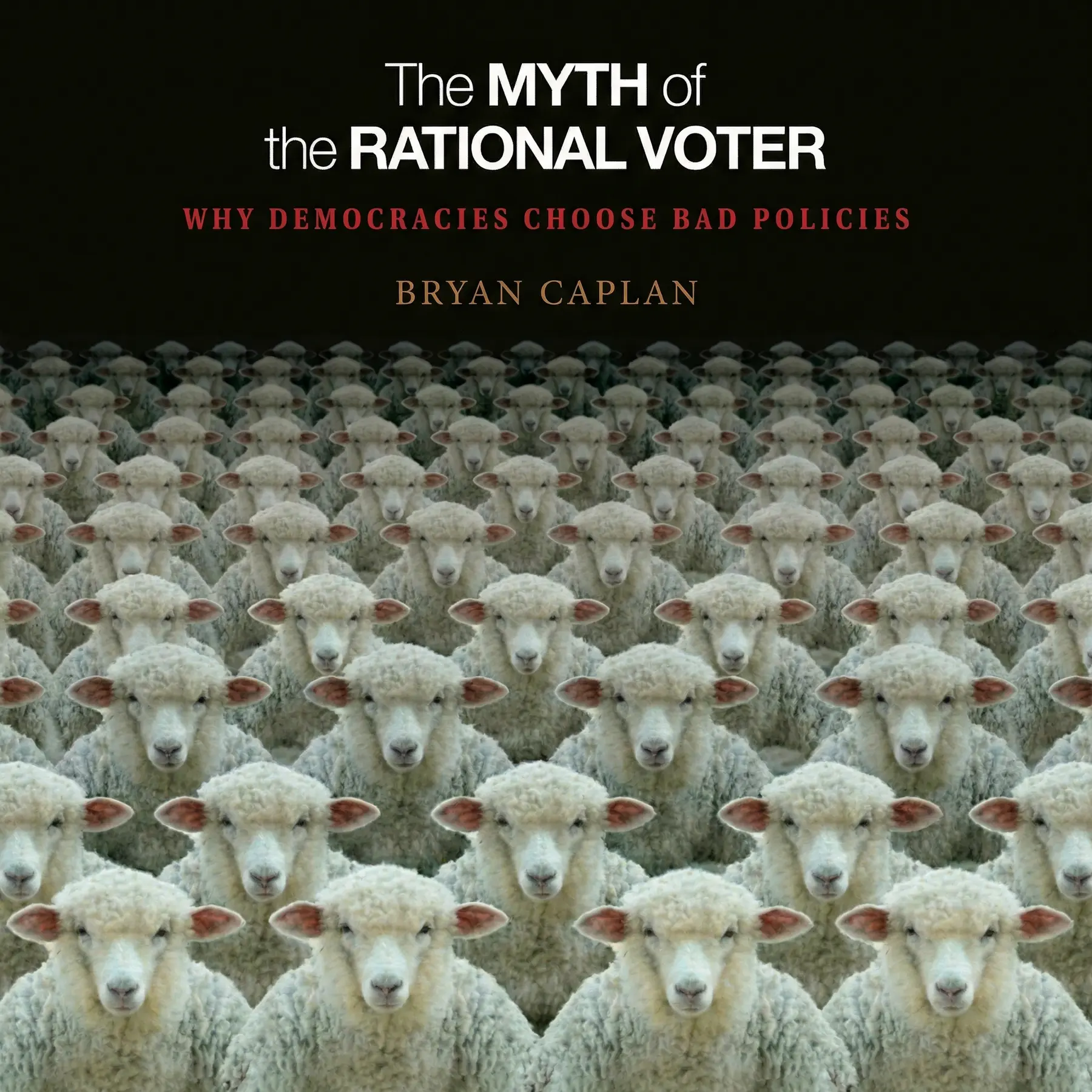
The Myth of the Rational Voter: Why Democracies Choose Bad Policies
By Bryan Caplan
Explore why democratic systems often produce flawed economic policies. This summary examines how systematic voter biases and emotional beliefs override rational decision-making, challenging the fundamental assumptions of modern governance and public choice.
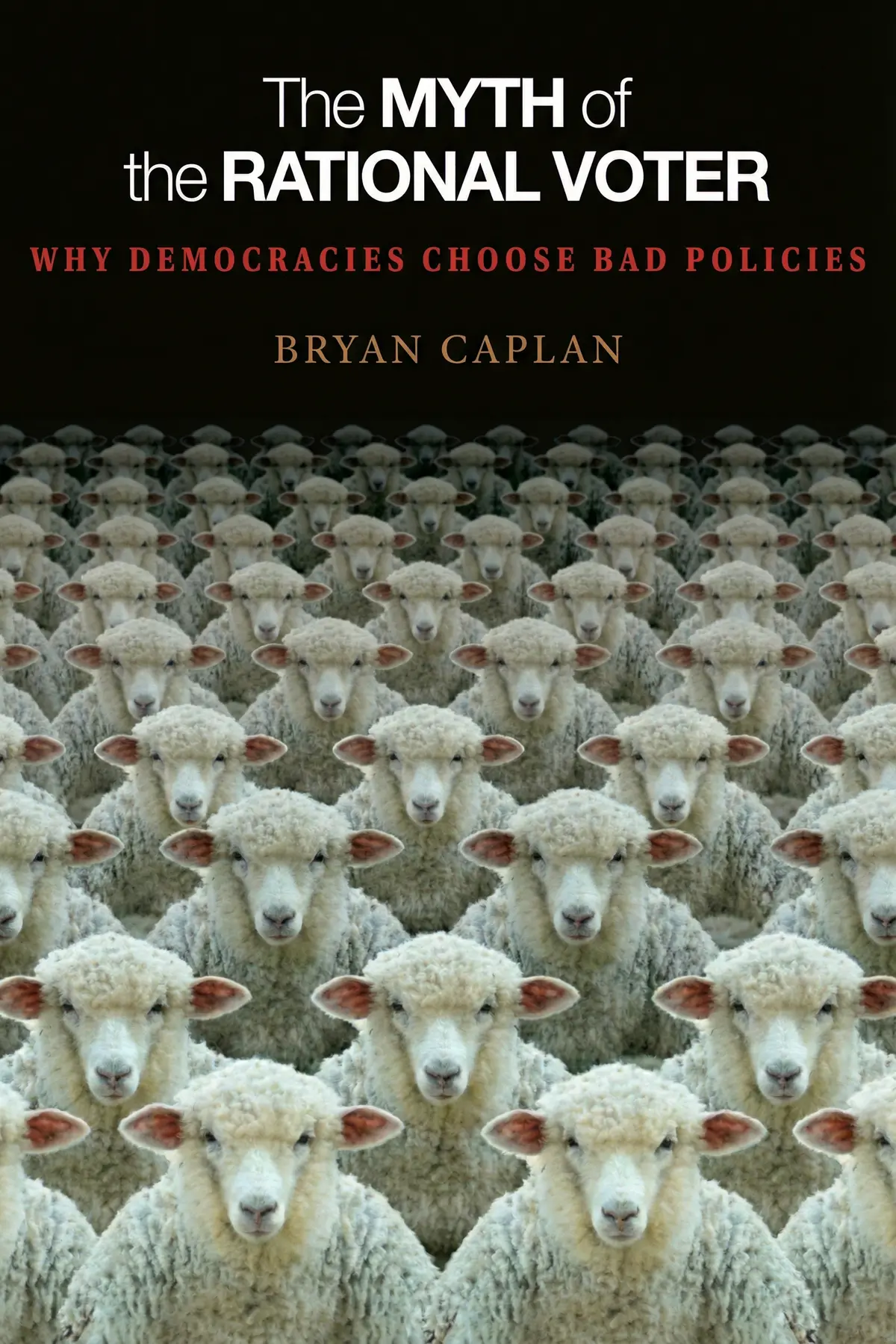
Table of Content
1. Introduction
1 min 57 sec
In modern society, democracy is frequently treated as more than just a political system; it is often viewed with a level of reverence usually reserved for religious institutions. The general consensus across the Western world is that democracy is the pinnacle of social organization, the ultimate guarantor of freedom, and the most effective way to ensure justice for all. We are taught from a young age that the transition from autocracy and dictatorship to democratic rule was the single greatest leap forward for human rights and equality. However, despite this nearly universal acclaim, many of us feel a growing sense of unease. We look at stagnant economies, persistent unemployment, and the apparent inability of governments to solve complex problems, and we wonder what is going wrong.
The conventional explanation for these failures usually points toward corrupt leaders, powerful special interests, or a media landscape that keeps citizens in the dark. But what if the problem is more fundamental? What if the flaw isn’t in the people leading the system, but in the very foundation upon which the system is built: the voters? This is the provocative throughline we are going to explore today. We will delve into the idea that democracy fails not because voters are uninformed, but because they are systematically biased and, in many cases, fundamentally irrational when it comes to politics.
Over the course of this summary, we will unpack how specific, widespread misunderstandings about economics translate into disastrous public policy. We will look at why the mathematical “miracles” that are supposed to keep democracy stable often fall apart in the voting booth. We will also examine why our tendency to vote based on emotion rather than self-interest actually makes the system less efficient. By the end, you will have a new perspective on why we choose the policies we do and how our own psychological comfort might be the biggest threat to a functioning democracy. It is a journey that asks us to trust the free market a bit more and our own political instincts a bit less.
2. The Theoretical Miracle of Collective Intelligence
2 min 28 sec
Could a group of uninformed individuals actually make a perfect decision? Explore the mathematical phenomenon that serves as the primary justification for democratic governance.
3. When Systematic Bias Breaks the System
2 min 19 sec
The miracle of aggregation has one fatal flaw: it only works if our mistakes are random. Discover what happens when an entire population shares the same misconceptions.
4. The Deep-Seated Mistrust of the Market
2 min 17 sec
Most people view the pursuit of profit with suspicion, but this skepticism often stems from a misunderstanding of how wealth is created.
5. The Zero-Sum Fallacy of Foreign Trade
2 min 20 sec
Why do we fear trade with other nations? Discover the bias that treats international exchange as a win-lose game, rather than a mutual benefit.
6. The Obsession with Job Preservation
2 min 19 sec
We often view layoffs as an unmitigated disaster for the economy. But what if the loss of specific jobs is actually a sign of progress?
7. The Paradox of the Unselfish Voter
2 min 16 sec
We are often told that selfishness is the root of all political problems. But what if the real issue is that voters aren’t selfish enough?
8. Rational Irrationality and the Cost of Belief
2 min 12 sec
Why do smart people believe such strange things about politics? Explore why it is often rational for a voter to stay irrational.
9. Conclusion
1 min 41 sec
The fundamental challenge of democracy is not a lack of information, but a conflict of incentives. We have seen how the miracle of aggregation, which should lead us toward moderate and sensible policies, is consistently derailed by systematic biases. Whether it is a mistrust of the market, a fear of foreign trade, or an irrational desire to preserve obsolete jobs, these common misconceptions lead us to demand policies that ultimately make us worse off. Because our individual votes carry so little weight, we treat the voting booth as a place for emotional expression rather than cold, hard calculation. We choose beliefs that make us feel good, and because the cost of being wrong is spread across millions of people, we never feel the personal sting of our own mistakes.
This leaves us with a provocative conclusion: democracy doesn’t work because we are rational, but because we are allowed to be irrational. As long as we continue to vote based on our biases and emotional attachments, the system will continue to produce flawed results. So, what can we do? The most important step is to recognize these patterns in ourselves. We must learn to identify when we are defending an idea not because it is supported by evidence, but because it feels like a part of who we are. The next time you feel a surge of anger during a political debate, or when you find yourself dismissing a logical argument because it comes from the “other side,” stop and ask yourself: am I holding this belief because it is true, or because it feels good? Genuine progress starts with the individual courage to prioritize truth over comfort. Only by confronting our own rational irrationality can we hope to build a democracy that truly serves the common good.
About this book
What is this book about?
Have you ever wondered why governments continue to support policies that most experts agree are harmful? The answer might not lie with corrupt politicians, but with the voters themselves. This exploration of the democratic process argues that the core problem is not a lack of information, but the presence of deeply held, systematic biases among the electorate. While we often assume that democracy works because the majority is generally right, this summary reveals how specific misconceptions about markets, foreign trade, and employment lead to a breakdown in the system. You will learn about the miracle of aggregation and why it fails when everyone is wrong in the same direction. By understanding the concept of rational irrationality, you will see why it is often more comfortable for a voter to be wrong than to be logical. This is a deep dive into the psychology of politics and the economic myths that shape our world.
Book Information
About the Author
Bryan Caplan
Bryan Caplan is a prominent American economist and a professor at George Mason University. Known for his expertise in public choice theory, he also identifies as an anarcho-capitalist. Beyond his work on the flaws of democratic decision-making, Caplan has authored other influential titles, including Selfish Reasons To Have More Kids.
Ratings & Reviews
Ratings at a glance
What people think
Listeners find this work thought-provoking and thoroughly documented, with one listener recommending it as essential reading for fans of political theory. Additionally, they value the fresh perspective on democratic systems, as one review mentions its superior analysis of economic principles. Conversely, opinions on the reasoning are varied; one listener views the arguments as straightforward, whereas another perceives them as muddled. The book's overall mood also sparks differing views, with one listener praising it as the ideal corrective to populist progressivism, while another finds the content emotionally disheartening.
Top reviews
Hana
Bryan Caplan has crafted a truly provocative challenge to the 'wisdom of crowds' in the political sphere. He argues that while people are rational consumers, the zero-cost nature of voting allows us to indulge in feel-good biases that hurt the economy. I found his breakdown of the four main biases—anti-market, anti-foreign, pro-employment, and pessimistic—to be incredibly illuminating and backed by solid survey data. It’s a refreshing, if somewhat cynical, look at why 'the people' often demand policies that make them worse off in the long run. Even if you don't agree with his move toward market-based governance, you have to grapple with his data on the gap between economists and the public. This is a must-read for any political theory enthusiast who wants to look past the usual populist rhetoric.
Show moreCharlotte
This is essential reading for anyone interested in the intersection of psychology and political science. Caplan’s theory that voters are 'rationally irrational' because their individual vote doesn't actually cost them anything is a stroke of genius. It explains so much of the political gridlock and nonsensical trade wars we see today. Truth is, we often treat our political beliefs like fashion statements or religious convictions rather than serious policy decisions. I particularly enjoyed the discussion on how more education tends to align voter views more closely with those of professional economists. While his suggested solutions are controversial, the diagnosis of the problem is the most brilliant thing I've read in years. It’s the perfect antidote to the blind progressivism that assumes the public always knows best.
Show moreElias
Wow, what a punchy deconstruction of democratic myths! Caplan doesn't pull any punches here, arguing that the problem isn't that politicians ignore the public, but that they listen to them too much. The book is an excellent discussion of economic theories that explains why 'good politics' is often 'bad economics.' I loved the section on how people vote for what makes them feel patriotic or virtuous rather than what works. It’s a highly insightful look at the flaws in our system, even if it is a bit cynical. If you want a book that will make you rethink everything you learned in civics class, this is it. Brilliant and deeply researched.
Show moreTod
Ever wonder why politicians support policies that seem to defy basic economic logic? Caplan provides a fascinating, though at times confusing, answer by looking at the incentives of the individual voter. The book is well-researched and makes a compelling case that our voting habits are driven by psychological comfort rather than material self-interest. Personally, I think he overstates the 'anti-foreign' bias by ignoring legitimate concerns about trade impacts, but his logic regarding the 'pro-employment' bias is spot on. The writing is academic but accessible enough for those with a passing interest in public choice theory. It’s not a light read, and parts of it are psychologically depressing, but it changed how I look at every election cycle.
Show moreSam
Picked this up because I enjoyed Caplan's work on education, and this book definitely shares that same provocative spirit. He spends a lot of time presenting empirical evidence that proves the irrationality of voters, particularly when it comes to free trade and the benefits of markets. However, I found his dismissal of the minimum wage debate to be a bit one-sided, as he ignores studies that don't fit his narrow worldview. To be fair, he acknowledges that his views are out of the mainstream, but the logic is usually easy to follow even if you disagree. It’s an innovative approach to democracy that moves beyond the old 'rational ignorance' models. Definitely worth a read, though you might find yourself arguing with the pages by the end.
Show moreLincoln
Frankly, this book is a bit of a wake-up call for anyone who puts too much faith in the 'will of the people.' Caplan’s core argument is that the average voter wishes for harmful policies because they don't have to face the direct costs of their choices. He contrasts this with the market, where buying a bad car actually hurts your wallet. I did find the book’s tone a little too dismissive of the Great Depression, and he glosses over the risks of deregulation far too quickly. But the discussion of the 'four biases' is worth the price of admission alone. It’s a dense, challenging book that forces you to rethink your commitment to democratic fundamentalism.
Show moreWararat
Finally got around to finishing this, and it’s a perfect antidote to modern populist movements. The author makes a compelling case that voters don't just lack information—they actively prefer error-ridden ideas. I found his analysis of 'anti-market bias' particularly relevant given the current political climate. My only real gripe is that he assumes humans are purely 'selfish' in their market decisions, which many historians and sociologists would dispute. Still, the core thesis is robust and the way he compares public opinion to economist consensus is eye-opening. It's a bit of a psychological slog because it paints such a grim picture of human nature, but the intellectual rigor is undeniable.
Show moreDream
Not what I expected, to be fair. While the premise—that voters are systematically biased rather than just uninformed—is a powerful insight, the book repeats itself far too much. Caplan hammers home the same points about 'rational irrationality' in every chapter until it feels like he’s trying to wear the reader down. I also found it strange that he dismisses the power of propaganda so easily, claiming people are naturally skeptical of the news. Look, if voters are as irrational as he claims, wouldn't they be more susceptible to manipulation, not less? There's a lot of good data here regarding the differences between public and expert opinion, but the author's refusal to acknowledge any middle ground makes the conclusions feel forced.
Show moreSofia
As someone who appreciates data, I found the first half of the book fascinating, but the second half left me cold. Caplan's argument that we should shift more power to unelected experts or markets is a tough pill to swallow. He doesn't provide enough substantial evidence that these 'market-based' alternatives wouldn't just lead to a different set of irrational outcomes. Also, he completely ignores climate change, which seems like a massive oversight for a book about 'rational' policy-making. The writing style is okay, but it lacks the engagement of a truly great non-fiction work. It’s a useful teaching aid for understanding public choice, but I’d take his more extreme conclusions with a huge grain of salt.
Show moreArt
After hearing so much about this in libertarian circles, I was deeply disappointed by the execution. Caplan writes with an insufferably arrogant and condescending tone that makes it a chore to get through the denser chapters. He makes massive assumptions about how democracy works while conveniently ignoring the role of special interests or the 'elite' influence that studies from places like Princeton have documented. To suggest that politicians don't lie because of the risk to their careers is honestly laughable and shows a total disconnect from reality. While the core idea of 'rational irrationality' is interesting, the author's leaps toward suggesting an oligarchy of the educated are terrifying. It feels less like an economic study and more like a manifesto for why the rich should run the world.
Show moreReaders also enjoyed
Adults in The Room: My Battle With Europe’s Deep Establishment
Yanis Varoufakis
Abolish Rent: How Tenants Can End the Housing Crisis
Tracy Rosenthal
Abortion: Our Bodies, Their Lies, and the Truths We Use to
Jessica Valenti
21 Lessons for the 21st Century
Yuval Noah Harari
Age of Anger: A History of the Present
Pankaj Mishra
A Different Kind of Power: A Memoir
Jacinda Ardern
AUDIO SUMMARY AVAILABLE
Listen to The Myth of the Rational Voter in 15 minutes
Get the key ideas from The Myth of the Rational Voter by Bryan Caplan, plus 5,000+ more titles in English and Thai.
- 5,000+ titles
- Listen as much as you want
- 7-day free trial
- Cancel anytime







