
17 min 42 sec
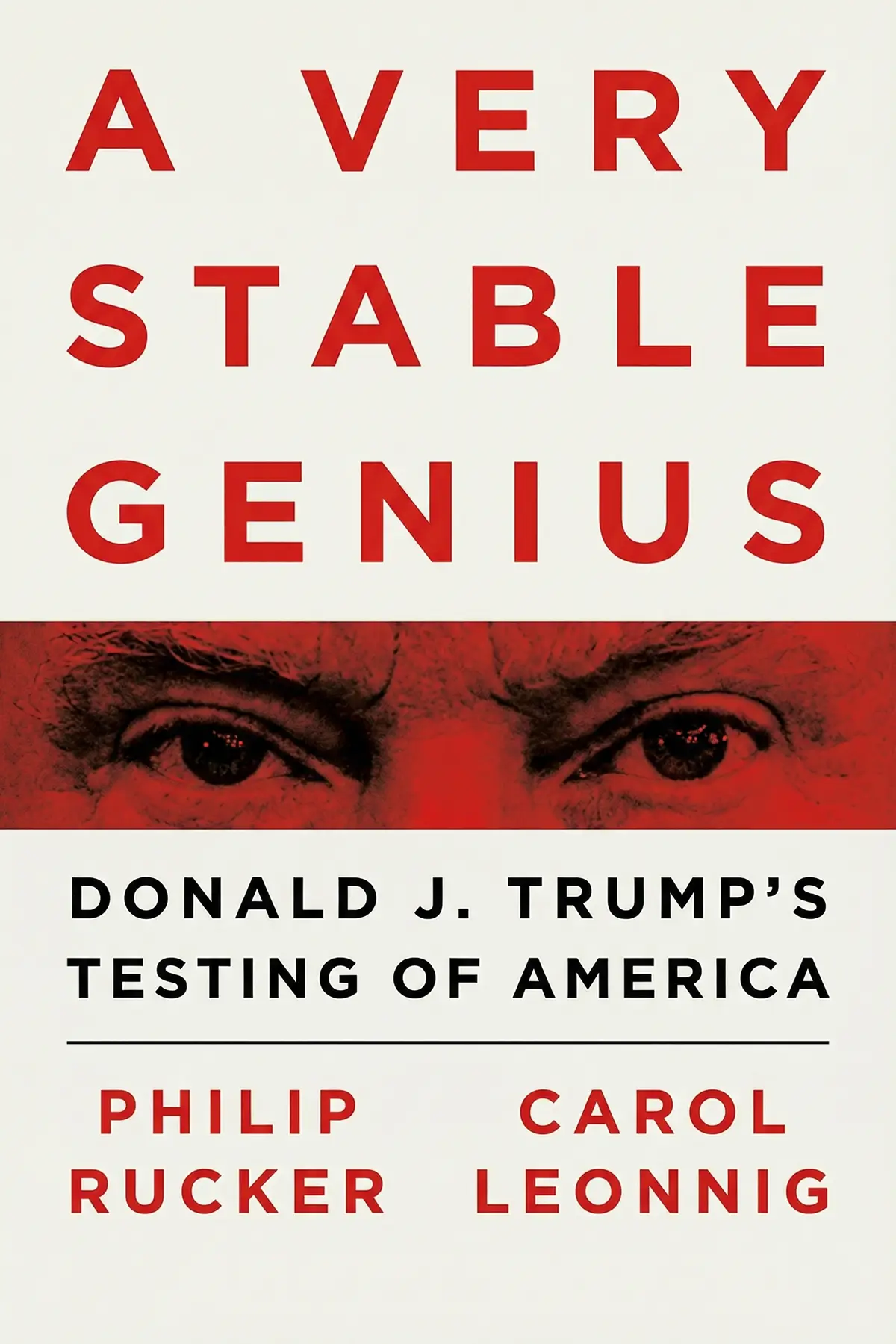
The Myth of the Strong Leader: Political Leadership in the Modern Age
By Archie Brown
The Myth of the Strong Leader challenges the cult of the decisive individual in politics, arguing that the most effective and democratic leadership actually comes from collaboration, expertise, and shared power.
Table of Content
1. Introduction
1 min 51 sec
In our modern world, there is a persistent and often dangerous obsession with the idea of the ‘strong leader.’ We are taught to look for figures who exude total confidence, individuals who appear capable of bending the world to their will through sheer force of personality. This image of the solitary hero at the helm of the state is deeply ingrained in our culture, popping up in everything from blockbuster movies to nightly news broadcasts. We are told that in times of crisis, what we need is a man or woman of action who won’t be slowed down by the messy details of debate or the cautious advice of others. But what if this entire concept is built on a misunderstanding of how power actually works? What if the ‘strong leader’ we crave is actually the least effective at managing a complex, democratic society?
This is the provocative question at the heart of our exploration today. We are going to look at why the cult of the individual is a relatively recent distortion of political reality. We will see how our media environment feeds this hunger for singular heroes and how politicians themselves often buy into their own myths, sometimes with disastrous consequences. More importantly, we’re going to discover that the most successful and enduring political achievements—the kind that truly improve people’s lives—rarely come from the top-down commands of a ‘strongman.’ Instead, they are born from a leadership style that values collaboration, respects institutional boundaries, and has the humility to listen to experts.
As we walk through these ideas, notice the throughline: true strength in a democracy isn’t about the power to dominate; it’s about the capacity to coordinate. We’ll examine how this plays out in the halls of power in London and Washington, and we’ll uncover the risks that arise when we let the myth of the strong leader take hold of our collective imagination. By the end of this journey, you’ll have a completely different perspective on what it means to lead in the modern age.
2. The Media Distortion of Power
2 min 11 sec
Explore how the lens of modern media simplifies complex political systems into a drama of individual personalities, misleading the public about where power truly resides.
3. The Danger of Political Messiahs
2 min 06 sec
Discover why the self-confidence of leaders like Tony Blair can lead to a dangerous isolation from their own parties and advisors.
4. The Hidden Strength of Modesty and Expertise
1 min 59 sec
Learn why the most effective leaders aren’t the ones who know everything, but the ones who know who to listen to.
5. The Success of Collegial Leadership
2 min 05 sec
Uncover how the ‘team-first’ approach of leaders like Clement Attlee and Lyndon Johnson produced some of history’s greatest achievements.
6. Navigating the Hoops of Democracy
2 min 00 sec
Understand the vital role of checks and balances that limit a leader’s domestic power and why this is a feature, not a bug, of the system.
7. The Foreign Policy Trap
2 min 05 sec
Examine why leaders often turn to international affairs to flex their power and the catastrophic risks of making solo decisions in global conflict.
8. Context, Crisis, and the Rise of the Charismatic Figure
2 min 02 sec
Understand why certain historical moments make us prone to choosing the wrong kind of leader and how societal turmoil fuels the strongman myth.
9. Conclusion
1 min 23 sec
As we wrap up our look at the realities of political power, the central message is clear: our fascination with the ‘strong leader’ is a distraction from what actually makes governance work. We have seen how the media’s focus on individual personality creates a distorted view of leadership, and how this distortion can lead politicians to abandon the very qualities—like modesty and the ability to listen—that would make them most effective.
The historical evidence is compelling. From the creation of the NHS to the landmark Civil Rights legislation in the US, the most enduring successes have come from leaders who embraced a collegial style, who respected the expertise of others, and who were willing to work within the slow, often frustrating confines of democratic checks and balances. True strength in a leader isn’t the ability to dominate a room or a country; it’s the ability to bring people together, to manage conflict, and to prioritize the health of the system over their own personal legacy.
The next time you hear a politician described as ‘strong’ or ‘weak,’ take a moment to look beneath the label. Ask yourself: are they collaborating with their peers? Are they listening to experts? Are they respecting the institutions that exist to hold them accountable? By moving past the myth of the singular hero, we can begin to demand the kind of leadership that a complex, modern democracy actually requires—a leadership of modesty, intelligence, and collective action.
About this book
What is this book about?
We often equate political success with 'strong' leadership—the image of a singular, bold individual who commands authority and refuses to compromise. In this insightful analysis, Archie Brown dismantles this stereotype, revealing it as both a misunderstanding of history and a potential threat to democratic health. The book explores the various styles of leadership that have shaped the modern world, from the collegial cabinets of post-war Britain to the decentralized power structures of the United States. Brown argues that the most transformative leaders are often those who prioritize listening, expertise, and institutional cooperation over personal ego. By examining the careers of figures like Tony Blair, Margaret Thatcher, and Lyndon B. Johnson, he illustrates how the desire for absolute control often leads to failure, particularly in the complex arena of foreign policy. Ultimately, the book offers a promise of better governance by showing that true strength in leadership is found in modesty and the ability to unite diverse perspectives.
Book Information
About the Author
Archie Brown
Archie Brown is an emeritus professor of politics at Oxford University and a distinguished expert on the political landscapes of Russia, the United Kingdom, and the United States. He is a twice-awarded winner of the W. J. M. Mackenzie Prize from the Political Studies Association of the UK, receiving the honor for his acclaimed works, The Gorbachev Factor and The Rise and Fall of Communism.
Ratings & Reviews
Ratings at a glance
What people think
Listeners find this title helpful for contextualizing modern news and admire its academic rigor, with one listener remarking that it offers a captivating look at 20th-century history. The work is praised for being highly accessible, and listeners appreciate its concentration on leadership style, with one review drawing attention to its exploration of what makes leadership truly effective.
Top reviews
Eli
This is easily one of the most resonant books I have read regarding the current state of global affairs. Brown successfully dismantles the 'Great Man' theory of history with surgical precision. He demonstrates how the most effective leaders, like Mandela or Attlee, were those who sought consensus and empowered their colleagues rather than those who ruled by decree. The chapter on how Thatcher’s style eventually led to her downfall was particularly enlightening. To be successful, a leader must be able to listen—a simple truth that is often forgotten in the age of populism. The book provides a fascinating review of 20th-century history that feels incredibly fresh. It is scholarly, yes, but Brown’s clear language makes it accessible for anyone with a passing interest in how governments actually work. Highly recommended for any political junkie.
Show moreVipawan
Wow, the depth of research here is staggering. Brown covers so much ground—the US, UK, USSR, China, and beyond—that you feel like you've taken a masterclass in modern history by the time you finish. The central thesis is a powerful one: we are often attracted to the very leadership traits that lead to the biggest political disasters. I loved the historical tidbits scattered throughout, especially the anecdotes about Churchill’s actual cabinet interactions versus the myth we’ve built around him. It’s a long book, but the chapters are broken down well into sub-sections, making it manageable. This should be required reading for anyone in a leadership position, political or otherwise. It completely changed how I think about effectiveness and power.
Show moreWorawit
After hearing Bill Gates mention this, I had to give it a go, and I’m glad I did. Archie Brown has a way of making complex political theories feel grounded in real-world examples. He destroys the idea that a 'strong' leader is what a country needs during a crisis, showing instead that modesty and an ability to listen to experts are far more valuable traits. The biographical sketches of leaders like Kim Il Sung and Pol Pot serve as chilling reminders of what happens when the 'strong leader' myth is taken to its logical extreme. The writing is clear and the arguments are objective, which is a breath of fresh air in today’s polarized climate. It’s an essential text for understanding the pitfalls of modern governance and the true nature of democratic success.
Show moreOrathai
Archie Brown delivers a masterclass in political science that feels more relevant today than when it was first published. The core argument—that we overvalue 'strong' individual leaders while ignoring the benefits of collective leadership—is handled with immense scholarly weight. I found the distinctions between 'redefining' and 'transformational' leaders particularly helpful for understanding why some regimes thrive while others collapse under the weight of a single ego. While the prose can be a bit dense at times, the way he weaves in the history of the UK Prime Ministers and US Presidents provides a much-needed reality check. It’s a bit of a commitment to get through, but the payoff is a much more sophisticated lens through which to view modern elections. If you want to move beyond the headlines and understand how power actually functions in a cabinet or a committee, this is essential reading.
Show moreGrace
Picked this up after seeing it recommended as a way to understand the rise of authoritarianism, and it did not disappoint. Brown uses his fifty years of academic experience to provide a very nuanced look at different leadership styles: redefining, transformational, and revolutionary. I especially appreciated the analysis of how democratic systems are designed to limit the 'strong leader' impulse, and how dangerous it is when those guardrails are tested. The comparison between Tony Blair’s decision-making during the Iraq War and the more collaborative approach of previous PMs was a standout section. My only minor complaint is that the book can be a bit rambling in the middle sections, particularly when he gets lost in the weeds of Mexican or Brazilian political history. Still, it’s a very solid four-star read for the insights alone.
Show moreJoy
As someone who follows politics closely, I found this to be a refreshing take on what makes a leader truly 'transformational.' Brown argues that the leaders who change their countries for the better are rarely the ones who dominate the room or ignore opposition. Instead, they are the ones who can persuade and build coalitions. The historical comparisons are top-notch; seeing the parallels between leaders as diverse as De Gaulle and Deng Xiaoping was eye-opening. The book is very readable, though it does demand your full attention. It’s not a light beach read, but it provides a necessary framework for evaluating the people who run our countries. I came away with a much deeper appreciation for collective leadership and the dangers of the cult of personality.
Show moreBenjamin
Ever wonder why we're so obsessed with 'strong' personalities in politics? Brown attempts to answer this by dissecting the last century of global leadership, from FDR to Gorbachev. Truth is, the book is a bit of a mixed bag. On one hand, the level of historical detail is impressive, and I learned a lot about the inner workings of the Soviet Politburo that I never knew. On the other hand, it often feels like a series of biographical sketches rather than a cohesive argument. The writing style is academic and dry, which makes it hard to stay engaged for long stretches. I think it serves better as a reference book to dip into rather than something you'd read cover-to-cover. It’s useful, but be prepared for a very slow pace.
Show moreAubrey
Gotta say, the book could have been half its length and been much more effective. Brown has a great point to make about the dangers of centralizing power, but he makes it so many times that it loses its impact. I enjoyed the sections on the Soviet Union—where Brown is clearly an expert—but other chapters felt like they were just padding the page count. To be fair, the analysis of how 'redefining' leaders like Reagan or Thatcher change the political center is very sharp. However, the constant jumping back and forth between different eras made it hard to follow the chronological development of his ideas. It’s a good book buried inside a much longer, somewhat tedious one. Read it for the insights, but don't be afraid to skim the repetitive parts.
Show moreIvan
To be fair, I went into this with high hopes because the premise is fascinating. However, the execution left me wanting much more than I actually got. The author repeats his central point—that 'strong' leaders are often the most damaging—over and over again without adding much nuance as the chapters progress. While some of the historical anecdotes about figures like Stalin or Mao are interesting, the narrative structure feels incredibly repetitive. By the midpoint, it felt like I was reading the same arguments copy-pasted into different geographical contexts. It’s an important thesis, but it didn't need to be this long or this redundant to get the point across. It felt like a 100-page essay stretched out into a massive volume that eventually becomes a slog.
Show morePakpoom
Not what I expected at all, and frankly, quite a chore to get through. While Brown is clearly a giant in the field of political science, his writing style here is incredibly dry. At many points, the experience felt indistinguishable from poring through a series of Wikipedia entries on 20th-century dictators. He jumps through time and across continents—from Castro to Ho Chi Minh—in a way that makes the overall structure feel disjointed. I appreciate the scholarly approach, but I was looking for a more concise distillation of principles rather than an endless stream of biographical sketches. It’s informative, sure, but it’s definitely not a page-turner. If you aren't already a history buff, you might find yourself checking how many pages are left in every chapter.
Show moreReaders also enjoyed
A Warning
Miles Taylor
Abolish Rent: How Tenants Can End the Housing Crisis
Tracy Rosenthal
Abortion: Our Bodies, Their Lies, and the Truths We Use to
Jessica Valenti

Adults in The Room: My Battle With Europe’s Deep Establishment
Yanis Varoufakis
21 Lessons for the 21st Century
Yuval Noah Harari
A Different Kind of Power: A Memoir
Jacinda Ardern
AUDIO SUMMARY AVAILABLE
Listen to The Myth of the Strong Leader in 15 minutes
Get the key ideas from The Myth of the Strong Leader by Archie Brown, plus 5,000+ more titles in English and Thai.
- 5,000+ titles
- Listen as much as you want
- 7-day free trial
- Cancel anytime







