
14 min 51 sec
The Narcissist’s Playbook: How to Identify, Disarm, and Protect Yourself from Narcissists, Sociopaths, Psychopaths, and Other Types of Manipulative and Abusive People
Examine the calculated tactics used by manipulative personalities. This guide reveals the predictable patterns of narcissistic abuse, offering readers the clarity and tools needed to break free and begin emotional recovery.
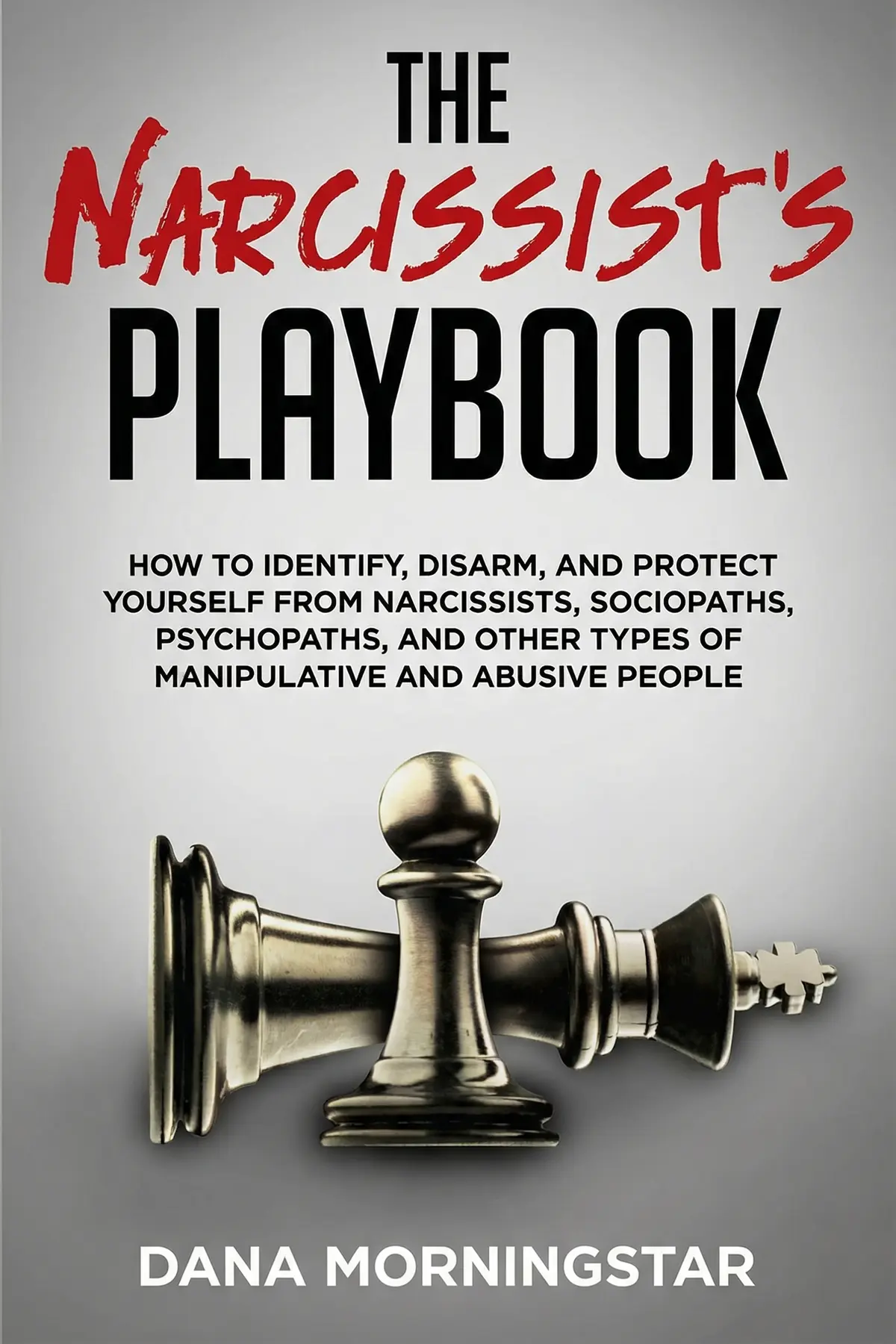
Table of Content
1. Introduction
1 min 27 sec
Have you ever walked away from a conversation feeling completely drained, confused, and questioning your own memory of the events? Or perhaps you’ve been in a relationship that felt like a whirlwind romance at first, only to turn into a confusing cycle of criticism and coldness? If these experiences sound familiar, you might have been dealing with a personality type that operates from a very specific, though often hidden, set of rules. In this exploration of the themes found in Dana Morningstar’s work, we are diving deep into what is often called the narcissist’s playbook.
This isn’t just about people who take too many selfies or talk about themselves a lot. We are looking at a much deeper, more calculated pattern of behavior that focuses on power, control, and a fundamental lack of empathy for others. By understanding these patterns, we can begin to see that the chaos isn’t random. It’s actually a predictable series of moves designed to keep you off-balance.
Our goal today is to pull back the curtain on these tactics. We’ll look at how these individuals enter your life, how they slowly erode your confidence, and how they use others to keep you trapped. But more importantly, we’re going to talk about the way out. Understanding the playbook is the first step toward reclaiming your reality and building a life defined by your own values, not someone else’s demands. By the end of this summary, you’ll have a clearer perspective on the mechanics of toxic relationships and the tools necessary to protect your emotional well-being.
2. The Illusion of the Perfect Start
1 min 56 sec
Discover why the beginning of a toxic relationship often feels like a dream come true and how this intense phase sets the stage for future control.
3. The Systematic Devaluation of Self
1 min 52 sec
Learn how the initial charm is replaced by subtle criticisms and emotional distance, designed to make you doubt your own worth.
4. The Distortion of Reality
2 min 00 sec
Uncover the mechanics of gaslighting and how manipulators use psychological warfare to make you question your own sanity and memories.
5. The Use of Social Triangulation
1 min 59 sec
Explore how manipulators use third parties to create jealousy, insecurity, and a false sense of competition among their victims.
6. The Trap of the Hoovering Phase
1 min 56 sec
Understand why toxic individuals often return just as you’re starting to heal and how to recognize these false apologies.
7. Reclaiming Authority and Setting Boundaries
2 min 06 sec
Explore the essential steps for breaking the cycle, including the Gray Rock method and the power of total disengagement.
8. Conclusion
1 min 35 sec
As we wrap up our look into the mechanics of narcissistic manipulation, the most important takeaway is this: the confusion, the self-doubt, and the pain you may have experienced were not accidental. They were the result of a specific set of tactics designed to keep you small and controlled. By learning the narcissist’s playbook, you have done something incredibly powerful—you have taken away their greatest advantage, which is the element of surprise and the cloak of secrecy.
Moving forward, remember that recovery is not a straight line. There will be days when the old doubts creep back in or when the urge to respond to a ‘hoovering’ attempt feels overwhelming. In those moments, come back to the facts. Re-read your notes, talk to trusted friends who see the situation clearly, and remind yourself that you deserve a life free from psychological warfare. You are not responsible for the narcissist’s choices, but you are now empowered to make your own.
True healing comes when you stop looking for closure from the person who hurt you and start providing it for yourself. Closure is not a conversation you have with a manipulator; it is the moment you decide that their script no longer has a role for you. As you move forward, use this knowledge as a shield. Trust your gut when something feels ‘off,’ protect your boundaries fiercely, and prioritize your peace above all else. You have the tools, you have the clarity, and most importantly, you have your reality back. Now, go out and build a life that is authentically yours.
About this book
What is this book about?
The Narcissist's Playbook is an essential guide to understanding the complex and often devastating world of narcissistic manipulation. It moves beyond the common misconception that narcissism is simply about vanity, instead revealing a systematic pattern of behavior designed to control and devalue others. The book breaks down the specific stages of toxic relationships, from the initial overwhelming charm to the eventual emotional abandonment, helping readers recognize that they are not alone and, more importantly, that they are not to blame. By shedding light on hidden tactics like gaslighting, triangulation, and hoovering, the book provides a roadmap for identifying red flags before they become traps. It promises to empower those who have felt confused or silenced by a toxic partner, family member, or colleague. Through clear explanations and practical advice on setting boundaries and implementing self-care, it offers a path toward reclaiming one’s sense of reality and emotional health. Ultimately, it serves as both a defensive manual and a beacon of hope for anyone seeking to navigate the difficult journey from victimhood to survivor, ensuring they have the knowledge to protect themselves in the future.
Book Information
About the Author
Dana Morningstar
Dana Morningstar is a dedicated author, professional speaker, and advocate who focuses on the nuances of emotional health. She specializes in assisting individuals as they learn to identify the warning signs of toxic personalities and navigate the challenging process of recovering from narcissistic abuse. Her work is centered on providing clarity to those in confusing interpersonal dynamics.
Ratings & Reviews
Ratings at a glance
What people think
Listeners find the guide both educational and articulate, with one listener describing it as a pathway out of emotional suffering. It successfully examines patterns of manipulation and abuse, and listeners are impressed by its clear presentation and functional strategies. One listener also mentions that it provides specific advice for navigating interactions with narcissists.
Top reviews
Kan
Wow, I wish I could mail a copy of this to myself ten years ago because it would have saved me so much heartache. Personally, I found the breakdown of how manipulation happens in both romantic and professional settings to be spot on. The author describes these toxic archetypes with such precision that I could see the faces of specific people from my past on every page. Not gonna lie, reading Chapter 13 on trauma bonds was painful because it held a mirror up to my own excuses. This book doesn't just explain why they do what they do; it explains why we stay and how our own self-esteem is exploited. It’s the most important book I’ve read this year for my mental health. If you feel attacked and need to find a way to thrive again, this is your guide. It gave me the wake-up call I desperately needed.
Show moreLuke
This book provides the definitive blueprint for anyone struggling to identify why their relationships feel like an exhausting game of chess where they are always losing. Gotta say, the way Morningstar explains the different levels of manipulative behavior really helped me categorize the 'cunning' people in my life. It isn't just a list of complaints; it's a strategic manual for winning your life back from people who thrive on your confusion. I particularly liked the focus on boundaries and deal breakers in the later chapters. It’s one thing to know you’re being used, but it’s another thing entirely to have a game plan for when they make their next move. The writing is direct, punchy, and incredibly supportive. It truly feels like a lifeline for those who are ready to stop being targets and start being survivors.
Show moreSumalee
Ever wonder why you feel like you're losing your mind during a simple disagreement with your partner? Look, this book is essentially a decoder ring for the gaslighting and subtle shifts in reality that manipulators use to keep you off balance. I’ve read several books on this topic, but this one felt the most practical because it focuses on the 'playbook' rather than just the diagnosis. It’s less about the narcissist’s childhood and more about your own survival and restoration. The author is very clear about the fact that you cannot change them, which is a hard pill to swallow but necessary for moving forward. I feel much better equipped to protect myself now. It’s an empowering read that turns victims into informed observers. Total game changer for my boundaries.
Show moreTom
After hearing about 'The Narcissist’s Playbook' on a podcast, I decided to give it a shot to help navigate a difficult work dynamic. Honestly, the way it describes professional manipulators was just as accurate as the romantic descriptions. I had no idea that my personality traits were being exploited so systematically by my supervisor until I read the chapter on self-esteem. It gave me a clear path to move forward without feeling like I was the 'crazy' one in the room. The strategies for changing how you respond to their moves were worth the price of the book alone. It is validating, easy to read, and provides a sense of clarity that is hard to find when you're in the middle of a conflict. It helped me find my footing again. I finally feel like I have the tools to thrive.
Show moreYam
The chapter on understanding trauma bonds was a total revelation for me and helped me stop the cycle of guilt I was feeling. Truth is, I had allowed manipulative behavior for so long because I didn't recognize the progression as it was happening. Morningstar does an excellent job of showing how these hooks get set and why they are so hard to pull out once they're in. This book is a wake-up call for anyone who thinks they can 'fix' a manipulator through empathy or better communication. It’s very validating to hear that some people simply operate with a different mindset that doesn't include remorse. It provided the tools I needed to restore my sense of self. It’s a heavy subject, but the author’s tone is consistently encouraging and practical. Highly recommend for anyone feeling lost.
Show moreHana
Identifying manipulative behavior early is a skill we aren't taught in school, but Morningstar makes a compelling case for why it’s essential survival knowledge. Actually, I found the sections on the 'different levels' of behavior to be the most helpful part of the entire book. It’s not just about 'evil' people; it's about the spectrum of manipulation we encounter every day. The book offers a map out of the fog and provides specific, actionable strategies for how to engage—or not engage—with these individuals. It’s well-written, deeply empathetic, and serves as a powerful guide for anyone who has been tired of being the target. I appreciate that it doesn't just focus on the narcissist, but focuses on the reader's empowerment. It's a must-read for anyone looking to better protect their peace. It truly gives you your life back.
Show moreNook
Finally got around to reading this after seeing it recommended in several support groups for survivors of emotional abuse, and I found it quite illuminating. Truth is, many of us suspect we are being manipulated but lack the vocabulary to describe the specific tactics being used against us. Morningstar provides that map out of emotional distress by labeling behaviors like trauma bonding and the psychological progression of the target. I appreciated the practical tools offered in Part 4, which move beyond just identifying the problem to actually practicing strategies for self-preservation. While some of the 'mindset' chapters felt like common knowledge to me, seeing it all laid out in one 'playbook' was incredibly validating. It is a quick read that doesn't hide behind academic jargon, making it accessible for anyone feeling beaten down and tired. A solid resource for restoration.
Show moreMoo
As someone who prefers a structured approach to self-help, I appreciated how Morningstar breaks down complex psychological tactics into digestible, numbered chapters. Frankly, the progression from understanding the manipulator to examining your own personality traits felt very logical and helped me see the 'hooks' clearly. The book acts as a roadmap for anyone navigating the aftermath of narcissistic abuse, providing tools that are actually usable in real-world interactions. I did feel that some of the earlier chapters on 'Why we think bad things won't happen' were a bit long-winded and could have been condensed. That said, the validation provided in the sections on couple's counseling was invaluable and something rarely discussed in other books. It’s a well-written guide that prioritizes the reader's safety and sanity. Definitely worth having on your shelf if you're dealing with a difficult personality.
Show moreMingkwan
The structure of this book feels a bit like a classroom lecture, complete with bullet points and PowerPoint-style transitions that keep things organized but occasionally dry. To be fair, if you are looking for a groundbreaking psychological treatise with brand new clinical theories, you might find this a bit elementary. It often reads like an introductory course taught by someone who just mastered the material themselves. However, for those who are currently in the fog of a toxic relationship, the simplicity is likely a benefit rather than a drawback. The section on 'Crazy-Making Conversations' was particularly relatable, even if the writing style lacked a certain professional polish. I found the first half a bit repetitive, but the book definitely picks up steam once it reaches the actual strategies for breaking free. It serves as a decent primer for beginners.
Show moreMay
Not what I expected given the high praise, as it largely felt like common knowledge repackaged for a general audience without much depth. In my experience, if you have spent any time at all researching toxic dynamics online or in therapy, there is absolutely nothing here that is new or fresh. The tone is very much like a basic PowerPoint presentation, and the writing style reminds me of an undergraduate essay where the word count was a struggle. To be fair, it is readable and might help someone who is truly at step zero of their journey. However, for anyone looking for nuanced psychological insight or advanced strategies, this is likely to disappoint. It felt very repetitive and lacked the 'tools' I was hoping for beyond basic boundary setting. It’s a very 'Psych 101' take on a very complex subject.
Show moreReaders also enjoyed
All About Love: New Visions
bell hooks
Alcoholics Anonymous
Alcoholics Anonymous World Services
A Liberated Mind: How to Pivot Toward What Matters
Steven C. Hayes


AUDIO SUMMARY AVAILABLE
Listen to The Narcissist’s Playbook in 15 minutes
Get the key ideas from The Narcissist’s Playbook by Dana Morningstar, plus 5,000+ more titles in English and Thai.
- 5,000+ titles
- Listen as much as you want
- 7-day free trial
- Cancel anytime







