
17 min 01 sec
The Neural Mind: How Brains Think
Explore the revolutionary science of embodied cognition. Discover how your physical sensations and movements provide the literal neural architecture for your most complex thoughts, language, and social structures.
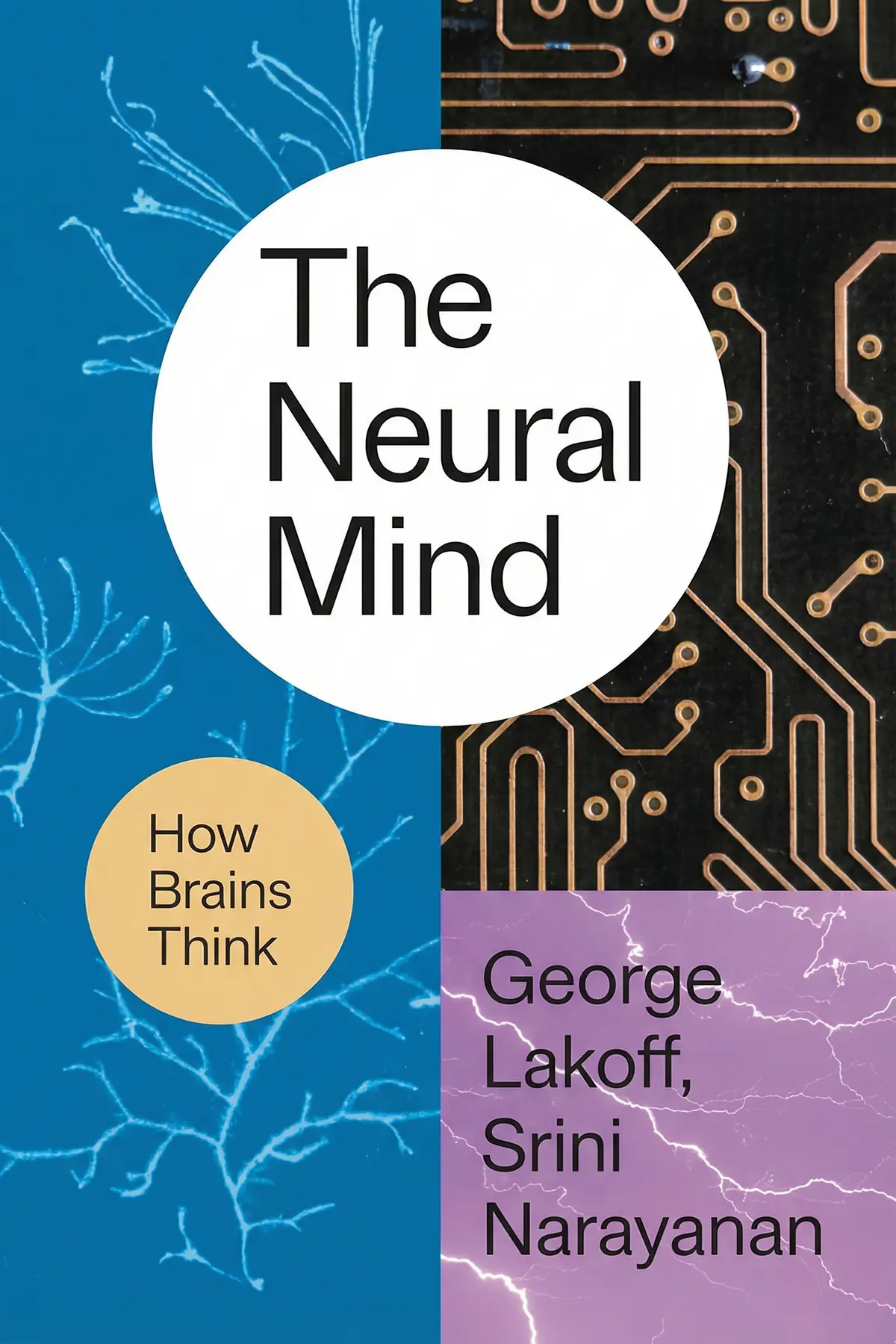
Table of Content
1. Introduction
1 min 55 sec
For a very long time, we have been told a specific story about what it means to be human. This story suggests that your mind is a kind of ethereal pilot sitting inside a biological machine. In this traditional view, your body is just the hardware—the muscles and bones that carry you around—while your mind is the software, processing abstract thoughts in a quiet, isolated space. We’ve been taught that logic, language, and complex reasoning are somehow cleaner or more elevated than the messy physical realities of moving, breathing, and feeling.
But what if that entire foundation is an illusion? What if your thoughts don’t actually float in a vacuum, but are instead physically woven into the very same neural circuits you use to navigate a room or pick up a glass of water?
We are currently living through a massive shift in how we understand the human experience. Revolutionary evidence from the fields of neuroscience and linguistics is proving that the boundary between the physical and the mental simply doesn’t exist in the way we once thought. Every abstract idea you have ever had—from the concept of ‘justice’ to the way you understand ‘time’—is built out of the literal, physical experiences your body has every day.
In this exploration of the embodied mind, we are going to look at the evidence that is overturning centuries of philosophy. We’ll see how your brain reuses its ancient survival systems to build modern intellectual frameworks. We’ll discover why you can’t think about the future without using the part of your brain that knows how to move forward through space. And finally, we will see how this new understanding of the brain changes everything we thought we knew about language, communication, and even the future of artificial intelligence. It’s time to move past the idea of the mind as a ghost in the machine and start seeing it as the living, breathing, biological miracle it truly is.
2. The End of the Mind-Body Divide
2 min 36 sec
Discover how mirror neurons and neural reuse prove that our brains do not separate the act of thinking from the act of doing.
3. How Early Experience Scaffolds Abstract Logic
2 min 38 sec
Learn how the simplest physical lessons from infancy provide the structural blueprints for complex political and ethical ideologies.
4. The Metaphorical Operating System
2 min 54 sec
Explore why metaphors are not just literary devices but are the fundamental way our brains process complex information.
5. Thinking as Constant Neural Simulation
2 min 36 sec
Uncover the secret process of mental simulation that allows us to plan for the future and understand the experiences of others.
6. Why AI Lacks True Human Understanding
2 min 46 sec
Explore the fundamental difference between statistical AI and embodied human intelligence, and why data alone isn’t enough for thought.
7. Conclusion
1 min 36 sec
The shift toward an embodied view of the mind is more than just a scientific curiosity; it is a fundamental change in how we perceive ourselves and our place in the world. For too long, we have tried to separate our ‘higher’ intellectual functions from our ‘lower’ biological ones. But as we have seen, this division is a myth. Our most profound ideas, our most complex languages, and our most cherished social values are all grown from the same soil: our physical, bodily interactions with the environment.
When we understand that our brains use the same circuits for moving and thinking, we begin to see why physical health, movement, and sensory experience are so vital to mental clarity and creativity. We realize that communication isn’t just about the words we choose, but about the shared physical simulations we create in each other’s minds. And we see that our intelligence is a deeply human, biological phenomenon that cannot be easily replicated by machines that have never felt the world around them.
Moving forward, this perspective invites us to be more mindful of the metaphors we use and the physical experiences we prioritize. It encourages us to design education systems that engage the whole body and to build societies that recognize the biological roots of our shared human values. Your mind is not a separate entity from your body; it is the living expression of your body’s journey through the world. By embracing this truth, we can live more integrated, grounded, and meaningful lives, recognizing that every thought we have is a testament to our incredible, physical existence.
About this book
What is this book about?
For centuries, the Western world operated under the assumption that the mind and body were distinct entities—that your thoughts existed in an abstract realm separate from your physical biology. This book dismantles that ancient divide, presenting a groundbreaking look at how the brain actually processes information. By merging linguistics with neuroscience, it reveals that our abstract concepts are not detached symbols but are instead deeply rooted in our physical experiences and neural pathways. You will learn how the same circuits used for grasping a cup are repurposed to help you grasp a mathematical concept. The book explains how infant experiences of warmth and movement create the scaffolding for adult ideas about love and social progress. It also addresses the limitations of modern artificial intelligence, showing why statistical pattern-matching can never fully replicate the meaning-making that comes from living in a human body. Ultimately, the work offers a new vision of human nature where the biological and the intellectual are one and the same.
Book Information
About the Author
George Lakoff
George Lakoff is Professor Emeritus of Cognitive Science and Linguistics at the University of California, Berkeley. He is a pioneer in cognitive linguistics and famous for discovering the systematic nature of conceptual metaphors. His previous works include Metaphors We Live By and The Political Mind. Srini Narayanan is a Distinguished Scientist and Senior Research Director at Google DeepMind in Zurich. A former faculty member at UC Berkeley, he co-founded the Neural Theory of Language research group and specializes in bridging neuroscience and artificial intelligence through computational modeling.
Ratings & Reviews
Ratings at a glance
What people think
Listeners describe this as a captivating and thoroughly documented investigation into how biological neural networks transform into intricate concepts and metaphors. They value the text's heavy reliance on cognitive science to clarify our interaction with the world, as one listener remarks that the explanation of how color perception is a neural construct rather than a physical one is especially illuminating. Additionally, they suggest that the comparison between human cognitive functions and artificial intelligence delivers unique and significant insights. While viewpoints differ on the thickness of the technical writing, listeners generally agree that the content delivers an exceptionally crucial outlook on the science of the mind.
Top reviews
Tan
As someone who has followed Lakoff’s work on metaphors for years, this feels like a definitive culmination of his theories. The way the authors dismantle the idea of 'abstract' thought and replace it with a model of embodied neural constructs is nothing short of groundbreaking. It really makes you rethink everything from your personal worldview to the way political discourse is structured around metaphors. The book is undeniably technical, but the payoff for sticking with the dense prose is immense. I especially appreciated the deep dive into how our brains make sense of social events through specific neural pathways. It's a challenging read, but it offers a profound understanding of the mind that you won't find anywhere else. Absolutely essential reading for the 21st century. My thanks to the publisher for the advanced copy.
Show moreClara
Wow, this was mind-bending. The authors do an incredible job of explaining how our physical brain structure actually builds the reality we experience every day. I was particularly struck by the idea that thoughts are physical entities—neural circuits—rather than some ethereal substance. It’s a bit like a manual for the human operating system, though a very complex one. Not gonna lie, I had to reread several sections on the biomolecular substrate to really grasp what was being said, but the clarity it brings to our understanding of 'the self' is worth the effort. It helps us make sense of the political and social events that affect our lives. This book changed the way I look at my brain and the world around me. Mind-boggling stuff!
Show moreLaor
The chapter on color perception was a total revelation for me. Lakoff and Narayanan explain that color isn't an external reality but a product of our specific neural circuitry and retinal cones, which explains so much about human variation in perception. This book provides a deeply researched look at how physical circuits create non-physical ideas, bridging the gap between biology and philosophy. I found the sections on embodied cognition particularly compelling, especially how our physical environment shapes our metaphors. It is a bit heavy on the linguistics side in the later sections, and some arguments felt very tied to English sentence structures. Regardless, the insights provided here are extraordinarily important for anyone interested in cognitive science. I will definitely be going back to this one after letting it sink in.
Show moreKai
After hearing about the intersection of linguistics and biology in this book, I knew I had to pick it up. It takes a very detailed look at how our brains are structured to create ideas, and the depth of research is staggering. The authors argue that our engagement with reality is composed entirely of neural networks, which is a wild concept to sit with. I found the first half of the book to be incredibly strong, particularly the sections on how we build meaning from physical inputs. However, the latter portion shifts heavily into computer modeling and specific linguistic structures that felt a bit more niche. It’s a very complicated book, but it offers unique information that you won't get from more 'pop-science' titles on the market. Highly recommended for the serious student of the mind.
Show moreAlice
Frankly, the concept that our thoughts are physical constructs is revolutionary, and this book backs it up with an impressive array of citations. I’ve read a lot about the brain, but the way Lakoff and Narayanan connect neural circuitry to our social and political understanding is unique. The book is very technical—don't expect a light read—but the information is extraordinarily important. I loved the way it challenged my assumptions about how I 'see' the world via eyes and ears. My only gripe is that it leans very heavily on English-specific examples in the linguistics section, which made me wonder if the theories apply as neatly across different cultures. Still, it's a fascinating deep dive into the machinery of the mind. Definitely worth the time if you are patient.
Show morePor
Ever wonder how a wet mass of neurons produces a metaphor? This book attempts to answer that, and while it's a difficult journey, the destination is worth it. The research summarized here establishes a powerful link between our internal wiring and our engagement with external reality. It’s a very complicated book that assumes a bit of prior knowledge, but the finale comparing human cognition to AI is particularly understandable and timely. I appreciated the nuance the authors brought to the table, even when the computer modeling sections got a bit over my head. It’s an ambitious work that asks the right questions about the nature of thought. Definitely a book I'll need to revisit once I’ve let these ideas sink in for a while. A solid four stars for the sheer depth of information.
Show moreRohan
Finally got around to reading this one, and I have mixed feelings. On one hand, the comparison between human cognitive processes and artificial intelligence is brilliant and timely, highlighting why we shouldn't simply equate the two. On the other hand, the writing style is quite dense and requires a lot of mental energy to parse. I liked the focus on how thoughts are systems products rather than just individual neuron firings, but the middle section on computer modeling really slowed me down. Look, it’s a high-quality piece of scholarship with extensive citations, but it could have benefited from some experience-based anecdotes to break up the theory. A solid resource, though perhaps not for casual reading if you aren't already familiar with the basics of neurobiology.
Show moreWararat
To be fair, I struggled with the sheer volume of technical detail in this book. While the core message about how the brain creates a viewpoint from sensory input is fascinating, the delivery is very clinical. I enjoyed the early chapters that explained the systems-level nature of thought, but I eventually started skimming the sections on formal linguistic modeling toward the end. It felt like the book was trying to be both a neuroscience text and a computer science paper at the same time. For a lay audience, it might be a bit too much, though students of cognitive science will likely find it to be a goldmine. I’d recommend it for the insights into AI vs. human thinking, but be prepared for some heavy lifting. Not an easy read by any stretch.
Show moreMo
Not what I expected from a book intended for a general audience. While the premise of how our brain's physical architecture gives rise to abstract thought is fascinating, the execution is incredibly dry and academic. It reads more like a graduate-level textbook than a popular science book, which makes it a slog to get through even for those of us who enjoy the subject. Truth is, I found myself getting lost in the technical jargon by the second chapter. I appreciate the research, but it lacks the conversational warmth found in other science writing. If you aren't prepared for deep dives into computational modeling and extensive linguistic theory, you might find this one a bit too dense for a weekend read. It’s clearly a work of high scholarship, but for me, it was just too inaccessible.
Show moreOmar
Picked this up because I love neuroscience, but I found it nearly impossible to finish. The authors are clearly brilliant, but the writing is so academic and dense that it drains the joy out of the subject matter. There were moments of brilliance, like the explanation of why color is a neural construct rather than a physical one, but those were buried under mountains of jargon and complex diagrams. I really wanted more conversational, experience-based writing to help ground the theories in everyday life. Instead, it felt like reading a series of high-level research papers bound together. If you aren't an expert in the field or a dedicated student, you might find this more frustrating than enlightening. I appreciate the free copy for review, but this wasn't for me.
Show moreReaders also enjoyed
A Liberated Mind: How to Pivot Toward What Matters
Steven C. Hayes
Acting with Power: Why We Are More Powerful Than We Believe
Deborah Gruenfeld



Alien Earths: The New Science of Planet Hunting in the Cosmos
Lisa Kaltenegger

Age of Propaganda: The Everyday Use and Abuse of Persuasion
Anthony Pratkanis
AUDIO SUMMARY AVAILABLE
Listen to The Neural Mind in 15 minutes
Get the key ideas from The Neural Mind by George Lakoff, plus 5,000+ more titles in English and Thai.
- 5,000+ titles
- Listen as much as you want
- 7-day free trial
- Cancel anytime







