
19 min 19 sec
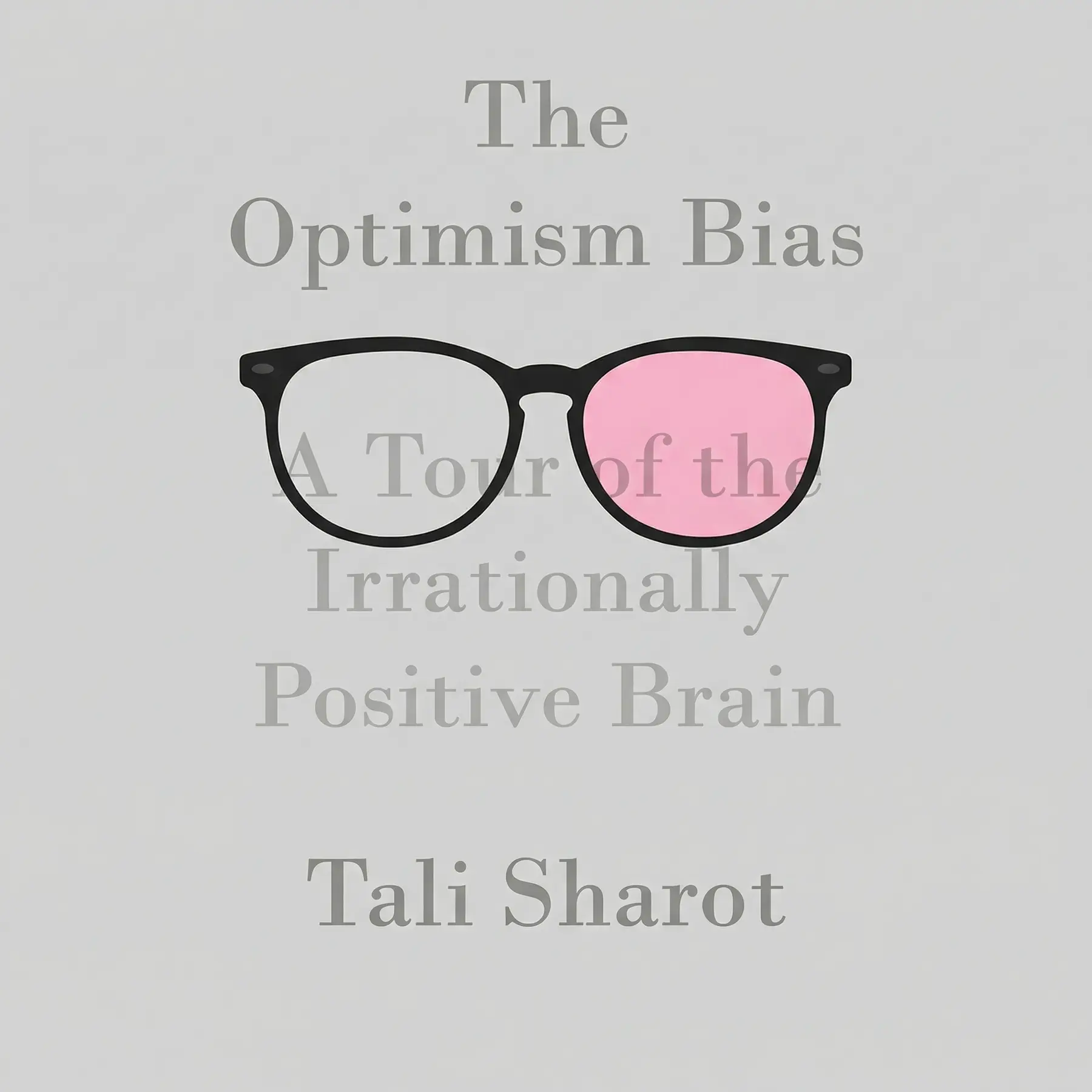
The Optimism Bias: A Tour of the Irrationally Positive Brain
By Tali Sharot
Explore the fascinating neurological mechanisms that drive human hope. This summary reveals why our brains are biologically wired for optimism and how this bias shapes our health, success, and survival.
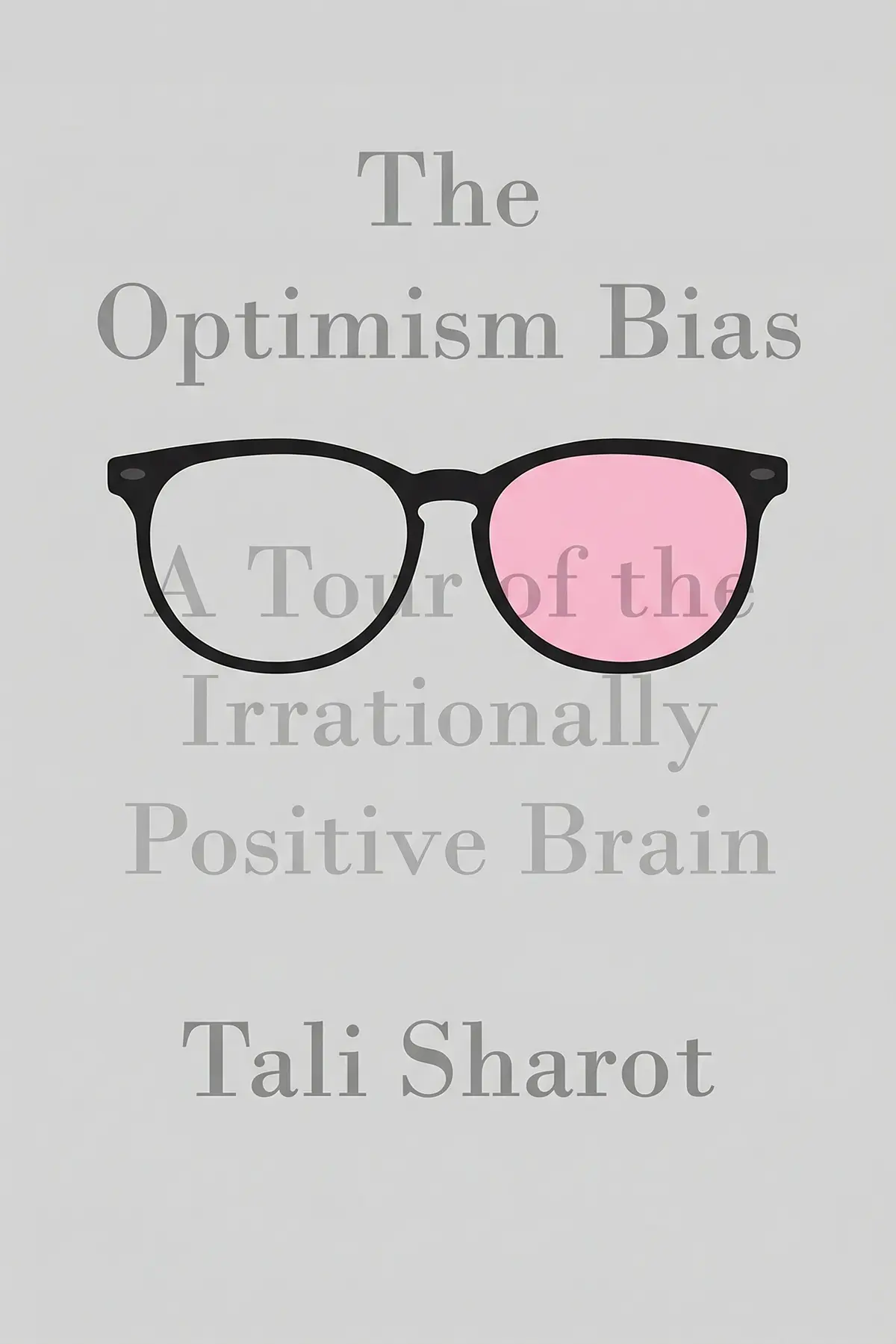
Table of Content
1. Introduction
1 min 27 sec
Imagine for a moment that you consider yourself a realist—or perhaps even a committed pessimist. You might believe that by keeping your expectations low, you are effectively building a shield against the inevitable disappointments of life. If you don’t expect the promotion, it won’t hurt when you don’t get it; if you expect the rain, a sunny day is a pleasant surprise. It sounds like a logical strategy for emotional survival. However, as we dive into the core findings of cognitive neuroscience, we find that this ‘shield’ is largely an illusion. Pessimism doesn’t actually soften the blow of failure, and more importantly, most of us aren’t nearly as realistic as we think we are.
In this exploration of our mental architecture, we are going to look at a phenomenon known as the optimism bias. This isn’t just a ‘glass half-full’ attitude that some people are born with; it is a fundamental, biological leaning toward the positive that is present in the vast majority of the human population. We are going to see how our brains are physically constructed to look at the future through rose-colored lenses, often ignoring hard data in favor of a brighter narrative. We will uncover why this bias exists, how it helps us succeed, and where it can lead us dangerously astray. By the end of this journey, you’ll understand that being ‘irrationally’ positive isn’t a flaw in our programming—it’s one of our greatest evolutionary strengths, even if it does occasionally make us ignore the warning signs right in front of us.
2. The Illusion of Rationality and the Superiority Bias
1 min 55 sec
Think you see the world exactly as it is? Discover why our self-perception is often a distorted map that favors our own ego over objective reality.
3. The Ubiquity of the Optimistic Lens
1 min 58 sec
Most people believe they are immune to the misfortunes that befall others. Explore the staggering statistics behind our collective ‘it won’t happen to me’ mentality.
4. The Neurological Roots of Hope
2 min 16 sec
Inside your brain, a constant dialogue between two specific regions determines your outlook. Learn how your neural wiring creates a vivid future.
5. Why Positive Expectations Fuel Success
2 min 01 sec
Is expecting the best just wishful thinking, or is it a prerequisite for achievement? Discover the link between high expectations and real-world results.
6. The Joy of Anticipation and the Weight of Dread
1 min 56 sec
Your brain can’t always tell the difference between a future event and a present thought. Learn how to use this to maximize your happiness.
7. The Role of Choice in Solidifying Our Bias
1 min 58 sec
Ever wonder why you’re so sure your choice was the right one after you’ve made it? Explore the brain’s clever way of preventing regret.
8. The Danger of the Information Filter
1 min 51 sec
Why do we ignore warnings of disaster even when they are staring us in the face? Uncover the neurological ‘blind spot’ for bad news.
9. Finding the Balance: Moderate vs. Extreme Optimism
2 min 09 sec
Is there such a thing as too much hope? Learn how to distinguish between the optimism that builds and the optimism that breaks.
10. Conclusion
1 min 48 sec
As we have seen, the optimism bias is far more than just a cheerful disposition; it is a complex, biologically-driven framework that defines the human experience. Our brains are designed to prioritize the positive, to imagine a bright future, and to protect us from the paralyzing weight of every possible risk. This bias is what gives us the courage to start new businesses, to fall in love, and to keep going in the face of immense personal tragedy. It is the engine of human progress and individual resilience.
However, we must also recognize that this neurological gift comes with a responsibility. Because we know that our brains are naturally inclined to filter out ‘bad news’ and underestimate risks, we have to consciously invite a bit of realism back into the room when making major life decisions. We don’t want to lose our hope—that would lead to the ‘depressive realism’ that saps our motivation and joy. Instead, we want to aim for that sweet spot of moderate optimism. We can hold onto the belief that things will work out, while still doing the hard work of preparing for the hurdles we know exist.
Ultimately, the throughline of our neurological story is one of survival. We are the descendants of the people who were hopeful enough to try, to explore, and to rebuild. By understanding the ‘why’ and the ‘how’ of our optimistic brains, we can better navigate our lives. So, the next time you find yourself feeling perhaps a little too sure of a positive outcome, or if you’re tempted to ignore a warning sign, take a moment to acknowledge your brain’s hardwiring. Celebrate the hope, but verify the facts. In doing so, you can harness the full power of your irrationally positive brain to build a future that isn’t just imagined, but achieved.
About this book
What is this book about?
The Optimism Bias provides an in-depth exploration of a peculiar human trait: our tendency to overestimate the probability of good things happening while underestimating the risks of the bad. Drawing on cognitive neuroscience, the book explains that this isn't just a personality quirk, but a fundamental feature of the human brain. It examines the specific neural pathways—primarily involving the amygdala and the rostral anterior cingulate cortex—that facilitate this positive outlook. Readers will learn how this internal bias functions as a survival mechanism, driving us to pursue goals and recover from setbacks. The narrative covers the practical implications of optimism, from how it influences our physical health and professional success to how it can lead to massive planning errors in government and business. By understanding the mechanics of hope and the 'depressive realism' of those who lack it, the book promises to show how we can harness our natural positivity while remaining aware of its potential blind spots. It is a journey through the irrational yet essential landscapes of the mind.
Book Information
About the Author
Tali Sharot
Tali Sharot is a distinguished researcher in the field of cognitive neuroscience. She serves as an associate professor at University College London and has received high honors for her work, including the British Psychological Society’s Book Award. In addition to her groundbreaking research on human belief and decision-making, she is the author of The Science of Optimism.
Ratings & Reviews
Ratings at a glance
What people think
Listeners find the book highly accessible and value the excellent quality of the writing. They also characterize it as engaging, with one listener highlighting it as a mind-bending journey into positivity. On the other hand, the standard of information gets a divided response, with some admiring the solid research and others noting a deficit in scientific debate. Perspectives on the mental health elements are similarly mixed.
Top reviews
Suda
Wow. This book is a total mind-bending journey into why humans are such irrational creatures when it comes to the future. Sharot explains that we aren't just being naive; our brains have actually evolved to be overly positive because it helps us survive and stay motivated. The chapter on the 'free choice paradigm'—showing how we value things more simply because we chose them—blew my mind, especially the part about monkeys doing it too. While some critics might find it a bit light on technical jargon, I appreciated the conversational tone that made complex concepts feel reachable. It changed how I view my own decision-making process and my occasional bouts of anxiety. We are literally out-smarting ourselves to stay happy, which is both hilarious and deeply profound when you think about it.
Show moreLeila
This book is a fascinating exploration of the internal machinery that keeps us looking on the bright side. Sharot does a brilliant job explaining how our brains don't just see the world as it is, but rather how we need it to be for our own sanity. I was especially taken with the research on 'flashbulb memories' and how our emotional state can completely rewrite our history without us realizing it. The logic behind why we overestimate our own leadership qualities or friendliness is explained with such clarity that it's hard not to laugh at our own vanity. While the author does occasionally drift into personal narratives, they usually serve to humanize the science. It’s an essential read for anyone who wants to understand why we stay hopeful even when the evidence suggests we shouldn't.
Show moreJeeranan
Finally got around to reading this, and I'm so glad I did because it's a total game-changer. The writing style is conversational and engaging, making it one of those rare science books that you can actually read for fun. I loved the section on why we are so bad at predicting what will actually make us happy—it explains so much about our consumer culture and failed relationships! Sharot manages to take complex neurological functions and explain them using everyday examples that actually make sense. There’s a perfect balance between the 'hard science' of brain scans and the 'soft science' of human behavior. Even the minor detours into public despair and group optimism provided a lot of food for thought. Highly recommended for anyone who wants to peek under the hood of their own mind.
Show moreVarinee
Ever wonder why we keep making the same mistakes despite knowing better? Tali Sharot offers a fascinating glimpse into the 'optimism bias'—that innate tendency to assume things will just work out for us personally. I found the section on how our memories of 9/11 are actually quite fallible to be particularly gripping and well-researched. While the prose is wonderfully accessible and moves at a brisk pace, I occasionally felt like the author leaned too heavily on anecdotes rather than rigorous data. It’s definitely more pop-science than a dense academic text, but the insights into how our brains are 'hardwired' for hope are genuinely enlightening. If you enjoy books that challenge your perception of reality without being too dry, this is a solid pick for your weekend reading list.
Show moreArnav
After hearing about Tali Sharot’s TED talk, I decided to give the full book a go to better understand my own habits. The core argument that our brains are essentially 'rose-tinted' by default is presented through a series of engaging and often surprising studies. I particularly liked the exploration of why Friday feels better than Sunday—it’s all about that sweet anticipation versus the dread of the work week! To be honest, some of the sections on the 2008 financial crisis felt a bit simplistic compared to the rest of the neuroscience, but the overall message is powerful. It’s a wonderful reminder that a little bit of irrationality is actually what keeps us healthy and moving forward in a chaotic world. The writing is smooth and never feels like a slog, which I really appreciated.
Show moreJulian
As someone who struggles with a more pessimistic outlook, I found this to be a surprisingly comforting read. Sharot argues that optimism isn't just about being 'happy-go-lucky,' but is actually a vital evolutionary tool for survival and health. The data showing how optimists live longer and recover faster from illness was eye-opening and grounded the theory in reality. My only real gripe is that the book gets a little repetitious toward the end, and some of the examples felt a bit dated. Still, the way she ties together 9/11 memories with future predictions is clever and makes for a very cohesive narrative. It's a great choice for anyone interested in the intersection of psychology and biology, offering a much-needed perspective on how we perceive risk and reward.
Show moreManop
Interesting topic, but the treatment felt somewhat flat and repetitive by the halfway point. Dr. Sharot clearly knows her stuff, yet she spends an awful lot of time on pop-culture references like the Lakers and Lance Armstrong instead of the raw data I was craving. Truth is, it frequently felt like a long-form magazine article that had been stretched out to fill a book-length manuscript. I did enjoy the discussion on how optimism acts as a shield against clinical depression, but the lack of a technical appendix or a deeper look into the limitations of current research was a letdown. It's a quick, worthy read if you're new to psychology, but seasoned science buffs might find the superficial approach a bit frustrating. Not a bad book, just not the definitive work I was hoping for.
Show moreOm
The information quality in this book is a bit of a mixed bag, though the central premise remains captivating throughout. On one hand, you get some great research on the amygdala and frontal cortex; on the other, you get long-winded stories about the author's travels. Frankly, I think the book could have been about fifty pages shorter if she had trimmed the anecdotal fat. I found the 'Thatcher illusion' diagram and the discussion on cognitive dissonance to be the highlights, but the lack of a glossary made some of the terms hard to track. It’s definitely accessible to the masses, but if you're looking for a dense academic breakdown of neural pathways, you might be disappointed. It’s more of a fun, insightful introduction to the concept of psychological bias than a heavy-duty textbook.
Show moreApichat
Picked this up expecting a rigorous deep dive into neuroscience, but I was quickly disappointed by the excessive political detours and irrelevant personal stories. Within the first twenty pages, the author is already name-dropping the Kennedys and making strange comparisons about Margaret Thatcher's appearance. What does any of that have to do with the actual mechanics of the human brain? To be fair, the concept of the optimism bias is compelling, but the execution here feels scattered and strangely biased for a book about scientific objectivity. The anecdote about the pilot risking lives based on a whim felt completely out of place and poorly explained. I’d much rather stick to Oliver Sacks for my neurology fix since he stays focused on the patients rather than his own worldview.
Show morePaisley
Not what I expected at all. I wanted a serious book on neuroscience, but what I got was a collection of incoherent political rants and 'look-at-me' travel logs. Why are we talking about Barack Obama and the Kennedys in a book that is supposed to be about the biological basis of optimism? It felt like the author was more interested in being a media personality than a scientist, which is a shame because the topic is so important. The science that is there feels buried under mountains of filler and kitschy analogies that don't actually clarify the material. I honestly felt like my time was wasted, and I ended up skimming the last few chapters just to be done with it. If you want real neuroscience, skip this and find a book that respects the reader's intelligence instead of trying to be trendy.
Show moreReaders also enjoyed
A Liberated Mind: How to Pivot Toward What Matters
Steven C. Hayes
Acting with Power: Why We Are More Powerful Than We Believe
Deborah Gruenfeld


Alien Earths: The New Science of Planet Hunting in the Cosmos
Lisa Kaltenegger
Age of Propaganda: The Everyday Use and Abuse of Persuasion
Anthony Pratkanis
AUDIO SUMMARY AVAILABLE
Listen to The Optimism Bias in 15 minutes
Get the key ideas from The Optimism Bias by Tali Sharot, plus 5,000+ more titles in English and Thai.
- 5,000+ titles
- Listen as much as you want
- 7-day free trial
- Cancel anytime







