
17 min 46 sec
The Origin of Wealth: The Radical Remaking of Economics and What It Means for Business And Society
Explore a revolutionary perspective on global markets by viewing the economy not as a machine, but as a complex, evolving organism driven by biological principles, human psychology, and cultural shifts.
Table of Content
1. Introduction
1 min 53 sec
Every morning, we are greeted by a barrage of financial data. We see stock tickers flashing across the bottom of our screens, hear pundits debating the latest unemployment figures, and watch as politicians promise that their specific set of policies will finally fix the engine of the economy. We are taught to think of the economy as a massive machine—one that can be tuned, repaired, or steered if we just have the right experts at the controls. But what if that entire framework is wrong? What if the economy isn’t a machine at all, but something much more organic, unpredictable, and alive?
This summary explores the groundbreaking ideas presented in The Origin of Wealth. We are going to step away from the traditional, centuries-old theories that treat humans like rational calculators and markets like predictable pendulums. Instead, we’ll dive into the world of complexity economics. This approach suggests that our financial world is actually a complex adaptive system, much more similar to a biological ecosystem than a piece of industrial hardware.
Over the course of this exploration, we’ll see how wealth is not just a collection of numbers, but a product of an evolutionary process that has been unfolding for millions of years. We will look at why the ways we think about value are deeply rooted in our culture, why our brains aren’t wired to be the ‘rational actors’ economists want us to be, and how the smallest individual choices can ripple out to change the entire global landscape. By the end of this journey, you’ll have a new lens through which to view the world of business, society, and your own role within the vast, swirling currents of the global economy. Let’s begin by uncovering why the old rules of economics are starting to show their age.
2. The Flaws in Traditional Economic Equilibrium
2 min 06 sec
Traditional economics views the market as a self-correcting machine that always returns to a state of balance. But is this peaceful equilibrium a myth that ignores how change truly happens?
3. The Myth of the Rational Human Actor
2 min 04 sec
Are we really the calculating, logical decision-makers that economists assume we are? New insights suggest our biology and sense of fairness matter more than pure profit.
4. Economics as an Emergent Human Phenomenon
2 min 01 sec
Wherever people gather, an economy appears. Discover how complex trade systems grow spontaneously from simple human interactions without any central designer.
5. The Co-Evolution of Social and Physical Technology
2 min 04 sec
Wealth isn’t just about tools; it’s about how we organize ourselves. Explore the feedback loop between our inventions and our institutions.
6. Wealth is Defined by Cultural Context
1 min 55 sec
What makes a person wealthy? The answer depends entirely on where they are and what their community values most.
7. The Darwinian Process of Business Success
2 min 05 sec
Discover how the principles of natural selection apply to the marketplace, where only the most adaptable ideas and products survive.
8. Shaping Society Through Economic Choice
1 min 57 sec
We aren’t just passive observers of the economy. Our daily actions and government policies have the power to steer our collective future.
9. Conclusion
1 min 41 sec
As we wrap up our journey through the complex landscape of wealth and evolution, it becomes clear that the old ways of looking at our financial world are no longer sufficient. We have moved from a vision of a static, mechanical economy to one that is vibrant, unpredictable, and deeply human. We’ve seen that the economy isn’t a separate entity that happens *to* us; it is a reflection of our biology, our culture, and our collective choices.
The throughline of this entire exploration is the idea of adaptation. Just as life on Earth has survived and thrived by constantly changing to meet new challenges, our economic systems must do the same. This means moving away from the hunt for a perfect ‘equilibrium’ and embracing the reality of constant change. It means acknowledging that we are not always rational, but that our instincts for fairness and social connection are actually vital strengths that hold our markets together.
So, what is the actionable takeaway from all of this? It is the realization that you have agency. Whether you are an entrepreneur, a policymaker, or a consumer, you are part of the ‘selection’ process that determines which ideas will shape the future. By being more conscious of the ‘social technologies’ we support and the businesses we amplify, we can help steer the evolution of wealth toward a future that is more sustainable and inclusive. The economy is a story we are writing together, one transaction at a time. It is a vast, beautiful, and complex system—and its next chapter is entirely up to us.
About this book
What is this book about?
For decades, we have been told that the economy is a predictable system that naturally settles into a state of balance. In this deep dive, you will discover why these traditional theories often fail to reflect the messy reality of the world we live in. By moving away from rigid mathematical models and toward the study of complexity and evolution, we can better understand how wealth is actually created and sustained. The book promises to reframe your understanding of everything from personal financial decisions to global policy. You will learn how human instincts for fairness often override logical self-interest, how technology and social structures evolve together in a Darwinian struggle, and how economies spontaneously emerge even in the most unlikely places. This journey challenges the idea that any single person or institution is in control, offering instead a vision of an adaptive, self-organizing system that we all help shape through our daily choices.
Book Information
About the Author
Eric D. Beinhocker
Eric D. Beinhocker is a prominent figure in the intersection of business, academia, and economic theory. He has served as a Senior Advisor at McKinsey & Company and held prestigious research roles at the MIT Sloan School and Harvard Business School. Beyond his theoretical contributions, Beinhocker has practical leadership experience as a software CEO and has worked within the venture capital sector.
Ratings & Reviews
Ratings at a glance
What people think
Listeners find the book captivating and value its influential fresh concepts in economics, with one listener highlighting the superb explanations of complex adaptive systems. Furthermore, the depth of the information is well-received; one listener describes it as an all-encompassing review, while another points out the logical development of feedback loops. The text also explores behavioral economics, and one listener notes that it provides an exceptional overview of the emergence of complexity.
Top reviews
Tee
Complexity economics is a complete paradigm shift, and Beinhocker explains it with such clarity that you’ll never look at a stock market ticker the same way again. The way he dismantles the old equilibrium models of the 19th century—which were basically just poorly applied physics—is nothing short of masterly. He argues that the economy isn't a dead machine but a living, breathing evolutionary system that follows the rules of biology rather than static equations. I found the section on the Santa Fe Institute’s role in birthing this field absolutely riveting. It’s a thick book, and you really have to concentrate during the chapters on thermodynamics and entropy, but the payoff is immense. To be fair, some of the management advice toward the end feels a bit like standard consulting fodder, but the core thesis is so powerful it doesn't matter. This is essential reading for anyone who feels that traditional economic theory has lost its way.
Show moreElan
Ever wonder why our economic models fail to predict crashes? Beinhocker has the answer, and it’s because we’ve been using the wrong metaphors for over a hundred years. This book is an eye-opening journey into how feedback loops and agent-based modeling can give us a much more accurate picture of reality than the old supply-and-demand curves ever could. The 'Sugarscape' experiment mentioned in the text was a highlight for me, showing how inequality can emerge from very simple rules and a bit of bad luck. It’s intellectually stimulating and well-researched, though it requires some patience. The author is a patient storyteller, taking the time to explain difficult concepts like punctuated equilibrium and its application to the Industrial Revolution. It’s easily the most important book I’ve read this year because it offers a way past the stale Left-vs-Right political debates that dominate our culture today.
Show moreNong
Finally got around to reading this massive tome and wow, what a ride. The central message that wealth creation is an evolutionary algorithm—differentiate, select, and amplify—is one of those ideas that seems obvious once you hear it but changes everything. Beinhocker weaves a coherent narrative that connects biology, physics, and computer science into a single framework for understanding how we got from the Stone Age to eBay. I appreciated that he didn't dumb down the science too much; he treats the reader with respect while keeping the tone engaging. The chapter on the instability of the stock market was particularly prophetic given when this was written. Even though it's from 2007, the insights into why bubbles are inherent to the system feel more relevant than ever. If you want a deep dive into how the world actually works, this is the book for you. It's truly fascinating stuff.
Show moreOtt
The chapter on the Sugarscape model alone is worth the price of admission. It’s a staggering look at how wealth distribution becomes skewed even in the simplest systems, and it has massive implications for how we think about inequality. Beinhocker’s writing is straightforward and intellectually honest, often admitting where the theory of complexity economics is still 'sketchy' or incomplete. This honesty makes his stronger arguments about the failure of the 'Perfect Market Hypothesis' even more compelling. He shows how the drive for short-term shareholder value has actually damaged our ability to innovate for the long term. This isn't just a book for economists; it's for anyone who wants to understand the 'Origin of Wealth' in a literal, evolutionary sense. It’s a powerful, provocative read that challenges almost every assumption you have about how markets function. I’ve been recommending it to everyone I know who enjoys behavioral economics or systems thinking.
Show moreEmily
Wow. This book completely dismantles the 'rational agent' myth that has dominated economic thinking for a century. Beinhocker replaces it with a much more realistic view of humans as emotional, social beings who use simple rules of thumb to navigate a chaotic world. I was particularly impressed by how he links the Industrial Revolution to the concept of 'punctuated equilibrium.' It makes so much more sense than the traditional 'capital accumulation' stories we usually hear. The book is intellectually heavy, but the author’s tone is casual enough to keep it from feeling like a textbook. Personally, I found the discussion on how the internal combustion engine created the middle class to be a brilliant example of how physical and social technologies co-evolve. It’s a comprehensive, mind-expanding book that bridges the gap between the natural sciences and the humanities. A masterpiece of interdisciplinary writing.
Show moreDing
Picked this up after a recommendation from a friend who works in finance, and I have to say, it lived up to the hype. The author does a fantastic job of explaining how 'Social Technologies' and 'Physical Technologies' co-evolve to create the massive explosion of wealth we've seen since the Industrial Revolution. I particularly enjoyed the critique of the 'rational agent'—the idea that we’re all hyper-calculating robots is finally put to rest here. My only real gripe is that the book is quite long and repetitive in the middle sections. Beinhocker spends a lot of time on business strategy and Jack Welch that didn't feel as groundbreaking as the theoretical stuff. Still, the insight that wealth is actually 'fit' information is a beautiful concept. It’s a comprehensive review of a new science that feels much more 'real' than anything I learned in my Econ 101 class back in college.
Show moreThida
As an economics major who always felt something was 'off' about our textbooks, this book was a breath of fresh air. Beinhocker argues that the economy is a complex adaptive system, meaning it’s dynamic and never truly reaches a state of rest. I loved the connection he draws between the laws of thermodynamics and wealth creation; it makes the 'real' economy feel much more connected to the physical world. Some critics say the financial economy is just 'pure information,' but Beinhocker shows how energy and matter are still the fundamental constraints. The writing style is generally accessible, though some sentences are a bit dense and require a second pass. I did feel the business strategy chapters were a bit out of place compared to the high-level theory, but as a whole, it's a monumental achievement in popular science writing. It’s a long haul at over 500 pages, but your brain will thank you.
Show moreTim
Not what I expected from a book on wealth, but in a good way. Instead of investment tips, you get a deep philosophical and scientific inquiry into the nature of value. The author is very convincing when he talks about how human culture and ethical norms are actually 'Social Technologies' that allow us to cooperate and build complex systems. My main takeaway was that we need to stop treating the economy like a machine we can tune and start treating it like a garden we have to cultivate. Frankly, the book could have used a more aggressive editor to trim about 100 pages, especially in the sections regarding General Electric and corporate hierarchy. However, the build-up of feedback loops and the explanation of emergence are handled so well that I still recommend it highly. It provides a fantastic overview of a field that is still unfortunately ignored by many mainstream policymakers.
Show moreOn
The first half of this book is a brilliant, five-star critique of traditional economics that everyone should read. Beinhocker's explanation of why Walras and Pareto led us down a mathematical dead end is clear and historically grounded. However, the second half of the book really started to drag for me. Once he pivots from the science of complexity to giving business management advice, it loses its intellectual edge and starts to sound like a McKinsey PowerPoint presentation. He uses the 'Red Queen Race' as an analogy for business competition, which is fine, but he strains to make it fit every scenario. I also found his dismissal of stakeholder vs. shareholder models a bit too simplistic for such a nuanced thinker. It's worth reading for the history of the Santa Fe Institute and the 'Sugarscape' model, but feel free to skim the later chapters once the 'consultant-speak' kicks in.
Show moreWaree
To be fair, Beinhocker is a great storyteller, but I struggled with the inconsistency of his arguments in the latter half. He does a wonderful job explaining why traditional economics is 'a mansion built on sand,' but then he tries to build his own mansion using the exact same management consulting jargon he seems to critique elsewhere. He suggests that businesses can adapt to 'fitness landscapes' just like biological organisms, yet he also admits that most companies are destined to fail because they can't change their internal DNA. It felt a bit contradictory. Look, the stuff on the Santa Fe Institute and the history of physics in economics is 5-star material. It’s genuinely eye-opening. But by the time I reached the policy implications, I felt the book had lost its momentum. It’s a worthwhile read if you’re interested in complexity, but be prepared for a bit of a slog toward the end.
Show moreReaders also enjoyed
1929: Inside the Greatest Crash in Wall Street History--and How It
Andrew Ross Sorkin
23 Things They Don’t Tell You About Capitalism
Ha-Joon Chang
A Little History of Economics
Niall Kishtainy
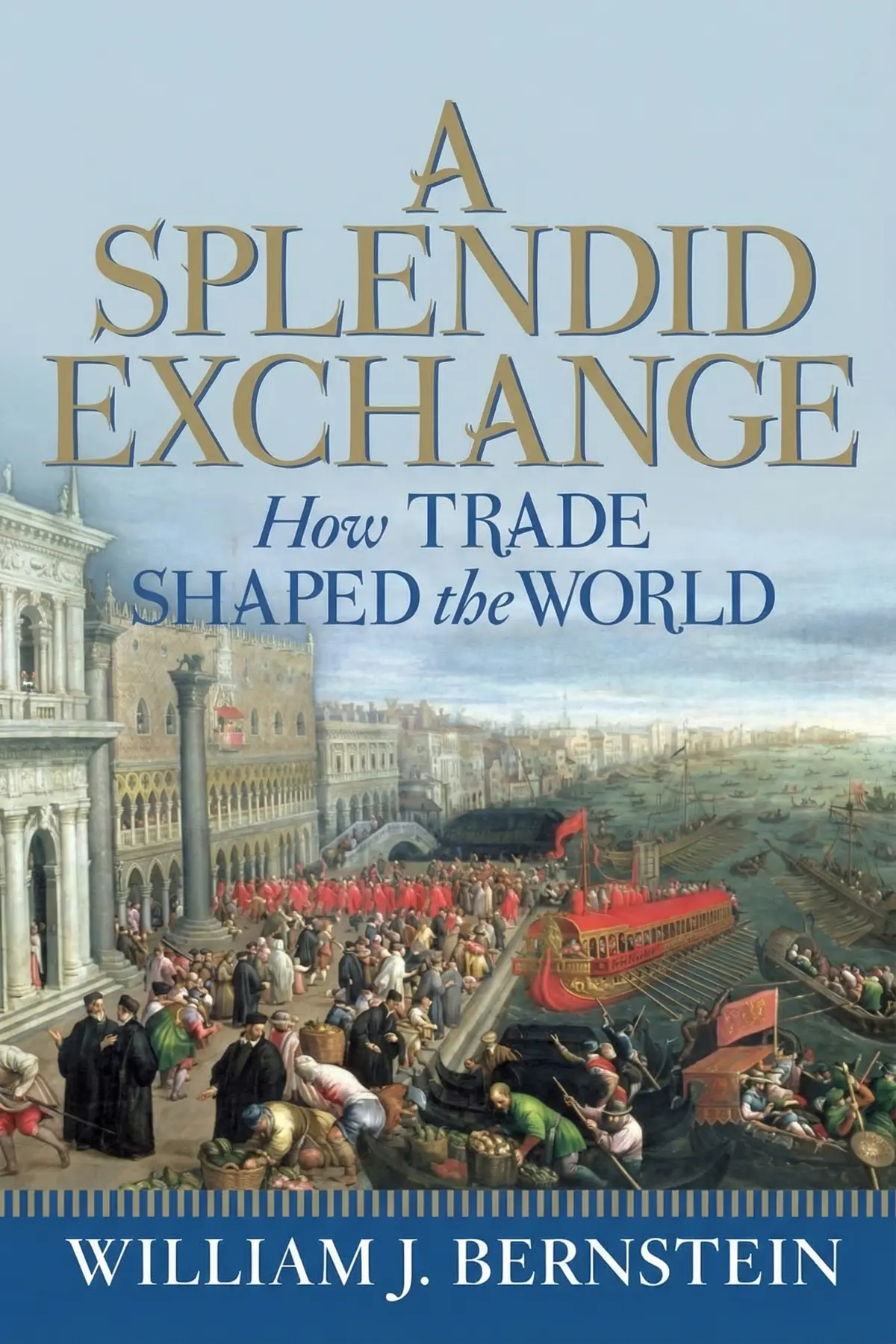
A Splendid Exchange: How Trade Shaped the World
William J. Bernstein
AUDIO SUMMARY AVAILABLE
Listen to The Origin of Wealth in 15 minutes
Get the key ideas from The Origin of Wealth by Eric D. Beinhocker, plus 5,000+ more titles in English and Thai.
- 5,000+ titles
- Listen as much as you want
- 7-day free trial
- Cancel anytime







