
The Dark Net: Inside the Digital Underworld
Jamie Bartlett
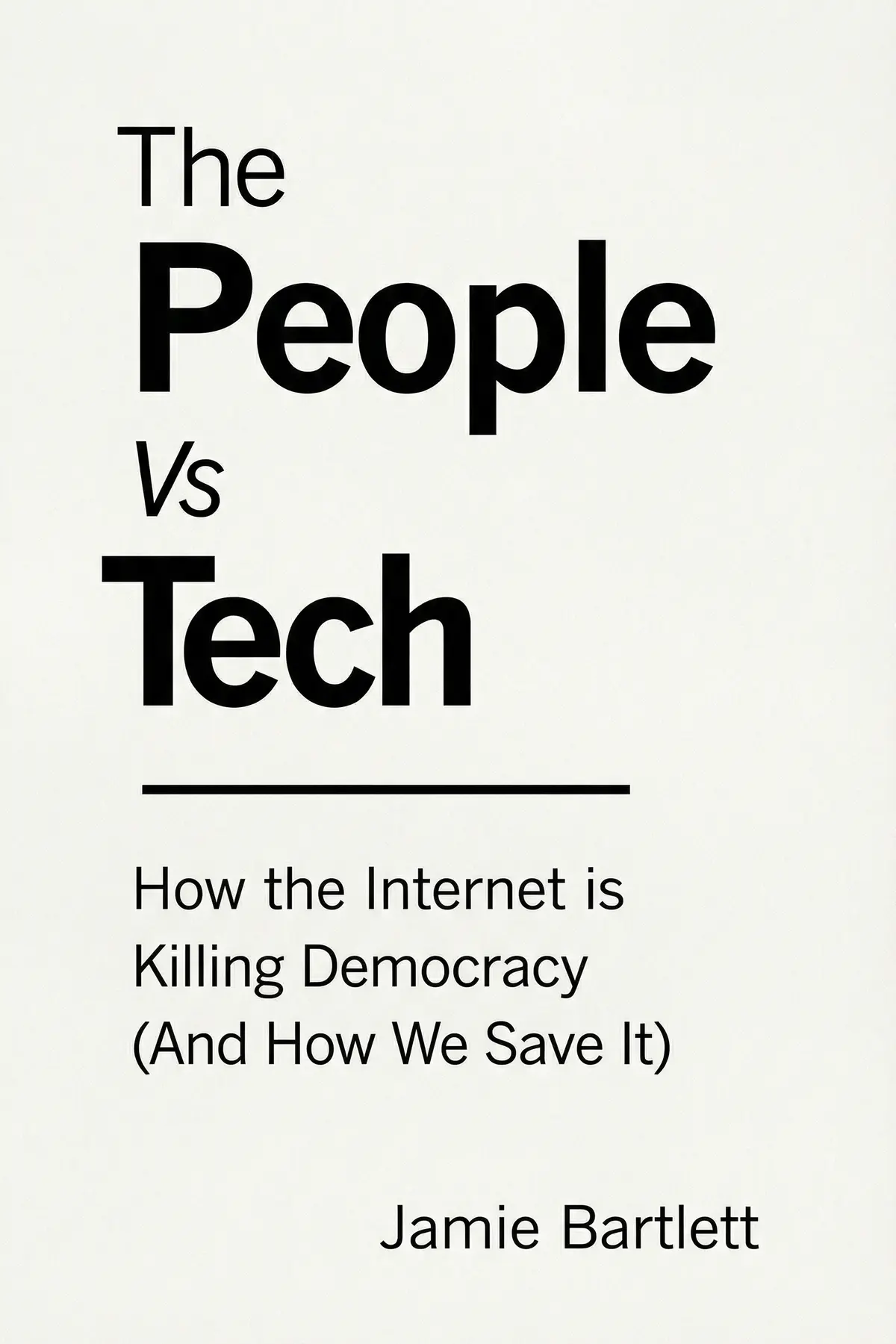
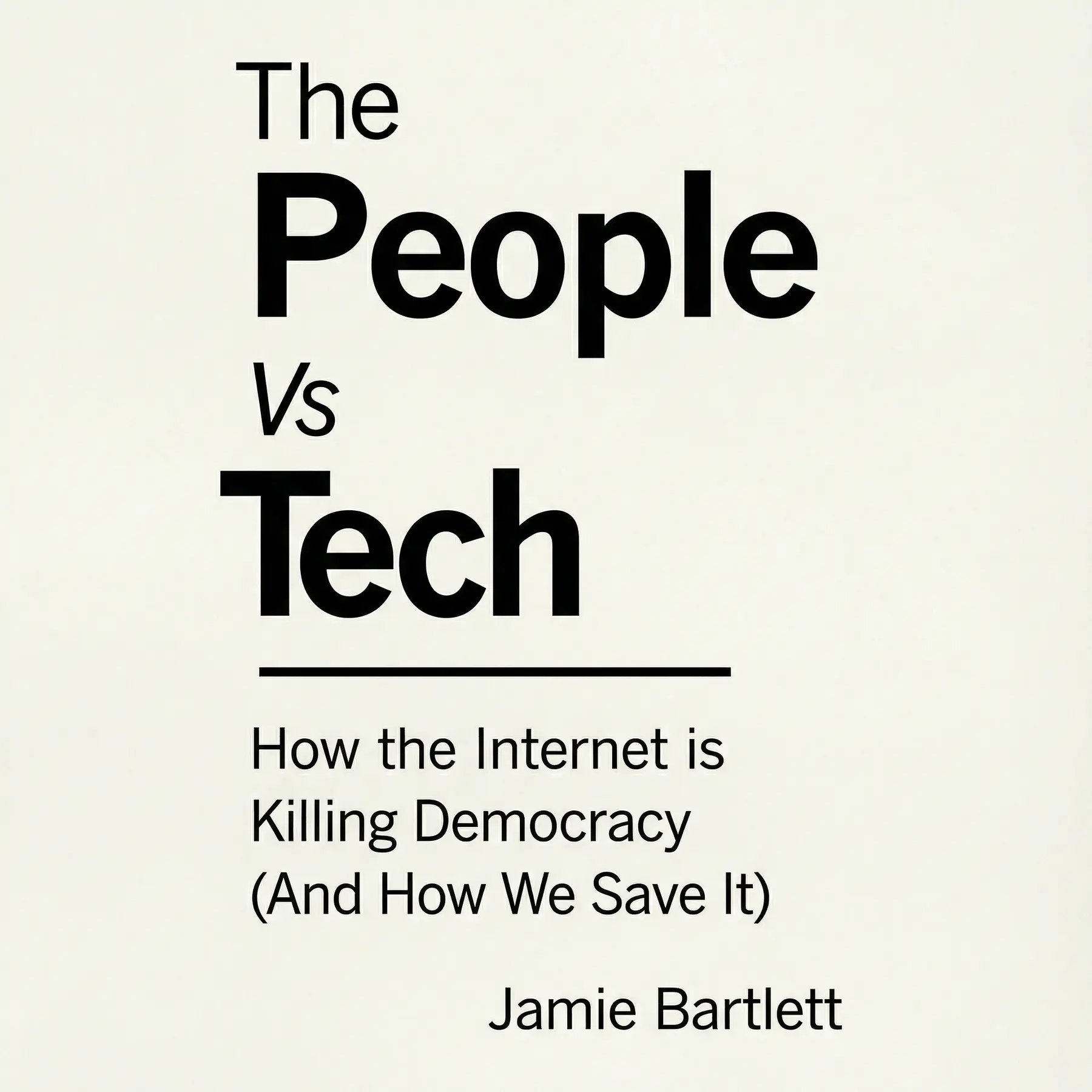
The People Vs Tech examines the fundamental friction between digital innovation and democratic stability, revealing how algorithms, big data, and automation are dismantling the pillars of a free society and how we can respond.
2 min 10 sec
In our current era, it’s hard to ignore the surge of dystopian stories in our movies, books, and television shows. We seem fascinated by visions of bleak, high-tech futures where human freedom is a relic of the past. It’s easy to dismiss these stories as mere entertainment, but there’s a deeper, more unsettling question underneath them: how close are we actually getting to those fictional worlds? If we look at the trajectory of our current political and technological landscape, the answer might be more concerning than many of us care to admit.
The central tension we face today is the conflict between the rapid evolution of digital technology and the relatively static structures of democracy. When we talk about digital technology, we aren’t just talking about gadgets; we’re talking about the infrastructure of modern life—social media platforms, the vast collection of big data, and the growing influence of artificial intelligence. While these innovations have brought incredible conveniences and new ways to connect, they are also subtly and systematically undermining the core principles that make a democracy work.
Democracy isn’t just a set of rules; it’s a living system that requires specific conditions to survive. It relies on privacy, a shared reality, and a stable middle class. It demands that citizens be able to make independent choices without being manipulated by hidden algorithms. Yet, the current path of technological development is putting all of these requirements at risk. In the following discussion, we’re going to look at the six pillars that support a free society and see how modern tech is causing them to crack. We’ll explore why social media creates echo chambers, how big data is changing the way we vote, and why AI might be the greatest threat yet to economic equality.
However, this isn’t just a story of inevitable decline. The throughline here is one of awareness and adaptation. If we can understand exactly how these digital tools are affecting our politics and our minds, we can begin to update our democratic systems to better handle the pressure. We will examine the risks of crypto-anarchy and the potential for techno-authoritarianism, but we will also look at practical solutions—both for governments and for individuals—to ensure that the digital revolution serves the people, rather than the other way around.
2 min 03 sec
Democracy is often compared to a well-hosted party, requiring specific behaviors from its attendees to succeed. Discover the six essential pillars that must remain standing for a free society to thrive.
2 min 14 sec
Modern technology is subtly making us less independent and more prone to self-censorship. Learn how public scrutiny and algorithmic assistance are changing our political maturity.
2 min 08 sec
While the internet was supposed to bring us together, it has instead fragmented society into warring groups. Discover how echo chambers and algorithmic curation fuel modern divisiveness.
2 min 10 sec
Political campaigns now have the power to see into your living room and predict your behavior. Learn how big data is transforming elections into a high-stakes psychological arms race.
2 min 19 sec
Automation and AI are not just changing how we work; they are reshaping the entire economic structure of democracy. Explore the dangers of the emerging ‘barbell economy.’
2 min 06 sec
The biggest tech companies have reached a level of power that rivals sovereign states. Discover how network effects and rapid scaling create unstoppable economic giants.
2 min 09 sec
Encryption and decentralized technology are giving individuals the power to hide from the state. Learn why this ‘freedom’ could end up making the government toothless.
2 min 19 sec
If we don’t change course, we face two grim possibilities for the future of society. Explore the dark visions of dystopian chaos and techno-authoritarianism.
2 min 18 sec
Saving democracy requires more than just hope; it requires a systematic upgrade of our laws and our schools. Learn the practical steps to reclaim our political future.
1 min 36 sec
The digital revolution is the defining challenge of our time. As we have seen, the very tools that were supposed to liberate us are now creating deep fissures in our society. They are making us less independent, more tribal, and more susceptible to manipulation. They are hollowing out the middle class and concentrating power in the hands of a few tech giants who are increasingly beyond the reach of the law. If we do nothing, we are drifting toward a future of either chaotic collapse or high-tech authoritarianism.
However, the central message is one of agency. Technology is not an act of God; it is a human creation, and we have the power to decide how it is used. The key to saving democracy lies in acknowledging that our current systems are outdated and being willing to do the hard work of reform. We need a government that is brave enough to regulate the tech giants and an education system that is smart enough to prepare citizens for the digital world.
You don’t have to wait for the government to act to start making a difference in your own life. You can take back control of your attention by using ad blockers to stop psychological targeting. You can consciously break out of your echo chamber by seeking out diverse news sources and listening to people who disagree with you. You can support smaller, more ethical tech companies instead of automatically going to the biggest platforms. Democracy is a muscle that must be exercised to stay strong. By being more intentional about how we use technology, we can ensure that we remain the masters of our digital tools, rather than their subjects. The future of democracy is in our hands, but only if we are willing to fight for it.
Modern digital technology was once hailed as a tool for ultimate liberation, promising to connect the world and democratize information. However, this book presents a sobering alternative reality: the very innovations we celebrate—from social media to artificial intelligence—are inadvertently eroding the foundations of democratic governance. By examining the mechanics of data collection, algorithmic curation, and the rise of crypto-anonymity, the narrative illustrates how our political systems are becoming increasingly fragile in the face of rapid technological disruption. The core promise of this exploration is to provide a roadmap for survival. It moves beyond mere alarmism to identify the six vital pillars that sustain a functioning democracy and explains how tech is chipping away at each one. From the destruction of the middle class via automation to the fragmentation of the public square into warring tribes, the text details the systemic risks we face. Ultimately, it offers a vision for the future where democracy is not replaced by silicon-based authority but is instead updated to withstand the challenges of the twenty-first century through policy reform and individual action.
Jamie Bartlett serves as the Director of the Centre for the Analysis of Social Media at Demos, a prominent UK-based think tank dedicated to evidence-based social policy solutions. A frequent contributor to major publications like the Spectator and the Telegraph, Bartlett has established himself as a leading voice on the intersection of society and technology. He is also recognized for his bestselling investigative works, including The Dark Net and Radicals Chasing Utopia, which explore the fringes of digital culture and political movements.
Jamie Bartlett
Listeners find that while perspectives differ regarding the text's technical depth for specialists, most value the way it provides a brief and approachable overview of the intricate link between technology and contemporary democracy. Additionally, they appreciate Bartlett’s captivating prose and his use of interesting stories to show how data analytics and algorithms can influence political involvement. The practical nature of the final suggestions is also noted, with one listener observing that the list of "20 ideas to save democracy" offers an invigorating and useful structure for managing our current digital environment.
Wow. I didn't expect a book about political theory to be such a page-turner, but Bartlett writes with a sense of urgency that is hard to ignore. By breaking democracy down into six essential pillars, he shows exactly how the digital revolution is quietly sawing through the legs of our society. It’s not that he hates technology, but rather that he’s terrified of how it’s being used to manipulate our tribal instincts and erode our shared reality. The chapter on the 'barbell' economy and the disappearance of the middle class was particularly chilling. While some might call it alarmist, I found his arguments about the lack of accountability in algorithms to be incredibly well-reasoned. It’s much deeper than the 'Social Dilemma' documentary. I walked away feeling like I finally understood the mechanism behind the social panic we’re all feeling.
Show moreThis book is a vital wake-up call for anyone who thinks their scrolling is harmless. Bartlett avoids the trap of being a Luddite; he clearly sees the potential in technology but warns that it needs a guidance that just isn't happening right now. The way he describes the erosion of free choice through data-driven nudges is brilliant. We are basically delegating our moral and political decision-making to machines owned by a handful of rich men in Silicon Valley. It’s a scary thought. The list of recommendations at the end—like taxing robots and monitoring bot activity—provides a much-needed sense of agency in a world that feels increasingly out of control. It is rare to find a book that is this engaging while also being this important for our civic participation.
Show moreAfter hearing so much about 'techno-pessimism' lately, I wanted a book that could actually define the stakes of the conversation. Bartlett delivered. This isn't just a rant about how 'phones are bad'; it’s a sophisticated analysis of how modern democracy requires certain conditions to function—conditions that are currently being undermined by big tech monopolies. Personally, I found the 20 ideas to save democracy at the end to be the most valuable part of the book. They aren't just vague platitudes; they're specific, actionable policy changes that we should be campaigning for. The writing is simple enough to be understood by anyone, but the implications of his arguments are profound. It's a necessary framework for staying sane in an era of endless digital distraction.
Show moreEver wonder why politics feels so much more aggressive and tribal lately? Bartlett offers a smart, concise summary of how the attention economy is basically a giant panopticon designed to keep us addicted and angry. I loved the way he used the 'devil’s rope' analogy to describe how new tech can accidentally destroy entire ways of life. The book is full of these compelling anecdotes that make the abstract concepts of data analytics feel very real and immediate. Truth is, I was a bit skeptical of his '20 ideas to save democracy' at the end—some of them feel a bit utopian given how much power Big Tech already holds—but it’s still a refreshing framework for navigating the digital landscape. It’s a quick read that doesn't shy away from the hard questions about our future.
Show moreFinally got around to reading this and it definitely shook me out of my complacency regarding social media. Bartlett’s exploration of the crypto-anarchist movement and how it could potentially collapse state control was eye-opening, if a bit terrifying. He does a great job explaining how the speed and scale of Big Tech are what make it truly novel and dangerous. I especially appreciated his point that newspapers are legally responsible for what they print, while algorithms shape the reality for billions without any accountability. My only real complaint is that his tone borders on paranoia at times, which makes it hard to distinguish between legitimate threats and speculative dystopia. Still, it’s a thought-provoking read that everyone should pick up before the next election cycle.
Show moreLook, we all know the internet is a mess, but Bartlett explains the *why* behind the chaos with incredible clarity. He takes complex ideas about surveillance capitalism and makes them accessible through simple, direct prose. I found the section on how Cambridge Analytica used personality profiles to hijack voter attention to be the most compelling part of the book. It’s a sobering look at how the 'creative destruction' of the tech industry is actually destroying the very foundations of our democracy. While it might be a bit basic for experts in the field, for the average person, it’s an essential guide to the digital age. The sentence structure is varied and keeps the pace moving quickly, making it a fast read despite the heavy subject matter.
Show morePicked this up at the library and ended up finishing it in two sittings. It's a very punchy, unbiased summary of the ways the internet is upending our political systems. Bartlett is excellent at condensing critical points neatly, like how individual political targeting makes it impossible for us to thrash out the issues of the day as a collective. We’re losing our common public debate to millions of private ones. To be fair, the section on crypto-anarchy felt a little bit disconnected from the rest of the book, but it was still fascinating. It’s an engaging read that forces you to re-examine your own social media habits and the long-term impact they have on your critical faculties. Definitely worth a read.
Show moreAs someone who works in software development, I found parts of this incredibly frustrating to get through. Bartlett often speaks about 'mysterious' algorithms as if they are magical black boxes, rather than just explaining the basic principles of machine learning or how something like Facebook’s EdgeRank actually functions. It felt technologically superficial in places, almost like a collection of Wired articles stitched together with a bit of padding. To be fair, his analysis of how micro-targeting destroys common public debate is spot on and very well-articulated. He correctly identifies that if we all receive personalized political messages, we lose the ability to have a unified national conversation. It’s a decent entry point for a general audience, but if you’ve already read Nicholas Carr or Shoshana Zuboff, you might find this a bit light on rigour.
Show moreThe premise is fascinating, but I struggled with the author's tone at times. Bartlett writes with a level of paranoia that makes it feel like he’s shouting at you from a bunker. Look, I agree that social media tribalism is a problem, but his suggestions for the government to regulate everything seem highly idealistic. He spends the whole book explaining how tech is destroying state authority, and then he asks that same weakened state to fix it? It feels like those suggestions were added just for the sake of having a 'solutions' chapter. That said, his interviews with Silicon Valley luminaries provide some great behind-the-scenes context that you won't find in a standard news report. It's a solid introduction to the topic, just take some of the more extreme predictions with a grain of salt.
Show moreNot what I expected at all. A friend recommended this because I'm interested in the intersection of tech and society, but I found the writing style to be quite repetitive and occasionally contradictory. He drags out very simple points for pages and pages, and some of his assumptions about programming and AI are just plain false. Frankly, it felt like he was more interested in being a 'techno-pessimist' than actually providing a coherent framework for how to fix things. The second half of the book descends into vague theories about the distant future that the author himself admits he can't fully predict. If you want something with actual depth, I'd suggest reading Marshall McLuhan or Virginia Eubanks instead of this.
Show more
James Comey


Barack Obama

Masaji Ishikawa
John Rawls

Yuval Noah Harari
AUDIO SUMMARY AVAILABLE
Get the key ideas from The People Vs Tech by Jamie Bartlett, plus 5,000+ more titles in English and Thai.







