

A Guide to the Good Life: The Ancient Art of Stoic Joy
William B. Irvine
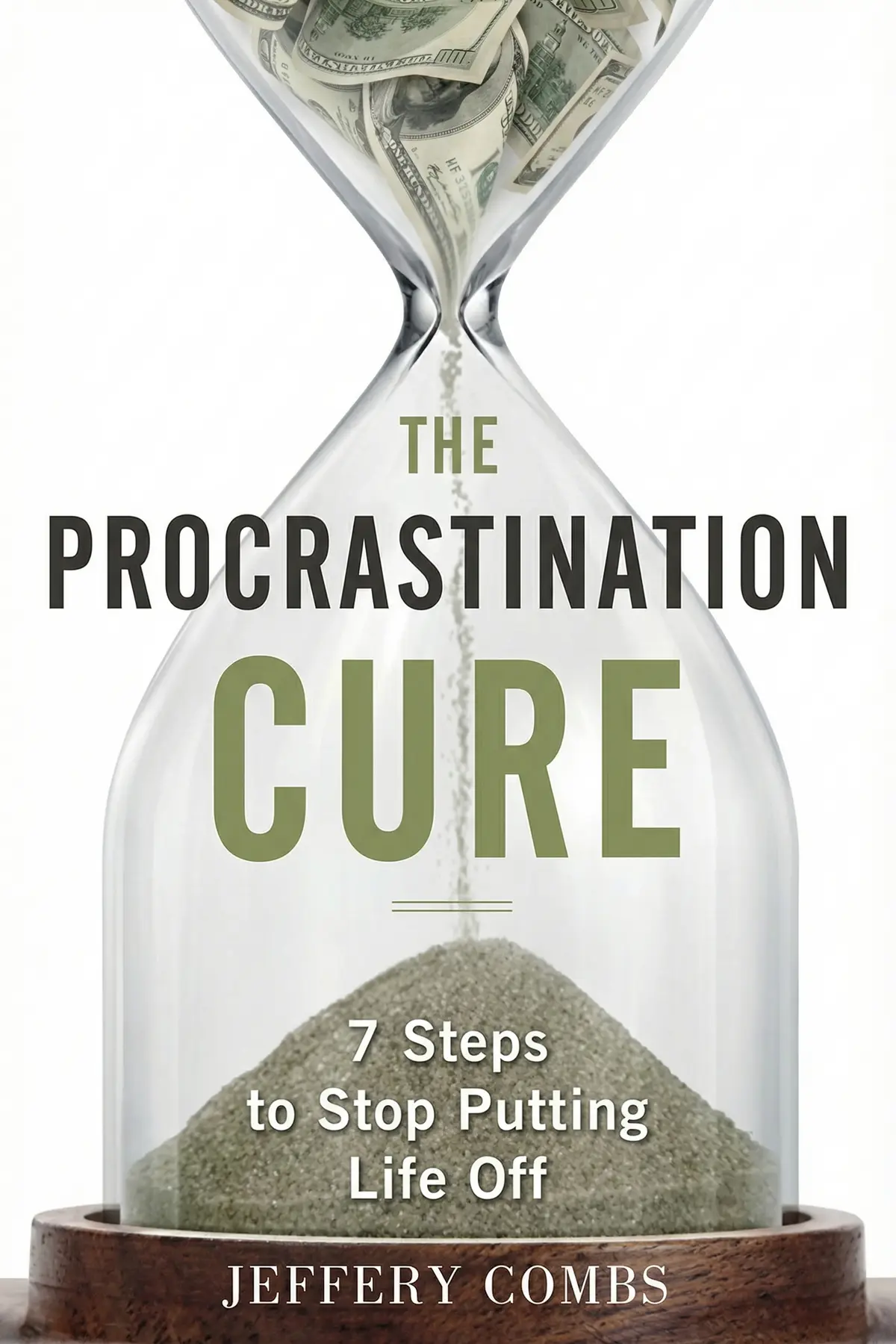
The Procrastination Cure dives into the psychological triggers behind chronic delay, offering a transformative 7-step plan to move from emotional paralysis to decisive action and achieve your most meaningful goals.
1 min 46 sec
We have all been there. You have a deadline looming, or perhaps a dream you’ve been nurturing for years, yet you find yourself organizing your sock drawer or scrolling through social media for the third hour in a row. It is easy to think that if you just had the right app, a better calendar, or a more restrictive internet filter, you would finally get to work. But as Jeffery Combs suggests in The Procrastination Cure, those external fixes are often just bandages on a much deeper wound.
Procrastination isn’t actually about being lazy or disorganized. In reality, it is a sophisticated pattern of behavior triggered by internal psychological dynamics. It’s a way our minds try to protect us from discomfort, even if that protection eventually causes more pain than the task itself. To truly beat the habit, we have to look past the clock and into the mirror.
In this summary, we are going to explore why we put things off and how our emotions—specifically fear, shame, and anger—drive our most frustrating habits. We will break down the specific types of procrastinators and look at how different personality traits lead to different versions of the same problem. Most importantly, we will outline the path forward. Through self-awareness and targeted strategies, it is possible to stop the cycle of delay and start living the life you’ve been putting off. Let’s dive into the psychology of action and discover how to bridge the gap between where you are and where you want to be.
2 min 44 sec
Delaying a task might seem like a temporary relief, but the long-term price is often far higher than we realize.
2 min 45 sec
For some, the fear of producing something imperfect is so strong that it prevents them from producing anything at all.
2 min 18 sec
Research and preparation can be productive, but they can also become sophisticated ways to hide from the actual work.
2 min 16 sec
Sometimes, putting things off is an act of defiance, a way to assert control in a world that feels unfair.
2 min 31 sec
Overcoming procrastination requires more than just mental shifts; it requires a physical and social realignment.
1 min 47 sec
Procrastination is a challenge that almost everyone faces at some point, but for those who find it chronic, it can feel like an insurmountable wall. As we’ve explored, this wall isn’t built of laziness, but of complex emotions like shame, fear, and resentment. Whether you are a perfectionist waiting for the right moment, a worrier stuck in a cycle of preparation, or a rebel fighting against external pressure, the root of the issue is the same: an attempt to avoid internal discomfort.
The cure, then, is a journey of self-discovery and emotional courage. It requires looking honestly at the narratives you tell yourself and having the bravery to rewrite them. It means choosing the temporary discomfort of action over the long-term agony of regret. By simplifying your goals, acknowledging your worth regardless of your output, and staying connected to both your body and your community, you can begin to dismantle the habits that hold you back.
Change doesn’t happen overnight, but every small task completed is a victory over the old patterns. The next time you feel the urge to turn away from a difficult task, take a deep breath, recognize the emotion behind the impulse, and then take one small step forward. You have the power to stop putting your life off and start living it fully, one moment at a time. The throughline of this journey is simple: you are capable of action, and you are worthy of the success that follows it.
Have you ever wondered why you can’t seem to start that one project that matters most, even when you have all the tools at your disposal? This book explains that procrastination isn’t a time-management problem or a character flaw; it is a complex emotional defense mechanism. By identifying the root causes—ranging from a fear of failure to deep-seated resentment—this summary provides a roadmap for breaking free from the cycles that hold you back. You will explore the different profiles of procrastinators, from the perfectionist who is paralyzed by high standards to the rebel who uses delay as a form of defiance. The promise here is not just a list of productivity hacks, but a fundamental shift in how you relate to yourself and your work. By the end, you’ll have the strategies needed to clear the mental clutter and finally take the lead in your own life.
Jeffery Combs is a renowned speaker and professional trainer with extensive experience in the network marketing and direct sales industries. As a coach, he has mentored thousands of entrepreneurs on their path to success. He is the author of several books, including More Heart Than Talent and The Breakthrough Factor. Combs often describes himself as a recovering procrastinator, using his personal journey and professional expertise to help others overcome their internal barriers.
Listeners find that although viewpoints differ regarding the author’s non-traditional medical and psychological suggestions, many value how the work explores the underlying emotional causes of self-sabotage. Furthermore, they appreciate the hands-on methods for defeating avoidance, like dividing projects into tiny pieces, and one listener pointed out that the 15-minute task rule is especially useful. Additionally, listeners feel that categorizing various types of procrastinators gives useful insight for individual development. They also highlight that the featured procrastination test and daily goal-setting activities provide a practical guide for transforming how one handles productivity habits.
Wow. Most books on this topic just give you planners and timers, but Combs goes for the jugular: your emotions. This isn't just about time management; it’s about healing the parts of you that feel 'not enough.' I’ve read a dozen books on productivity, yet this is the first one that made me address my fear of rejection. The breakdown of the different types of procrastinators—especially the chronic worrier—helped me understand my own patterns of over-preparation. The 15-minute rule is so simple it’s brilliant. I’ve already seen a huge difference in my daily output just by focusing on small, achievable actions. Sure, the writing is a bit casual and some parts are repetitive, but the impact on my mindset has been profound. If you are tired of the same old 'just do it' advice, this is the deep dive you need. It’s transformative for anyone willing to do the inner work.
Show morePicking this up was the best thing I did for my career this year. The focus on shame and fear as the real culprits behind my delay was life-changing. I used to think I was just lazy, but now I see the 'neurotic perfectionist' inside me that was too afraid to start. The 15-minute task rule has become my go-to strategy whenever I feel the urge to check my phone. It’s practical, actionable, and addresses the root cause rather than just the symptoms. I actually liked the quiz at the end; it gave me a concrete way to measure my progress. While the author has some unique opinions on health, his core message about emotional regulation is spot on. This book provided the shift in perspective I desperately needed to stop dreaming and start doing. It’s a must-read for anyone who feels stuck in a cycle of avoidance and regret.
Show moreFinally got around to reading this, and while the cartoons are absolutely bizarre, the section on the neurotic perfectionist hit home. As someone who has always struggled with 'getting ready to get ready,' seeing that behavior described as a form of fear was eye-opening. The author correctly points out that perfectionism is often just a mask for inadequacy. I’ve started implementing the 15-minute rule when I feel overwhelmed, and it has genuinely helped me tackle my inbox. To be fair, you have to ignore some of the weirder tangents about chiropractors and 'telepathic' emotions. If you can filter out the fluff, the core message about managing your heart rather than your clock is powerful. It’s not a perfect book, and it definitely needs a more professional tone. Still, the psychological insights into self-sabotage make it worth the time. It helped me move from 'draft' mode to actually finishing my projects.
Show moreTruth is, I didn't think I needed a 'cure' until I took the 40-question quiz at the back. It revealed how much I rely on adrenaline rushes from looming deadlines to actually function. The 'adrenaline junkie' description fit me perfectly, and it was a bit of a wake-up call. I liked that the book doesn't just give you more apps to download but asks you to look at why you're afraid. The practical strategies for overcoming avoidance, like breaking projects into tiny increments, are easy to start immediately. I do think the book is a bit bloated, and some of the author's personal anecdotes feel like humble bragging. However, the actionable roadmap for reinventing productivity habits is there if you look for it. It helped me realize that being 'busy' with preparation isn't the same as being productive. A solid, albeit slightly eccentric, guide.
Show moreAs someone who identifies as a 'rebellious procrastinator,' seeing my resentment mapped out was painful but necessary. I always thought I was just being independent, but Combs argues it's actually a passive-aggressive way of avoiding failure. That hit hard. The book does a great job of explaining the emotional roots of self-sabotage, moving beyond simple 'to-do' lists. I appreciated the focus on physical relaxation and yoga as a way to ease the anxiety that causes delay. Yes, some of the medical advice is off-the-wall, and the 12-step influence is very heavy. But if you can look past the quirks, there is real wisdom here about forgiveness and letting go of anger. It’s a very human look at a frustrating habit. I’m definitely feeling more in control of my schedule now. It’s a bit of a diamond in the rough, provided you don’t mind the rough.
Show moreThe 15-minute task rule is actually a lifesaver, yet I had to trudge through a swamp of filler to find it. This book is a classic example of a good idea stretched way too thin. There are seven types of procrastinators listed, and while identifying as a 'chronic worrier' helped me, the chapters describing them are incredibly repetitive. Do we really need a 10-CD set plug in the middle of a chapter? It felt like a sales pitch at times. However, the emotional focus is a nice change of pace from standard time-management books. Understanding that my delay comes from shame rather than laziness was a bit of a breakthrough. I just wish the author had a better editor to trim the fat and remove the odd health tips. It's a decent read if you're willing to skim through the nonsense to get to the practical bits.
Show moreEver wonder why you can't just 'do' the work you planned? This book identifies the emotional blockage well enough, but it gets lost in its own weeds. I appreciated the classification of the 'rebel' procrastinator because I finally saw my own resentment toward authority reflected in my work habits. That self-awareness is valuable for personal growth, even if the surrounding text is a bit 'woo-woo.' The truth is, most of this could have been a single long-form article. The daily goal-setting exercises are solid, but they aren't exactly revolutionary. I found the 40-question quiz at the end to be the most useful part of the entire experience. It gave me a clear roadmap of where I'm at, even if the journey there was bumpy. It’s an okay book for a weekend read, but don’t expect a scientific masterpiece. Use it as a starting point, not a bible.
Show moreAfter hearing some hype, I decided to give this a shot, but the weird medical advice really threw me off. The author claims that neurotic perfectionists often wear glasses and that passivity is genetic, which just feels like nonsense pulled out of thin air. It gets even worse when he starts stigmatizing pharmaceutical help for anxiety, calling it the 'easy way out.' That kind of rhetoric is harmful to people actually struggling with clinical conditions. The book is also surprisingly sexist in how it characterizes mothers as 'meek rebels' addicted to disappointment. While the advice on setting modest daily goals is somewhat practical, it doesn’t justify the price of the book. The middle section dragged on for far too long with repetitive stories about the author's coaching clients. Frankly, it’s a lot of fluff mixed with some very questionable personal beliefs. I expected a toolkit, but I got a sermon.
Show moreNot what I expected from a productivity book. Combs spends way too much time on 12-step analogies and 'The Secret' style manifesting rather than actual work habits. The book is riddled with typos and repeats entire paragraphs in Chapter 9, which made it feel rushed and unpolished. I really hated the cartoons; they added nothing and felt like they were just there to pad the page count. Why are we talking about Pizza Hut parking lots as character-building experiences in a professional development book? It felt very 'bro-science' at points, especially with the weird left-brain/right-brain junk science. Some of the core ideas about fear of failure are okay, but they aren’t original. You can find better versions of this advice in almost any other self-help book without the weird baggage. It’s a disappointing read for anyone looking for serious, evidence-based strategies.
Show moreSeriously, what was the editor doing here? This book is a chaotic mess of pseudo-scientific claims about chiropractic care and 'telepathic' emotions that have no place in a productivity guide. I found the suggestion to get monthly X-rays for better focus to be both bizarre and dangerous. Between the repetitive chapters and the insulting cartoons, it felt more like a self-published manifesto than a professional career resource. While the 12-step approach might work for some, it felt forced and lacked any real empirical evidence here. Most of the 'types' described were over-generalized, and the writing style was clunky at best. To be fair, there are a few tiny nuggets of decent advice, but they are buried under mountains of garbage. It is frustrating to pay for a book that reads like a collection of disorganized blog posts. Save your money and just look up the 15-minute rule online instead.
Show moreWilliam B. Irvine
Andrew D. Thompson
Deepak Chopra
Laura Vanderkam
AUDIO SUMMARY AVAILABLE
Get the key ideas from The Procrastination Cure by Jeffery Combs, plus 5,000+ more titles in English and Thai.







