
15 min 04 sec
The Protestant Ethic and the Spirit of Capitalism: and Other Writings
By Max Weber
Max Weber explores the surprising historical link between Protestant asceticism and the rise of modern capitalism, revealing how a religious sense of duty transformed into a secular obsession with productivity and wealth.
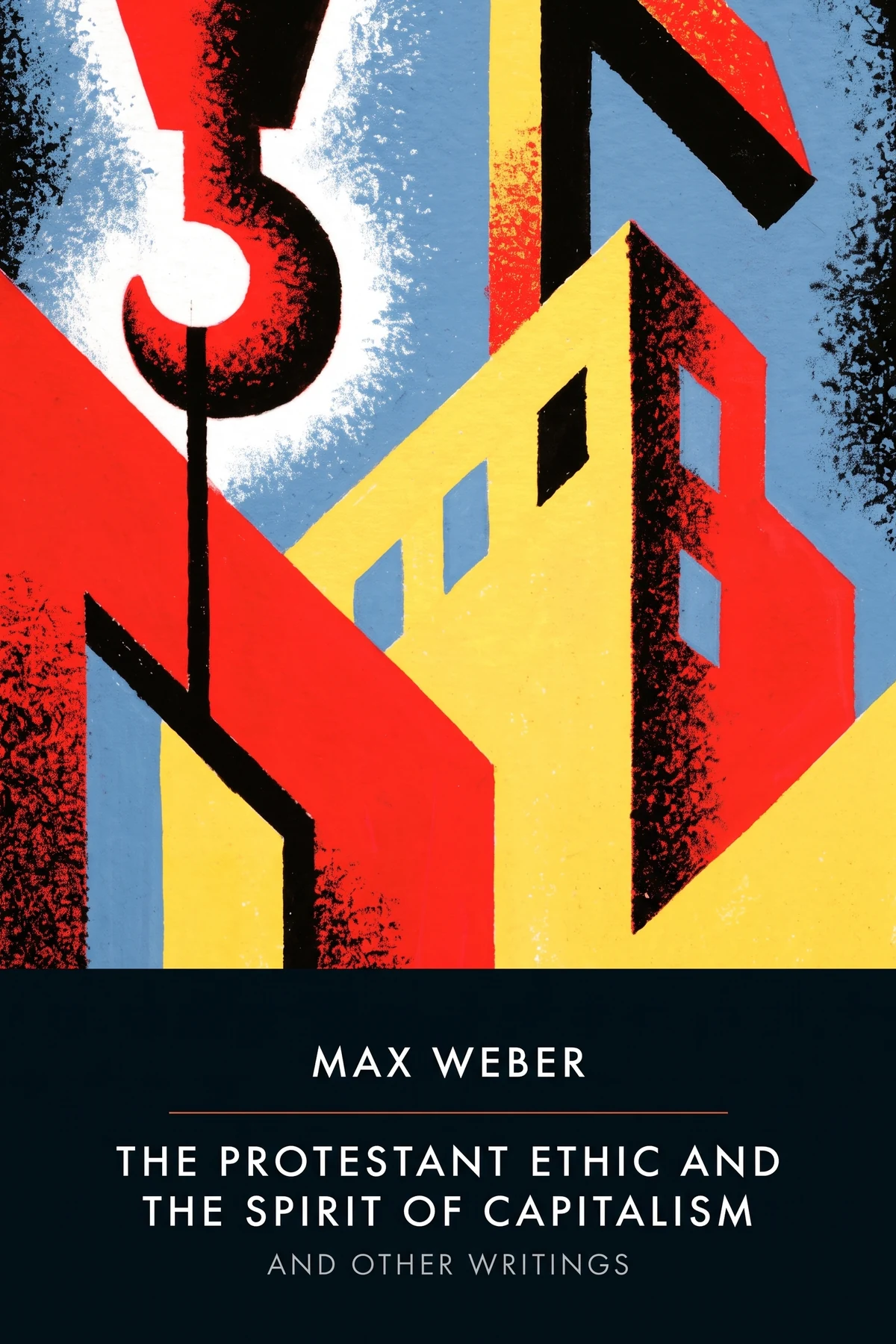
Table of Content
1. Introduction
1 min 41 sec
Have you ever paused to consider why the modern world feels like a never-ending race toward more—more work, more profit, and more efficiency? It’s a way of life we often take for granted, yet it represents a massive shift from how humans lived for most of history. To understand how we got here, we have to look back at one of the most influential theories in the history of social science. Max Weber’s investigation into the roots of our economic system suggests that the fuel for the industrial engine didn’t come from coal alone; it came from a radical change in the human soul.
In this exploration, we are going to unpack the connection between the pews of the Reformation and the boardrooms of today. Weber’s central thesis is both brilliant and counterintuitive: he believed that the values of self-denial, intense discipline, and ethical labor—values championed by specific Protestant sects—were the very things that allowed capitalism to take root and flourish.
We often think of capitalism as a system driven by pure material greed, but Weber noticed something different in its early stages. It wasn’t just about wanting things; it was about a systematic, rational approach to life and work. By the end of this summary, you’ll see how a religious fear of the afterlife transformed into a secular obsession with the workday. We’ll explore the ‘spirit’ that drives our modern hustle, the ‘iron cage’ that Weber feared we were building for ourselves, and why the ‘Protestant work ethic’ continues to define our identity even in an age that feels increasingly disconnected from its religious origins. This is the story of how faith was forged into fortune.
2. The Sacred Architecture of the Workday
2 min 21 sec
Discover how the Protestant Reformation turned everyday labor into a spiritual quest, forever changing the way we view our daily jobs.
3. From Divine Calling to Economic Spirit
2 min 20 sec
Explore how the religious fervor of the past slowly evaporated, leaving behind the cold, efficient machinery of modern capitalism.
4. The Machine and the Iron Cage
2 min 07 sec
Weber’s haunting vision of the ‘iron cage’ reveals the dark side of our modern obsession with rationalization and efficiency.
5. Navigating the Critiques of Cultural Capitalism
2 min 19 sec
Was Weber right? Examine the historical and social arguments that challenge his view of how religion built the modern economy.
6. The Secular Ghost of the Protestant Ethic
2 min 17 sec
From the American Dream to workplace burnout, see how the remnants of a 500-year-old religious mindset still haunt our modern lives.
7. Conclusion
1 min 59 sec
In the end, Max Weber’s journey through the history of faith and fortune reveals a profound truth: our modern world was built on the foundation of a religious revolution that most of us have forgotten. What started as a desperate search for spiritual certainty among the followers of the Reformation became the rigid, efficient framework of global capitalism. We inherited a ‘spirit’ that values hard work, constant growth, and rational calculation above almost all else. While these values have provided us with unprecedented material comfort and technological marvels, Weber’s warning about the ‘iron cage’ rings louder today than ever before.
We live in a system that demands our total devotion, often at the expense of our health, our relationships, and our sense of meaning. But by understanding the cultural roots of this system, we gain a powerful tool. We can see that the ‘spirit of capitalism’ is not a law of nature; it is a historical development. It was shaped by human values once, and that means it can be reshaped by human values again.
As you move forward into your own workday, consider the ‘why’ behind your hustle. Are you working toward a purpose that nourishes your humanity, or are you simply feeding the gears of an old, secularized machine? Weber’s work doesn’t offer easy answers, but it does offer a mirror. It asks us to reflect on whether we want to remain in the iron cage or if we can find a way to re-enchant our lives with a sense of purpose that goes beyond the bottom line. The story of the Protestant ethic is still being written, and the next chapter is up to us. We have the power to decide which values will define the spirit of our future.
About this book
What is this book about?
Have you ever wondered why Western culture is so obsessed with productivity, even when we have more than enough to survive? In this seminal work of sociology, Max Weber argues that our modern economic system didn't just appear because of technology or greed. Instead, it was sparked by a profound shift in religious thinking during the Protestant Reformation. Weber investigates how the intense spiritual anxieties of groups like the Calvinists created a new kind of person: one who views hard work as a moral obligation and financial success as a sign of divine favor. This book traces the journey of those ideas as they moved from the church into the marketplace, eventually shedding their religious skin to become the 'spirit of capitalism' we recognize today. It offers a deep look at the 'iron cage' of modern life—a world of efficiency and rationalization that provides material wealth but often leaves us searching for a deeper sense of purpose.
Book Information
About the Author
Max Weber
Max Weber, who lived from 1864 to 1920, stands as a foundational figure in the world of German sociology. He is widely recognized as one of the primary architects of modern social theory, and his intellectual reach extended far beyond a single field. Throughout his career, Weber produced groundbreaking work that navigated the complex intersections of religion, economics, and the structures of authority. His investigations into how rationalization shapes society have left an indelible mark on how we understand the modern world, making him a central figure for anyone studying the evolution of human social systems.
Ratings & Reviews
Ratings at a glance
What people think
Listeners view this cornerstone sociological work as profoundly enlightening, and while views on the intricacy of theological specifics are mixed, most value the clear investigation into how Protestant ethics molded the modern capitalist mindset. Additionally, they point to the persuasive evaluation of the "calling" and the way religious asceticism redefined diligent labor as a rational, ethical goal. Listeners also treasure the book's historical importance, with one listener remarking that even those who struggle with the text can capture the central thesis by prioritizing the introduction and the final chapter.
Top reviews
Methinee
This book is a titan of sociology for a reason. Weber’s argument about how religious asceticism paved the way for modern capitalism is absolutely gripping, even if the prose is occasionally dense. I was particularly fascinated by the "iron cage" metaphor at the end—the idea that we’ve inherited a system of rational organization but lost the spiritual drive that birthed it. It makes you look at your 9-to-5 totally differently. While the theological deep-dives into various Calvinist sects can feel like a slog, the payoff in the final chapter is worth every minute of effort. It’s a foundational text that remains hauntingly relevant in our world of hustle culture.
Show morePrasarn
Ever wonder why we feel so much guilt when we aren't being productive? Weber’s masterpiece provides the answer by digging into the roots of the Protestant work ethic. It’s a profound look at how "getting ahead" became a sign of God's favor rather than just common greed. I loved the distinction he made between old-school Catholic asceticism (the monk in the cell) and the new Protestant version (the businessman at his desk). It’s a dense read, but the insights into our "rationalized" modern existence are worth the struggle. It really puts the "spirit" of our current economy into a much needed historical perspective.
Show moreThanakorn
Max Weber's ability to connect individual psychology to massive historical shifts is nothing short of breathtaking. He takes the seemingly simple idea of "hard work" and reveals the terrifying theological machinery underneath it. The description of the "unprecedented inner loneliness" of the Calvinist, who has no way to know if they are saved, is one of the most haunting passages in social science. This book isn't just about economics; it's about the very soul of the West and how we became obsessed with rationalization and efficiency. It is a challenging, dense, and ultimately rewarding journey through the ideas that built our world.
Show moreAva
As someone who grew up in a very traditional religious environment, I found Weber's analysis of the "calling" to be incredibly spot-on. He explains how the shift from monastic withdrawal to "worldly asceticism" essentially rebranded hard work as a moral imperative. To be fair, the middle sections get a bit bogged down in the minutiae of 17th-century dogma, which might bore a casual reader. However, seeing the link between the anxiety of predestination and the drive for economic success was a total lightbulb moment for me. It’s not just about money; it’s about the psychological need for proof of salvation. A must-read for history buffs.
Show moreAnchalee
Picked this up after hearing it described as the "anti-Marxist" manifesto, and it’s fascinating to see how Weber flips the materialist script. Instead of the economy dictating culture, he shows how a specific religious ethos actually created the conditions for a new economic system. The way he traces the "spirit" of capitalism back to the "Beruf" or calling is genius. My only gripe is that it can be incredibly dry in places, especially when he’s nitpicking theological disputes that feel very distant from modern life. Still, the core thesis is so powerful that it’s easy to see why we’re still debating this book over a century later.
Show moreAubrey
I gotta say, reading this while being stuck in a corporate job was a bit of an out-of-body experience. Weber basically describes the original "hustler spirit"—people working themselves to the bone not for the money, but for the sake of the work itself. He uses Benjamin Franklin as this perfect example of the capitalist ethos, which was really clever. I liked how he explained that we’ve kept the work habits of the Puritans but lost the religious reasons for doing them. It’s a bit dry, and the translation I had was a little stiff, but the core idea is one of the most interesting things I’ve read all year.
Show moreSaovapa
Finally got around to finishing this, and I’m struck by how Weber’s "iron cage" has only become more restrictive since he wrote it. The book does a fantastic job of explaining how the search for salvation accidentally created a system that eventually discarded God altogether. I struggled a bit with his dismissive tone toward other forms of capitalism in the East, but his focus on the specific "rational" flavor of Western development is very compelling. It's a heavy read, and you’ll probably need a dictionary and a basic understanding of Christian history to get through it, but it’s essential for anyone trying to understand modern society.
Show moreWatcharin
The chapter on the various Protestant sects was much more detailed than I anticipated, and frankly, it was a bit exhausting. I picked this up hoping for a broad sociological overview, but Weber spends a massive amount of time on the specific differences between Pietism, Methodism, and Calvinism. It’s undeniably brilliant, but you have to be in the right headspace for this level of academic rigor. If you're looking for a quick summary, you might be better off just sticking to the introduction and the fifth chapter. I appreciate the historical significance, but the lack of hard quantitative data makes some of his conclusions feel more like brilliant intuitions than proven facts.
Show morePop
Truth is, you could probably get the gist of this entire book just by reading the final thirty pages. Weber’s main point is that Calvinism created a psychological pressure to succeed, which eventually morphed into the secular capitalism we see today. It’s a great theory, but he takes a very long way to get there. I found myself skimming through the parts about the different creeds in Germany and England because they felt so repetitive. Look, it’s a classic for a reason and the "iron cage" concept is brilliant, but don't feel bad if you find yourself struggling with the mid-section. It’s definitely a product of its time.
Show moreJackson
Not what I expected at all, and to be honest, I found it quite frustrating. Weber makes these huge, sweeping claims about entire cultures based on qualitative observations of religious texts, but there’s almost no actual economic data to back it up. He admits that capitalism existed elsewhere, then tries to find a special "type" of capitalism in Northern Europe to fit his theory. It feels like he started with a conclusion and worked backward to find religious reasons for it. Plus, the writing style is typical for 1905—long, winding sentences that take three reads to understand. It’s historically important, sure, but as an actual piece of scientific analysis, it left me wanting much more evidence.
Show moreReaders also enjoyed
1929: Inside the Greatest Crash in Wall Street History--and How It
Andrew Ross Sorkin


23 Things They Don’t Tell You About Capitalism
Ha-Joon Chang

A Little History of Economics
Niall Kishtainy
A Splendid Exchange: How Trade Shaped the World
William J. Bernstein

AUDIO SUMMARY AVAILABLE
Listen to The Protestant Ethic and the Spirit of Capitalism in 15 minutes
Get the key ideas from The Protestant Ethic and the Spirit of Capitalism by Max Weber, plus 5,000+ more titles in English and Thai.
- 5,000+ titles
- Listen as much as you want
- 7-day free trial
- Cancel anytime







