Forgive: Why Should I and How Can I?
Timothy Keller
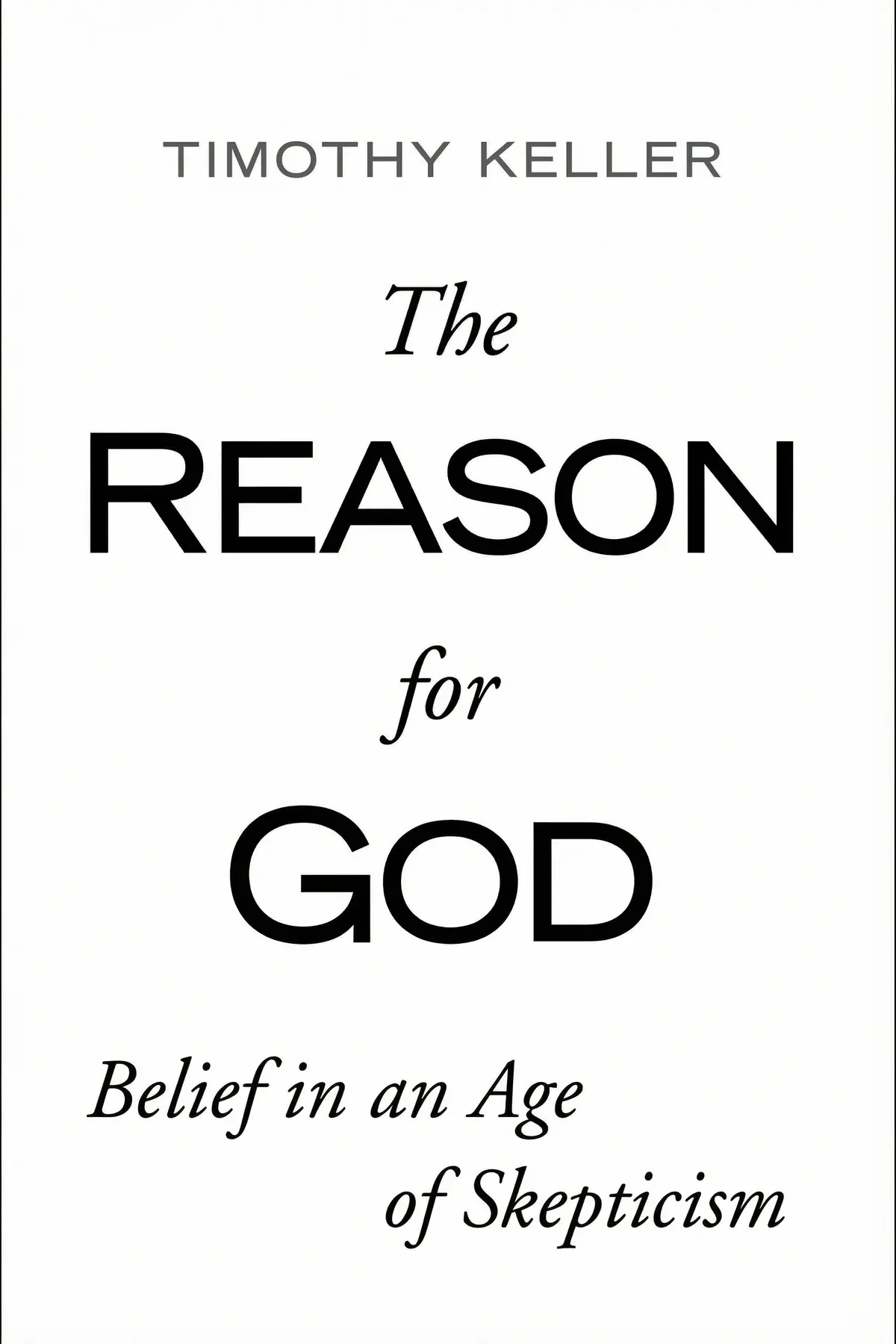
A deep exploration of the most common doubts regarding the Christian faith, offering intellectual and historical counters to skepticism while presenting a compelling case for the existence of God.
1 min 36 sec
We live in an age characterized by a profound tension between old-world faith and new-world skepticism. For many, the idea of a single, universal truth feels not only outdated but dangerous. You might find yourself asking: How can one religion claim to be the only way? If there is a loving God, why is the world so full of brokenness and pain? Does science render ancient scriptures obsolete?
These are the questions that define our cultural moment, and they are exactly what Timothy Keller tackles in this exploration of belief. Keller, who spent decades engaging with skeptical New Yorkers, understands that doubt is not the enemy of faith; rather, it is often its catalyst. He suggests that if you look closely at your doubts, you’ll find they are actually based on a set of beliefs themselves.
In the following minutes, we aren’t just going to look at dry theology. We’re going to look at the historical, philosophical, and personal reasons why the Christian faith remains a vital force in the 21st century. We’ll explore how Christianity has shaped our sense of justice, how it reconciles with modern science, and why the story of a resurrected carpenter still resonates today. Whether you are a firm believer, a curious seeker, or a committed skeptic, this journey offers a way to look at the world’s most influential religion through a lens of rigorous honesty and intellectual depth. Let’s begin by addressing the very thing that often keeps people at arm’s length: the perceived exclusivity of the church.
2 min 29 sec
Does claiming to have the ‘only truth’ inherently lead to division and conflict, or is every identity built on a foundation of exclusive principles?
2 min 29 sec
Is a life of faith a prison of rules, or can the structure of scripture actually provide more space for personal and cultural expression?
2 min 32 sec
Why does the Christian view of human dignity continue to serve as the bedrock for modern justice and human rights movements?
2 min 25 sec
Could the ancient, heavy concept of ‘sin’ actually be the key to psychological health and a renewed sense of purpose?
2 min 12 sec
If the world is truly just a series of random accidents, why do we feel such a deep sense of outrage when things go wrong?
2 min 09 sec
How can a God of love also be a God of judgment? We explore why these two concepts might be more compatible than they first appear.
2 min 24 sec
Does modern biology really disprove the ancient claims of the church, or are we looking for answers in the wrong places?
2 min 15 sec
Was the story of the risen Christ a carefully constructed myth, or does the historical record suggest something far more startling?
2 min 24 sec
What if our deepest longings for beauty, justice, and meaning are actually the compass needles pointing us toward a divine reality?
1 min 29 sec
As we reach the end of this exploration, we’re left with a choice. We’ve seen that the most common objections to Christianity—exclusivity, the restriction of freedom, the problem of suffering, and the supposed conflict with science—have deep, thoughtful answers within the faith itself. We’ve seen that the historical evidence for the resurrection is surprisingly robust and that our own internal longings for justice and beauty act as signposts pointing toward a divine source.
Ultimately, Timothy Keller’s argument is that belief in God is not a leap into the dark, but a step into the light of a more complete reality. It’s an invitation to stop trying to be the sole architect of your own meaning and to trust in a design that is larger, older, and more loving than anything we could invent on our own.
The central ‘throughline’ here is that skepticism, when pushed to its logical conclusion, often requires just as much faith as belief. Every one of us is gambling on a worldview. If you find that the secular story of a random, accidental universe doesn’t quite fit the depth of your experiences or the complexity of human history, perhaps it’s time to reconsider the ‘reason for God.’ Christianity offers a framework that doesn’t just explain the world, but offers the hope of a world being made right. Whether you are ready to believe or simply ready to doubt your doubts, the door to this ancient and living faith remains open.
The Reason For God addresses the modern skeptic’s most pressing questions. In an era where secularism and religious pluralism are on the rise, many find the traditional claims of Christianity to be exclusive, restrictive, or scientifically outdated. This summary navigates these objections, from the problem of suffering to the relationship between faith and evolution, providing a bridge between ancient scripture and contemporary reason. Listeners will find a thoughtful defense of belief that doesn't shy away from the difficult parts of the Bible. The book promises to reframe the conversation around faith, showing that every worldview—including atheism—is based on a set of fundamental beliefs. By examining historical evidence, philosophical clues, and the transformative power of the gospel, it offers a pathway for seekers and believers alike to engage with the Christian message on a deeper, more intellectual level.
Timothy Keller founded his own church in New York in 1989, and now speaks weekly to a Sunday congregation of over 5,000. A prolific author, he has been described as the C.S. Lewis for the 21st Century.
Listeners find this book remarkably accessible and appreciate its stimulating perspectives, especially its defense of Biblical Christianity and its dismantling of contemporary critiques against Christian beliefs. The prose is carefully crafted and marked by a humble tone, establishing it as an essential pillar for apologetics collections. Listeners celebrate its clarity, with one mentioning how easy it is to comprehend for non-theologians, while others point to its scholarly depth and its ability to demonstrate the truth from Scripture.
As someone who has wrestled with the intellectual barriers to faith for years, I found Keller's approach to be a breath of fresh air. He doesn't just shout scripture at you; he actually listens to the modern skeptic. The chapter on the 'problem of evil' was particularly moving, suggesting that if God is big enough to be mad at, He’s big enough to have reasons we can't see. I loved the 'branch' analogy about trust. It’s not about the strength of your faith, but the object you're holding onto. Keller writes with a humility that is often missing in these types of debates. This is a foundational resource for any apologetics library.
Show moreThis book is a masterclass in making complex theological arguments accessible to the average person. Keller’s writing is exceptionally clear, which is a relief because many of these books drift into 'shimmery' language that makes no sense. I found his defense of the resurrection particularly solid—it doesn't just feel like wishful thinking, but like a historical reality. He addresses the big questions, like 'how can a loving God send people to Hell,' with a level-headedness that invites conversation rather than an argument. If you are looking for a modern-day 'Mere Christianity,' this is definitely the book to pick up.
Show moreWow, Keller really delivers a thoughtful defense of Biblical Christianity without coming across as condescending or preachy. The most impactful part for me was his description of the afterlife. He describes it not as some airy paradise, but as a 'restoration' where every sad thing comes 'untrue.' That’s a beautiful way to frame the Christian hope. The book is very readable and manages to be erudite without being exclusionary. He’s not just trying to win an argument; he’s trying to show you a person—Jesus. It’s a very humble, well-written exploration of what it means to believe in the 21st century.
Show moreEver wonder why a loving God would allow such deep suffering in the world? Keller tackles this head-on with a lot of intellectual honesty. He doesn't give a 'magic wand' answer, but he suggests that our small human brains might not see the whole picture. I appreciated his point that if you believe in a God big enough to be angry at, you have to accept He might have reasons beyond your comprehension. The book is dense with ideas but stays surprisingly readable throughout. It’s a rare find: a religious book that treats the skeptic with genuine respect rather than as a target for conversion.
Show morePicking this up was the best decision I've made for my library this year. Keller’s ability to demonstrate the truth from Scripture while engaging with modern culture is unmatched. He uses everything from literature to sociology to build his case, making it feel very relevant to today's world. I particularly liked his definition of sin not just as 'bad behavior' but as building your identity on anything other than God. It shifts the whole conversation. The book is written with such clarity and humility that even if you don't agree with him, you'll walk away with a deeper understanding of the Christian faith.
Show moreFinally got around to reading this staple of modern apologetics, and I can see why it's so highly recommended. Keller is clearly an erudite thinker who interacts deeply with art, philosophy, and history. I appreciated how he dismantled the idea that 'secular' values are somehow more neutral than religious ones. He argues that even the most 'progressive' morals often have hidden religious roots. My only real gripe was the section on evolution; it felt a bit rushed at only a few pages. Still, the way he frames Christianity as the best explanation for the world we actually experience is compelling. It’s a thought-provoking, well-considered piece of work.
Show moreAfter hearing Keller’s sermons for months, I decided to dive into his most famous written work. He has a unique way of articulating the 'trust' aspect of faith that resonated with my logical side. The book is organized brilliantly, starting with the biggest objections skeptics have and then moving into the reasons for belief. I did feel some of the logic regarding the 'neighbor's wall' and the atonement was a bit simplified for such a heavy topic. However, his overall point that everyone operates on some kind of faith—even atheists—is a powerful insight. It definitely pushed me out of my comfort zone.
Show moreKeller’s approach to the 'Seven Doubts' in the first half of the book is systematic and very easy to follow. I’ve always struggled with the idea of one 'true' religion, and while he didn't solve everything for me, his argument about why religions can't all be the same was eye-opening. He points out that if we say all religions are just 'different paths,' we are actually claiming a superior knowledge over all of them. It's a 'gotcha' moment, but an effective one. The prose is clean and the tone is gracious. It’s a great entry point for anyone wanting to see how faith and reason can actually coexist.
Show moreFrankly, most apologetics books are either too dry or too emotional, but Keller finds a decent middle ground. I liked the focus on 'restoration' rather than just 'escaping to heaven.' However, some of his stances boiled down to 'just trust me' on the things that are hardest to prove. He avoids some of the franker questions about who exactly gets 'the big heave-ho' into Hell, which felt a bit evasive. The book is a good summary of the Christian worldview, but if you’re looking for a rigorous scientific defense, you might find his two-page take on evolution a bit thin.
Show moreLook, I really wanted to hear an intelligent, plausible argument for God’s existence, but I didn't find it here. To be fair, the introduction was well-written and gave me hope. But then the logic started to feel incredibly circular. At one point, Keller essentially says that if you call a Christian arrogant for having the answers, you’re being arrogant by assuming you have a better vantage point. That’s just 'I know you are but what am I' level debating. The analogy of Jesus dying to pay for 'wall damages' felt incredibly weak for such a profound theological concept. It’s a lot of scholar-like varnish over logic that isn't actually solid oak.
Show more
Daniel Goleman
Eckhart Tolle
Marianne Williamson
Deepak Chopra
Pico Iyer

Alcoholics Anonymous World Services

Beth Moore
Paramahansa Yogananda
AUDIO SUMMARY AVAILABLE
Get the key ideas from The Reason For God by Timothy Keller, plus 5,000+ more titles in English and Thai.