
24 min 05 sec
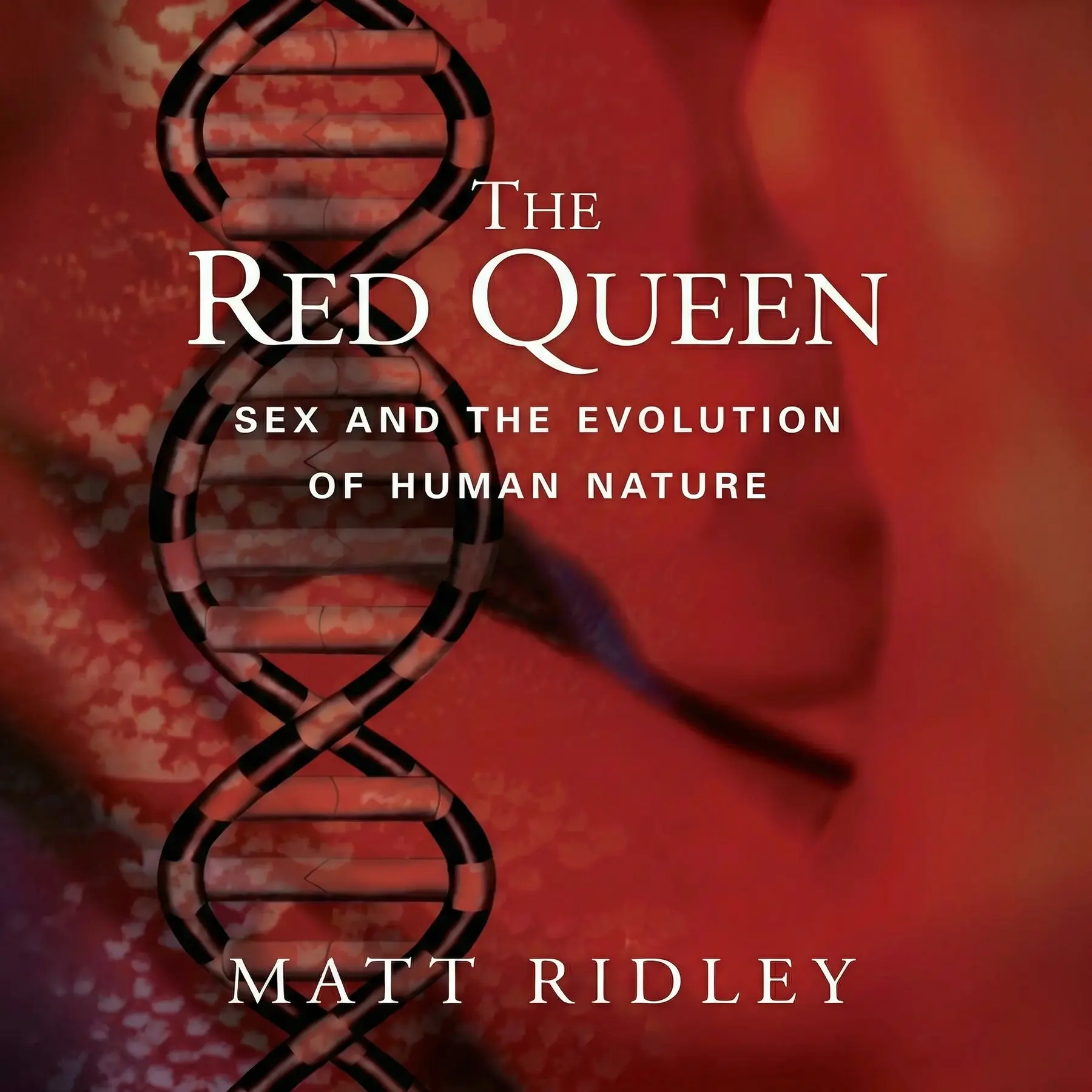
The Red Queen: Sex and the Evolution of Human Nature
By Matt Ridley
Explore the biological origins of human behavior through the lens of evolutionary competition. This summary examines how the relentless race against parasites and the pursuit of mates shaped our species' nature and intelligence.
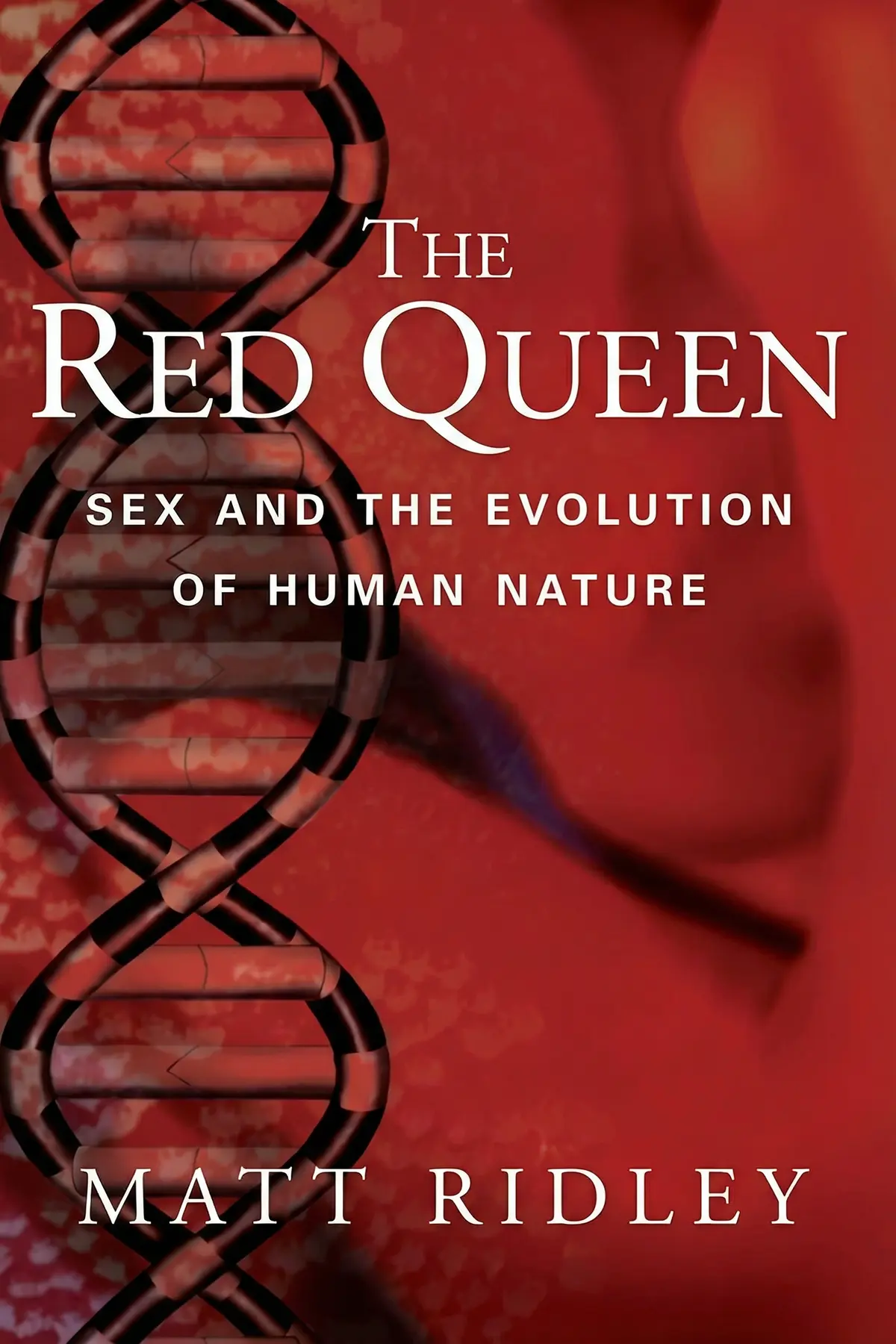
Table of Content
1. Introduction
2 min 05 sec
Imagine for a moment that you are in a race where the track is moving backward just as fast as you are running forward. No matter how much effort you put in, or how much speed you gain, your position relative to the landscape remains exactly the same. This vivid image comes from the world of Lewis Carroll’s Through the Looking-Glass, where the Red Queen explains to Alice that in her kingdom, it takes all the running one can do just to stay in one place. While this was written as a piece of whimsical fiction, it has become one of the most powerful metaphors in modern biology. It describes a world where standing still is equivalent to extinction.
In the realm of evolution, this is known as the Red Queen hypothesis. It suggests that nature is not a ladder that we climb toward perfection, but rather a relentless arms race. Every time a predator gets faster, the prey must get faster too. Every time a parasite finds a new way to invade a host, the host must develop a new defense. This constant, circular struggle is the backdrop for everything we are. It is the reason we have two sexes, the reason we choose the partners we do, and arguably, the reason we are capable of complex thought.
Over the course of this exploration, we are going to dive deep into the mechanics of this race. We will look at why sex—a process that is remarkably inefficient compared to simple cloning—became the dominant way for complex life to persist. We will examine the subtle and not-so-subtle ways that males and females have evolved different strategies for survival and reproduction. Most importantly, we will see how these ancient biological imperatives continue to ripple through our modern lives, influencing our societies, our relationships, and the very structure of our brains. By understanding the Red Queen, we begin to see human nature not as a static set of traits, but as a dynamic response to a world that never stops moving.
2. The Eternal Sprint for Survival
2 min 30 sec
Discover why the simple act of reproduction is a high-stakes gamble against invisible enemies that force every species to change or vanish.
3. The Conflict Behind the Binary
2 min 37 sec
Explore the microscopic power struggle that led to the division of the sexes and why two became the magic number for life.
4. Predicting the Next Generation
2 min 30 sec
Learn how the environment and social standing can tip the scales of biology to determine if a mother produces a son or a daughter.
5. The Biological Roots of Difference
2 min 38 sec
Investigate the complex interplay between nature and nurture that shapes the distinct tendencies of men and women.
6. The Logic of Flamboyance
2 min 33 sec
Uncover why evolution sometimes favors traits that seem dangerous or impractical, like a peacock’s tail or a bird’s song.
7. The Balance of Partnership
2 min 29 sec
Dive into the evolutionary trade-offs between polygamy and monogamy and why most humans eventually settled on the latter.
8. The Strategy of Infidelity
2 min 42 sec
Examine the surprising evolutionary logic behind affairs and why ‘monogamy with a side of adventure’ can be a biological tactic.
9. The Sexy Mind
2 min 23 sec
Question the true purpose of our massive brains and discover why human intelligence might have evolved as a display for courtship.
10. Conclusion
1 min 38 sec
As we close our look at the Red Queen’s world, the throughline becomes clear: we are not finished products, but active participants in an ongoing biological drama. The traits we think of as uniquely human—our intelligence, our complex emotions, even our sense of morality—have been forged in the fires of evolutionary competition. We have seen how the need to stay ahead of parasites drove us toward sexual reproduction, and how the resulting division into two sexes created a ripple effect that shaped our bodies and our social roles.
We’ve explored the subtle strategies behind our choices of partners and the hidden logic in our mating systems. Most importantly, we’ve seen that even our highest intellectual achievements may have their roots in the ancient drive to be ‘attractive’ to our peers. This doesn’t diminish the beauty of our culture or the depth of our relationships; instead, it gives us a deeper appreciation for the immense pressure that created them.
The takeaway for our modern lives is that while our environment has changed—we live in cities rather than on the savannah—our underlying biological hardware is still running the Red Queen’s race. We are still motivated by status, by the desire for genetic quality, and by the need to protect our offspring. By understanding these drives, we can navigate our world with more clarity. We can see our behaviors not as random quirks, but as time-tested strategies for survival in a world that never stops moving. The race continues, and the most important thing we can do is keep learning, keep adapting, and keep running.
About this book
What is this book about?
The Red Queen explores the fascinating world of evolutionary biology, specifically focusing on the Red Queen hypothesis. It posits that species must constantly adapt and evolve not just to gain an advantage, but simply to survive against ever-changing competitors and parasites. This struggle is the primary reason why sexual reproduction exists, despite being less efficient than cloning. Through an analysis of animal behavior and human history, the book reveals how sexual selection has influenced everything from our physical traits to our complex psychology. It explains the origins of gender differences, the logic behind mating systems like monogamy and polygamy, and why human intelligence may have evolved as a tool for social and sexual attraction. Readers will gain a deeper understanding of how the ancient drive to pass on genes continues to influence modern human nature.
Book Information
About the Author
Matt Ridley
Matt Ridley is a British journalist, businessman and author who has worked for the Economist, the Times and the Daily Telegraph. Now an editor of the Best American Science Writing, Ridley is known for his science-focused books such as The Rational Optimist: How Prosperity Evolves (2010) and The Evolution of Everything: How Ideas Emerge (2015).
Ratings & Reviews
Ratings at a glance
What people think
Listeners find the work thoroughly researched and engaging, with one listener describing it as the coolest textbook they’ve read. They value the intellectually stimulating material, especially the way it facilitates deep insights into human nature, and find the subject matter fascinating. The prose is highly regarded, though opinions regarding the pacing are mixed; some find it slow going, while others say it holds up well. Although some listeners find it easy to understand, others note it is not an easy read.
Top reviews
David
This book is a masterclass in making complex evolutionary biology accessible to the layperson. Ridley explores the 'Red Queen' hypothesis with such clarity that you start seeing the 'arms race' of sexual selection everywhere you look. I found the section on how parasites drive the need for genetic shuffling through sex to be absolutely mind-blowing. Honestly, it reads more like a gripping narrative than a dry textbook, though it does demand your full attention during the more technical chapters. While the book was written in the 90s, the core arguments about why we aren't just cloning ourselves feel as fresh as ever. The way he bridges the gap between animal behavior and human sociology is nothing short of brilliant. If you've ever wondered why gender roles or beauty standards exist, this provides a rigorous, if sometimes provocative, framework. It’s the kind of read that sticks with you long after the final page is turned.
Show morePaisley
As a biology enthusiast, I can confidently say this is one of the coolest 'textbooks' I have ever encountered. Ridley manages to weave together the intricate threads of sexual selection and evolutionary competition into a tapestry that explains so much of the human condition. The 'Red Queen' metaphor—borrowed from Lewis Carroll—perfectly captures the frantic, never-ending struggle of life to outpace its own predators and diseases. I particularly enjoyed the chapters on the power of parasites and how they essentially forced us into becoming sexual beings. Frankly, the author’s ability to synthesize disparate studies into a cohesive argument is impressive, making even the most difficult concepts easy to grasp. While some critics might find his views on gender essentialist, he provides enough biological context to make his reasoning hard to ignore. This book changed the way I look at every social interaction I have. It is an absolute classic for a reason.
Show moreRoydao
Wow, talk about a deep dive into the primal forces that drive us! Ridley’s exploration of sexual Darwinism is both illuminating and, at times, a little bit depressing in its cold logic. He argues that our intelligence, our culture, and even our sense of beauty are all just tools in a grand game of reproductive chess. Personally, I found the evidence for the 'arms race' between males and females to be the most compelling part of the entire narrative. The book is dense with information, so it isn't exactly a light beach read, but it rewards the patient reader with incredible insights. I did feel that he occasionally anthropomorphized animals to make a point, which felt slightly less 'scientific' than the rest of the work. Still, the overall impact is a profound reconsideration of what it means to be a human animal. It's a dense, challenging, and ultimately rewarding piece of popular science literature.
Show moreAroon
Human nature is a mess of contradictions, but Matt Ridley provides a remarkably coherent lens through which to view our chaos. By focusing on the 'Red Queen' effect, he explains how our very existence is a byproduct of an eternal struggle for genetic survival. The book is packed with fascinating trivia about everything from peacock tails to the way sperm competes within a species. I appreciated how he balanced the 'nature vs. nurture' debate, even if he leans more heavily toward the biological side of the scale. The truth is, we are creative apes, and understanding our evolutionary baggage is the first step toward true self-awareness. Ridley’s prose is elegant and fast-paced, ensuring that even the most technical sections remain accessible to a general audience. This is easily one of the most thought-provoking books I’ve read in the last decade. It’s a brilliant synthesis of biology, psychology, and sociology that demands to be discussed.
Show moreAiden
Ever wonder why humans are so obsessed with finding the 'perfect' mate? Matt Ridley dives into the Red Queen effect to explain how we are essentially running as fast as we can just to stay in the same evolutionary place. To be fair, some of the data feels slightly dated, yet the central metaphor remains a powerful tool for understanding our species. The writing is incredibly well-researched and engaging, though I’ll admit some of the pacing felt a bit slow in the middle sections. He doesn't shy away from controversial topics like polygamy or the inherent differences between the sexes, which might ruffle some feathers today. It’s a thought-provoking look at the biological machines we truly are, even when we like to think we're above it all. I appreciated the intellectual honesty when he admits that half of his theories might eventually be proven wrong. This is a must-read for anyone interested in the intersection of science and culture.
Show moreOscar
The chapter on 'The Power of Parasites' alone makes this entire book worth the price of admission. It presents a radical way of looking at sex—not as a source of pleasure, but as a defense mechanism against microscopic invaders that evolve faster than we do. Ridley's writing is sophisticated and bold, frequently challenging the reader to abandon their cherished notions of human exceptionalism. Not gonna lie, some of the sections on human mating strategies felt a bit repetitive, yet they were anchored by interesting references to the animal kingdom. He has a knack for finding the perfect anecdote to illustrate a complex game-theoretic strategy. My only real gripe is that he occasionally treats his hypotheses as universal truths when they are clearly still debated. Regardless of whether you agree with every conclusion, the book forces you to think critically about your own nature. It’s an engaging, well-founded exploration of why we are the way we are.
Show moreKai
Published decades ago, this book still manages to hold its own in the crowded field of evolutionary psychology. Ridley is a gifted writer who knows how to make a sentence sing, even when he’s talking about something as unglamorous as parasite resistance. I’ve read other works on this subject, like Pinker or Dawkins, and while Ridley might not be as pithy, his focus on sex provides a unique angle. The central metaphor of the Red Queen is so intuitive that it’s hard to imagine evolutionary theory without it. Some of the references to 'modern' society feel a bit like a time capsule from the early 90s, but the underlying biology is still sound. I did find the pacing a bit uneven, with the human-centric chapters at the end feeling slightly rushed compared to the earlier sections. However, the sheer breadth of research on display is staggering. It’s an insightful, if occasionally controversial, look at the engine of our evolution.
Show moreRohan
Finally got around to reading this classic, and I must say it lives up to most of the praise. It’s a fascinating exploration of how sexual selection has shaped not just our bodies, but our very minds and cultures. Ridley makes a compelling case that we are all players in an 'intellectual chess game' designed to maximize our reproductive fitness. The book is well-researched and provides a treasure trove of historical and biological insights that are still relevant today. I particularly liked his take on beauty as a signal of genetic health, even if it feels a bit reductive at times. In my experience, the best science books are the ones that make you question your own behavior, and this one certainly qualifies. There are moments where the author’s hubris shines through, but his intelligence is undeniable throughout the entire work. It’s an engaging, challenging read that offers a powerful new perspective on what it means to be human.
Show moreElena
Picked this up because I wanted to understand the 'why' behind human attraction, but I left with mixed feelings. On one hand, the science regarding parasites and genetic mutations is fascinating and provides a solid foundation for why sexual reproduction is necessary. On the other hand, Ridley’s conclusions about human behavior often feel like they’re propping up traditional gender norms under the guise of 'objective' biology. I found his dismissiveness toward certain sociological perspectives to be a bit grating at times, though his prose is undeniably sharp. The book is dense, making it a slow-going journey through various species before finally hitting the human-centric chapters at the end. Look, it’s a brilliant intellectual exercise, but you have to take his more 'authoritative' claims with a massive grain of salt. It serves as an interesting time capsule of 90s scientific thought, even if some of the logic feels wobbly now.
Show moreRungrat
After hearing so much hype about this being a 'scientific masterpiece,' I found myself incredibly disappointed by the blatant bias throughout the text. Ridley seems to start with a conclusion—that men and women are fundamentally, biologically different in ways that mirror 1950s stereotypes—and then hunts for data to support it. The logic is often circular, and he frequently ignores cultural factors that could easily explain the behaviors he attributes solely to evolution. I found the tone to be somewhat smug, as if he expects the 'uninformed' reader to be shocked by his supposedly 'brilliant' reasoning. While the early chapters on genetics and parasites were informative, the transition into human sociology felt like a leap into pure conjecture. It was hard to swallow his claims about what women want or how the male brain is 'wired' for certain tasks. If you enjoy being told that your personality is just a series of pre-programmed biological urges, this is for you. Otherwise, give it a miss.
Show moreReaders also enjoyed
Acting with Power: Why We Are More Powerful Than We Believe
Deborah Gruenfeld
Alien Earths: The New Science of Planet Hunting in the Cosmos
Lisa Kaltenegger
Age of Propaganda: The Everyday Use and Abuse of Persuasion
Anthony Pratkanis
AUDIO SUMMARY AVAILABLE
Listen to The Red Queen in 15 minutes
Get the key ideas from The Red Queen by Matt Ridley, plus 5,000+ more titles in English and Thai.
- 5,000+ titles
- Listen as much as you want
- 7-day free trial
- Cancel anytime







